


BCU: The HCJ’s decisions undermine the constitutional guarantees of the independence of the advocacy profession
The Bar Council of Ukraine has concluded that, in its recent decisions, the High Council of Justice has, without legal grounds, called into question the right of bar self-governing bodies to protect the guarantees of legal practice and has, in effect, attempted to grant one of its members — who retains the status of an advocate — special immunity from the Rules of professional conduct and disciplinary responsibility.
These conclusions of the BCU are set forth in the decision «On the results of the review of the High Council of Justice’s decisions regarding violations of constitutional guarantees of the independence of the advocacy». The BCU meeting is taking place today, April 2, in Kyiv.
The focus of the Bar Council of Ukraine’s review is on Decisions No. 136/0/15-26 of the High Council of Justice dated January 29, 2026, and No. 531/0/15-26 dated March 26, 2026. According to the BCU, it is in these decisions that the lawful activities of bar self-governing bodies — considering an advocate’s appeal, filing a disciplinary complaint, opening a disciplinary case, and further participation in disciplinary proceedings — were groundlessly characterized as interference in the activities of a member of the High Council of Justice. At the same time, the Bar Council of Ukraine emphasized: as early as October 14, 2025, the High Council of Justice itself effectively acknowledged that BCU Decision No. 82 was adopted within the scope of the Bar Association’s self-governing powers and did not constitute interference in the activities of its member.
As a reminder, in Decision No. 82 of August 12, 2025, the Bar Council of Ukraine, having reviewed the statement of advocate Oleksandr Vikhrov and video recordings of the High Council of Justice’s sessions, established facts of violations of guarantees of attorney-client privilege during the evaluation of his candidacy for the position of judge. According to the BCU’s conclusion, Roman Maselko, a member of the High Council of Justice, being aware of the legal regime of attorney-client privilege, induced the advocate to disclose materials from the advocate’s file, the nature of his relationship with the client, and other information obtained in connection with the provision of legal assistance. The Council also noted the de facto identification of the advocate with his clients and their cases, as well as the use of information about the advocate’s personal and family life beyond the scope of a proper evaluation of a candidate for the position of judge.
The new decision by the BCU places particular emphasis on the fact that attorney-client privilege protects not the «internal interests of the profession», but first and foremost the human rights of the client, the principal, and other individuals whose information the advocate obtained while providing legal assistance. The BCU emphasized that an advocate is merely a professional bearer of the perpetual duty to preserve this privilege. For this reason, the Bar Council of Ukraine regarded the unjustified coercion of an advocate to disclose such information without the client’s consent not only as an interference in the advocate’s professional sphere but also as an interference in the constitutionally protected sphere of human rights.
The BCU’s decision also explicitly states: the suspension of the right to practice law in connection with election or appointment to another position does not terminate the status of an advocate, does not nullify the effect of the Oath of an Advocate of Ukraine, and does not release such a person from the obligation to comply with the Rules of professional conduct. Therefore, in the opinion of the Bar Council of Ukraine, the conclusion of the High Council of Justice that the actions of an advocate who is a member of the High Council of Justice may be assessed exclusively by the High Council of Justice itself is not grounded in law and effectively creates a functional immunity not provided for by law.
Another fundamental conclusion of the BCU concerns the role of bar self-governing bodies. The Council noted that the decision of the High Council of Justice dated March 26, 2026, effectively interfered with the activities of the Qualification and Disciplinary Commission of the Bar of Zakarpattia Oblast, as it contained a negative assessment of the disciplinary proceedings, called into question the authority of the disciplinary body of the advocacy profession, and, according to the content of the BCU’s decision, was aimed at imposing a predetermined model of conduct on independent bodies of bar self-governance.
At the same time, the Qualification and Disciplinary Commission of the Bar of Zakarpattia Oblast, having considered the complaint, concluded that there was a disciplinary offense in the actions of advocate Maselko and issued a warning to him specifically for interfering in the legal practice of advocate Vikhrov, inciting the disclosure of attorney-client privilege, identifying the advocate with clients, and using inappropriate and humiliating remarks. Under these circumstances, the BCU emphasized, instead of refuting the established facts in the manner prescribed by law, the High Council of Justice called into question the very competence of the advocacy body’s disciplinary body to assess such actions.
The Bar Council of Ukraine also stated that this legal position of the High Council of Justice contradicts Ukraine’s international obligations regarding the protection of the legal profession. The decision emphasizes that European standards for the protection of the legal profession are based on the need to ensure that professional bar associations have a real opportunity to support and defend the independence of advocates, guarantee the confidentiality of legal practice, and prevent negative consequences for an advocate arising from their association with a client or a client’s case. In the opinion of the BCU, the recent decisions of the High Council of Justice have called into question precisely this right of professional bar associations — to respond to violations of guarantees of legal practice and to initiate disciplinary proceedings against another advocate.
In conclusion, the Bar Council of Ukraine stated that in its decisions of January 29 and March 26, 2026, the High Council of Justice exceeded the powers granted to it by law, arbitrarily expanded its own jurisdiction, interfered in the activities of independent bodies of bar self-governance, and effectively created a new legal regime not provided for by either the Constitution of Ukraine or the laws of Ukraine. Such an approach, according to the BCU’s conclusion, is incompatible with the principle of the rule of law, legal certainty, and international standards for the protection of the advocate profession.
Following the review, the Bar Council of Ukraine decided to send this decision to the President of Ukraine, the Prime Minister of Ukraine, the High Council of Justice, the Council of Judges of Ukraine, the Verkhovna Rada Committee on Legal Policy, the Verkhovna Rada Committee on Law Enforcement, the Subcommittee on the Organization and Activities of the Advocacy, legal aid agencies, the Ukrainian Parliament Commissioner for Human Rights, the Ukrainian National Bar Association, as well as to the Council of Bars and Law Societies of Europe (CCBE), the International Bar Association (IBA) and other institutions.
Popular news
Support
Protecting the legal profession, cybersecurity and support for advocates: common themes for the IBA and the UNBA
On September 18, a working meeting was held at the office of the Ukrainian National Bar Association with Executive Director of the International Bar Association (IBA) Mark Ellis. The parties discussed the Ukrainian advocacy profession’s participation in European legal processes, the protection of the UNBA’s digital infrastructure, psychological support for advocates and future areas of cooperation.
War
Are Europe's advocacy associations prepared for a potential war? V. Gvozdiy shared lessons from the Ukrainian experience
The continuity of the bar’s self-governance, the protection of professional registries and archives, as well as equal guarantees of employment for advocates, judges, and prosecutors must be enshrined in advance in legislation in the event of war or another emergency.

Educational events
How DISC helps manage «tigers», «monkeys», «elephants» and «turtles»
The same instruction from a manager may motivate one employee to take action, while leaving another without the necessary guidance. People perceive work tasks differently: for some, a deadline and the expected outcome are enough, while others need explanations, time or a detailed plan.

Legislation
The Verkhovna Rada is preparing a bill to implement the Convention on the Protection of the Professions of Lawyer
Members of Parliament plan to introduce a bill in the near future to implement the main provisions of the Council of Europe Convention on the Protection of the Professions of Lawyer. This parliamentary initiative may also prompt the government to expedite the preparation of the ratification package.
Educational events
What an advocate should consider when a fee dispute escalates into a complaint to the QDBC
If an advocate files a lawsuit seeking to recover fees from a client, the client may in turn file a complaint with the High Qualification and Disciplinary Commission of the Bar in an effort to compel the advocate to withdraw the lawsuit. How do the advocacy’s disciplinary bodies handle such cases?
Edition
Veteran-advocates returning to the practice of law: the UNBA has prepared recommendations
Military service is incompatible with the practice of law; therefore, an advocate suspends their practice for the duration of their service. However, upon returning, they must reinstate their right to practice law, refresh their knowledge and reestablish their organizational and digital processes.
Educational events
Energy, focus and priorities: how an advocate should plan their day
A rigid workday schedule becomes irrelevant when your routine depends on air raid alerts and disrupted sleep caused by nighttime explosions. Under such conditions, advocates should assess the resources they can actually manage.
Discussion
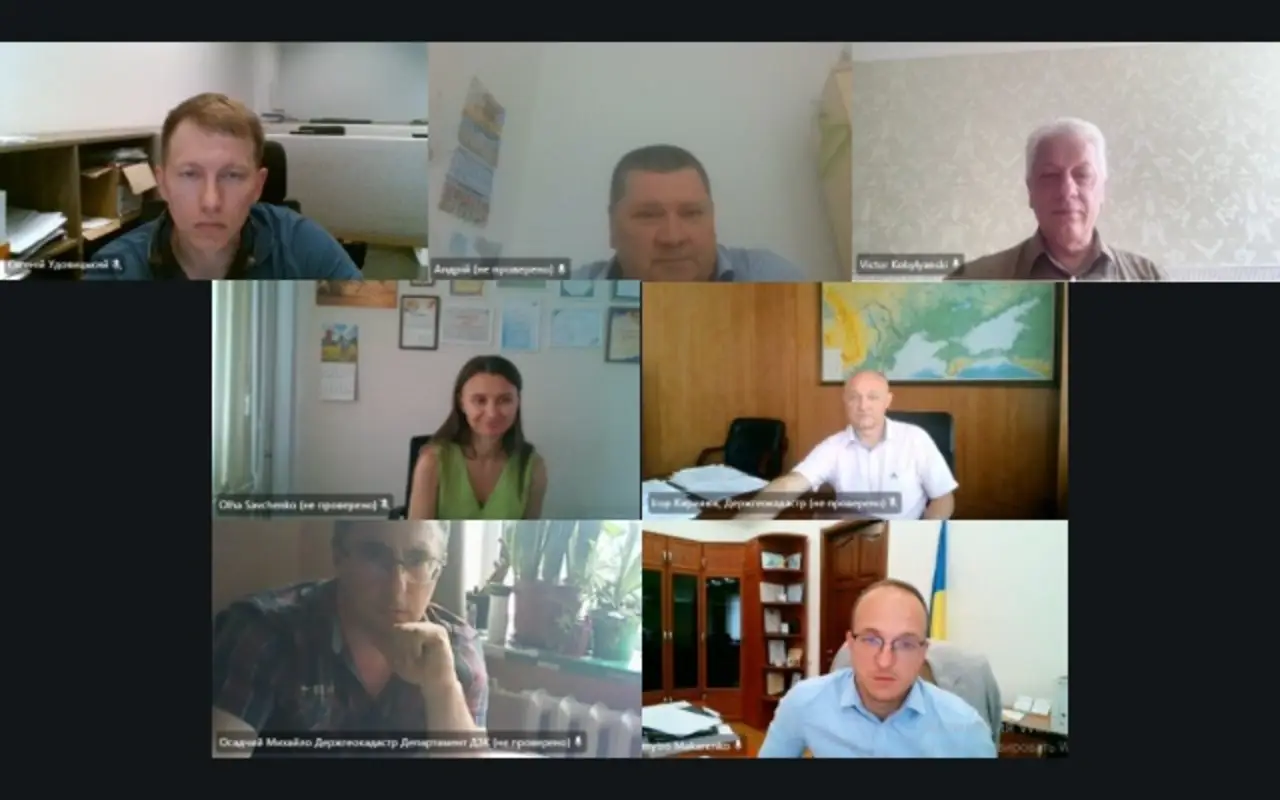
Appeals by NGOs and advocates' access to the SLC were discussed with the State Geocadastre
Advocates’ access to data from the State Land Cadastre remains limited: there is no separate access, and a court order is required to obtain coordinates. At the same time, the functionality for generating extracts from the State Land Cadastre as of a specific date still needs further refinement. The State Geocadastre is working on this.
Publications

Vasyl Kolishnyi, «Law and Business» Supporting mental health should become part of the professional culture of the Bar, - H. Udovenko

Volodymyr Matsko Extradition during wartime: when the risks outweigh the request

Volodymyr Matsko Extradition as a systemic form of rights violations

Victoria Yakusha, Law and Business The anti-corruption vertical cannot «take care» of the Bar as an institution, - acting head of the HQDCB

Censor.net Protecting advocates – protecting justice: addressing concerns about the new law

Ihor Kolesnykov A BRIEF SUMMARY REGARDING THE APPLICATION OF THE ORDER ON EXTENDED CONFISCATION IN LATVIA REGARDING FINANCIAL ASSETS OF…

Valentyn Gvozdiy WORKING IN A WAR ZONE

Lydia Izovitova Formula of perfection