Advocates have warned that the draft Labor Code would curtail workers' protections

Certain provisions of the draft Labor Code of Ukraine regarding collective labor disputes undermine labor protections and do not comply with constitutional and international standards.
The UNBA Committee on labor law has prepared comments and proposals regarding draft law No. 14386 dated January 15, 2026. These were submitted to the Verkhovna Rada Committee on social policy and the protection of veterans’ rights.
In particular, the advocates drew attention to the provision of Part 4 of Article 277 of the draft, which provides for the possibility of a strike without prior labor mediation or labor arbitration only under additional conditions, specifically in the event that the employer fails to respond to demands regarding the repayment of overdue wage arrears in the prescribed amount. However, the current Article 18 of the Law «On the procedure for resolving collective labor disputes (conflicts)» does not contain such requirements, and therefore the proposed model restricts workers’ right to strike. The document also references the position of the ILO Committee, according to which restrictions on this right must not be excessive, and dispute resolution procedures must not be overly complex or protracted.
Separately, the UNBA expressed concerns regarding the legalization of the so-called lockout. In the draft, this is understood to mean a temporary full or partial suspension of the employer’s operations or a restriction on employees’ access to workplaces without terminating employment contracts. According to the proposed wording of Article 291 of the draft, a lockout may be applied by an employer exclusively at the local level. However, as the European Committee of social rights has pointed out, this approach does not comply with the European Social Charter, which does not recognize an individual employer’s right to a lockout, except in exceptional circumstances.
Furthermore, Article 44 of the Constitution guarantees only the right to strike for employees, but does not establish an employer’s right to a lockout. An analysis of the draft suggests the possibility of simultaneously applying both a lockout and the suspension of an employment contract to employees participating in a strike. However, this is unacceptable, as in such a case, employees would effectively face restrictions on the exercise of their constitutional right.
Separate attention was also drawn to wages during a lockout: the draft allows the employer to independently determine the procedure for paying wages but does not establish minimum guarantees, which could jeopardize the payment of wages to employees who did not participate in the strike but were unable to work due to its occurrence.
In conclusion, the UNBA Committee stated that the introduction of a lockout in its proposed form could become a form of unilateral collective pressure, restrict the exercise of the right to strike, and disrupt the balance of interests in the mechanism for resolving collective labor disputes. A lockout cannot override employees’ right to strike, and in the absence of clear legislative conditions and judicial oversight, there is a risk that the draft would violate Article 6 of the European Social Charter.
The UNBA also raised comments regarding other provisions of the draft, specifically concerning non-standard forms of employment, video surveillance of employees, rest periods, mediation in labor disputes, the role of the National mediation and conciliation service, as well as issues of employee safety and health.
The full text of the comments and proposals can be downloaded via this link.
Popular news
Legislation
Advocates have warned that the draft Labor Code would curtail workers' protections
Certain provisions of the draft Labor Code of Ukraine regarding collective labor disputes undermine labor protections and do not comply with constitutional and international standards.
Educational events
The right of minors to marry: how judicial oversight works
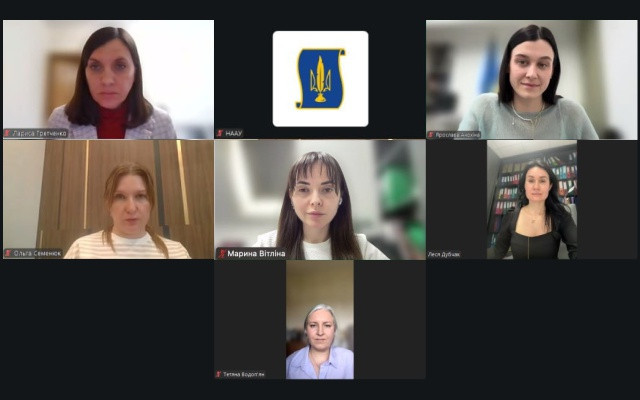
The issue of granting minors the right to marry lies at the intersection of family law, child protection, and judicial discretion. The UNBA Committee on family law dedicated a webinar held on March 30 to this very topic.
Self-government
BCU: The HCJ’s decisions undermine the constitutional guarantees of the independence of the advocacy profession
The Bar Council of Ukraine has concluded that, in its recent decisions, the High Council of Justice has, without legal grounds, called into question the right of bar self-governing bodies to protect the guarantees of legal practice and has, in effect, attempted to grant one of its members — who retains the status of an advocate — special immunity from the Rules of professional conduct and disciplinary responsibility.
Announcements
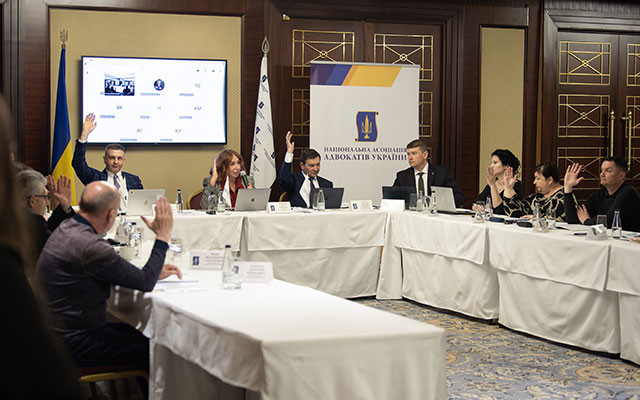
The Bar Council of Ukraine begins its meeting
Today, April 2, a meeting of the Bar Council of Ukraine is taking place in Kyiv. On the agenda are issues related to the activities of bar self-governing bodies, consideration of a decision by the High Council of Justice, a number of appeals, as well as a discussion of the current state and pressing issues regarding the functioning of the legal aid system.
Interaction
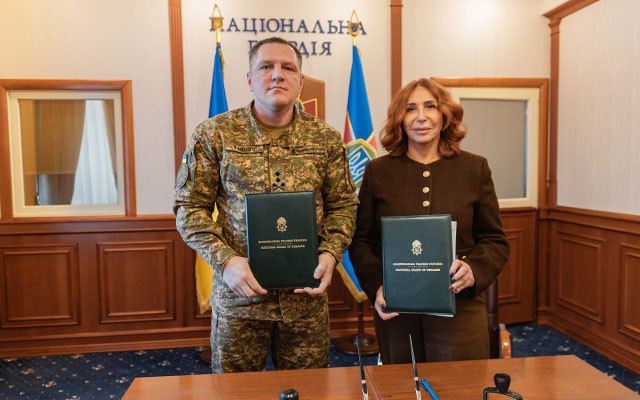
The UNBA and the National Guard have agreed to cooperate on legal protection for military personnel
Servicemembers of the National Guard, their family members, and veterans are to receive additional legal tools to protect their rights, while the National Guard’s legal services will receive methodological and expert support.
Interaction
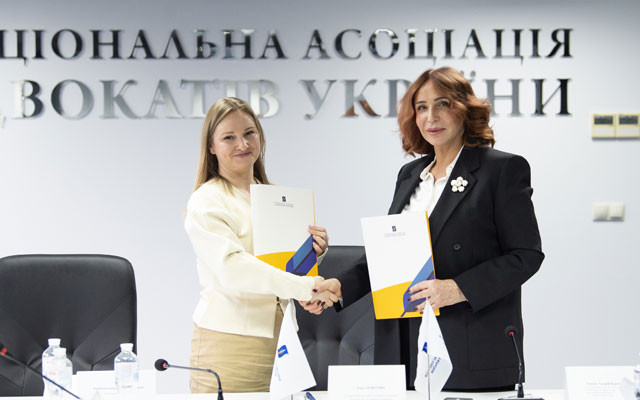
Protecting the rights of service members: The UNBA and the Military Ombudsman have agreed on cooperation
Servicemembers, reservists, conscripts during training exercises, members of local community volunteer units, and other individuals covered by the Law «On the Military Ombudsman» should have better access to professional legal assistance.
Discussion
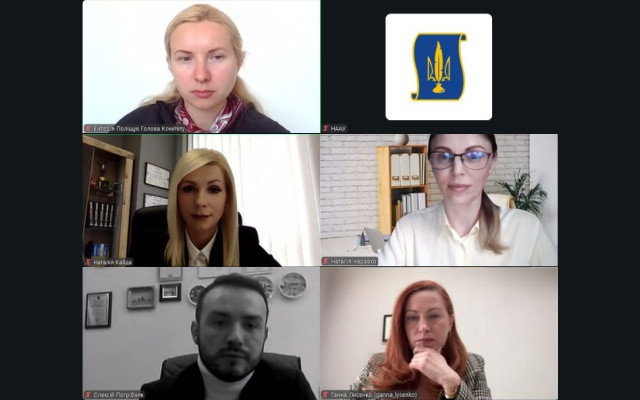
New Labor Code: advocates highlight the strengths and risks of the draft
The draft Labor Code contains a number of progressive provisions aimed at modernizing labor legislation: digitizing procedures, expanding forms of employment, and increasing transparency in wage payments. At the same time, certain systemic issues require further refinement.
Rule of Law Roadmap
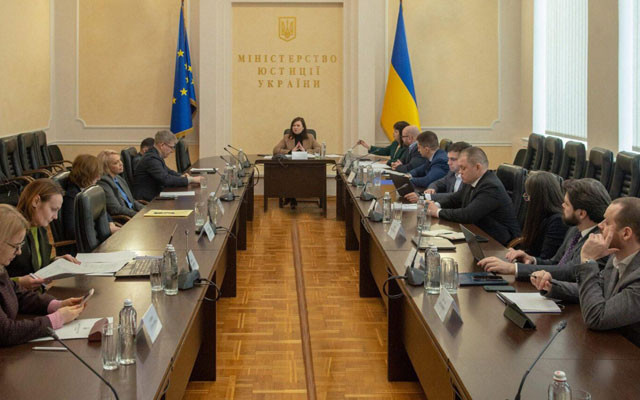
Reform without data and advocacy: what the Ministry of Justice’s launch has revealed
The Ministry of Justice hosted the first meeting of the working group on bar reform. But instead of professional preparation of legislative changes, we saw exactly what Armada Network Director Dale Armstrong had spoken about the day before in Kyiv: not reform, but a struggle for control over the agenda through a narrow circle of “stakeholders” who create an echo chamber of influence for themselves.
Publications

Volodymyr Matsko Extradition during wartime: when the risks outweigh the request

Volodymyr Matsko Extradition as a systemic form of rights violations

Victoria Yakusha, Law and Business The anti-corruption vertical cannot «take care» of the Bar as an institution, - acting head of the HQDCB

Censor.net Protecting advocates – protecting justice: addressing concerns about the new law

Ihor Kolesnykov A BRIEF SUMMARY REGARDING THE APPLICATION OF THE ORDER ON EXTENDED CONFISCATION IN LATVIA REGARDING FINANCIAL ASSETS OF…

Valentyn Gvozdiy WORKING IN A WAR ZONE

Lydia Izovitova Formula of perfection

Sergiy Vylkov Our judicial system is so built that courts do not trust advocates