10 mistakes that cost advocates money – webinar
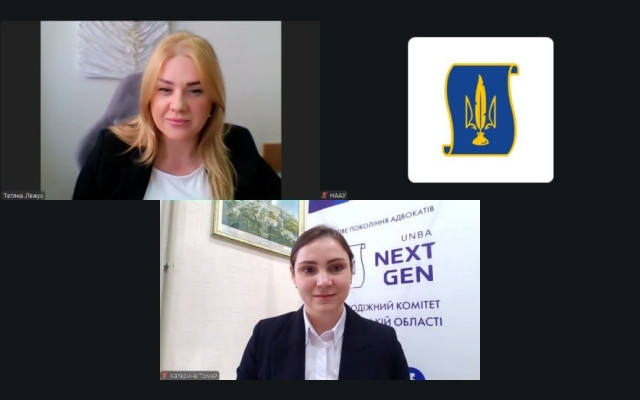
An advocate may work long hours, have a constant caseload, and yet still find themselves in the red. The reason is often not a lack of clients, but rather mistakes in how the practice is organized: improper pricing, a lack of specialization, failure to track expenses, and neglecting delegation and rest.
Advocate Tetyana Lezhukh spoke about these mistakes in legal practice during a webinar hosted by the UNBA. The event was initiated by Kateryna Tomay, a representative of the UNBA NextGen in the Vinnytsia region.
T. Lezhukh emphasized that this is not about business and KPIs, but about daily habits in legal practice that affect income.
1. A lack of understanding of how much services should actually cost. The speaker advised tracking all expenses for at least three months, calculating the number of working hours, and determining a base hourly rate. According to her, an hour of an advocate’s time cannot cost less than this threshold.
2. A willingness to take on all types of legal services. The advocate noted that at the beginning of one’s practice, it is indeed necessary to try one’s hand at various fields, but later on, it is advisable to choose one or at most two specializations. Otherwise, a significant portion of time is spent delving into new areas and preparing for consultations that do not always lead to full-fledged collaboration.
3. Lack of understanding of one’s target audience. An advocate must determine exactly who they are working for, what needs this audience has, and what they are interested in reading or seeing in professional communications. Working «for everyone» disperses efforts and prevents you from clearly standing out among other specialists.
4. Lack of income and expense tracking. It is important to understand how much an advocate actually earns, how much they spend, which services generate the most revenue, and which areas can be gradually phased out. Tracking also helps identify expenses that can be eliminated. For example, if an office costs more than it generates from in-person consultations, the advocate must decide whether such an expense is justified.
5. Failure to delegate technical tasks. This refers to situations where an advocate personally handles tasks that could be delegated to an assistant: mailing correspondence, technical preparation of documents, some administrative work, or specific tasks related to managing social media. The speaker advised conducting an audit of the workday for at least a week, determining where time is spent, and identifying tasks that can be delegated to an assistant.
6. Lack of rest. T. Lezhukh called this an unobvious mistake for those who have not yet experienced professional burnout. According to her, rest should become part of the work routine and be scheduled just like court hearings. This refers not only to vacation but also to sleep, exercise, and activities that truly restore one’s energy.
7. Lack of strategic goals. Many advocates work at the same pace for years: they get their license, open an office, handle cases, but generally don’t change anything. If there are issues with pricing or workflow organization, an advocate may work at a loss for a long time and accumulate fatigue. Therefore, it’s important to have a vision for at least six months and understand what skills and steps are needed to achieve those goals.
8. Lack of understanding of what clients think about an advocate’s work. The problem arises when, after a consultation or a completed assignment, the client disappears, and the advocate doesn’t know why. The speaker emphasized that feedback helps reveal less obvious aspects: the quality of communication, the client’s comfort, the clarity of explanations, and the overall experience of interaction.
9. Failure to adjust service rates in a timely manner. Advocates sometimes work for years at old rates, failing to account for inflation, currency fluctuations, their own growing experience, or professional achievements. She advised addressing this issue at least once a year.
10. Expenses exceeding income. The speaker linked this problem to the lack of systematic record-keeping. In such cases, an advocate may work a lot but actually remain in the red, burn out, and mistakenly believe that the problem lies with advocacy itself, when in reality it is a matter of an inability to manage financial flows.
Concluding her speech, T. Lezhukh emphasized that changes in legal practice begin with a change in one’s approach to oneself. «We cannot solve our problems with the same mindset that created them. Therefore, if we want change, we must change our approaches; we must change something in our work», - she summarized.
Popular news
Legal defence of military personnel
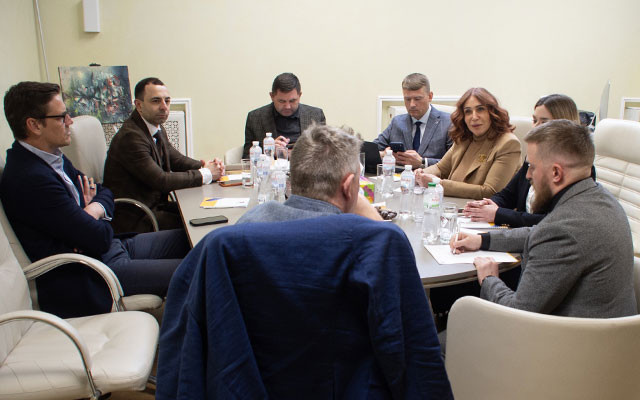
The model for legal assistance to veterans was discussed at the UNBA
A working meeting was held at the Ukrainian National Bar Association, during which representatives of the advocacy profession, the Ministry of Veterans Affairs of Ukraine and a foreign expert discussed approaches to providing legal aid to veterans, the role of the advocacy profession in this system, and the experience of other countries.
Guarantees of the practice of law
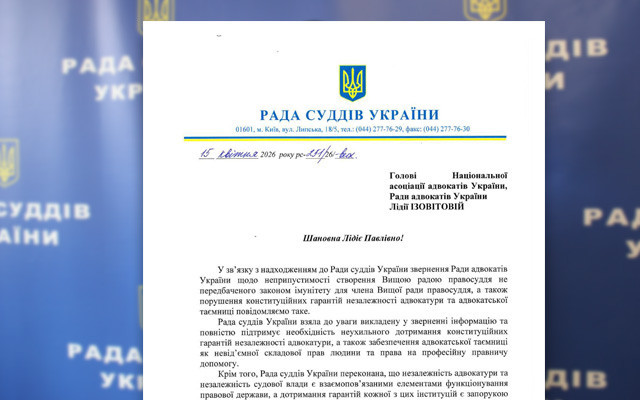
The CJU has endorsed guarantees of the legal profession’s independence and has proposed a meeting with the BCU
The Council of Judges of Ukraine has responded to a letter from the Bar Council of Ukraine regarding the inadmissibility of the High Council of Justice granting immunity to a member of the High Council of Justice — a privilege not provided for by law — as well as regarding violations of constitutional guarantees of the independence of the legal profession and attorney-client privilege.

Interaction
The UNBA and the Ministry of Veterans are expanding their cooperation
War veterans, their family members, as well as the family members of fallen Defenders of Ukraine are to receive improved access to professional legal assistance and additional opportunities for independent legal protection.

Legislation
Advocates have warned that the draft Labor Code would curtail workers' protections
Certain provisions of the draft Labor Code of Ukraine regarding collective labor disputes undermine labor protections and do not comply with constitutional and international standards.
Legal defence of military personnel
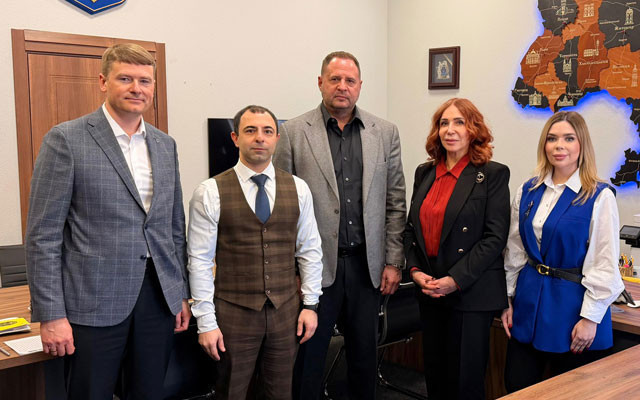
Representatives from the Ministry of Veterans Affairs and the UNBA discussed veterans' access to justice
On April 3, a working meeting was held at the Ministry of Veterans Affairs of Ukraine with representatives of the Ukrainian National Bar Association, dedicated to improving the effectiveness of legal protection for war veterans and their families.
Educational events
The right of minors to marry: how judicial oversight works
The issue of granting minors the right to marry lies at the intersection of family law, child protection, and judicial discretion. The UNBA Committee on family law dedicated a webinar held on March 30 to this very topic.
Interaction
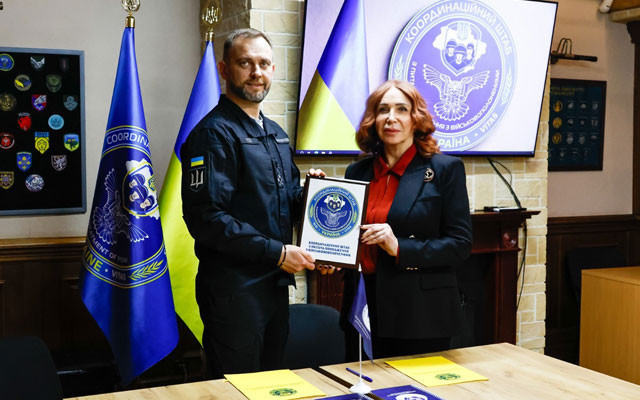
The UNBA and the Coordination headquarters have agreed to cooperate in assisting those released from captivity
Servicemen released from captivity, family members of prisoners of war, civilians deprived of their personal liberty as a result of armed aggression, as well as persons missing in connection with the war, will gain additional opportunities to access legal assistance and protect their rights.
Self-government
BCU: The HCJ’s decisions undermine the constitutional guarantees of the independence of the advocacy profession
The Bar Council of Ukraine has concluded that, in its recent decisions, the High Council of Justice has, without legal grounds, called into question the right of bar self-governing bodies to protect the guarantees of legal practice and has, in effect, attempted to grant one of its members — who retains the status of an advocate — special immunity from the Rules of professional conduct and disciplinary responsibility.
Publications

Volodymyr Matsko Extradition during wartime: when the risks outweigh the request

Volodymyr Matsko Extradition as a systemic form of rights violations

Victoria Yakusha, Law and Business The anti-corruption vertical cannot «take care» of the Bar as an institution, - acting head of the HQDCB

Censor.net Protecting advocates – protecting justice: addressing concerns about the new law

Ihor Kolesnykov A BRIEF SUMMARY REGARDING THE APPLICATION OF THE ORDER ON EXTENDED CONFISCATION IN LATVIA REGARDING FINANCIAL ASSETS OF…

Valentyn Gvozdiy WORKING IN A WAR ZONE

Lydia Izovitova Formula of perfection

Sergiy Vylkov Our judicial system is so built that courts do not trust advocates