

The UNBA proposed practical solutions to protect the rights of veterans and the families of those who died in service
Veterans and their family members are formally entitled to legal aid and representation in court; however, in practice, they face procedural barriers, lengthy delays, difficulties in proving their status and inconsistent application of laws regarding state guarantees.
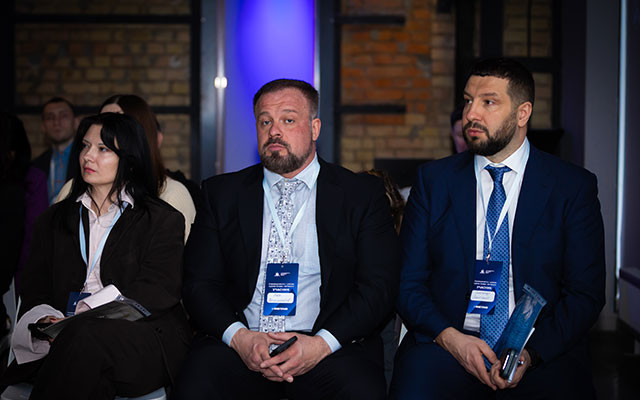
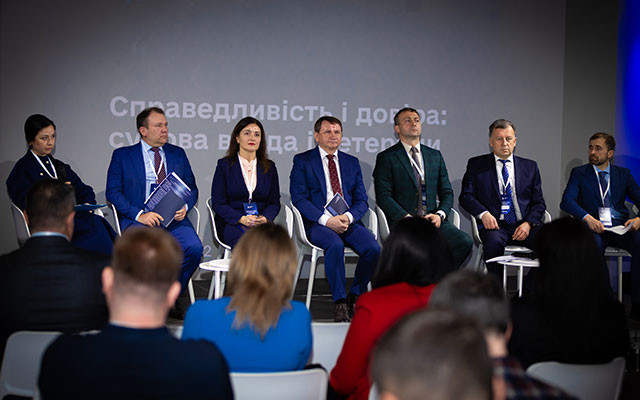
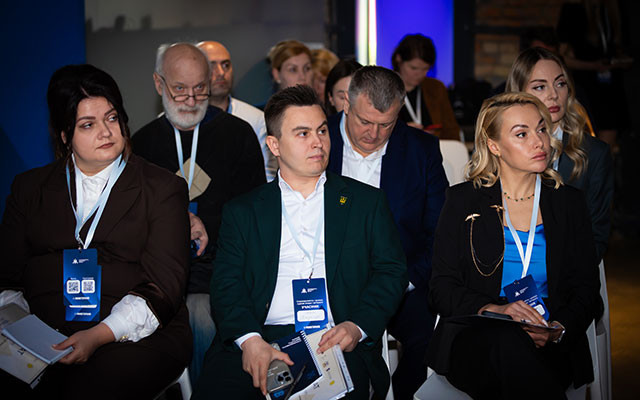
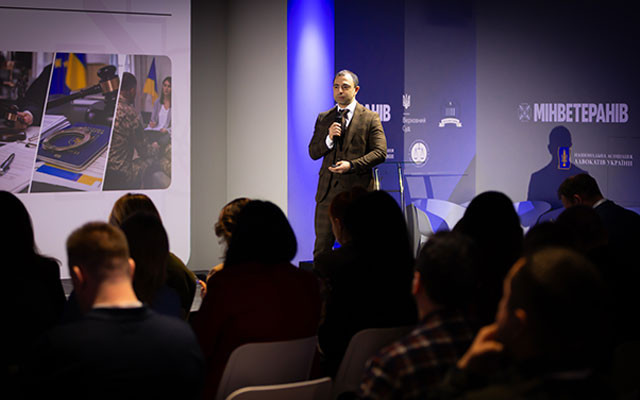
The seminar «Justice and trust: the judiciary and veterans» was dedicated to veterans’ and their families’ access to justice and legal aid. The event was organized by the Ministry of Veterans Affairs of Ukraine. Co-organizers included the Supreme Court, the Council of Judges of Ukraine, the Ukrainian National Bar Association and the NGO «Ukrainian Bar Association».
Participants were greeted by Minister of Veterans Affairs Nataliia Kalmykova, Deputy Head of the Office of the President Iryna Mudra, Judge of the Grand Chamber of the Supreme Court Oleg Tkachuk, Member of the High Council of Justice Olena Kovbii, Chairman of the Council of Judges of Ukraine Vitalii Salikhov and Representative of the Ukrainian Parliament Commissioner for Human Rights Andrii Ovsienko. Deputy Minister for Veterans Affairs Farkhad Farkhadov outlined the results of the work already carried out in this area, including the creation of an expert group, cooperation with the judiciary, the collection of practical case studies in the regions, and the preparation of legislative proposals. He specifically noted the cooperation with the UNBA — the signing of a memorandum and the involvement of advocates in systematic work to protect veterans’ rights.
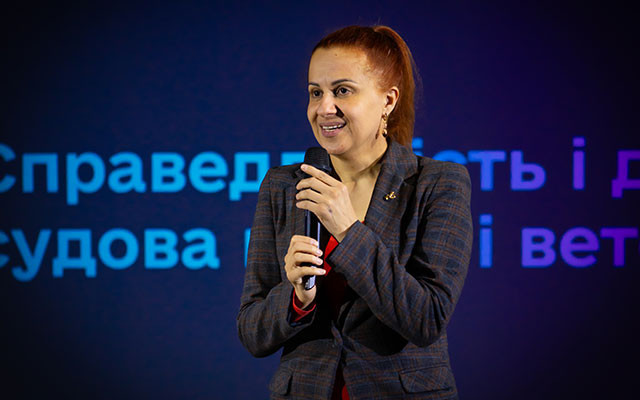
A member of the Bar Council of Ukraine from the Rivne region Hanna Lazarchuk focused on veterans’ access to free legal aid. According to her, there are no particular problems with primary legal aid, since every person has the right to it, and an application can be submitted in person or via electronic means. However, obstacles arise at the secondary FLA stage: a veteran must contact an FLA center, submit a handwritten application certified by an electronic or physical signature, and attach documents confirming their status and right to such assistance. And for a veteran who is still on active duty or undergoing medical treatment, such a procedure is not always practically feasible, and the review of the application can take up to 10 days. As an example, the speaker cited a situation where a veteran was in a medical facility, but while the power of attorney was being processed, he was transferred to another region. As a result, the power of attorney was revoked, the documents were transferred to another region, and for three months, the person was effectively deprived not only of a resolution to the legal issue but also of access to free secondary legal aid. Among her proposals, H. Lazarchuk mentioned improving the «Veteran Pro» app.
She noted that the app offers psychological support, services from a specialist in supporting war veterans, and mediation, but lacks direct access to FLA. In her view, a relevant link could be added to the app, which would enable instant verification of veteran status without a 10-day wait and without submitting a stack of documents to exercise this right. The speaker also proposed establishing direct contacts with advocates in each region who have undergone relevant training or demonstrated expertise in this category of cases. Such an approach, she said, would allow veterans to contact an advocate directly, track the provision of legal aid through «Veteran Pro» and reduce the time required to obtain an advocate’s contact information to one or two days.
Deputy Chairman of the UNBA Committee on the protection of victims of armed aggression against Ukraine, compensation mechanisms and European integration legal support for recovery Zhanna Hrusko noted that the Committee is collecting proposals for amendments to laws and subordinate regulatory acts that could improve the legal status of military personnel, veterans, and their family members.
She also noted that Committee representatives are traveling to the regions to meet with representatives of military units and veteran policy departments to maintain contact and implement joint initiatives.
Separately, Zh. Hrusko focused on the issue of family members of fallen servicemembers and the difficulty of obtaining a one-time cash benefit. The speaker explained that since the start of the full-scale invasion, Article 16-1 of the Law «On social and legal protection of servicemen and their families», which defines the circle of persons eligible for a one-time cash benefit following the death of a serviceman, has been amended several times. She noted that eligibility for the payment is determined by the version of the law in effect at the time of the person’s death: if a servicemember died in June 2022, one version applies; if in 2023, another; and if from 2024 to the present, a third. According to the lawyer, the version in effect from July 2022 to December 2023 was the least favorable for some families: at that time, the right to the payment was granted to parents, a spouse who had not remarried, minor children, and certain dependents; adult children without a disability status were effectively unable to receive such assistance. Therefore, the main proposal put forward by the chairman of the relevant Committee of the UNBA is to grant equal rights to family members of deceased military personnel to receive a one-time cash benefit, regardless of when their loved one died and which version of the law was in effect at that time.
During the discussion, representatives of advocacy emphasized the need for practical solutions that simplify access to legal aid for veterans and their family members, ensure faster contact with an advocate, and eliminate legislative gaps in the area of state guarantees.
Popular news
European integration
The UNBA presented the CCBE with an overview of legal reform and challenges
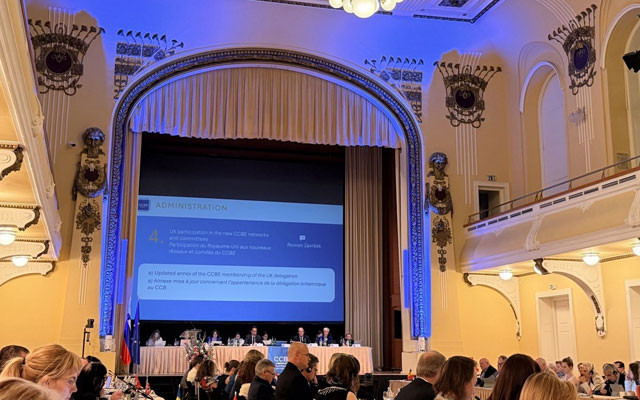
Reform of the legal profession, Ukraine’s European integration commitments, guarantees of the profession’s independence, and practices of bar self-governance in European countries — these issues were the subject of discussion at the Council of Bars and Law Societies of Europe (CCBE).
Rule of Law Roadmap
The UNBA is compiling the findings of the subgroups regarding the implementation of the Rule of Law Roadmap
Today, May 28, the Ukrainian National Bar Association hosted a meeting of the Coordination Bureau of the Working Group on the implementation of the Rule of Law Roadmap regarding the reform of the advocacy profession. Following a series of meetings by thematic subgroups, the work is now moving to the stage of consolidating proposals and preparing a coordinated package of recommendations.
Discussion
UNBA discussed removing barriers at border crossings for families with children with disabilities
Families of children with disabilities face additional requirements when traveling abroad, particularly regarding consular registration. What is happening and what changes are needed to remove these obstacles were discussed during the roundtable «Borders without barriers for families of children with disabilities».
Discussion
New rules, old problems: the UNBA discussed the work of the ETAIDF and MMC
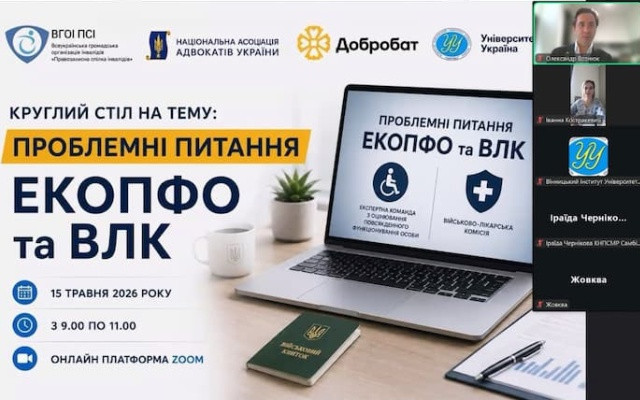
The reform of medical-social assessment and military medical commissions has changed procedures but has not resolved practical issues. People face situations where documents are not issued, decisions are based on technicalities, assessments are delayed, and they struggle to demonstrate their actual health status in specific life situations.
Discussion
Co-parenting shouldn't be reduced to a 50/50 formula, — roundtable discussion
Following a divorce, joint custody can serve as a mechanism for ensuring equal parental rights. However, this model requires clear criteria and cannot be applied automatically without taking into account the child’s age, the level of conflict between the parents, the risk of violence, and the feasibility of enforcing the future decision.
Legislation
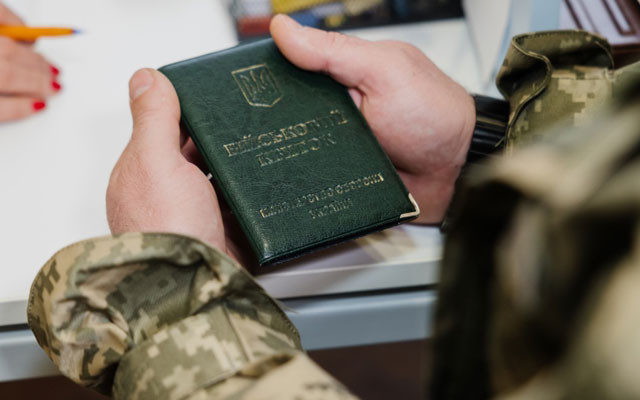
Penalties for errors in military registration require clear rules, – UNBA
The liability of officials for violations of military registration rules must be legally defined, proportionate, and effectively enforceable. Otherwise, the new fines will not protect citizens from registration errors but will create additional risks.
European integration
Lidiya Izovitova: In the context of European integration reforms, advocacy is a partner of the state, not a target of reform
The war has significantly altered the working conditions for advocates, while European integration has presented the profession with new institutional challenges. The ongoing negotiation process covers issues such as the rule of law, judicial independence, fundamental rights, justice, freedom and security.
Guarantees of the practice of law
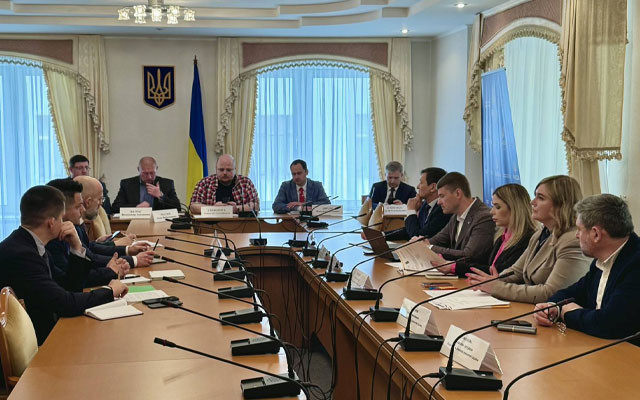
The Verkhovna Rada discussed the next steps for ratifying the Convention on the Protection of the Professions of Lawyer
The Verkhovna Rada Committee on legal policy held a working meeting to prepare for the ratification of the Convention for the Protection of the Profession of Lawyer. The meeting was attended by members of parliament, representatives of the Office of the President, the Ministry of Justice, the Ministry of Foreign Affairs and the Ukrainian National Bar Association.
Publications

Volodymyr Matsko Extradition during wartime: when the risks outweigh the request

Volodymyr Matsko Extradition as a systemic form of rights violations

Victoria Yakusha, Law and Business The anti-corruption vertical cannot «take care» of the Bar as an institution, - acting head of the HQDCB

Censor.net Protecting advocates – protecting justice: addressing concerns about the new law

Ihor Kolesnykov A BRIEF SUMMARY REGARDING THE APPLICATION OF THE ORDER ON EXTENDED CONFISCATION IN LATVIA REGARDING FINANCIAL ASSETS OF…

Valentyn Gvozdiy WORKING IN A WAR ZONE

Lydia Izovitova Formula of perfection

Sergiy Vylkov Our judicial system is so built that courts do not trust advocates