Recodification of family law: new provisions, risks and safeguards
Out-of-court divorce, family housing, spousal debts, children’s property and the rights of missing persons — the recodification of civil legislation addresses practical issues that advocates and notaries deal with on a daily basis.
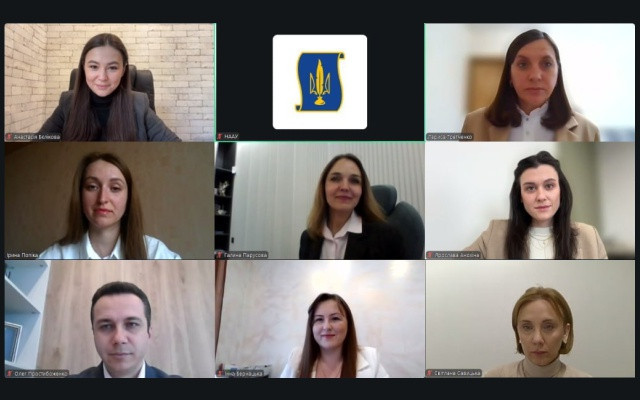
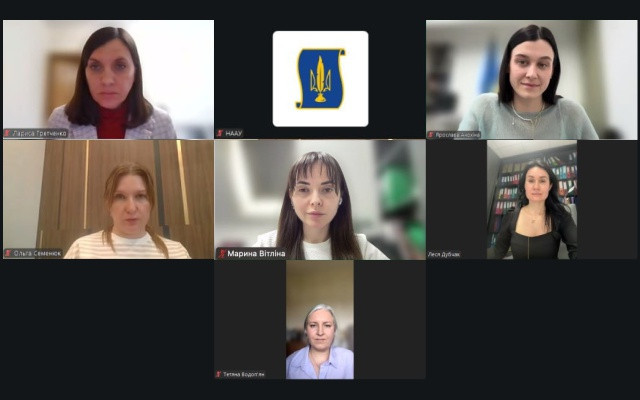
During a professional discussion organized by the UNBA Committee on family law in conjunction with the UNBA Committee on civil law and procedure and with the participation of the Notary Chamber of Ukraine, participants discussed and shared their views on which provisions of the draft Civil Code could simplify procedures and which likely require additional safeguards.
Divorce Without Barriers
Secretary of the UNBA Committee on family law Iryna Popika analyzed the provisions of draft laws No. 14394, No. 14394-1, No. 14394-2, and No. 15150 regarding the dissolution of marriage. Among the proposed changes, she highlighted the expansion of a notary’s authority as an agent for extrajudicial divorce, the simplification of procedures for spouses with children, and the introduction of a notarial agreement on the legal consequences of divorce.
At the same time, according to her analysis, certain legislative initiatives combine the modernization of procedures with a return to approaches that had already been removed from family law. In particular, draft laws No. 14394 and No. 14394-2 propose reinstating the prohibition on granting a divorce petition during the wife’s pregnancy and within one year after the child’s birth. This provision was removed from the Family Code in November 2024, and its reinstatement may not be consistent with Ukraine’s obligations in the area of combating domestic violence, particularly under the Council of Europe Convention on Preventing and Combating Violence Against Women and Domestic Violence.
I. Popika drew particular attention to reconciliation mechanisms. In her view, they require additional safeguards to ensure they are not applied in cases involving domestic violence. Similarly, provisions regarding restrictions on the right to divorce during pregnancy, interference with personal autonomy—particularly regarding changes to a surname—as well as the overall consistency of the proposed regulations with the principles of voluntary marriage, respect for human dignity, legal equality, and non-discrimination require further refinement.
The limit of indisputability
A member of the same Committee Yaroslava Anokhina focused on the role of extrajudicial procedures in family legal relations. According to her, such mechanisms are important not only for the prompt resolution of family issues but also for settling conflicts without resorting to lengthy court proceedings, which can have complex consequences for the parties.
As part of the recodification, a number of proposals have been put forward that, in general, may indicate the development of out-of-court mechanisms. These include, in particular, the possibility of establishing a regime of separate residence for spouses through an out-of-court procedure by notarizing the relevant agreement, an agreement on the legal consequences of divorce, an agreement on the division of parental responsibility, as well as the «family housing» mechanism.
At the same time, according to Y. Anokhina, certain proposals may create legal uncertainty. The problem arises when a notary — as a professional who, by nature, operates in the realm of undisputed legal relationships — is effectively tasked with substantively assessing family conflicts and verifying compliance with the best interests of the child standard.
She emphasized that this standard is mandatory for all authorities and individuals who make decisions in cases involving children. However, the issue lies not in the extension of this obligation to various entities, but in how it is implemented within a specific procedure. If the dissolution of a marriage between spouses with children, or the establishment of a separate residence arrangement, is to take place through a notary and is simultaneously combined with the certification of agreements regarding the legal consequences of the dissolution of the marriage and parental responsibility, it is the notary who must verify compliance with the best interests of the child.
Given the nature of notarial practice, which is based on indisputability, the certainty of the subject matter, and documented circumstances, the question remains open: by means of what specific, appropriate, and sufficient documentary evidence can a notary objectively establish compliance with such a standard.
In this context, according to the attorney’s assessment, such ideas can only function within a hybrid model. The notarial procedure must be preceded by or accompanied by a special safeguard, specifically an opinion from the guardianship and custody authority, as well as a clearly defined list of documents confirming that the child’s interests have been taken into account.
If the legislature proposes to expand notarial certification of agreements regarding divorce, parental responsibility, determination of family residence, or other related family legal relationships, it must explicitly define the limits of such a procedure. Specifically, in which cases is a notary authorized to certify such agreements, what set of documents must be submitted, and how are the relevant status, absence of dispute, and observance of the child’s best interests verified. Otherwise, streamlining the procedure may not reduce conflict but merely shift the problem into the realm of subsequent disputes regarding the legality of extrajudicial actions already taken.
Property in limbo
Advocate Galina Parusova drew attention to the legal framework governing the property rights of persons whose whereabouts are unknown. This pertains, in particular, to persons missing under special circumstances, persons declared missing, as well as the rights of their relatives and family members.
She focused on the application of the Law «On the legal status of persons missing under special circumstances», which defines the legal status of such persons in the context of armed conflict, military operations, temporary occupation, and other extraordinary circumstances. A person acquires the relevant status from the moment their information is entered into the Unified Register of Persons Missing Under Special Circumstances. At the same time, the legislation does not preclude a parallel application to the court to have such a person declared missing or presumed dead. This, according to the speaker, may create a risk of overlapping legal statuses.
A separate section of the presentation addressed practical issues arising in notarial practice and civil transactions. The growing number of persons missing under special circumstances, as well as those declared missing, complicates the resolution of property relations in which they are involved. This refers to situations where a person has fully or partially fulfilled their obligations, but due to their absence, it is impossible to finalize the registration of rights or establish their intent regarding the further disposition of the property.
Difficulties also arise regarding the legal regime of joint marital property, the recognition of one spouse’s ownership rights in the absence of the other, and the use and maintenance of property. Separately, Hanna Parusova drew attention to the impossibility or significant difficulty of disposing of property, acquiring it, and participating in compensation mechanisms in the event of damage or destruction of property.
Such problems also directly affect the family members of the missing person. They may restrict one spouse’s access to property and financial resources, complicate property management, and require proper representation of the child and protection of their interests.
G. Parusova emphasized the need for a balance between protecting the rights of a missing person, the interests of their relatives and family members, the stability of civil transactions, and legal certainty. Under martial law, current regulations remain insufficient to address the complex practical situations faced by notaries. Therefore, the issue of exercising property rights for such individuals requires further regulatory refinement.
The voice of the child
But is the recodification under Draft Civil Code No. 15150 capable of overcoming the fragmentation of a child’s legal status and ensuring their real autonomy? The chairman of the Committee Larysa Gretchenko sought an answer to this question. In her assessment, the draft retains an approach in which the child is often perceived primarily as an object of protection rather than as a full-fledged subject of law.
Among the key issues, L. Gretchenko highlighted the declaratory nature of certain guarantees, particularly the right to self-defense and the right to be heard; the lack of clear mechanisms for realizing the child’s autonomy, including access to legal and psychological assistance; and the uncertainty regarding the timeframes for reviewing a child’s appeals.
According to her, the phrasing «without delay» or «within a reasonable time» effectively allows for situations where delay may cause the child greater harm than the violation of their rights itself.
L. Gretchenko noted that the draft Civil Code consistently develops various dimensions of human autonomy—physical, mental, and autonomy of will. At the same time, the child’s autonomy remains outside this system: it is not formulated as a principle and is not supported by practical mechanisms for implementation.
Separately, the speaker noted that the legislature has taken an important step toward concretizing the principle of the best interests of the child. However, the proposed approach does not establish a comprehensive methodology for assessing them in accordance with international standards. With this approach, there is a growing risk that a narrow list of criteria will lead to decisions that reflect not the child’s interests, but adults’ perceptions of them.
According to L. Gretchenko, the child’s right to self-defense, as provided for in the draft, is not supported by real tools for its implementation. In this regard, she proposed considering a model of «indirect self-defense» — through legal and psychological assistance. The child’s right to such assistance, in her view, should be regarded as a necessary prerequisite for the realization of the principle of the best interests of the child, since the child’s autonomy implies not only their participation but also the ability to actually influence the content of the decisions made.
Based on the analysis, the chairman of the relevant Committee of the UNBA, BCU formulated proposals regarding the introduction of the principle of child autonomy and a model for its gradual development, strengthening the role of the child’s opinion in decision-making, ensuring access to independent legal and psychological assistance, as well as specifying the criteria for the best interests of the child and the timeframes for reviewing relevant cases.
«It is important to prevent double standards; otherwise, we will end up with a modern code for adults and a declarative one for children», - emphasized L. Gretchenko. She also stressed that the recodification of civil legislation should be not only an update of the rules but also a rethinking of the child’s role in the law.
Housing with Conditions
The issue of protecting children’s rights during legal transactions involving property, the right of use, or ownership of which children hold, was addressed by the Vice President of the Notary Chamber of Ukraine Inna Bernatska. Her presentation focused on previous legislative experience, current practice, and gaps that should be addressed during recodification.
The speaker recalled Laws No. 3265-IX of July 14, 2023, «On amendments to certain legislative acts of Ukraine regarding the protection of property rights and other real rights to real estate belonging to children and persons under guardianship» and No. 4824-IX of March 25, 2026, «On amendments to certain legislative acts of Ukraine regarding the improvement of the procedure for entering into legal transactions in the interests of minors and juveniles».
One of the important innovations is the possibility for legal transactions specified in Article 32 of the Civil Code and Article 177 of the Family Code to be performed by one parent of a minor child or by the minor child themselves with the notarized consent of only one parent.
This procedure is provided for cases where the other parent has been taken captive or held hostage, interned in a neutral country, gone missing under special circumstances, declared missing, lived separately from the child for at least six consecutive months and does not participate in the child’s upbringing and support, or if the parent’s place of residence is unknown.
Also, according to the amendments, a transaction whereby a minor child acquires ownership of property, including real estate, of which the child is the user, without charge, is executed without the permission of the guardianship and custody authority.
Separately, I. Bernatska analyzed the provisions of Draft Civil Code No. 15150 that pertain to these issues and, in her opinion, require careful consideration. In particular, this concerns the concept of «family housing» proposed in Article 1582 of the draft. It is proposed to define this as a house, apartment, or other residential premises that a married couple uses for their joint permanent residence and the residence of their children. The problem with this concept is that any subsequent disposition of such housing is permitted only with the consent of the other spouse, and if there are children, also with the permission of the guardianship and custody authority. Moreover, this approach would apply regardless of the legal status under which the housing was acquired by one of the spouses.
The Vice President of the National Notary Union expressed the view that minimizing state control over transactions entered into by minors with parental consent should be gradual and measured. Such an approach must take into account both the correctness of the general direction toward the development of responsible parenthood and the current realities and risks that notaries encounter in practice.
The Debt Triad
Chairman of the UNBA civil law and procedure Committee Oleg Prostybozhenko who was directly involved in drafting the Civil Code, dedicated his remarks to spousal debts.
He emphasized that the current state of legal regulation cannot be considered satisfactory. In the practice of the Supreme Court, an approach has effectively emerged whereby all spousal debts are recognized as joint and several. This creates a significant imbalance between the interests of the spouses and, as the speaker noted, is not based on the provisions of the current Family Code.
The draft Civil Code proposes a more balanced model for regulating spousal debts. It is based on dividing such debts into three types: personal, joint and several, and joint.
For personal debts, each spouse is liable with their personal property, as well as their share in the joint property after it has been allocated in kind. For joint and several debts, both spouses are liable with all their property—both joint and personal. It is proposed that joint debts be paid from the spouses’ joint property, and the spouse who is a party to the obligation will also be liable with their personal property. At the same time, the other spouse, who is not a party to the obligation, will be liable for no more than half the amount of such debt.
According to O. Prostybozhenko, the introduction of this triad of obligations could have a positive effect on economic relations, as it would make the regime of spousal debts more predictable for both the parties to family legal relations and their creditors.
Not Just Rights
Deputy chairman of the UNBA Committee on family law Svitlana Savitska focused on the new approach to the personal rights and obligations of parents and children in the draft Civil Code. She identified the concept of «parental responsibility» — which had not previously been enshrined in national legislation — as one of the key innovations.
According to her, the introduction of this concept should encourage parents to take a more responsible approach to fulfilling their obligations toward the child, to view the child as a subject of family legal relations, and to avoid protracted disputes between parents, particularly regarding the child’s place of residence. The relevant chapter of the draft offers a new perspective on the distribution of parental responsibility in raising a child.
In Part 1 of Article 63 of the draft Civil Code, parental responsibility is defined as the totality of parents’ rights and obligations regarding the upbringing and development of the child, their legal representation, and the management of the child’s property. At the same time, in the speaker’s opinion, this concept is broader and should encompass all fundamental aspects of a child’s life: ensuring their health, well-being, safety, and adequate living conditions; making decisions regarding education, medical care, and the development of abilities; protecting the child’s rights; as well as parental responsibility for the child’s wrongful acts in cases specified by law.
Separately, S. Savitska focused on the provision of Part 2 of Article 63 of the draft, according to which parental responsibility rests with both parents from the moment of the child’s birth. In her opinion, this provision should be supplemented with a clause stating that such responsibility is exercised jointly by the parents until the child reaches the age of majority.
Marital Balance
A member of the Committee Anastasia Belikova highlighted current approaches to reforming the legal regime of property in family relations. She focused primarily on the relationship between the presumption of joint marital property and contractual freedom. The report analyzed key provisions of the draft, including the introduction of a basic regime for marital property, the specifics of the legal regime governing the family home, the scope of the marriage contract, contributions to family needs, the division of specific property items, property management, and the duty of mutual disclosure.
A. Belikova emphasized that the proposed changes reflect important principles of modern family law: partnership, family solidarity, transparency of property relations, legal certainty, and protection of the more vulnerable spouse.
At the same time, in her assessment, the draft generally strengthens the principles of community of property in family relations and restricts contractual freedom with regard to the family’s fundamental interests. For the effective and predictable application of these provisions in practice, certain provisions require more precise and consistent legal formulation.
Popular news
Legal defence of military personnel
The model for legal assistance to veterans was discussed at the UNBA
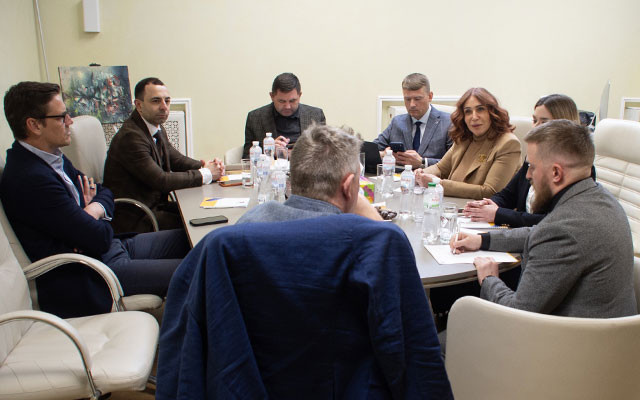
A working meeting was held at the Ukrainian National Bar Association, during which representatives of the advocacy profession, the Ministry of Veterans Affairs of Ukraine and a foreign expert discussed approaches to providing legal aid to veterans, the role of the advocacy profession in this system, and the experience of other countries.
Guarantees of the practice of law
The CJU has endorsed guarantees of the legal profession’s independence and has proposed a meeting with the BCU
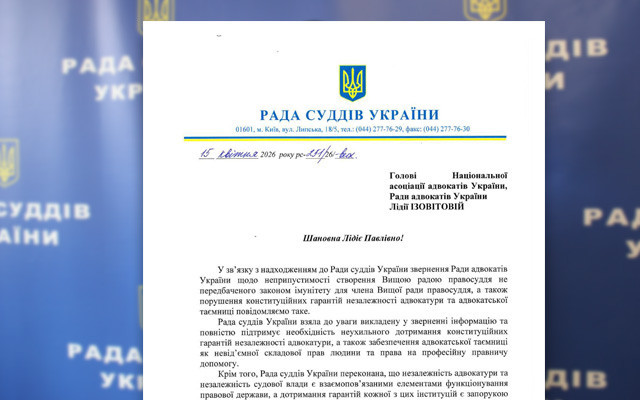
The Council of Judges of Ukraine has responded to a letter from the Bar Council of Ukraine regarding the inadmissibility of the High Council of Justice granting immunity to a member of the High Council of Justice — a privilege not provided for by law — as well as regarding violations of constitutional guarantees of the independence of the legal profession and attorney-client privilege.

Interaction
The UNBA and the Ministry of Veterans are expanding their cooperation
War veterans, their family members, as well as the family members of fallen Defenders of Ukraine are to receive improved access to professional legal assistance and additional opportunities for independent legal protection.

Legislation
Advocates have warned that the draft Labor Code would curtail workers' protections
Certain provisions of the draft Labor Code of Ukraine regarding collective labor disputes undermine labor protections and do not comply with constitutional and international standards.
Legal defence of military personnel
Representatives from the Ministry of Veterans Affairs and the UNBA discussed veterans' access to justice
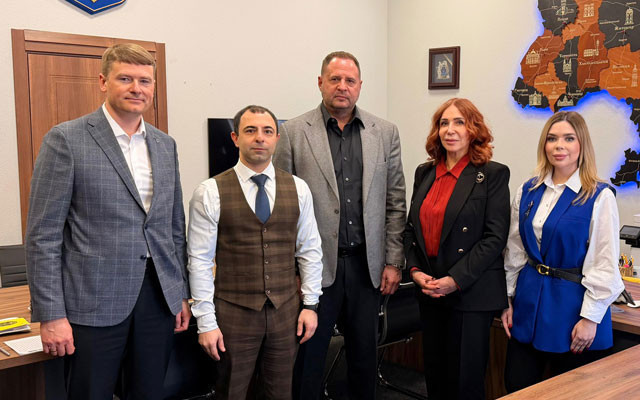
On April 3, a working meeting was held at the Ministry of Veterans Affairs of Ukraine with representatives of the Ukrainian National Bar Association, dedicated to improving the effectiveness of legal protection for war veterans and their families.
Educational events
The right of minors to marry: how judicial oversight works
The issue of granting minors the right to marry lies at the intersection of family law, child protection, and judicial discretion. The UNBA Committee on family law dedicated a webinar held on March 30 to this very topic.
Interaction
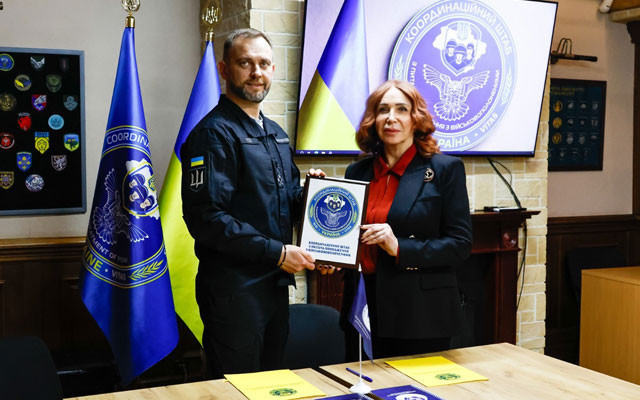
The UNBA and the Coordination headquarters have agreed to cooperate in assisting those released from captivity
Servicemen released from captivity, family members of prisoners of war, civilians deprived of their personal liberty as a result of armed aggression, as well as persons missing in connection with the war, will gain additional opportunities to access legal assistance and protect their rights.

Self-government
BCU: The HCJ’s decisions undermine the constitutional guarantees of the independence of the advocacy profession
The Bar Council of Ukraine has concluded that, in its recent decisions, the High Council of Justice has, without legal grounds, called into question the right of bar self-governing bodies to protect the guarantees of legal practice and has, in effect, attempted to grant one of its members — who retains the status of an advocate — special immunity from the Rules of professional conduct and disciplinary responsibility.
Publications

Volodymyr Matsko Extradition during wartime: when the risks outweigh the request

Volodymyr Matsko Extradition as a systemic form of rights violations

Victoria Yakusha, Law and Business The anti-corruption vertical cannot «take care» of the Bar as an institution, - acting head of the HQDCB

Censor.net Protecting advocates – protecting justice: addressing concerns about the new law

Ihor Kolesnykov A BRIEF SUMMARY REGARDING THE APPLICATION OF THE ORDER ON EXTENDED CONFISCATION IN LATVIA REGARDING FINANCIAL ASSETS OF…

Valentyn Gvozdiy WORKING IN A WAR ZONE

Lydia Izovitova Formula of perfection

Sergiy Vylkov Our judicial system is so built that courts do not trust advocates