Real estate violations: how businesses can protect their assets
Legal violations in the real estate sector are increasingly posing risks not only to property owners but also to legitimate businesses. Shortcomings in registration procedures, abuses by certain entities, and criminal proceedings can lead to the loss or restriction of property rights.
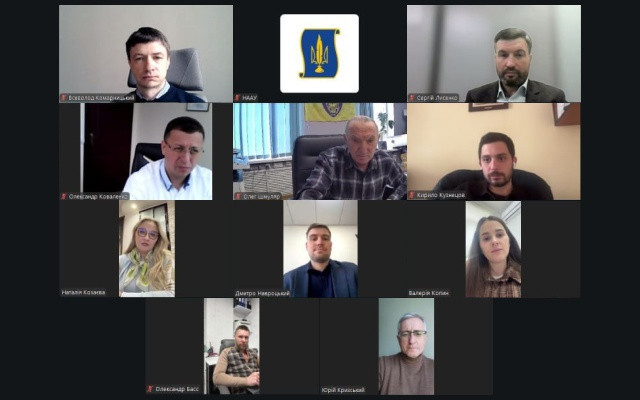
This was discussed by participants at the roundtable «Legal violations in the real estate sector: what threatens businesses and how to respond», organized by the UNBA Committee on business and investor protection. The event was attended by representatives of law enforcement agencies, government bodies, the notary sector, and the advocacy profession.
Opening the discussion, the event’s moderator, deputy chairman of the UNBA Committee on business and investor protection Serhiy Lysenko emphasized that the topic has long since gone beyond purely legal issues. According to him, it directly affects business stability, the investment climate, and the level of trust in the state.
An investigator with the National Police Valeria Kopin highlighted the need for effective cooperation between the police, the prosecutor’s office, and the Ministry of Justice during pre-trial investigations. According to her, in such cases, an investigator cannot work in isolation, as the outcome depends on coordinated actions, information sharing, and the use of oversight tools. One such tool is desk audits, which help identify violations during registration procedures and build a body of evidence.
Chairman of the Kyiv branch of the Notary Chamber of Ukraine Natalia Kozaeva focused on issues of notarial secrecy and the limits of law enforcement interference in notaries’ work. She highlighted the problems of vague requests, disproportionate searches, and the seizure of documents that have no direct connection to criminal proceedings. She also discussed the need to adhere to the principle of proportionality and to distinguish between situations where a notary is a subject of the investigation and those where they are merely a source of information. The speaker also emphasized the importance of conducting preliminary checks on real estate properties before concluding agreements.
The practice of privatizing municipal property through the Prozorro.Sales system was discussed by deputy director of the Kyiv City Department of Municipal Property Vsevolod Komarnytskyi. He assured that the procedures are conducted in accordance with the law; however, the Department faces criminal proceedings regarding privatization properties. He identified «retrospective appraisals» — conducted after the completion of transactions — as a separate issue, noting that, in his view, they cannot objectively reflect the property’s value at the time of sale. Such approaches create legal uncertainty and pose risks for investors.
Deputy chairman of the UNBA Committee on agricultural, land and environmental law Dmytro Navrotskyi presented practical approaches to verifying real estate, particularly land plots, prior to purchase. He outlined three main stages of such a verification: analysis of public registries and case law, a technical inspection involving specialists, and obtaining information from government agencies regarding potential restrictions or encumbrances. According to the advocate, it is precisely this comprehensive approach that helps reduce the risks of property being reclaimed or seized in the future.
Advocate Yuriy Kryzskyi spoke about the shift in the focus of law enforcement agencies from repressive measures to preventive ones. According to him, a biased attitude toward advocates, notaries, and officials involved in privatization processes negatively affects the investment climate and Ukraine’s image.
At the conclusion of the event, S. Lysenko summarized that commercial real estate is a core business asset, but at the same time a source of serious risks. Even bona fide purchasers, he said, are not immune to property seizures, restrictions on use, loss of control over the asset, or pressure from law enforcement agencies. Therefore, the key recommendation for businesses remains thorough due diligence on real estate properties — not only prior to acquisition but also regarding property the business already owns.
Popular news
Legal defence of military personnel
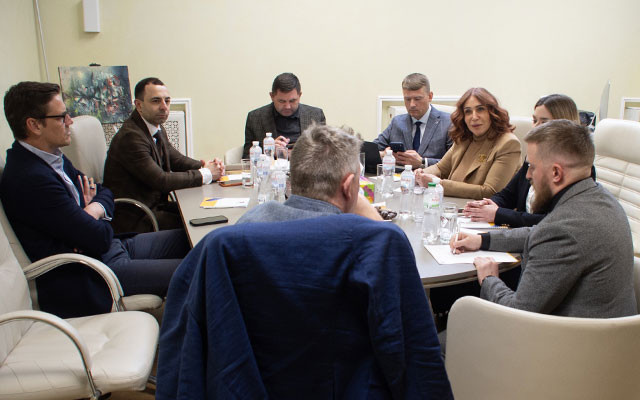
The model for legal assistance to veterans was discussed at the UNBA
A working meeting was held at the Ukrainian National Bar Association, during which representatives of the advocacy profession, the Ministry of Veterans Affairs of Ukraine and a foreign expert discussed approaches to providing legal aid to veterans, the role of the advocacy profession in this system, and the experience of other countries.
Guarantees of the practice of law
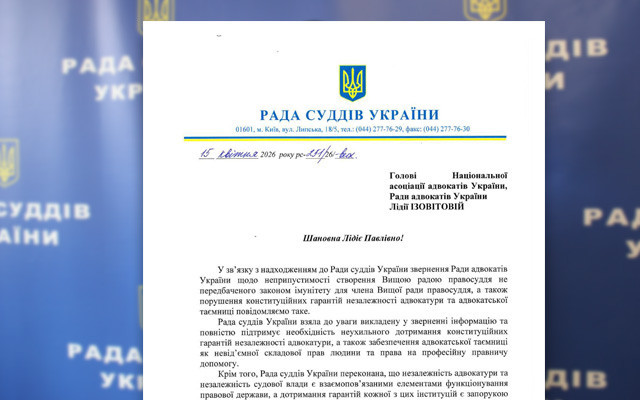
The CJU has endorsed guarantees of the legal profession’s independence and has proposed a meeting with the BCU
The Council of Judges of Ukraine has responded to a letter from the Bar Council of Ukraine regarding the inadmissibility of the High Council of Justice granting immunity to a member of the High Council of Justice — a privilege not provided for by law — as well as regarding violations of constitutional guarantees of the independence of the legal profession and attorney-client privilege.

Interaction
The UNBA and the Ministry of Veterans are expanding their cooperation
War veterans, their family members, as well as the family members of fallen Defenders of Ukraine are to receive improved access to professional legal assistance and additional opportunities for independent legal protection.

Legislation
Advocates have warned that the draft Labor Code would curtail workers' protections
Certain provisions of the draft Labor Code of Ukraine regarding collective labor disputes undermine labor protections and do not comply with constitutional and international standards.
Legal defence of military personnel
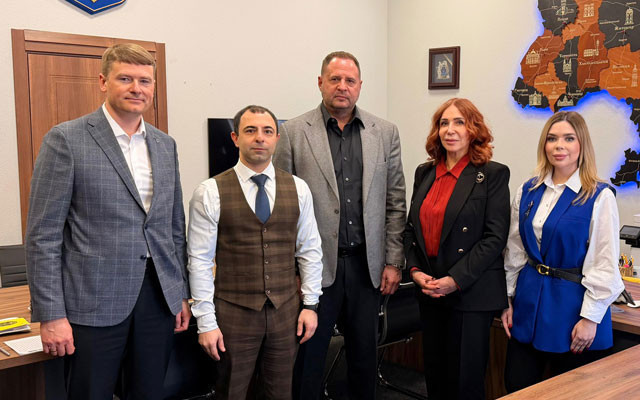
Representatives from the Ministry of Veterans Affairs and the UNBA discussed veterans' access to justice
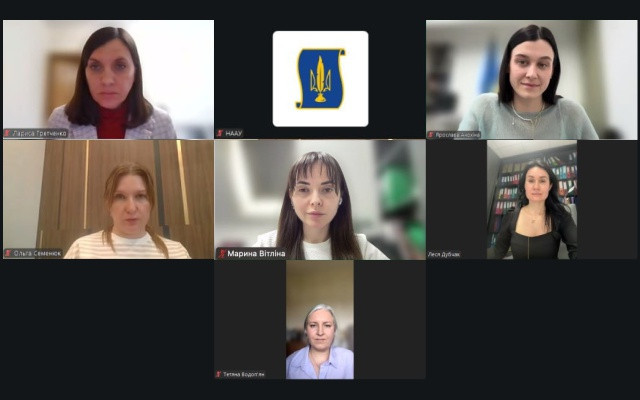
On April 3, a working meeting was held at the Ministry of Veterans Affairs of Ukraine with representatives of the Ukrainian National Bar Association, dedicated to improving the effectiveness of legal protection for war veterans and their families.
Educational events
The right of minors to marry: how judicial oversight works
The issue of granting minors the right to marry lies at the intersection of family law, child protection, and judicial discretion. The UNBA Committee on family law dedicated a webinar held on March 30 to this very topic.
Interaction
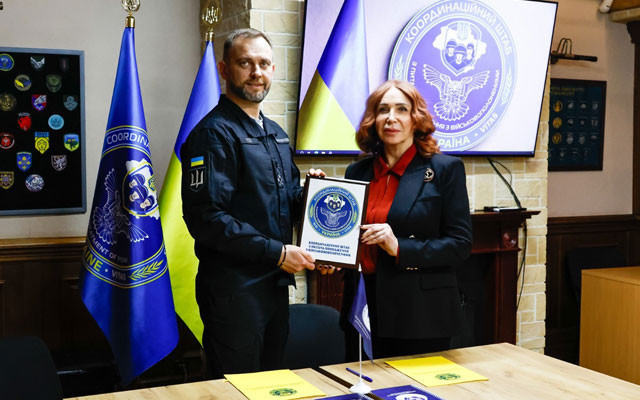
The UNBA and the Coordination headquarters have agreed to cooperate in assisting those released from captivity
Servicemen released from captivity, family members of prisoners of war, civilians deprived of their personal liberty as a result of armed aggression, as well as persons missing in connection with the war, will gain additional opportunities to access legal assistance and protect their rights.

Self-government
BCU: The HCJ’s decisions undermine the constitutional guarantees of the independence of the advocacy profession
The Bar Council of Ukraine has concluded that, in its recent decisions, the High Council of Justice has, without legal grounds, called into question the right of bar self-governing bodies to protect the guarantees of legal practice and has, in effect, attempted to grant one of its members — who retains the status of an advocate — special immunity from the Rules of professional conduct and disciplinary responsibility.
Publications

Volodymyr Matsko Extradition during wartime: when the risks outweigh the request

Volodymyr Matsko Extradition as a systemic form of rights violations

Victoria Yakusha, Law and Business The anti-corruption vertical cannot «take care» of the Bar as an institution, - acting head of the HQDCB

Censor.net Protecting advocates – protecting justice: addressing concerns about the new law

Ihor Kolesnykov A BRIEF SUMMARY REGARDING THE APPLICATION OF THE ORDER ON EXTENDED CONFISCATION IN LATVIA REGARDING FINANCIAL ASSETS OF…

Valentyn Gvozdiy WORKING IN A WAR ZONE

Lydia Izovitova Formula of perfection

Sergiy Vylkov Our judicial system is so built that courts do not trust advocates