

Penalties for errors in military registration require clear rules, – UNBA
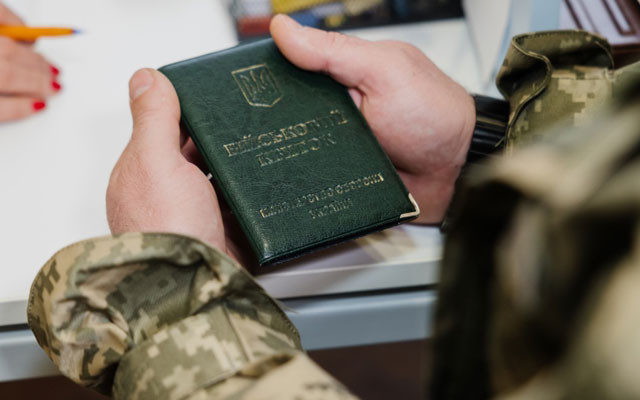
The liability of officials for violations of military registration rules must be legally defined, proportionate, and effectively enforceable. Otherwise, the new fines will not protect citizens from registration errors but will create additional risks.
The Ukrainian National Bar Association submitted comments to the Verkhovna Rada Committee on law enforcement regarding draft law No. 15115 dated March 30, 2026, «On amendments to article 210-1 of the Code of Ukraine on Administrative Offenses regarding liability for violations of military registration rules by officials».
The document proposes imposing a fine of 10,000 non-taxable minimum incomes for «violation by an official of the procedure for maintaining military records of conscripts, persons subject to military service, or reservists, which resulted in the registration of persons who, in accordance with the law, are not subject to military registration as conscripts, persons subject to military service, or reservists».
The UNBA noted that the proper condition of military registration documentation is important not only for manning the armed forces but also for protecting citizens’ rights. This pertains, in particular, to preventing groundless detention, erroneous notification, or the unlawful registration of persons who are not subject to such registration. At the same time, in its proposed version, the draft law contains a number of technical-legal and substantive-legal shortcomings. Without further refinement, the new provision may become ineffective or create risks of violating the principles of legal certainty, proportionality, and the presumption of innocence.
In particular, the UNBA drew attention to the vagueness of the term «official» for the purposes of the new provision. Military registration involves various parties: the head of the enterprise, a human resources employee, the person responsible for employee records, and a mobilization officer. Without clarifying the responsible party, disputes will arise regarding whose specific action or inaction led to the violation.
Reports under Article 210-1 of the Code of Administrative Offenses are drawn up by authorized officials of the TCC and the Special Purpose Unit (SPU). If the new provision is adopted without amendments to Article 255 of the Code of Administrative Offenses, a situation may arise where an official of the TCC must draw up a report regarding an official of the same TCC. The UNBA believes that, with regard to TCC officials, such reports should be drawn up by police officers.
Separately, the advocates noted that a fixed fine deprives the court of the ability to take into account the nature of the offense, the form of guilt, the identity of the offender, financial status, and other circumstances of the case.
It is also necessary to ensure the creation of technical prerequisites for proving guilt. This involves recording in the Unified State Register of Conscripts, Military Service Obligors and Reservists data regarding the person performing the registration action, the date, time, type of action, and the grounds for its performance. Without such a «digital trail», proving the guilt of a specific official will be difficult in many cases. Therefore, the Final Provisions of the draft should require the Ministry of Defense to ensure that the registry mandates the recording of a qualified electronic signature of the person performing the registration action.
In light of the above, the UNBA proposes a comprehensive revision of the draft law: to align it with the Code of Administrative Offenses, the Law «On military duty and military service», as well as subordinate legislation. Only under such conditions can liability become a real, rather than a declarative, instrument for ensuring the proper state of military registration.
The full text of the comments and proposals regarding Draft Law No. 15115 is available at this link.
Popular news
Legislation
The UNBA is counting on the swift ratification of the Convention on the Protection of the Professions of Lawyer
The ratification of the Council of Europe Convention on the Protection of the Professions of Lawyer must be accompanied by targeted amendments to legislation to strengthen safeguards for advocates, but should not be used as a pretext for dismantling the self-governing model of advocacy.
Interaction
A manifesto on AI in law was presented in Europe. The UNBA has joined the initiative
On June 24, as part of European Legal Sovereignty Day, which took place in Brussels, the Manifesto for a Referential of Human Guarantee in the Legal Use of AI was presented.
Court practice
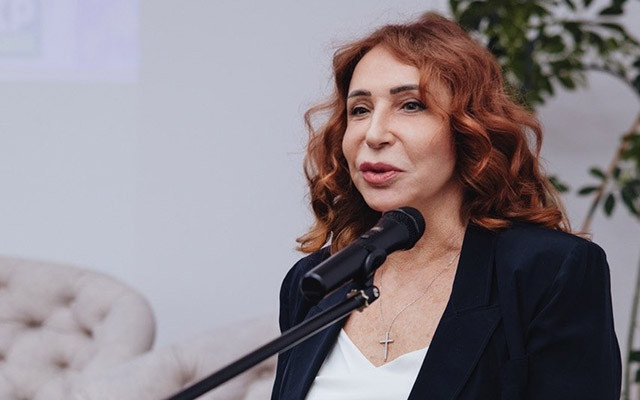
Lidiya Izovitova identified 7 challenges in administrative proceedings for advocates
The predictability of judicial practice, jurisdictional disputes, cassation filters, enforcement of judgments against the state, the burden of proof, written proceedings, and guarantees for the practice of law remain key issues in administrative justice for advocates.
Guarantees of the practice of law
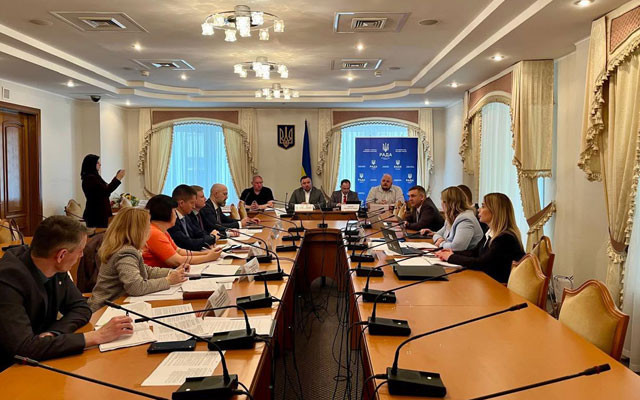
Preparations for the ratification of the Convention on the Protection of the Professions of Lawyer are in the final stages
On June 9, the Verkhovna Rada Committee on legal policy held a working meeting to prepare for the ratification of the Council of Europe Convention on the Protection of the Professions of Lawyer. The Ministry of Justice and the Ukrainian National Bar Association agreed on approaches to draft laws regarding the ratification and implementation of the Convention. Participants have been given 10 days to prepare the draft laws that will be submitted for consideration.
Announcements
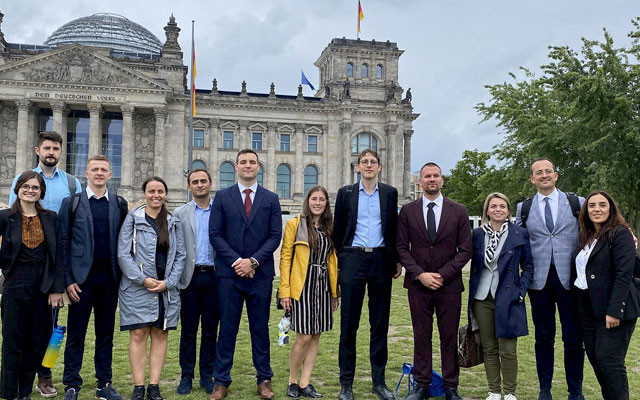
Internships at German law firms: IRZ is accepting applications from Ukrainians
In 2026, the German Foundation for International Legal Cooperation (IRZ) plans to organize a multilateral internship program for young advocates from partner countries. Participants will attend an introductory seminar in Bonn and complete internships at law firms in Germany.
Appointment
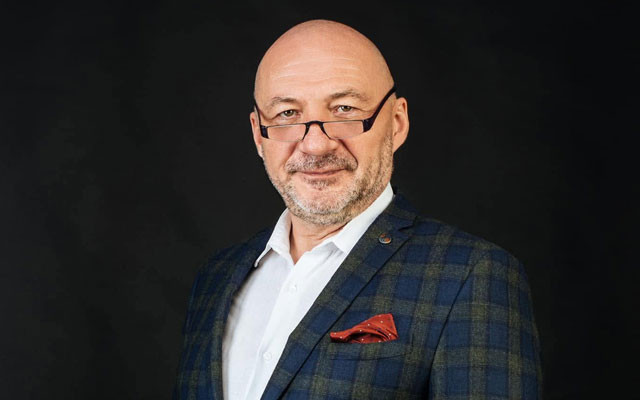
A representative of the UNBA will be stationed in Düsseldorf
By Order No. 159 of the President of the UNBA, BCU, dated June 3, 2026, advocate Vyacheslav Us has been appointed as the representative of the Ukrainian National Bar Association in the Federal Republic of Germany, in the city of Düsseldorf.
Legislation
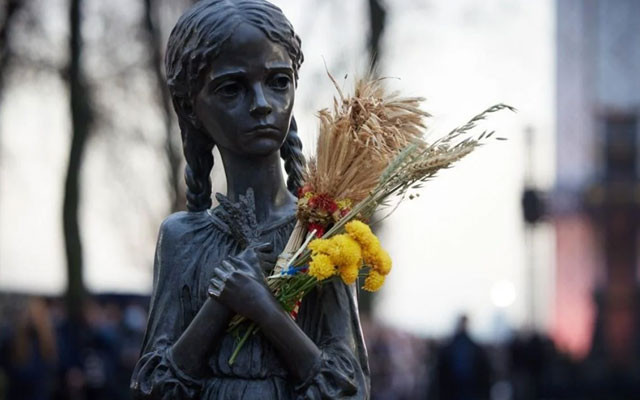
Accountability for denying the Holodomor requires clear boundaries – UNBA
Criminal liability for denying the Holodomor as genocide must be formulated in a way that avoids the risk of arbitrary interpretation of the law. Otherwise, it becomes possible to criminalize not only unlawful acts but also scientific or historical debate.
Guarantees of the practice of law
Restrictions on the right to legal assistance in pretrial detention centers are unacceptable – statement by the BCU
The Bar Council of Ukraine has stated that it is unacceptable to restrict the right to professional legal assistance, the guarantees of legal practice, and the confidentiality of communications between advocates and clients in pretrial detention facilities operated by the State Criminal-Executive Service of Ukraine.
Publications

Volodymyr Matsko Extradition during wartime: when the risks outweigh the request

Volodymyr Matsko Extradition as a systemic form of rights violations

Victoria Yakusha, Law and Business The anti-corruption vertical cannot «take care» of the Bar as an institution, - acting head of the HQDCB

Censor.net Protecting advocates – protecting justice: addressing concerns about the new law

Ihor Kolesnykov A BRIEF SUMMARY REGARDING THE APPLICATION OF THE ORDER ON EXTENDED CONFISCATION IN LATVIA REGARDING FINANCIAL ASSETS OF…

Valentyn Gvozdiy WORKING IN A WAR ZONE

Lydia Izovitova Formula of perfection

Sergiy Vylkov Our judicial system is so built that courts do not trust advocates