When a personal search is lawful: 5 criteria to consider

During a search of a home or office, it is quite common for a representative of the investigative team to also conduct a personal search of the persons present. Such action is permissible, however, subject to certain rules set out in the criminal procedure law.
The other day, the Main Investigation Department of the State Bureau of Investigation conducted a search of an enterprise in one of its office premises. Since the premises belonging to the lawyer were located on the territory, law enforcement officers, in accordance with the law, involved the UNBA Committee on Protection of Advocates' Rights and Guarantees of Legal Practice. Therefore, a representative of this committee, Yevhen Pelikhos, took part in the investigation.
In particular, he said that six hours after the search began, the investigator decided to conduct a personal search of the advocate, which he motivated by the fact that the group had not been opened for about thirty minutes. During the event, personal belongings from the advocate's bag were checked, and a laptop with information about clients was seized. This information was not relevant to the criminal proceedings, but contained the attorney-client privilege. Relevant comments on violations of the guarantees of the practice of law were set out in the report of the investigative action.
Y. Pelikhos reminded that such a personal search is regulated by Part 5 of Article 236 of the CPC, the analysis of which allows to identify five main criteria of its legality:
1.The search must be conducted to the extent necessary to achieve the purpose of the search. A personal search may be carried out only to achieve the purpose of a search that is already underway. In other words, the authorised person, when motivating his/her decision, must convincingly link it to the purpose of the search, within the framework of which the person's home or other property was entered. Any other grounds that are not related to a specific investigative action in accordance with the judge's decision should be declared illegal.
2.Sufficient grounds to believe that the person is hiding items or documents relevant to the criminal proceedings. Not every time an investigator makes an appropriate decision to search a person if there are sufficient grounds. Often, such decisions are made by investigators on an emotional level, with the aim of putting pressure on a person. For example, it is impossible to argue that there are sufficient grounds when, after several hours of searching, the investigator selectively decides to search the contents of a citizen's personal bag only on the grounds that at the beginning of the search the door was not opened for a long time.
3.Sufficiency of grounds to believe that the person is hiding such items or documents on his or her person. Here, the private sphere of a person should be interpreted broadly. The subject of a person's search includes not only items in pockets and clothing, but also the contents of a personal bag, briefcase or package that is directly in the person's hands or near the person and belongs to him or her. In other words, an investigator or prosecutor is not entitled to examine the contents of, for example, a person's personal bag during a «routine search» in the absence of grounds and a decision on a personal search.
4.A person must be searched by persons of the same sex. This rule does not require any special comments, as it is a matter of ensuring the dignity of the person being searched. For example, if there are no women in the investigative team, law enforcement officers are not entitled to inspect the personal belongings of female office workers. Even if there is a reasonable suspicion that they are hiding something.
5.A search of a person is carried out in the presence of a lawyer or representative at the request of such a person. In order to increase the scope of human rights guarantees, the legislator has formulated a procedure according to which a person subjected to a personal search has the right to engage a lawyer other than the one who already provides legal assistance during the search in general and wait for his or her arrival for up to three hours. This guarantee, in our opinion, is effective and helps to prevent disproportionate restriction of human rights.
Popular news

Rule of Law Roadmap
Reform without data and advocacy: what the Ministry of Justice’s launch has revealed
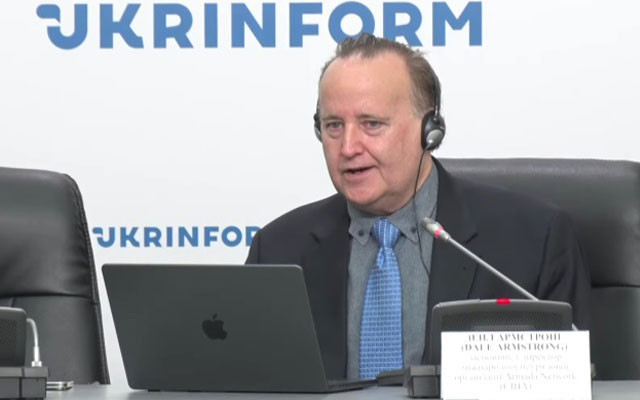
The Ministry of Justice hosted the first meeting of the working group on bar reform. But instead of professional preparation of legislative changes, we saw exactly what Armada Network Director Dale Armstrong had spoken about the day before in Kyiv: not reform, but a struggle for control over the agenda through a narrow circle of “stakeholders” who create an echo chamber of influence for themselves.
Rule of Law Roadmap
Advocacy, European integration and the limits of intervention: an American report presented in Kyiv
Following its presentation in Brussels, the report «The Ukrainian advocacy in the context of the rule of law and European integration» made its way to Kyiv. It highlighted critical issues both in understanding the very nature of the self-governing profession and in the emergence of a «shadow market» surrounding the Ukrainian advocacy.

Rule of Law Roadmap
Organization of advocacy: subgroup agrees on approaches to regulatory reform
On March 13, a meeting was held of the «Organization of the advocacy and self-government» subgroup of the Working Group on the implementation of the Rule of Law Roadmap regarding bar reform. The event was conducted via videoconference.

Guarantees of the practice of law
Ukraine has signed the Convention for the Protection of the Profession of Lawyer
Today, on 9 March, Ukraine's Permanent Representative to the Council of Europe Mykola Tochytskyi signed the Council of Europe Convention for the Protection of the Profession of Lawyer. This makes our country the 28th to sign this important international treaty.

Discussion
Detention as a rule: the UNBA discussed standards for proving risks
The state interferes most intensively with the human right to liberty when choosing a preventive measure. At this stage, the standard of proof of risk becomes the actual measure of the real meaning of the presumption of innocence.
European integration
«Freedom or security» — a false formula: speech by L. Izovitova at the conference of bar presidents
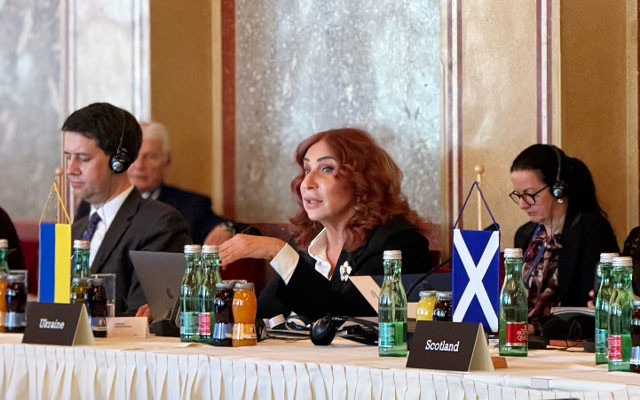
Is the state protecting society from crime today, or is it gradually destroying the rule of law under the guise of this fight? These alarming trends were outlined by the President of the UNBA, BCU Lidiya Izovitova, during her speech at the 54th European Conference of bar presidents.

Discussion
AI in advocacy and justice: ethics, regulation, limits of application
The Ukrainian National Bar Association held a roundtable discussion entitled «Artificial Intelligence in the цork of advocates: ethics, responsibility, legal process engineering». Participants discussed how artificial intelligence systems are already being used in the professional activities of advocates and where the ethical boundaries of what is permissible lie.

European integration
The Roadmap does not provide for the dismantling of the current model of advocacy — report
The Roadmap on the rule of law is not a law, directive, or other binding regulatory act and, accordingly, does not establish direct legal obligations regarding a specific institutional model of bar self-government.
Publications

Volodymyr Matsko Extradition during wartime: when the risks outweigh the request

Volodymyr Matsko Extradition as a systemic form of rights violations

Victoria Yakusha, Law and Business The anti-corruption vertical cannot «take care» of the Bar as an institution, - acting head of the HQDCB

Censor.net Protecting advocates – protecting justice: addressing concerns about the new law

Ihor Kolesnykov A BRIEF SUMMARY REGARDING THE APPLICATION OF THE ORDER ON EXTENDED CONFISCATION IN LATVIA REGARDING FINANCIAL ASSETS OF…

Valentyn Gvozdiy WORKING IN A WAR ZONE

Lydia Izovitova Formula of perfection

Sergiy Vylkov Our judicial system is so built that courts do not trust advocates