


«Freedom or security» — a false formula: speech by L. Izovitova at the conference of bar presidents
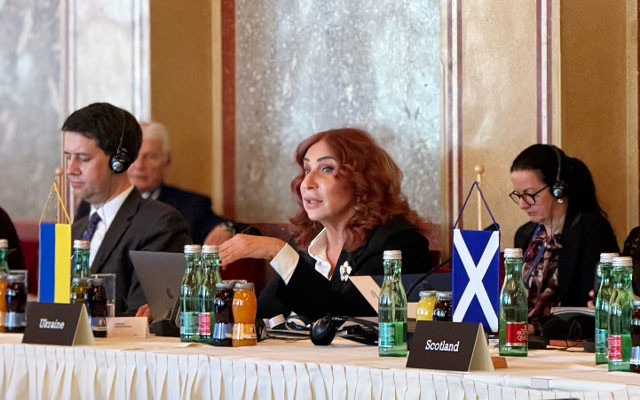
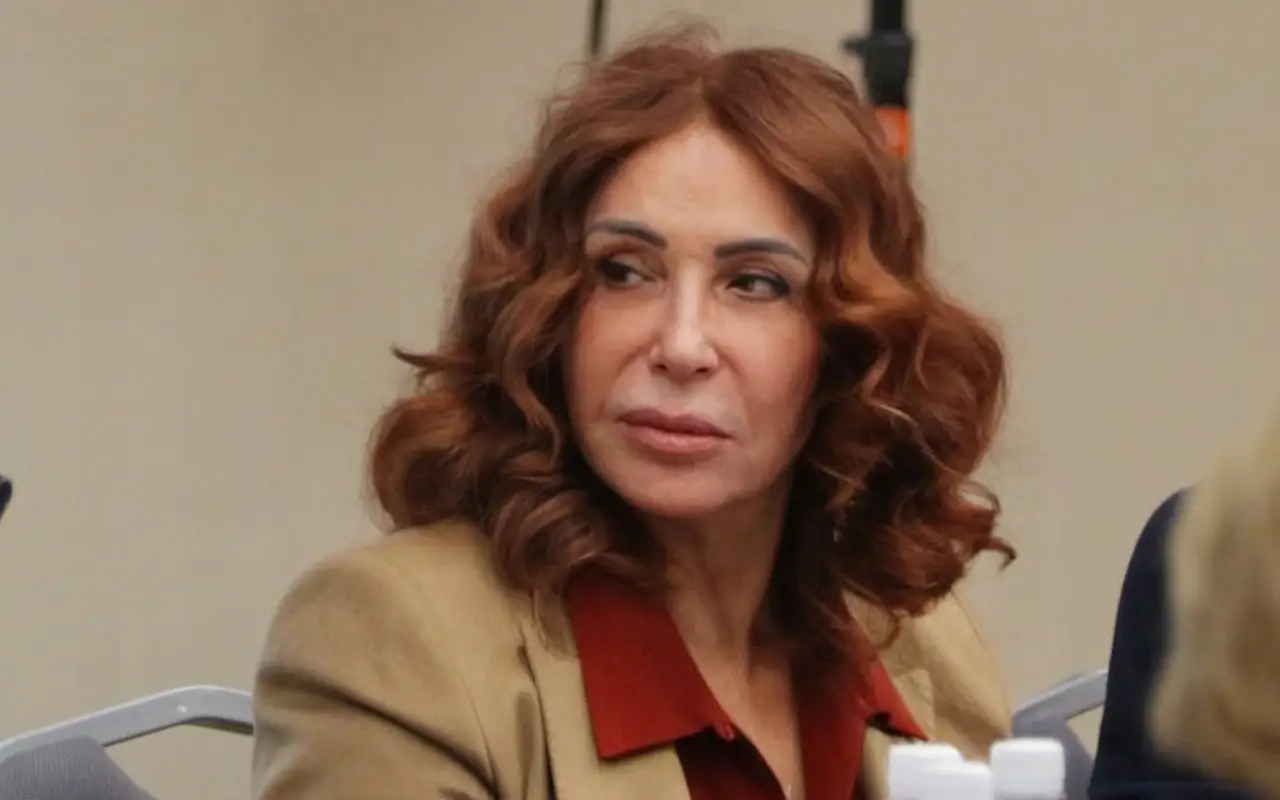
Is the state protecting society from crime today, or is it gradually destroying the rule of law under the guise of this fight? These alarming trends were outlined by the President of the UNBA, BCU Lidiya Izovitova, during her speech at the 54th European Conference of bar presidents.
The event, which is currently taking place in Vienna, has traditionally brought together leaders of the legal profession from around the world.
The chairman of the UNBA noted that the strongest pressure on human rights today comes from those states that, under the banner of security, allow themselves extraordinary powers and increasingly widespread interference in human rights. «We are often offered a simple formula: freedom or security. But from a legal point of view, this formula is flawed, - noted L. Izovitova. - Human rights were not created for peaceful times. They were created precisely for moments of danger. For situations in which the state is tempted to act quickly, harshly, and without proper restrictions and control».
She pointed out that legal practice in Europe and around the world demonstrates a recurring pattern. It is the fight against these threats that becomes the basis for expanding surveillance, weakening judicial control, and narrowing procedural guarantees.
L. Izovitova also cited several examples. In Italy, the long-standing fight against mafia structures led to the introduction of special regimes and extraordinary control instruments, which over time began to affect the sphere of the right to defense. In the European Union, under the banner of combating serious and organized crime, mass data storage was introduced, covering millions of people, most of whom had no connection to crime. In the United Kingdom, the expansion of electronic and mass surveillance powers was a response to the threats of terrorism and organized crime, which again called into question the limits of privacy and professional secrecy. In the field of anti-money laundering, advocacy in many countries has faced systematic pressure on attorney-client privilege under the pretext of combating financial crime.
«In each of these cases, the logic was similar. Security demanded concessions. And the first to come under pressure was the legal process. Unfortunately, Ukraine is no exception to this trend», - concluded the President of the UNBA, BCU.
She noted direct and systematic interference in the activities of lawyers. «They are monitored not only by law enforcement agencies, but also by representatives of the media. On television, on social media, and in the public sphere, materials appear in which advocates are publicly portrayed as criminals or accomplices, while in fact they are simply carrying out their legal activities and fulfilling their constitutional function of providing defense. This is not freedom of speech. This is a gross interference in the independence of the legal profession and a direct undermining of the right to defense», - warns L. Izovitova. At this point, in her view, the state and society cease to see advocates as institutional guarantors. Advocates begin to be perceived as a threat, an obstacle, part of the problem.
At the same time, the very logic of criminal proceedings is changing. People are increasingly less likely to be perceived as bearers of rights. And more and more often — as a potential threat. «The presumption of innocence is becoming declarative. The right to defense — burdensome. The court risks becoming a formality that merely confirms decisions made in advance. It is in this context that the true role of advocacy becomes apparent. But advocacy is not opposed to security, - the President of the UNBA, BCU is convinced. - Advocacy is an institutional safeguard against security becoming an excuse for denying rights».
Izvytova also recalled the adoption by the Council of Europe of the Convention for the Protection of the Profession of Lawyer, which enshrines what the advocacy community has been defending for decades: the independence of advocates, protection from interference, guarantees of professional secrecy, and unconditional recognition of the role of advocates in the justice system.
«We must make full use of this tool, - says the President of the UNBA, BCU. - Not declaratively, but practically: refer to the Convention in national courts, use it in international protection mechanisms, make it part of professional and legal discourse. Because this is not a matter of corporate interests. It is a matter of preserving the rule of law».
«Perhaps the real conflict today is not between freedom and security, but between the rule of law and the temptation to postpone it «until better times». And it is precisely this conflict that advocacy must respond to. Because a state that loses its ability to restrain itself ultimately loses both freedom and security. And a law that cannot withstand pressure ceases to be a law», - concluded L. Izovitova.
Popular news

Legislation
The Verkhovna Rada is preparing a bill to implement the Convention on the Protection of the Professions of Lawyer
Members of Parliament plan to introduce a bill in the near future to implement the main provisions of the Council of Europe Convention on the Protection of the Professions of Lawyer. This parliamentary initiative may also prompt the government to expedite the preparation of the ratification package.
Legislation
The path to ratification of the Convention must not end in yet another delay — L. Izovitova
Ukraine’s preparations for the ratification of the Council of Europe Convention on the Protection of the Professions of Lawyer have already passed key stages. Now, government institutions must submit the matter to the Verkhovna Rada for consideration. In doing so, Ukraine may complete the ratification process faster than EU member states.
Guarantees of the practice of law
Ukraine could be the first to implement a European mechanism for the protection of advocates. What’s holding it back?
Ukraine has a chance to be the first country to ratify the Council of Europe Convention on the Protection of the Professions of Lawyer. Political support for this exists, but the government’s legislative package has not yet been submitted to parliament. Meanwhile, the number of violations of advocates’ rights is on the rise.

Educational events
How can an advocate verify that work has been completed if the client refuses to sign the report?
When billing by the hour, the primary document for determining the fee may be a detailed report on the time spent by the advocate and the work performed. To prevent the client from withholding payment, the contract should specify in advance the procedure for submitting and approving such a report.
Self-government
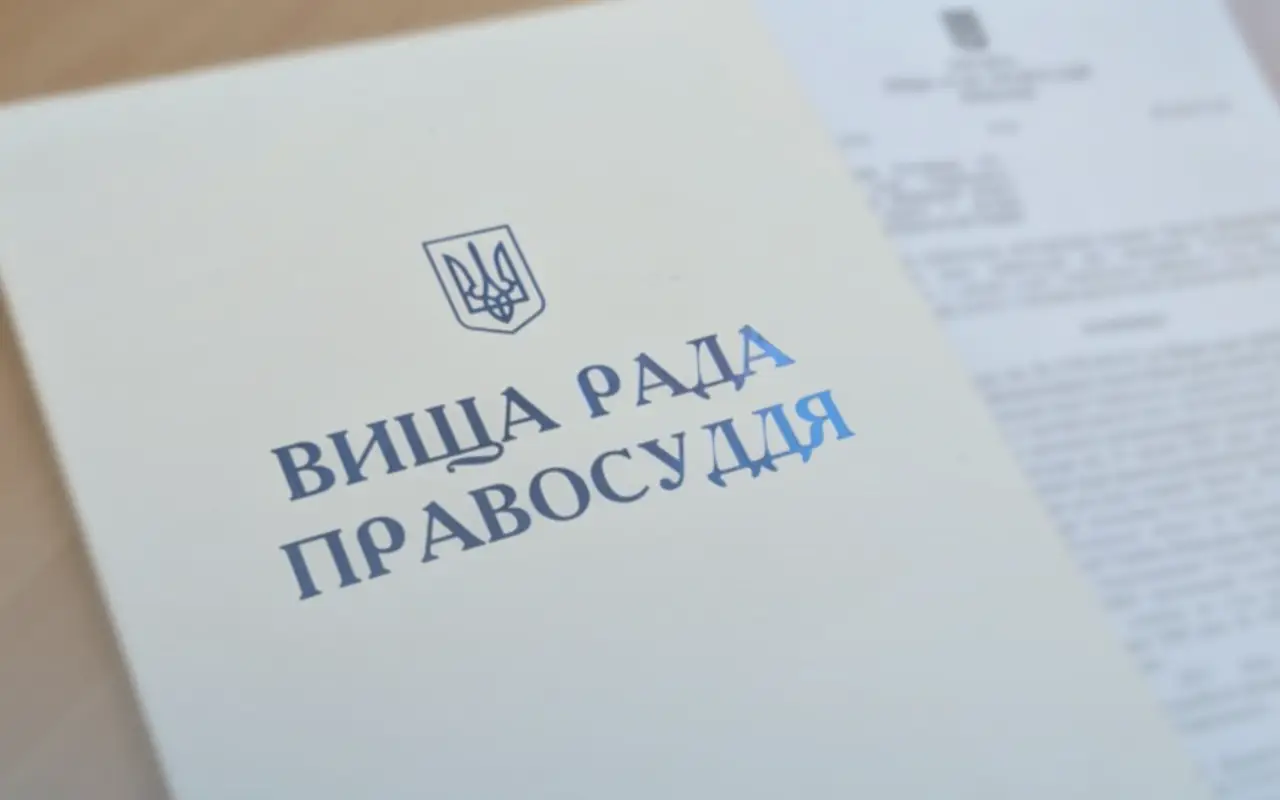
The BCU took note of the public appeal from the HCJ
The Bar Council of Ukraine has determined that, given the current security situation, it is objectively impossible to hold, in accordance with the procedure established by the Law «On the advocacy and the practice of law», meetings of advocates, regional conferences of advocates and the Congress of Ukrainian Advocates, including for the purpose of electing two members of the High Council of Justice under the quota allocated to the Congress of Ukrainian Advocates.
War
The BCU has launched a digital project «Wall of Remembrance and Honor»
The Bar Council of Ukraine has adopted a resolution to launch the digital project «Wall of Remembrance and Honor». To this end, the UNBA is beginning to collect information on advocates and paralegals who lost their lives as a result of the Russian Federation’s armed aggression against Ukraine.
Legal defence of military personnel
«Advocate+» has expanded its operations to 18 military units
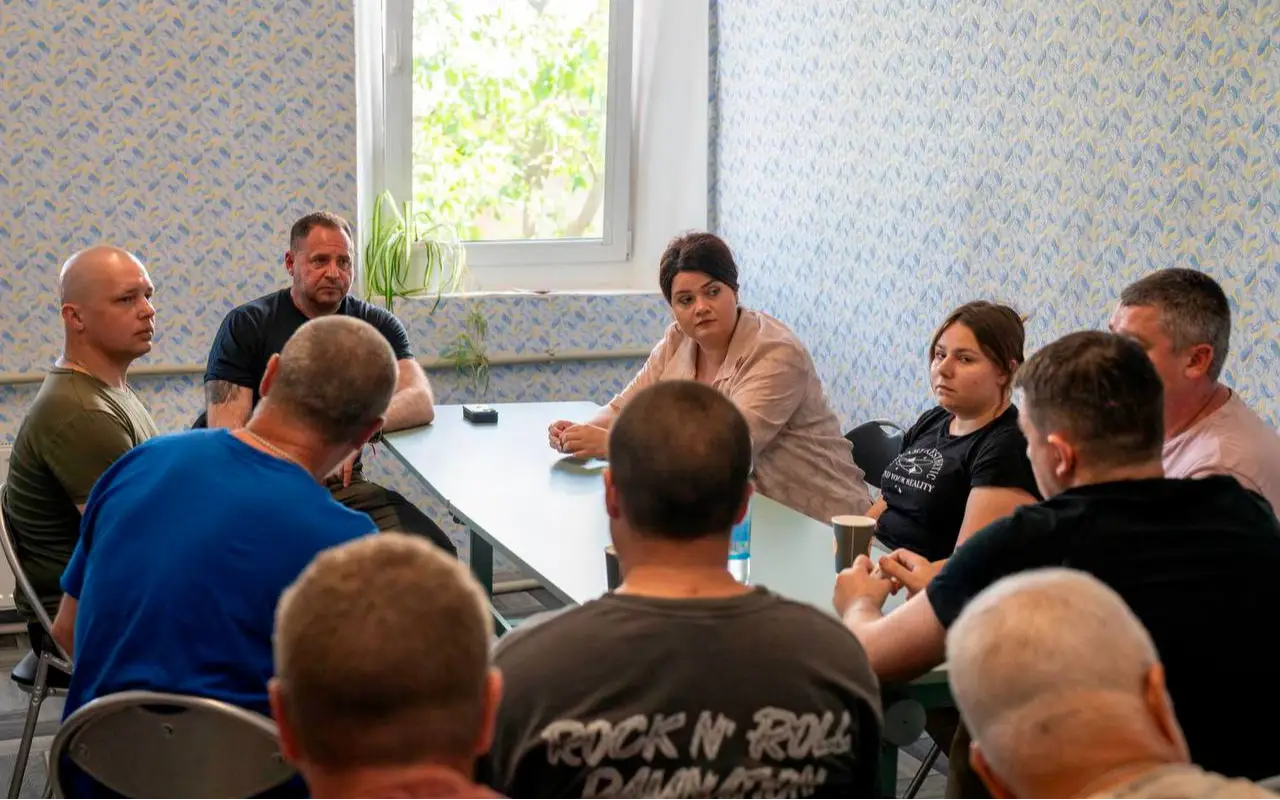
The «Advocate+» project of the Ukrainian National Bar Association, which assigns advocates to military units, has expanded its operations to 18 units. Specialists have already been assigned to the new participants and are set to begin consultations next week.
Edition
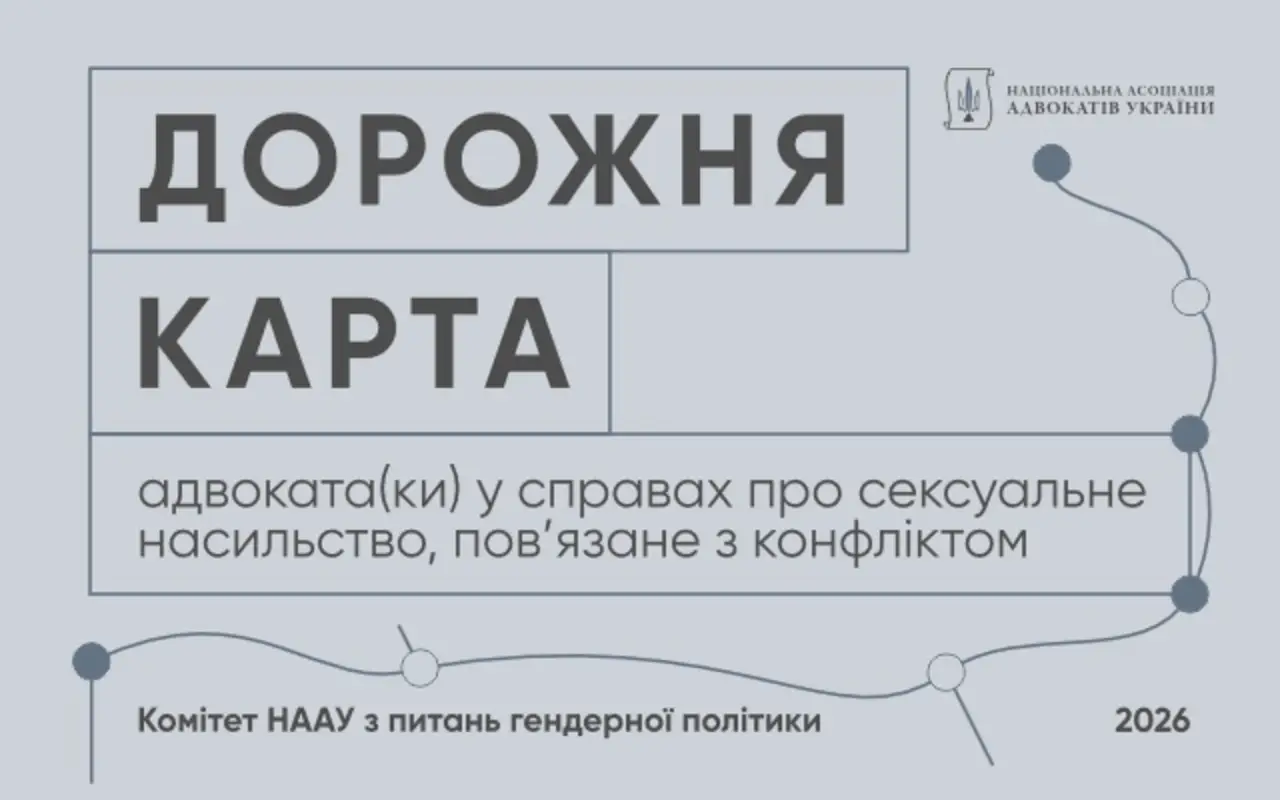
A roadmap for the CRSV cases has been prepared for the advocates
The UNBA Committee on gender policy has prepared a Roadmap for cases of Conflict-Related Sexual Violence.
Publications

Vasyl Kolishnyi, «Law and Business» Supporting mental health should become part of the professional culture of the Bar, - H. Udovenko

Volodymyr Matsko Extradition during wartime: when the risks outweigh the request

Volodymyr Matsko Extradition as a systemic form of rights violations

Victoria Yakusha, Law and Business The anti-corruption vertical cannot «take care» of the Bar as an institution, - acting head of the HQDCB

Censor.net Protecting advocates – protecting justice: addressing concerns about the new law

Ihor Kolesnykov A BRIEF SUMMARY REGARDING THE APPLICATION OF THE ORDER ON EXTENDED CONFISCATION IN LATVIA REGARDING FINANCIAL ASSETS OF…

Valentyn Gvozdiy WORKING IN A WAR ZONE

Lydia Izovitova Formula of perfection