7 FAQs about access to the legal profession in Poland

Poland is the European country to which perhaps the largest number of Ukrainians have left after February 24, 2022. Among those who are forced to stay abroad because of the war are attorneys. What should they consider in order to realize themselves professionally there?
At the end of 2023, Serhii Barbashyn, Chairman of the UNBA NextGen Youth Committee, held a working meeting with Mykola Piotrzak, Dean of the Warsaw Bar Council (Okręgowa Rada Adwokacka w Warszawie). The meeting resulted, among other things, in an agreement to have Polish lawyers prepare recommendations for their Ukrainian colleagues. The Youth Committee collected and systematized the most common questions, and the Warsaw Bar Council provided answers to them.
Here is a list of questions and answers to them:
1. What are the differences between a lawyer and an attorney in Poland?
Access to the profession is regulated:
- attorney (adwokat) - the Act of May 26, 1982 on the Bar;
- legal counsel (radcy prawnego) - by the Act of July 6, 1982 on the activities of legal counsels.
2. Which authorities are responsible for regulating the access of foreigners to the legal profession?
Applications of foreigners for inclusion in the register of advocates and the register of foreign lawyers in Poland are considered by the District Bar Councils on the basis of the Act on the Bar and the Act on the provision of legal aid by foreign lawyers in the Republic of Poland.
3. What are the rules of access to the legal profession for foreigners?
If you have a Ukrainian lawyer's license, you can apply for inclusion in the list of foreign lawyers from third countries (non-EU countries) in Poland. The file with the requirements for inclusion in the list of foreign lawyers from third countries for applicants from Ukraine can be found here.
When applying for inclusion in the list of foreign lawyers from third countries, it is not necessary to pass an exam in Polish law and Polish language, nor is it necessary to complete an internship.
At the same time, there is no simplified procedure for Ukrainians, including those under temporary protection, to access the legal profession.
4. What are the differences between the statuses of a foreign lawyer and a Polish lawyer?
After being included in the list of foreign lawyers from third countries, this person is entitled to provide legal advice and prepare legal opinions only on matters of home country law or international law pursuant to Article 18 of the Act of July 5, 2002 on the provision of legal aid by foreign lawyers in the Republic of Poland.
5. Can Ukrainians who have the status of a foreign lawyer in Poland apply for inclusion in the list of advocates?
A foreign lawyer from Ukraine cannot apply for inclusion in the list of lawyers in Poland even after three years of practice in the country, as this right is available only to foreign lawyers from the European Union.
6. Under what conditions can a Ukrainian lawyer become a lawyer in Poland?
The only way for a lawyer from Ukraine to be included in the list of lawyers in Poland is to complete the lawyer's internship and pass the bar exam.
7. Who can be exempted from the internship before taking the bar exam?
The following persons may take the bar exam without completing the internship:
- Doctors of Law;
- persons who for at least 4 years within a period not exceeding 6 years prior to the submission of the application for admission to the bar exam have been employed as a court clerk, senior court clerk, assistant prosecutor, assistant judge or have worked in the Supreme Court, the Constitutional Tribunal or an international judicial body, especially in the Constitutional Court of the European Union or the European Court of Human Rights and performed tasks corresponding to the position of an assistant judge;
- persons who, after graduating from the law faculty of a higher education institution for a period of at least 4 years and no later than 6 years prior to applying for admission to the bar exam, performed activities requiring legal knowledge under an employment contract or a civil law contract, activities directly related to the provision of legal aid, as an attorney or legal advisor meeting the requirements of the Law on the Bar or a firm of attorneys meeting the requirements of the Law of July 6, 1982 «On Legal Advisors»;
- persons who, after obtaining a higher legal education, have worked in public authorities for at least 4 years for a period not exceeding 6 years prior to applying for admission to the bar exam and have performed activities requiring legal knowledge related to the provision of legal aid to these authorities;
- persons who, upon completion of the internship, worked for at least 4 years within a period not exceeding 6 years prior to applying for admission to the exam in governmental authorities or governmental organizations and performed activities requiring legal knowledge related to the development of laws, regulations or local governmental acts;
- persons who have passed the judicial, prosecutorial, notarial or bailiff exam;
- persons holding the position of advisers to the Prosecutor General of the Republic of Poland;
- persons who have not applied for inclusion in the list of advocates within the period specified in Article 69b of the Act on the Bar;
- persons referred to in Article 73(2) of the Act on the Bar.
Аби першим отримувати новини адвокатури, підпишіться на канал Національної асоціації адвокатів України у Telegram.
Popular news
Rule of Law Roadmap
Reform without data and advocacy: what the Ministry of Justice’s launch has revealed
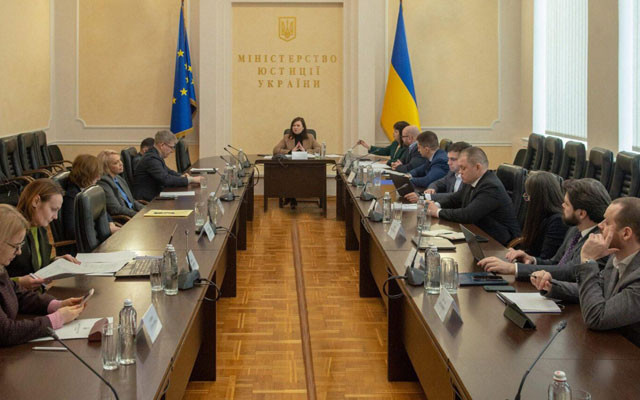
The Ministry of Justice hosted the first meeting of the working group on bar reform. But instead of professional preparation of legislative changes, we saw exactly what Armada Network Director Dale Armstrong had spoken about the day before in Kyiv: not reform, but a struggle for control over the agenda through a narrow circle of “stakeholders” who create an echo chamber of influence for themselves.
Rule of Law Roadmap
Advocacy, European integration and the limits of intervention: an American report presented in Kyiv
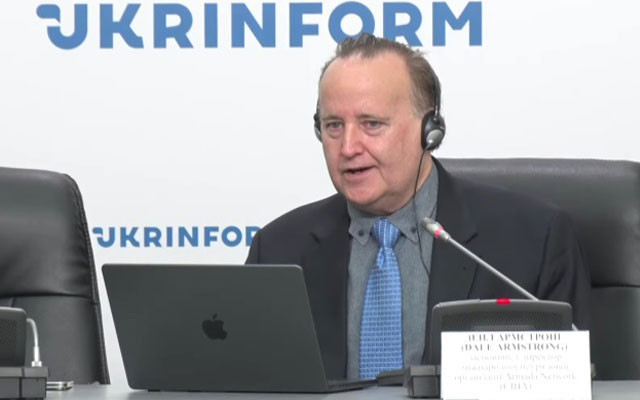
Following its presentation in Brussels, the report «The Ukrainian advocacy in the context of the rule of law and European integration» made its way to Kyiv. It highlighted critical issues both in understanding the very nature of the self-governing profession and in the emergence of a «shadow market» surrounding the Ukrainian advocacy.
Rule of Law Roadmap
Organization of advocacy: subgroup agrees on approaches to regulatory reform
On March 13, a meeting was held of the «Organization of the advocacy and self-government» subgroup of the Working Group on the implementation of the Rule of Law Roadmap regarding bar reform. The event was conducted via videoconference.
Guarantees of the practice of law
Ukraine has signed the Convention for the Protection of the Profession of Lawyer
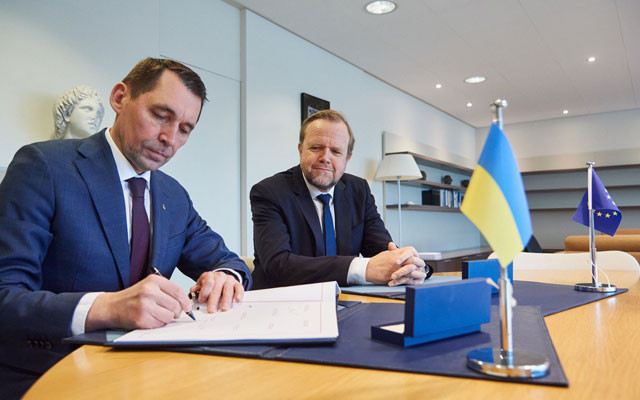
Today, on 9 March, Ukraine's Permanent Representative to the Council of Europe Mykola Tochytskyi signed the Council of Europe Convention for the Protection of the Profession of Lawyer. This makes our country the 28th to sign this important international treaty.

Discussion
Detention as a rule: the UNBA discussed standards for proving risks
The state interferes most intensively with the human right to liberty when choosing a preventive measure. At this stage, the standard of proof of risk becomes the actual measure of the real meaning of the presumption of innocence.
European integration
«Freedom or security» — a false formula: speech by L. Izovitova at the conference of bar presidents
Is the state protecting society from crime today, or is it gradually destroying the rule of law under the guise of this fight? These alarming trends were outlined by the President of the UNBA, BCU Lidiya Izovitova, during her speech at the 54th European Conference of bar presidents.
Discussion
AI in advocacy and justice: ethics, regulation, limits of application
The Ukrainian National Bar Association held a roundtable discussion entitled «Artificial Intelligence in the цork of advocates: ethics, responsibility, legal process engineering». Participants discussed how artificial intelligence systems are already being used in the professional activities of advocates and where the ethical boundaries of what is permissible lie.
European integration
The Roadmap does not provide for the dismantling of the current model of advocacy — report
The Roadmap on the rule of law is not a law, directive, or other binding regulatory act and, accordingly, does not establish direct legal obligations regarding a specific institutional model of bar self-government.
Publications

Volodymyr Matsko Extradition during wartime: when the risks outweigh the request

Volodymyr Matsko Extradition as a systemic form of rights violations

Victoria Yakusha, Law and Business The anti-corruption vertical cannot «take care» of the Bar as an institution, - acting head of the HQDCB

Censor.net Protecting advocates – protecting justice: addressing concerns about the new law

Ihor Kolesnykov A BRIEF SUMMARY REGARDING THE APPLICATION OF THE ORDER ON EXTENDED CONFISCATION IN LATVIA REGARDING FINANCIAL ASSETS OF…

Valentyn Gvozdiy WORKING IN A WAR ZONE

Lydia Izovitova Formula of perfection

Sergiy Vylkov Our judicial system is so built that courts do not trust advocates