


SAP's statement about judge-lawyer mafia will be evaluated by the QDCP
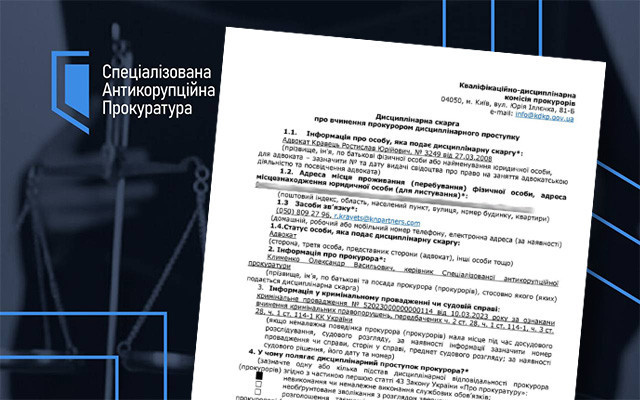
Public generalizations about a person's guilt contained in a publication of the Specialized Anti-Corruption Court violate the presumption of innocence, indicate improper performance of duties by the head, defame the title of prosecutor, and are grounds for disciplinary liability.
Advocate Rostyslav Kravets filed a complaint with the Qualification and Disciplinary Commission of Prosecutors.
In early April, the High Anti-Corruption Court, at the request of a prosecutor from the Specialized Anti-Corruption Court, imposed a preventive measure of detention on the suspected judge. The judge is suspected of allegedly being part of a group that helped men subject to military service to illegally travel abroad and receive a deferral from mobilization.
After the HACC meeting, the SAP telegram channel published a post with the headline «HACC imposed a preventive measure on a sitting judge - a member of the judicial and lawyer mafia in Odesa region».
This publication was the basis for filing a complaint with the QDCP, since, as the applicant noted, the application of a preventive measure is not a basis for such public generalizations about a person's guilt.
According to the Constitution and the CPC, a person is presumed innocent of committing a criminal offense and cannot be subjected to criminal punishment until his or her guilt is proven in accordance with the procedure provided for by the CPC and established by a court verdict that has entered into force. Therefore, charging a person whose guilt in committing a criminal offense has not been established by a court verdict that has entered into force is a direct violation of the presumption of innocence.
In addition, the complaint states that the content of the publication undermines the prestige of the bar and legal profession in general in the country, which leads to a loss of respect and trust in this institution. At the same time, the SAP with these statements commits actions that actually discredit the judiciary.
According to the Regulation on the SAP, its head is responsible for general management of the SAP, determines the main activities of its structural units, organizes, directs and controls the work of subordinate employees. At the same time, the SAP employees are responsible for violation of the Prosecutor's Oath, the Code of Professional Ethics and Conduct of Prosecutors, and official and labor discipline.
Since the Specialized Anti-Corruption Court is currently headed by Oleksandr Klymenko, the complainant believes that he is responsible for the unacceptable behavior of the body. In particular, it is a violation of the requirements stipulated by Article 19 of the Law “On the Prosecutor's Office”, Articles 11, 16, 21 of the Code of Professional Ethics and Conduct of Prosecutors, which manifested itself in the admission of unprofessional behavior that discredits the SAP as a prosecutorial body in the eyes of citizens, and the commission of actions that discredit the title of prosecutor and may raise doubts about his objectivity, impartiality and independence, as well as the honesty and integrity of the prosecutor's office.
In view of the above, the lawyer asks the QDCP to bring O. Klymenko to disciplinary responsibility in the form of dismissal.
Popular news

Legislation
Proceedings against military personnel following AWOL require clear deadlines — UNBA
A soldier’s return to duty after AWOL does not necessarily mean the end of criminal proceedings. To ensure that the case does not remain at the pretrial investigation stage, a clear procedure for the investigator and prosecutor is required.

Guarantees of the practice of law
Guarantees for advocacy without protective measures: proposed changes to the codes
The current law sets forth the rights and guarantees of the legal profession, but lacks the tools to protect them. The future law on advocacy is intended to fill this gap through amendments to criminal, administrative and procedural legislation.
Legislation
A bill implementing the Convention on the Protection of the Professions of Lawyer has been introduced
The constitutional guarantees of legal aid, defense, and the independence of advocacy cannot be realized without protecting advocates from unwarranted interference in their professional activities, including searches, the seizure of professional materials and the use of criminal procedural mechanisms to exert pressure.
Abroad
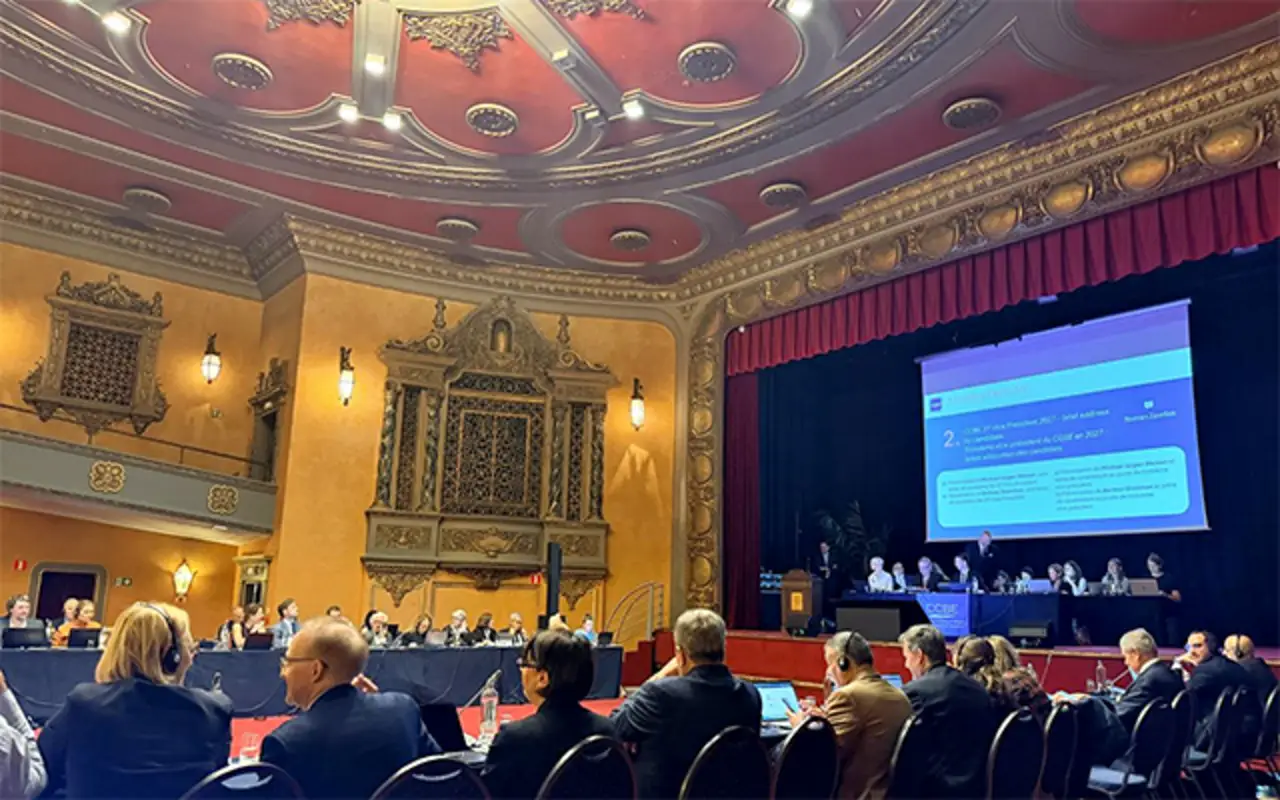
The CCBE is discussing European justice and issues related to the protection of advocates
Today, October 2, a meeting of the Standing Committee of the Council of Bars and Law Societies of Europe (CCBE) is taking place in Brussels. On the agenda are the protection of the advocate profession, the rule of law, attorney-client privilege, and changes in the European justice system.

Rule of Law Roadmap
The UNBA presented the key provisions of the future law on advocacy in Brussels
The Ukrainian National Bar Association presented its proposals for the upcoming law on advocacy, aligned with the Rule of Law Roadmap. The presentation covered topics such as access to the profession, self-governance, disciplinary procedures, professional development and guarantees for the practice of advocacy.

Discussion
First the return of assets, then subsidiary liability — an opinion
In bankruptcy cases, the legal entity’s ability to preserve and restore the financial foundation of its operations requires legal protection. In this regard, the right to solvency in which the legal entity is the aggrieved party should be an independent object of legal protection.

Educational events
Advocates were taught to voice their complaints without making accusations
In a difficult conversation, it’s easy to confuse facts with opinions, feelings with accusations, and requests with demands. How can you express dissatisfaction, explain your own needs, and propose a specific solution while still allowing your conversation partner the opportunity to refuse or suggest an alternative?

Guarantees of the practice of law
Search of an advocate's office after client's acquittal: criminal complaint filed
In Kyiv, law enforcement officers conducted a search of the home of an advocate who had defended a client acquitted by the court and seized materials from the advocate’s case file. The proceedings were initiated shortly after the acquittal, even though the document they were searching for was already included in the court case file.
Publications

Vasyl Kolishnyi, «Law and Business» Supporting mental health should become part of the professional culture of the Bar, - H. Udovenko

Volodymyr Matsko Extradition during wartime: when the risks outweigh the request

Volodymyr Matsko Extradition as a systemic form of rights violations

Victoria Yakusha, Law and Business The anti-corruption vertical cannot «take care» of the Bar as an institution, - acting head of the HQDCB

Censor.net Protecting advocates – protecting justice: addressing concerns about the new law

Ihor Kolesnykov A BRIEF SUMMARY REGARDING THE APPLICATION OF THE ORDER ON EXTENDED CONFISCATION IN LATVIA REGARDING FINANCIAL ASSETS OF…

Valentyn Gvozdiy WORKING IN A WAR ZONE

Lydia Izovitova Formula of perfection