How to formalize discharge from military service: practical workshop

The issue of discharge from military service remains one of the most pressing and complex for Ukrainian defenders and their families. Due to constant changes in legislation, military personnel often face refusals to discharge them from service or even to consider their reports.
To help navigate the intricacies of the procedure, advocate Daria Tarasenko, at the invitation of the Ivano-Frankivsk Regional Bar Association and the UNBA NextGen - UNBA NextGen in Ivano-Frankivsk Region, held an event to improve the professional level of advocates in the region, at which she revealed the key aspects of discharge under current legislation.
According to the speaker, the main mistake many people make is confusing the right to deferment with the right to discharge. Only those subject to military service can exercise the right to deferment. However, once a person subject to military service becomes a military serviceman, there can be no deferment, even if his family circumstances correspond to the description given in the law. After mobilization, the only option is discharge from military service, the grounds for which are specified in Article 26 of the Law «On military duty and military service». For the same reason, it is completely inappropriate to rely on information found on the Internet about deferment from conscription.
The grounds and procedure for dismissal from military service are regulated by the Law «On military duty and military service», the Law «On the statute of internal service of the Armed Forces of Ukraine», the Regulations on the Military Service of Citizens of Ukraine in the Armed Forces of Ukraine, approved by Presidential Decree No. 1153/2008 of December 10, 2008 No. 1153/2008, the Instructions on the Organization of the Implementation of these Regulations (Order of the Minister of Defense dated April 10, 2009, No. 170), and other normative acts. In this case, the rules in force at the time of dismissal must be applied. For the same reason, it may be a mistake to use court practice without taking into account whether the rules applied by the court are currently in force.
D. Tarasenko drew attention to the fact that the aforementioned Instruction applies to the Armed Forces of Ukraine (including the Territorial Defense Forces) and the State Special Transport Service. However, the National Guard and the State Border Guard Service do not have a similar regulatory act. Also, the List of family circumstances and other valid reasons that may be grounds for the dismissal of citizens from the service of enlisted and commanding personnel, approved by the Cabinet of Ministers' Resolution No. 413 of June 12, 2013, no longer applies to military personnel.
According to the spokesperson, military personnel most often wish to be discharged from military service on the following grounds:
- health reasons: based on the conclusion of the Military Medical Commission (MMC) of unsuitability or temporary unsuitability (for 6-12 months) or in the presence of any disability group, if the military personnel do not wish to continue serving;
- due to family circumstances;
- release from captivity: former prisoners of war have the right to leave the service at their own request.
In order to exercise their right to be discharged from military service, D. Tarasenko advises to collect the documents according to the list set out in the Instructions and attach them to the report. She focused on each ground for discharge and described in detail the necessary set of documents. For example, for discharge due to disability, one document is sufficient: a certificate from the Medical and Social Examination Commission or the relevant certificate.
On the other hand, in practice, they sometimes try to request additional documents, such as a certificate confirming that the serviceman is already caring for one of his parents or the parents of his spouse (husband), who is a person with a disability of group I or II, or for a second-degree relative who is a person with a disability of group I or II. In fact, the law only requires confirmation of the need for such care. The person will begin to provide such care after being discharged from military service.
Also, according to the lawyer, it is always necessary to have confirmation that the report with the documents has been submitted to the command (a receipt, which can be a photo or a postal notification). This allows you to monitor the timing of its consideration and avoid cases where the military unit does not acknowledge the fact of the report's submission, and the soldier is unable to prove otherwise.
The report must be considered in a timely manner (depending on the chain of command and the nature of the issues, the period for consideration of the report may be 48 hours, 14 days, or 30 days). The results of the consideration of the soldier's report must be communicated in writing. If the deadline for consideration of the report has expired and there is still no response, D. Tarasenko believes that this is a reason to contact the command personally or ask an advocate to send an advocate's request.
Popular news
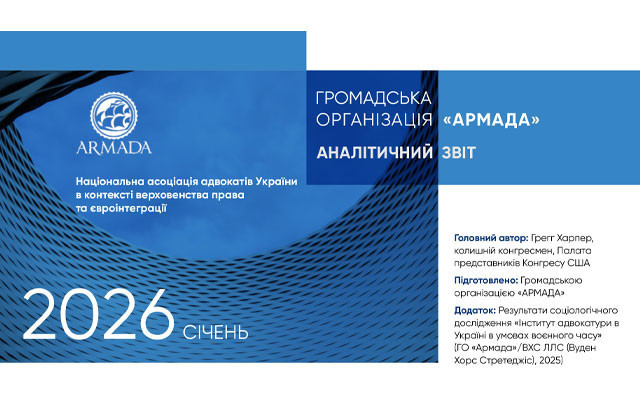
European integration
A translation of the report on advocacy presented to the European Parliament has been published
A translation of a research report on the Ukrainian advocacy profession in wartime, previously presented to the European Parliament in Brussels, has been published. The document is presented as a basis for discussion on the rule of law, Ukraine's European integration aspirations, and countering Russian disinformation in the legal sphere.
Legal defence of military personnel
How to formalize discharge from military service: practical workshop
The issue of discharge from military service remains one of the most pressing and complex for Ukrainian defenders and their families. Due to constant changes in legislation, military personnel often face refusals to discharge them from service or even to consider their reports.
Legislation
The Verkhovna Rada Committee criticized the format of the government working group on advocacy
The implementation of the Roadmap on the rule of law (approved by Cabinet of Ministers Resolution No. 475-r of May 14, 2025) in relation to advocacy raises the practical question of who exactly should prepare legislative changes and how.
Self-government
The BCU demands a review of the composition of the government working group on reforming the advocacy profession
The President of the UNBA, BCU Lidiya Izovitova, appealed to the Cabinet of Ministers of Ukraine to review the composition of the working group on improving legislation in the field of advocacy and legal practice.
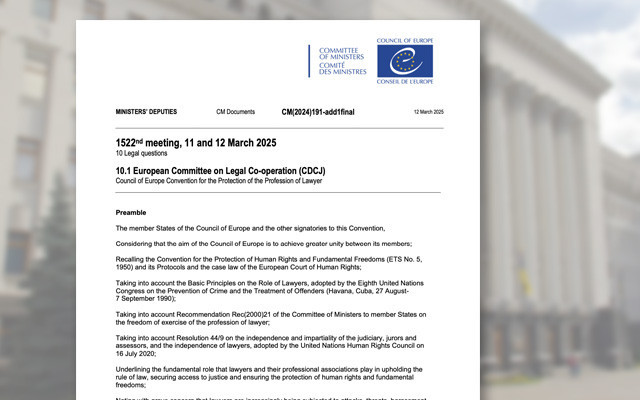
Guarantees of the practice of law
The President has determined, who will sign the Convention for the Protection of the Profession of Lawyer
President of Ukraine Volodymyr Zelenskyy authorized Ukraine's Permanent Representative to the Council of Europe Mykola Tochytskyi to sign the Council of Europe Convention for the Protection of the Profession of Lawyer.
Discussion
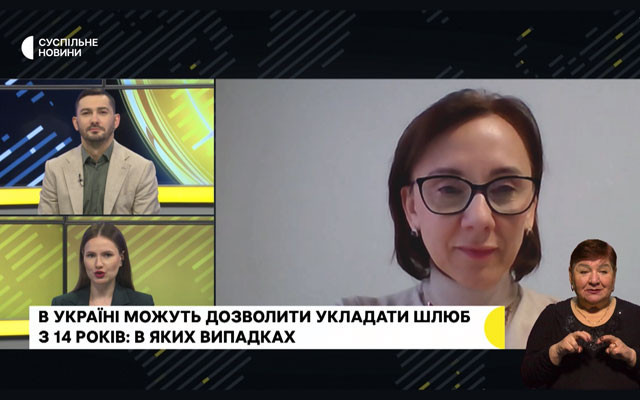
Why lowering the age of marriage lacks legal logic
Although until 2012 there was a provision in family law that allowed children to marry from the age of 14 under certain circumstances, its return to Ukrainian law would contradict international obligations and the logic of criminal law.
European integration
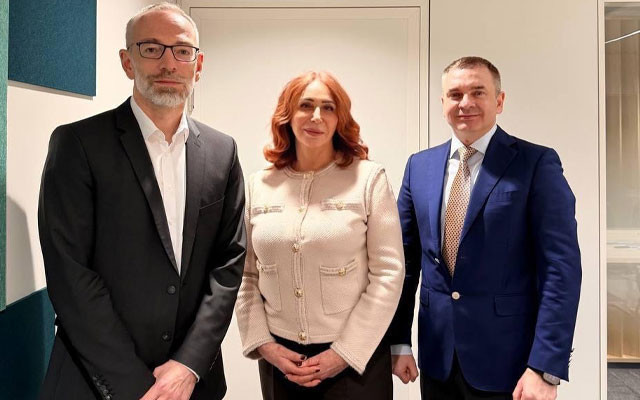
Open dialogue between the UNBA and the European Commission on the path to EU
The Ukrainian National Bar Association held a working meeting in Brussels with Mr Wolfgang Nozar, Head of Unit for Governance, Rule of Law and Financial Assistance, Directorate-General for Enlargement and Eastern Neighbourhood (DG ENEST), European Commission.
Self-government
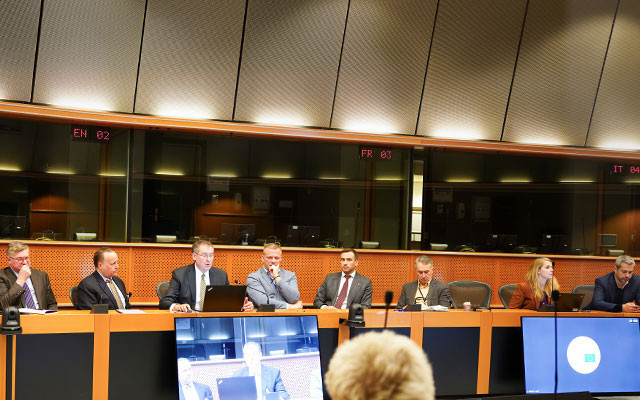
A report on Ukrainian advocacy was presented in the European Parliament
Can a shadow report on advocacy replace the political framework of the Roadmap on the rule of law with demands for the restructuring of self-government? Where is the line between accountability and the seizure of institutions? And how can we respond to narratives with data rather than impressions?
Publications

Volodymyr Matsko Extradition as a systemic form of rights violations

Victoria Yakusha, Law and Business The anti-corruption vertical cannot «take care» of the Bar as an institution, - acting head of the HQDCB

Censor.net Protecting advocates – protecting justice: addressing concerns about the new law

Ihor Kolesnykov A BRIEF SUMMARY REGARDING THE APPLICATION OF THE ORDER ON EXTENDED CONFISCATION IN LATVIA REGARDING FINANCIAL ASSETS OF…

Valentyn Gvozdiy WORKING IN A WAR ZONE

Lydia Izovitova Formula of perfection

Sergiy Vylkov Our judicial system is so built that courts do not trust advocates

Iryna Vasylyk Advocacy in the proclamation of Independence of Ukraine