After the war amnesty for criminals or exemption from responsibility?
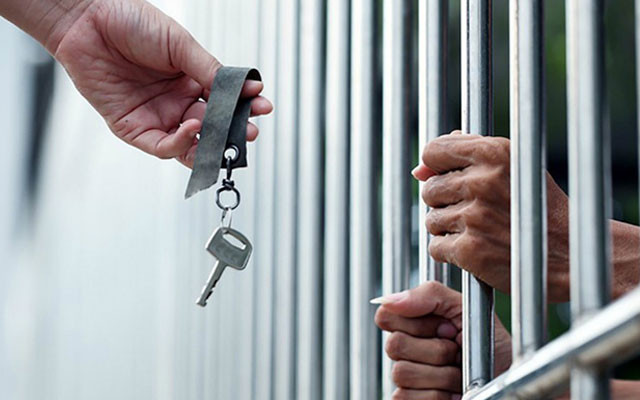
To ensure national reconciliation, rehabilitation of persons who have been persecuted for political reasons, restoration of justice, and establishment of lasting peace, it is proposed to introduce an amnesty after the war.
The corresponding draft law No. 14317 «On the amnesty of persons, the prevention of their persecution and punishment in connection with the end of the Russian Federation's military aggression against Ukraine with the aim of national reconciliation and restoration of the constitutional order» was registered on December 18, 2025.
At the request of the Verkhovna Rada Committee on law enforcement, the National Bar Association of Ukraine analyzed the document and expressed a number of reservations about it.
The draft proposes to define the legal grounds and procedure for applying amnesty to Ukrainian citizens in connection with events related to the military aggression of the Russian Federation against Ukraine.
According to the authors of the legislative initiative, persons who were detained, arrested, brought to criminal responsibility, or convicted for crimes provided for in Articles 109, 110, 110-2, 111, 111-1, 111-2, 114 -1, 114-2, 332, 332-1, 336, 337, 402, 403, 407, 408, 409, 436-2 of the Criminal Code, including in cases where their actions are classified as a combination of crimes with other articles of the Criminal Code (except for Articles 258 and 258-3), if such acts were committed in the period from February 24, 2022, to the date of entry into force of an international agreement on a ceasefire, the establishment of a truce, or the conclusion of a peace treaty between Ukraine and the Russian Federation. Persons who were convicted under Articles 112, 113, 258, and 258-3 of the Criminal Code at the time of the adoption of the Law shall be subject to amnesty.
The UNBA Committee on criminal law and procedure called these initiatives premature.
In addition, advocates noted that in terms of exempting persons from liability, the draft does not comply with Article 1 of the Law «On the application of amnesty», as well as Articles 85 and 86 of the Criminal Code, which stipulate that amnesty is a full or partial exemption from serving a sentence for persons found guilty of committing a criminal offense, or criminal cases against whom have been considered by the courts, but the verdicts against these persons have not yet entered into legal force.
Thus, the amnesty that is proposed to be introduced cannot provide for the exemption of persons from criminal liability. It may be a full or partial exemption from serving a sentence.
The full text of the comments on draft law No. 14317 is available at this link.
Popular news
Self-government
BCU: The HCJ’s decisions undermine the constitutional guarantees of the independence of the advocacy profession
The Bar Council of Ukraine has concluded that, in its recent decisions, the High Council of Justice has, without legal grounds, called into question the right of bar self-governing bodies to protect the guarantees of legal practice and has, in effect, attempted to grant one of its members — who retains the status of an advocate — special immunity from the Rules of professional conduct and disciplinary responsibility.
Interaction
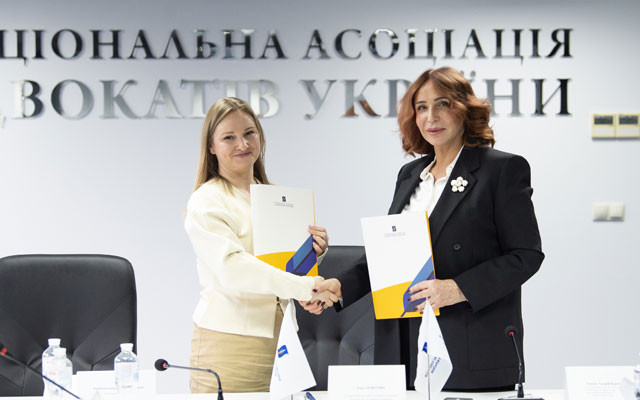
Protecting the rights of service members: The UNBA and the Military Ombudsman have agreed on cooperation
Servicemembers, reservists, conscripts during training exercises, members of local community volunteer units, and other individuals covered by the Law «On the Military Ombudsman» should have better access to professional legal assistance.
Rule of Law Roadmap
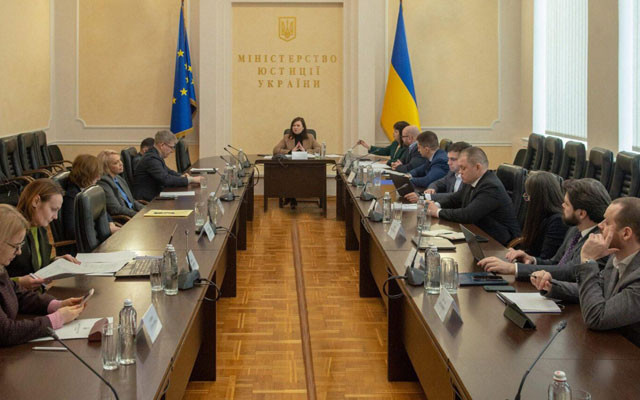
Reform without data and advocacy: what the Ministry of Justice’s launch has revealed
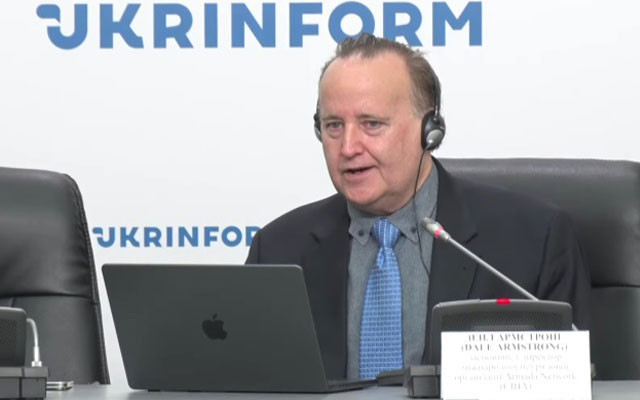
The Ministry of Justice hosted the first meeting of the working group on bar reform. But instead of professional preparation of legislative changes, we saw exactly what Armada Network Director Dale Armstrong had spoken about the day before in Kyiv: not reform, but a struggle for control over the agenda through a narrow circle of “stakeholders” who create an echo chamber of influence for themselves.
Rule of Law Roadmap
Advocacy, European integration and the limits of intervention: an American report presented in Kyiv
Following its presentation in Brussels, the report «The Ukrainian advocacy in the context of the rule of law and European integration» made its way to Kyiv. It highlighted critical issues both in understanding the very nature of the self-governing profession and in the emergence of a «shadow market» surrounding the Ukrainian advocacy.
Discussion
ETAIDF and MMC: where the system fails
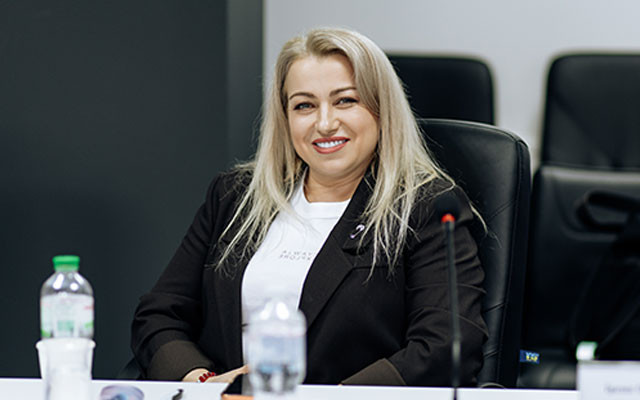
The new system for assessing a person’s daily functioning and the practice of undergoing medical-legal examinations have already raised numerous questions — ranging from unclear procedures to difficulties in appealing decisions. These issues were examined by advocates during the roundtable discussion «Problematic issues of the ETAIDF and MMC», organized by the UNBA Committee on the protection of the rights of persons with disabilities and the All-Ukrainian public organization «Human rights union of persons with disabilities».
Rule of Law Roadmap
Access to the advocate profession: a subgroup has identified the direction of change
On Monday, March 16, a meeting was held of the subgroup «Access to the profession and training of advocates. Organizational forms of legal practice» of the Working Group on the implementation of the Rule of Law Roadmap.
Appointment
A representative of the UNBA has arrived in Cairo
Advocate Irena Maria Ostrozka-Sangushko has been appointed as the representative of the Ukrainian National Bar Association in the Arab Republic of Egypt, in the city of Cairo. The corresponding Order No. 80, dated March 10, 2026, was signed by the President of the UNBA, BCU Lidiya Izovitova.
Rule of Law Roadmap
Organization of advocacy: subgroup agrees on approaches to regulatory reform
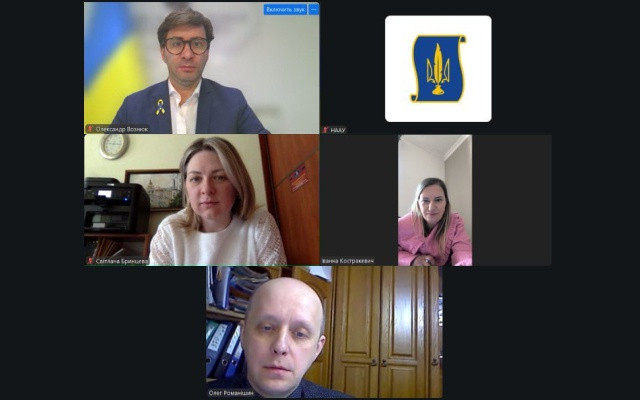
On March 13, a meeting was held of the «Organization of the advocacy and self-government» subgroup of the Working Group on the implementation of the Rule of Law Roadmap regarding bar reform. The event was conducted via videoconference.
Publications

Volodymyr Matsko Extradition during wartime: when the risks outweigh the request

Volodymyr Matsko Extradition as a systemic form of rights violations

Victoria Yakusha, Law and Business The anti-corruption vertical cannot «take care» of the Bar as an institution, - acting head of the HQDCB

Censor.net Protecting advocates – protecting justice: addressing concerns about the new law

Ihor Kolesnykov A BRIEF SUMMARY REGARDING THE APPLICATION OF THE ORDER ON EXTENDED CONFISCATION IN LATVIA REGARDING FINANCIAL ASSETS OF…

Valentyn Gvozdiy WORKING IN A WAR ZONE

Lydia Izovitova Formula of perfection

Sergiy Vylkov Our judicial system is so built that courts do not trust advocates