


Life imprisonment for advocates who use artificial intelligence?
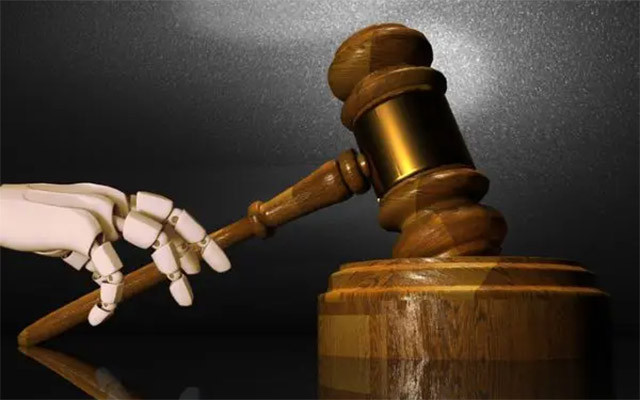
The unjustified use of generative artificial intelligence in legal practice is becoming a dangerous trend and could undermine the foundations of justice. Victoria Sharp, a judge at the High Court of England, warned of the risks of using fake decisions generated by AI.
The proceedings concerned two incidents in which advocates referred to fictitious court cases, according to Computing Magazine, a publication specializing in information technology.
The first case involved a £90 million lawsuit alleging breach of financing terms involving Qatar National Bank.
One of the participants in the proceedings submitted materials to the court in which he cited 18 fictitious court cases. He stated that he had used publicly available AI tools and had no intention of misleading the court. His advocate insisted that he had relied on the client's own research. In response to these arguments, the judge called the situation «extraordinary» and noted that it was unacceptable for an advocate to depend on a client for legal research — it should be the other way around.
In the second case, which concerned a tenant's claim against a municipality, the advocate also referred to five non-existent cases. She denied using artificial intelligence, but was unable to provide the court with a convincing explanation for the appearance of fake citations.
When announcing the decision, the judge emphasized that the use of fake court decisions in procedural documents could undermine confidence in the justice system. Submitting such data may be considered contempt of court or even interference with the administration of justice, a criminal offense punishable by up to life imprisonment in the UK.
«Artificial intelligence is a tool that carries both risks and benefits, - V. Sharpe noted. - Its use must be subject to proper oversight and within a regulatory environment that ensures compliance with established professional and ethical standards. Only under such conditions can public confidence in the justice system be maintained».
Ultimately, complaints were filed against the advocates with their professional bodies. However, no criminal sanctions have been imposed to date.
Popular news
Greetings
The UNBA congratulates Denis Maslov on his appointment as Minister of Justice
Denis Maslov’s many years of experience as a advocate, his work as a judge and his tenure as chairman of the Verkhovna Rada of Ukraine’s Committee on legal policy have given him a deep understanding of how the legal system functions and the challenges it faces.

Legislation
The Verkhovna Rada explained why the section on advocacy should be removed from the anti-corruption strategy
The section on advocacy and legal aid in the draft anti-corruption strategy for 2026–2030 goes beyond the scope of anti-corruption policy and is inconsistent with the constitutional guarantees of the independence of the legal profession.
Guarantees of the practice of law
The NACP’s clarification regarding the declaration of membership in the UNBA should be clarified – BCU
An advocate’s membership in the UNBA is an element of professional status arising by virtue of law, rather than a voluntary private membership in an association. Therefore, failure to disclose it in a declaration should not automatically lead to the conclusion of unethical conduct or the concealment of a private interest.

Discussion
The history of Ukrainian constitutionalism was discussed during a lecture
To mark Ukraine’s Constitution Day, the Center for research on the legal profession and law of the UNBA in collaboration with the «Bykivnia Graves» National Historical and Memorial Reserve organized an online lecture on the history of the Ukrainian constitutional process.
Legislation
The UNBA is counting on the swift ratification of the Convention on the Protection of the Professions of Lawyer
The ratification of the Council of Europe Convention on the Protection of the Professions of Lawyer must be accompanied by targeted amendments to legislation to strengthen safeguards for advocates, but should not be used as a pretext for dismantling the self-governing model of advocacy.
Interaction
A manifesto on AI in law was presented in Europe. The UNBA has joined the initiative
On June 24, as part of European Legal Sovereignty Day, which took place in Brussels, the Manifesto for a Referential of Human Guarantee in the Legal Use of AI was presented.

Court practice
Martial law has changed administrative disputes – findings from IUS PUBLICUM 2026
During martial law, the focus of administrative proceedings shifted: in addition to tax disputes, cases involving access to public information, personal data protection, and challenges to regulatory acts, the docket now includes mobilization issues, challenges to decisions by the TCC and the Special Purpose Commission, disputes regarding deferrals, military service, sanctions, and new administrative restrictions.

Court practice
Lidiya Izovitova identified 7 challenges in administrative proceedings for advocates
The predictability of judicial practice, jurisdictional disputes, cassation filters, enforcement of judgments against the state, the burden of proof, written proceedings, and guarantees for the practice of law remain key issues in administrative justice for advocates.
Publications

Volodymyr Matsko Extradition during wartime: when the risks outweigh the request

Volodymyr Matsko Extradition as a systemic form of rights violations

Victoria Yakusha, Law and Business The anti-corruption vertical cannot «take care» of the Bar as an institution, - acting head of the HQDCB

Censor.net Protecting advocates – protecting justice: addressing concerns about the new law

Ihor Kolesnykov A BRIEF SUMMARY REGARDING THE APPLICATION OF THE ORDER ON EXTENDED CONFISCATION IN LATVIA REGARDING FINANCIAL ASSETS OF…

Valentyn Gvozdiy WORKING IN A WAR ZONE

Lydia Izovitova Formula of perfection

Sergiy Vylkov Our judicial system is so built that courts do not trust advocates