Urban Planning Code: what should the new rules for rebuilding Ukraine be?
Does Ukraine need separate codification in the field of urban planning, which model of law to choose, and how to ensure a balance between the interests of the state, communities, businesses, and citizens in the context of post-war reconstruction?
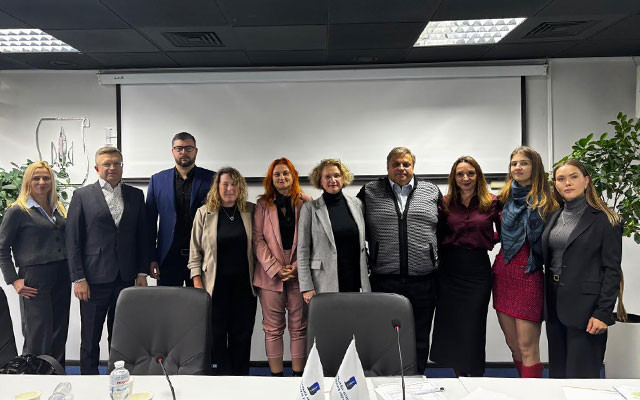
Participants sought answers to these questions at the latest roundtable discussion «Concept of the Future Urban Development Code of Ukraine», organized and conducted by the UNBA Committee on construction law.
Deputy chairman of the Committee Tetiana Batyus emphasized that currently, relations in the field of construction are regulated by a large number of laws and subordinate acts, which creates chaos, conflicts, and corruption risks. In her opinion, the new code, as a strategic document of the state, should systematize norms, establish a human-centered approach, ensure transparent and digitized procedures, real responsibility for violations, and take into account the European vector of development and the needs of rebuilding destroyed territories.
The view of the educational and scientific community was presented by the head of the Department of law and public administration at the Kyiv National University of construction and architecture Volodymyr Nikitin. He supported the idea of adopting a single codified act and pointed out that the lack of a unified approach complicates both law enforcement and the training of specialists in the field of construction and spatial planning, especially given the focus of educational programs on post-war reconstruction.
Chairman of the Subcommittee on urban planning, improvement and land relations within building territories of the Verkhovna Rada Committee on organization of state power, local self-government, regional development and urban planning Hanna Bondar presented the concept of the future act, which is being developed by a large interdisciplinary working group with the participation of representatives of local self-government bodies, specialized associations, ministries, and experts in urban planning, ecology, and heritage protection.
According to her, after lengthy discussions, a working title «Code of spatial planning and development of territories» was formed, which should reflect both the spatial planning and construction blocks. The concept covers not only traditional urban planning procedures (planning, design, construction, operation, and demolition of facilities), but also related areas such as ecology, cultural heritage protection, civil protection, economic mechanisms, insurance, and investment protection. The concept is currently being refined, taking into account hundreds of comments received.
Committee member of the UNBA Inna Yaremova focused on the compliance of the future code with Ukraine's international obligations. She noted that the document must be consistent with the Association Agreement with the EU, the Aarhus Convention, European charters on local self-government, landscape and architectural heritage, and the practice of the ECHR regarding property rights, housing, a favorable environment, and effective legal protection. In her opinion, particular attention should be paid to the real participation of the public in decision-making, environmental assessment, and guarantees of judicial control over administrative procedures in the field of construction.
She also warned against excessive centralization of powers and drew attention to the insufficient reflection in the concept of the principle of «right to the city» enshrined in the Council of Europe charter on democratic governance.
The chairman of the UNBA Committee on construction law Oleg Povaliayev stressed that the legal community should take an active part in shaping the legal basis of the future code. He recalled that, following the previous round table, the Committee had already sent a resolution to the Verkhovna Rada, and also emphasized the importance of continuing the dialogue with parliament. Concluding the event, O. Povaliayev thanked the participants for the discussion and invited experts to join the Committee's further work, as well as to cooperate between the UNBA and the Kyiv National University of construction and architecture.
Popular news
Self-government
The BCU demands a review of the composition of the government working group on reforming the advocacy profession
The President of the UNBA, BCU Lidiya Izovitova, appealed to the Cabinet of Ministers of Ukraine to review the composition of the working group on improving legislation in the field of advocacy and legal practice.
Discussion
Why lowering the age of marriage lacks legal logic
Although until 2012 there was a provision in family law that allowed children to marry from the age of 14 under certain circumstances, its return to Ukrainian law would contradict international obligations and the logic of criminal law.
European integration
Open dialogue between the UNBA and the European Commission on the path to EU
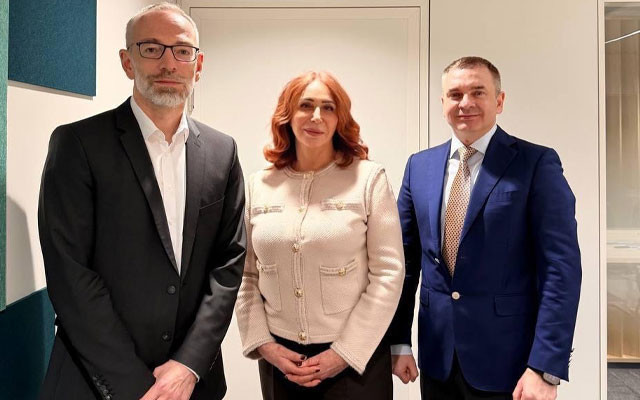
The Ukrainian National Bar Association held a working meeting in Brussels with Mr Wolfgang Nozar, Head of Unit for Governance, Rule of Law and Financial Assistance, Directorate-General for Enlargement and Eastern Neighbourhood (DG ENEST), European Commission.
Self-government
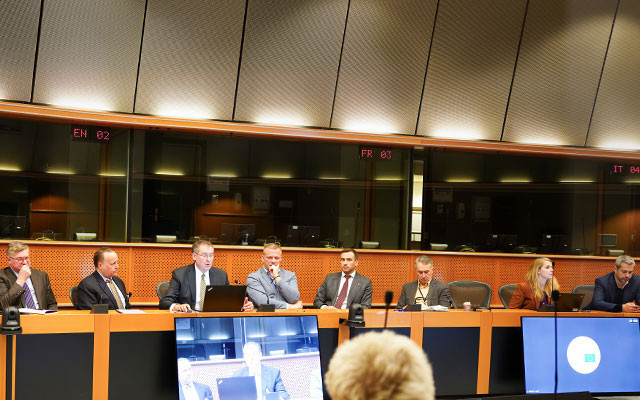
A report on Ukrainian advocacy was presented in the European Parliament
Can a shadow report on advocacy replace the political framework of the Roadmap on the rule of law with demands for the restructuring of self-government? Where is the line between accountability and the seizure of institutions? And how can we respond to narratives with data rather than impressions?
European integration
UNBA and Ukraine's representation to the EU have synchronized their priorities
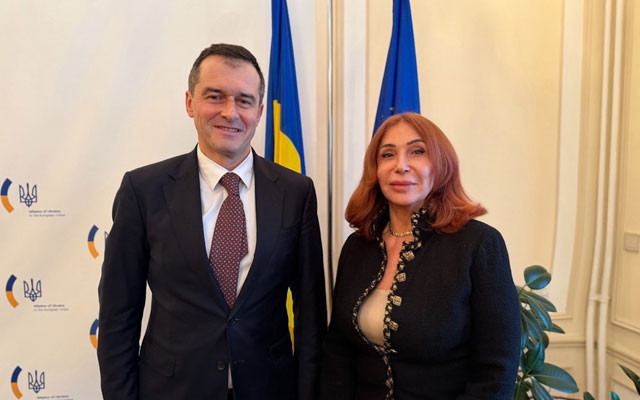
On February 5, in Brussels, the President of the UNBA, BCU Lidiya Izovitova held a working meeting with the Ambassador Extraordinary and Plenipotentiary of Ukraine, Representative of Ukraine to the European Union Vsevolod Chentsov.
Guarantees of the practice of law
Proceedings opened following attack on advocate in Dnipro
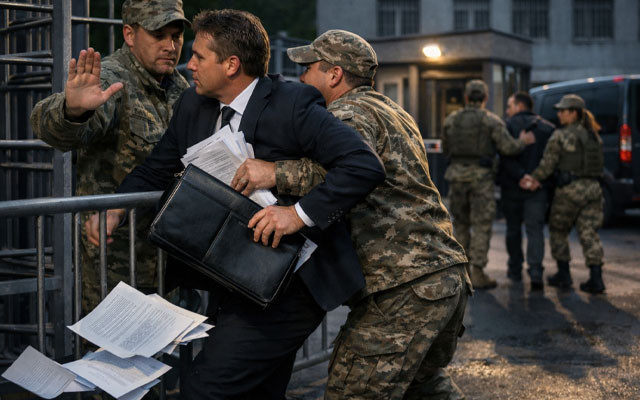
The Committee for the protection of advocates' rights and guarantees of legal practice of the UNBA appealed to law enforcement agencies in connection with an advocate's report of an attack while performing his professional duties. The information was entered into the Unified Register of Pre-trial Investigations and a pre-trial investigation was initiated.
Interaction
«With us — to Europe»: Italian advocacy supports UNBA initiatives
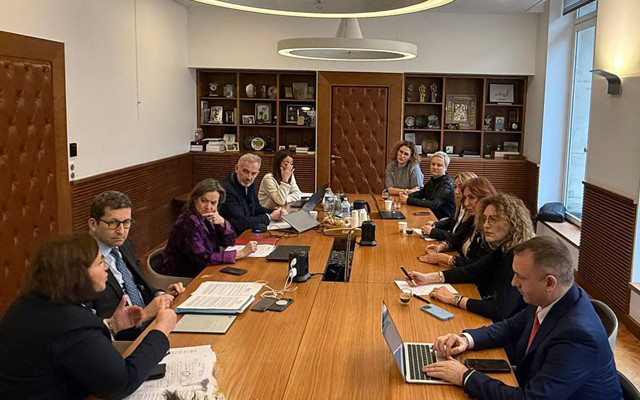
On January 30, a meeting was held in Rome between a delegation from the Ukrainian National Bar Association and the National Bar Council of Italy (Consiglio Nazionale Forense, CNF) on the standards and practices of the legal profession and their significance for Ukraine's European integration process.
Interaction
France confirms cooperation with UNBA on reforms in the field of the rule of law
On January 29, a working meeting between representatives of the Ukrainian National Bar Association and the French National Bar Council (Conseil National des Barreaux, CNB) took place in Paris.
Publications

Volodymyr Matsko Extradition as a systemic form of rights violations

Victoria Yakusha, Law and Business The anti-corruption vertical cannot «take care» of the Bar as an institution, - acting head of the HQDCB

Censor.net Protecting advocates – protecting justice: addressing concerns about the new law

Ihor Kolesnykov A BRIEF SUMMARY REGARDING THE APPLICATION OF THE ORDER ON EXTENDED CONFISCATION IN LATVIA REGARDING FINANCIAL ASSETS OF…

Valentyn Gvozdiy WORKING IN A WAR ZONE

Lydia Izovitova Formula of perfection

Sergiy Vylkov Our judicial system is so built that courts do not trust advocates

Iryna Vasylyk Advocacy in the proclamation of Independence of Ukraine