The court ruled that the advocate's mobilization was unlawful and overturned the TCC's order
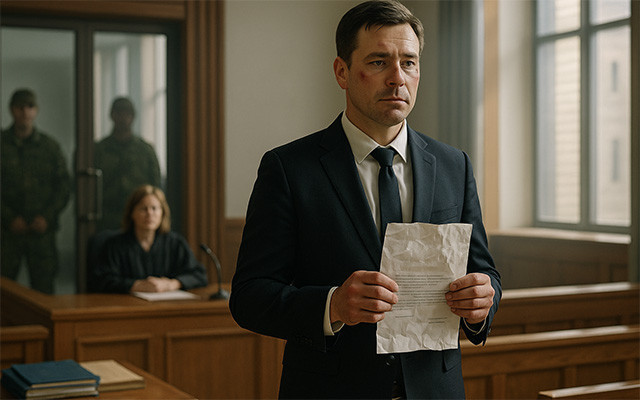
The order of the Uzhgorod District Territorial Center for Recruitment and Social Support to conscript an advocate, whose deferment had been revoked the day before, into military service was found to be unlawful and revoked.
This decision in case No. 260/6813/25 was made today, November 28, by the Transcarpathian District Administrative Court.
Recall that the advocate, who specialized in defending the rights of former police officers, was detained on July 21 at the district police department while reviewing the materials of official investigations at the request of the advocate. TCC employees blocked his exit, demanded military registration documents and, despite the provision of a certificate of valid deferment from mobilization, forcibly took him to the territorial center.
The advocate was held at the TCC for several hours without explanation, with officials refusing to state the grounds for his detention. He called the Ministry of Defense's government hotline and called the police, but there was no response. In the evening, he was asked to undergo a military medical examination. The advocate later learned that the TCC had issued a protocol decision to cancel the deferral on the same day.
When the advocate refused to go to the military unit without documents and explanations, his phone was taken away and he was struck several times in the back and face. On the way, an ambulance was called, which took him to the hospital. Doctors diagnosed a broken rib, chest contusion, and other injuries. The man's phone was returned only the next day, after he was officially enrolled in the military unit. After that, the advocate appealed to the UNBA for protection (more details about the circumstances of the incident can be found here).
The UNBA filed a statement with the Office of the Prosecutor General regarding the commission of criminal offenses. The document states that the actions of the police and the TCC show signs of a number of crimes: obstruction of legal practice (Article 397 of the Criminal Code), unlawful deprivation of liberty (Article 146 of the Criminal Code), unlawful detention (Article 371 of the Criminal Code), interference with electronic systems (Article 361 of the Criminal Code), and intentional infliction of moderate bodily harm (Article 122 of the Criminal Code).
The advocate, who was mobilized while providing legal assistance to a client despite having a deferral, also filed a lawsuit against the TCC and the military unit. The administrative court opened proceedings and involved the Ukrainian National Bar Association as a third party.
After requesting and examining the available materials, the court upheld the lawsuit. The actions of the TCC and the attestation commission regarding the advocate's conscription and referral for a repeat medical examination due to the cancellation of the deferral were found to be unlawful. TCC's order to draft the advocate into military service, send him to a military unit, and enlist him was also canceled. TCC's failure to grant a deferral from conscription was classified as unlawful inaction.
Popular news
Guarantees of the practice of law
Ukraine has signed the Convention for the Protection of the Profession of Lawyer
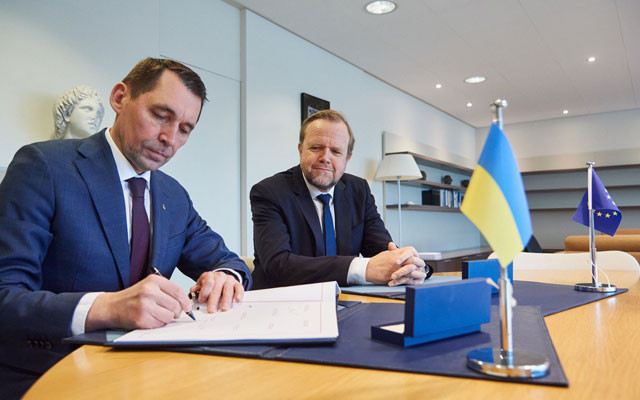
Today, on 9 March, Ukraine's Permanent Representative to the Council of Europe Mykola Tochytskyi signed the Council of Europe Convention for the Protection of the Profession of Lawyer. This makes our country the 28th to sign this important international treaty.
European integration
A translation of the report on advocacy presented to the European Parliament has been published
A translation of a research report on the Ukrainian advocacy profession in wartime, previously presented to the European Parliament in Brussels, has been published. The document is presented as a basis for discussion on the rule of law, Ukraine's European integration aspirations, and countering Russian disinformation in the legal sphere.

Legal defence of military personnel
How to formalize discharge from military service: practical workshop
The issue of discharge from military service remains one of the most pressing and complex for Ukrainian defenders and their families. Due to constant changes in legislation, military personnel often face refusals to discharge them from service or even to consider their reports.
Legislation
The Verkhovna Rada Committee criticized the format of the government working group on advocacy
The implementation of the Roadmap on the rule of law (approved by Cabinet of Ministers Resolution No. 475-r of May 14, 2025) in relation to advocacy raises the practical question of who exactly should prepare legislative changes and how.
Self-government
The BCU demands a review of the composition of the government working group on reforming the advocacy profession
The President of the UNBA, BCU Lidiya Izovitova, appealed to the Cabinet of Ministers of Ukraine to review the composition of the working group on improving legislation in the field of advocacy and legal practice.
Guarantees of the practice of law
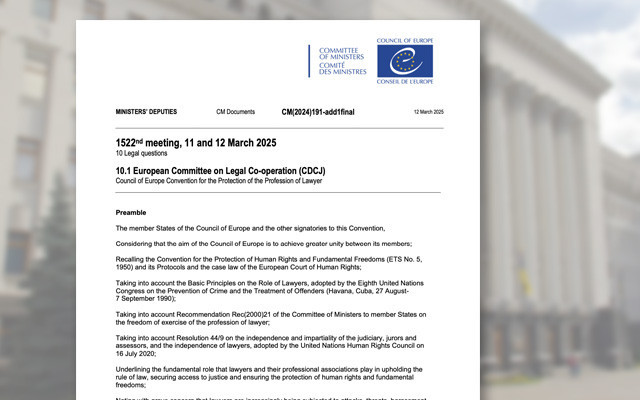
The President has determined, who will sign the Convention for the Protection of the Profession of Lawyer
President of Ukraine Volodymyr Zelenskyy authorized Ukraine's Permanent Representative to the Council of Europe Mykola Tochytskyi to sign the Council of Europe Convention for the Protection of the Profession of Lawyer.
Legislation
After the war amnesty for criminals or exemption from responsibility?
To ensure national reconciliation, rehabilitation of persons who have been persecuted for political reasons, restoration of justice, and establishment of lasting peace, it is proposed to introduce an amnesty after the war.
Discussion
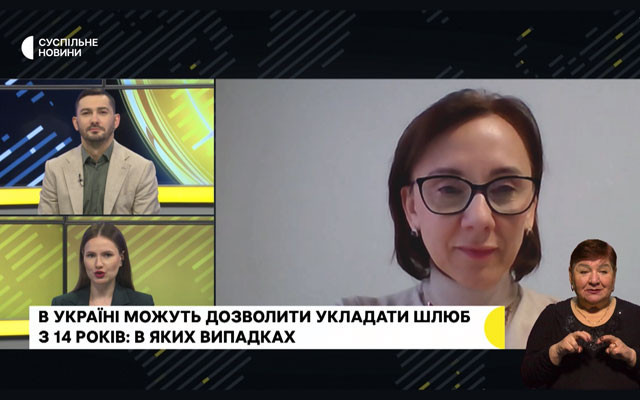
Why lowering the age of marriage lacks legal logic
Although until 2012 there was a provision in family law that allowed children to marry from the age of 14 under certain circumstances, its return to Ukrainian law would contradict international obligations and the logic of criminal law.
Publications

Volodymyr Matsko Extradition during wartime: when the risks outweigh the request

Volodymyr Matsko Extradition as a systemic form of rights violations

Victoria Yakusha, Law and Business The anti-corruption vertical cannot «take care» of the Bar as an institution, - acting head of the HQDCB

Censor.net Protecting advocates – protecting justice: addressing concerns about the new law

Ihor Kolesnykov A BRIEF SUMMARY REGARDING THE APPLICATION OF THE ORDER ON EXTENDED CONFISCATION IN LATVIA REGARDING FINANCIAL ASSETS OF…

Valentyn Gvozdiy WORKING IN A WAR ZONE

Lydia Izovitova Formula of perfection

Sergiy Vylkov Our judicial system is so built that courts do not trust advocates