The UNBA warns against evaluative concepts in amendments to Article 346 of the Criminal Code

The amendments to Article 346 (Threats or violence against a public or political figure) of the Criminal Code proposed to parliament blur the boundaries of criminally punishable behavior, and due to the technical and legal overload of the norm, there is a risk of its unpredictable application.
At the request of the Verkhovna Rada Committee on law enforcement, the National Bar Association of Ukraine analyzed draft law No. 14372 of 12.01.2026 «On amendments to Article 346 of the Criminal Code of Ukraine regarding the establishment of liability for public calls or public incitement to violence against state or public figures, as well as increased liability for threats or violence against state or public figures».
The authors of the legislative initiative see the goal as strengthening the criminal law protection of state and public figures and their family members from attacks on their life, health, or dignity. To this end, in particular, the objective side of the crime is expanded to include «threats of destruction or damage to property, expressed in any way — verbally, in writing, by gestures, using means of communication, including via the Internet or other electronic communications, including by displaying weapons, images, or video materials containing threats».
The UNBA Committee on criminal law and procedure noted that judicial practice does not indicate the existence of significant problems in the application of the concept of «threat» as an element of a criminal offense.
The Supreme Court interpreted (resolution of the Criminal Chamber of the Supreme Court of 24 May 2021 in case No. 706/882/19) the concept of «threat» as one of the elements of a criminal offense, noting that its form of expression is not limited to a direct verbal message about the possible use of violence. A threat may also occur when the guilty person, through their actions, gestures, or display of weapons or other objects that the victim may objectively perceive as capable of endangering their life or health, convinces the victim that such a threat will be carried out in the event of resistance or failure to comply with the demands, and, given the circumstances of the case, the victim actually had such a perception.
Therefore, the proposed additional regulatory elaboration of this concept has signs of substantive duplication of already established provisions and approaches in law enforcement practice. Excessive conceptual clarification in this case does not create new content, but may complicate the perception of the norm and lead to its unnecessary technical and legal overload, which is not fully consistent with the principles of consistency and certainty of criminal law.
Advocates also called into question the provisions of the draft law establishing criminal liability for «commenting on, supporting or approving» materials containing public appeals or so-called «public incitement». Such changes show signs of doctrinal uncertainty, since the terms mentioned are evaluative in nature and do not contain clear criteria for criminally punishable behavior. In the absence of direct calls for violent actions or incitement to carry them out in the relevant statements, such forms of expression cannot in themselves be considered criminal acts.
In this regard, the UNBA Committee recalled that, in accordance with the principle of «nullum crimen sine lege certa», the provisions of criminal law must be formulated with the necessary precision so that a person can foresee the actions that will result in criminal liability and, accordingly, refrain from such behavior. The implementation of this principle is an important element both at the stage of law-making and at the stage of applying the law. Inaccuracy in legal provisions or structural elements of a criminal offense can lead to legal uncertainty.
Separately, according to the relevant Committee of the UNBA, the expediency of introducing life imprisonment needs to be justified. In the case of Article 346 of the Criminal Code, there appears to be a violation of the principles of proportionality and consistency of criminal legislation. Without proper justification, there is an imbalance of sanctions and a departure from the general principles of criminal legislation.
In view of the above, the UNBA did not support draft law No. 14372, as it requires conceptual and technical-legal refinement.
Popular news
Self-government
BCU: The HCJ’s decisions undermine the constitutional guarantees of the independence of the advocacy profession
The Bar Council of Ukraine has concluded that, in its recent decisions, the High Council of Justice has, without legal grounds, called into question the right of bar self-governing bodies to protect the guarantees of legal practice and has, in effect, attempted to grant one of its members — who retains the status of an advocate — special immunity from the Rules of professional conduct and disciplinary responsibility.
Interaction
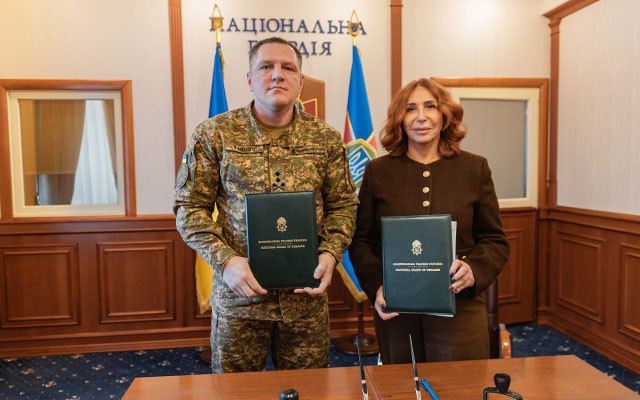
The UNBA and the National Guard have agreed to cooperate on legal protection for military personnel
Servicemembers of the National Guard, their family members, and veterans are to receive additional legal tools to protect their rights, while the National Guard’s legal services will receive methodological and expert support.
Interaction
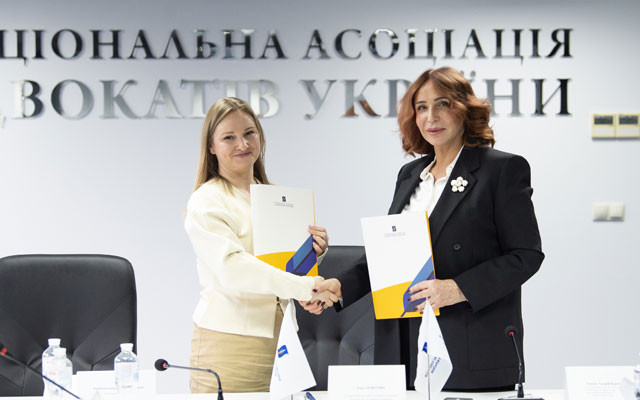
Protecting the rights of service members: The UNBA and the Military Ombudsman have agreed on cooperation
Servicemembers, reservists, conscripts during training exercises, members of local community volunteer units, and other individuals covered by the Law «On the Military Ombudsman» should have better access to professional legal assistance.
Rule of Law Roadmap
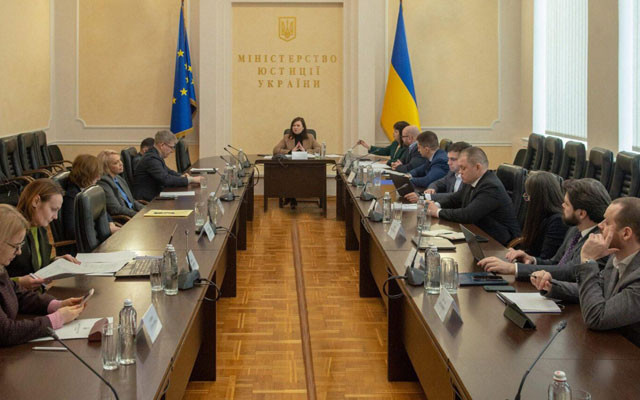
Reform without data and advocacy: what the Ministry of Justice’s launch has revealed
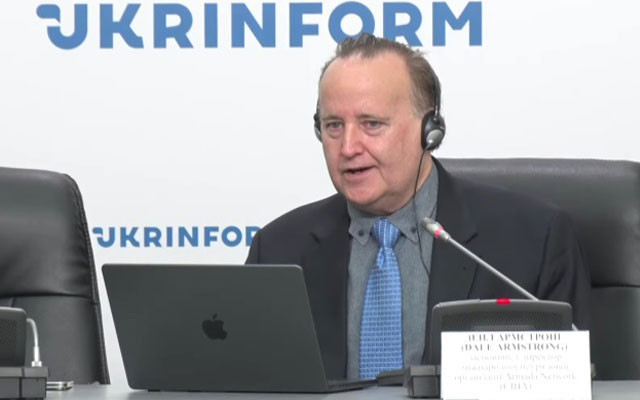
The Ministry of Justice hosted the first meeting of the working group on bar reform. But instead of professional preparation of legislative changes, we saw exactly what Armada Network Director Dale Armstrong had spoken about the day before in Kyiv: not reform, but a struggle for control over the agenda through a narrow circle of “stakeholders” who create an echo chamber of influence for themselves.
Rule of Law Roadmap
Advocacy, European integration and the limits of intervention: an American report presented in Kyiv
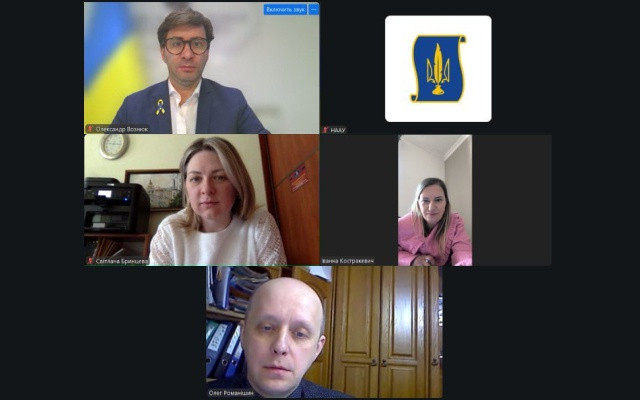
Following its presentation in Brussels, the report «The Ukrainian advocacy in the context of the rule of law and European integration» made its way to Kyiv. It highlighted critical issues both in understanding the very nature of the self-governing profession and in the emergence of a «shadow market» surrounding the Ukrainian advocacy.
Discussion
ETAIDF and MMC: where the system fails
The new system for assessing a person’s daily functioning and the practice of undergoing medical-legal examinations have already raised numerous questions — ranging from unclear procedures to difficulties in appealing decisions. These issues were examined by advocates during the roundtable discussion «Problematic issues of the ETAIDF and MMC», organized by the UNBA Committee on the protection of the rights of persons with disabilities and the All-Ukrainian public organization «Human rights union of persons with disabilities».
Rule of Law Roadmap
Access to the advocate profession: a subgroup has identified the direction of change
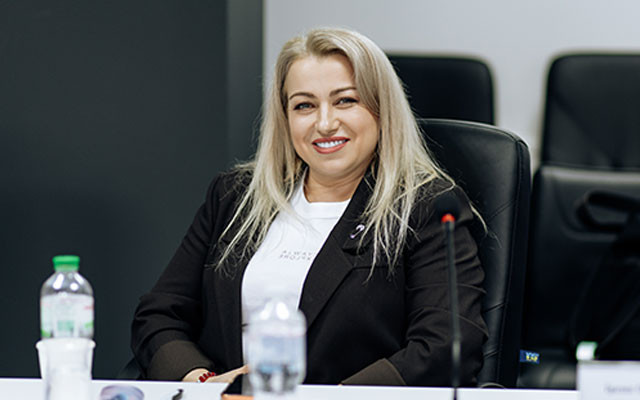
On Monday, March 16, a meeting was held of the subgroup «Access to the profession and training of advocates. Organizational forms of legal practice» of the Working Group on the implementation of the Rule of Law Roadmap.
Appointment
A representative of the UNBA has arrived in Cairo
Advocate Irena Maria Ostrozka-Sangushko has been appointed as the representative of the Ukrainian National Bar Association in the Arab Republic of Egypt, in the city of Cairo. The corresponding Order No. 80, dated March 10, 2026, was signed by the President of the UNBA, BCU Lidiya Izovitova.
Publications

Volodymyr Matsko Extradition during wartime: when the risks outweigh the request

Volodymyr Matsko Extradition as a systemic form of rights violations

Victoria Yakusha, Law and Business The anti-corruption vertical cannot «take care» of the Bar as an institution, - acting head of the HQDCB

Censor.net Protecting advocates – protecting justice: addressing concerns about the new law

Ihor Kolesnykov A BRIEF SUMMARY REGARDING THE APPLICATION OF THE ORDER ON EXTENDED CONFISCATION IN LATVIA REGARDING FINANCIAL ASSETS OF…

Valentyn Gvozdiy WORKING IN A WAR ZONE

Lydia Izovitova Formula of perfection

Sergiy Vylkov Our judicial system is so built that courts do not trust advocates