


No secret: USA court grants access to defendant's AI correspondence
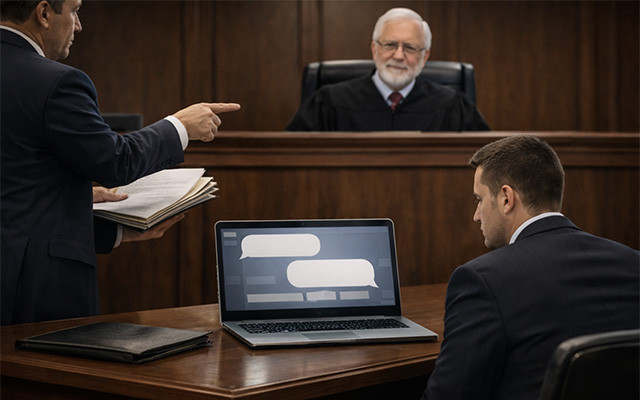
If a person enters facts, a version of events, or information from an advocate into a public chatbot, all of this information is effectively disclosed to a third party and therefore ceases to be confidential within the meaning of criminal procedural law.
The USA District Court for the Southern District of New York is hearing a criminal case against Bradley Heppner (United States v. Heppner, 25 Cr. 503), who is accused of securities fraud and document forgery.
In November 2025, during his arrest, the FBI searched his home and seized documents and electronic devices. Among them were 31 files containing B. Heppner's communications with Anthropic's Claude platform (the defendant used AI to independently prepare materials with possible defense strategies in the criminal case and subsequently transferred them to his advocates). Under criminal procedure law, these materials should have been protected from disclosure as having been produced by the defendant during the investigation or defense of the case. However, the prosecution challenged this status, and on February 10, 2026, Judge Jed S. Rakoff granted the motion.
The judge reasoned that communications with a public generative platform are not covered by either advocate-client communications, which are confidential, or the work product doctrine, which protects materials prepared by the defense for trial.
Thus, AI is not an advocate, so a conversation about the law between two non-advocates does not constitute attorney-client privilege. In addition, the exchange of information was not confidential, as Anthropic's privacy policy provides for the collection of information, the possibility of its use for model training, and disclosure to third parties. Therefore, the user cannot expect confidentiality regarding what is entered and generated. Even if the prompt contained information that the defendant received from advocates, the very fact of entering it into Claude means disclosure to a third party and, accordingly, loss of confidentiality, just as when transferring it to anyone outside the «advocate-client» relationship. And even if B. Heppner intended to transfer these materials to an advocate, they would not have acquired the status of attorney-client privilege because of this.
Even the purpose — obtaining legal assistance — does not give such communication a special status, since, in the court's opinion, it is not the further use of the result that matters, but the nature of the communication at the moment it is made. The lawyers did not instruct B. Heppner to make inquiries to Claude, and the platform itself is not a specialist that advocates are entitled to engage for specific issues. Moreover, the platform itself expressly warns that it does not provide legal advice and advises users to consult a qualified advocate. Therefore, in these circumstances, the court did not accept the logic that such exchanges could be equated with attorney-client privilege.
Regarding the work product doctrine, the court recalled that it is intended to protect the mental processes of an advocate and materials prepared by or on behalf of an advocate in anticipation of litigation or for court. Even if we assume that the AI documents were created for this purpose, this is not enough: they were not prepared by an advocate or on his behalf, but on the initiative of the defendant himself. Therefore, AI documents are not subject to protection.
Popular news

Interaction
The UNBA is developing a concept for a Center for expert research
The Ukrainian National Bar Association has begun work on a concept for a Center for expert research, which is intended to provide advocates and their clients with access to specialized knowledge and the ability to have expert opinions professionally reviewed.

Guarantees of the practice of law
Ombudsman calls for a firm response to violence against advocates
Every instance of obstruction of an advocate’s lawful activities, use of physical force, delaying an investigation, or concealment of evidence must be subject to a proper legal assessment. The state is obligated to ensure that the right to a defense is a genuine guarantee.
Greetings
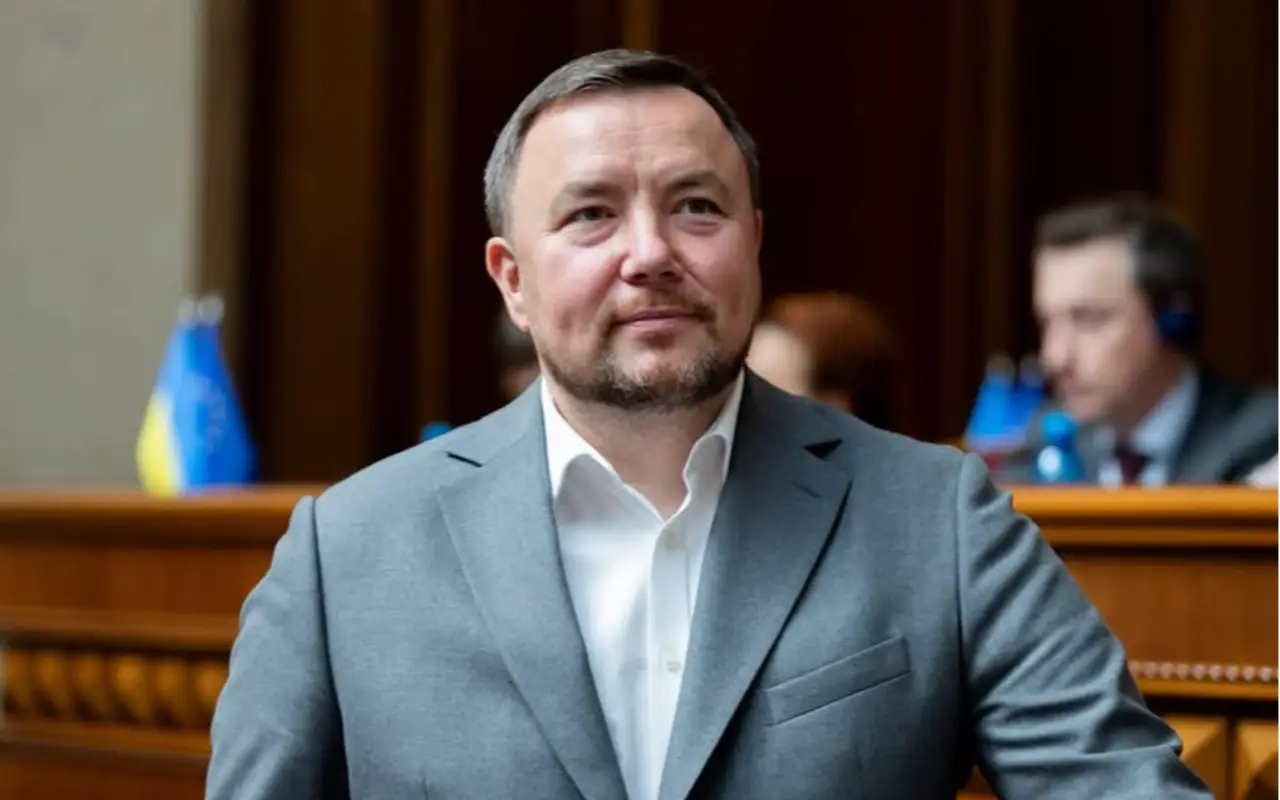
The UNBA congratulates Denis Maslov on his appointment as Minister of Justice
Denis Maslov’s many years of experience as a advocate, his work as a judge and his tenure as chairman of the Verkhovna Rada of Ukraine’s Committee on legal policy have given him a deep understanding of how the legal system functions and the challenges it faces.

Legislation
The Verkhovna Rada explained why the section on advocacy should be removed from the anti-corruption strategy
The section on advocacy and legal aid in the draft anti-corruption strategy for 2026–2030 goes beyond the scope of anti-corruption policy and is inconsistent with the constitutional guarantees of the independence of the legal profession.
Announcements
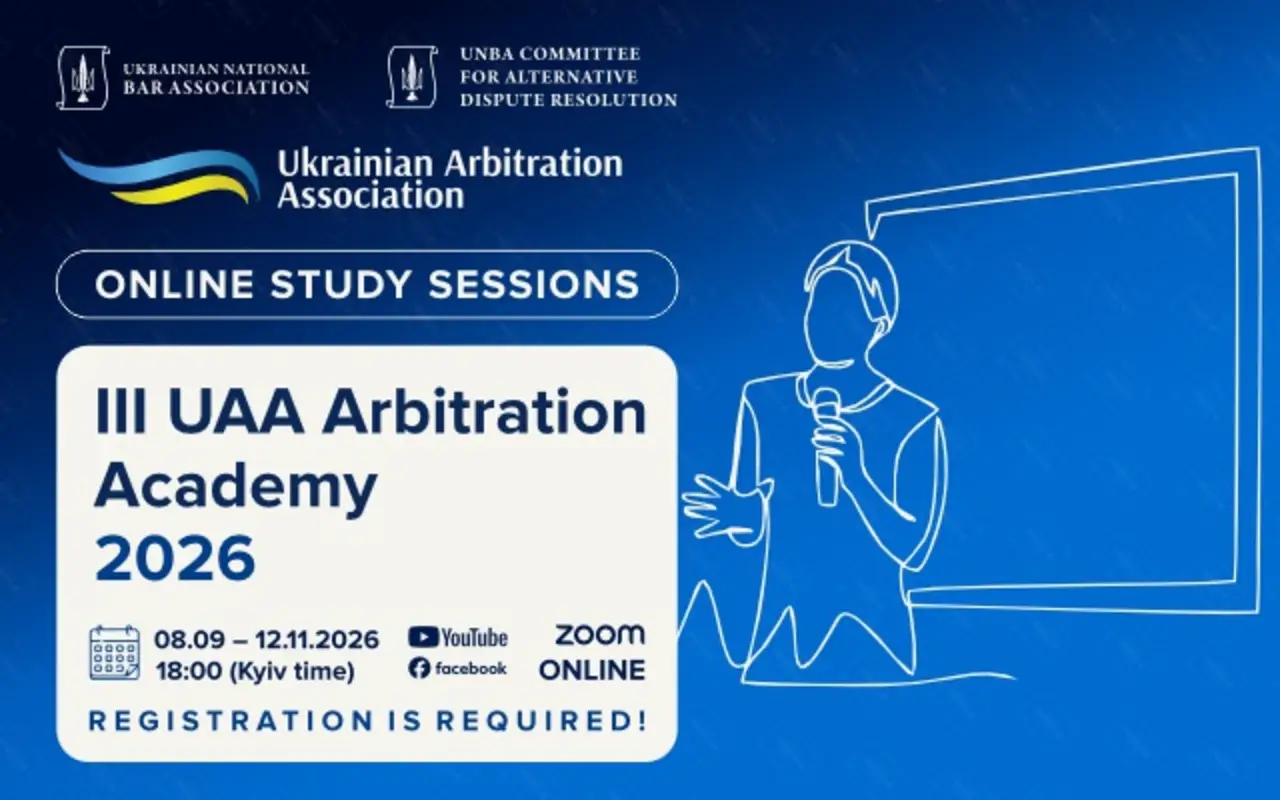
Advocates are invited to the III UAA Arbitration Academy 2026
The UNBA, at the initiative of the Committee on alternative dispute resolution, invites advocates, lawyers, students, judges, government officials and anyone interested in international arbitration to participate in the III UAA Arbitration Academy 2026.
Educational events
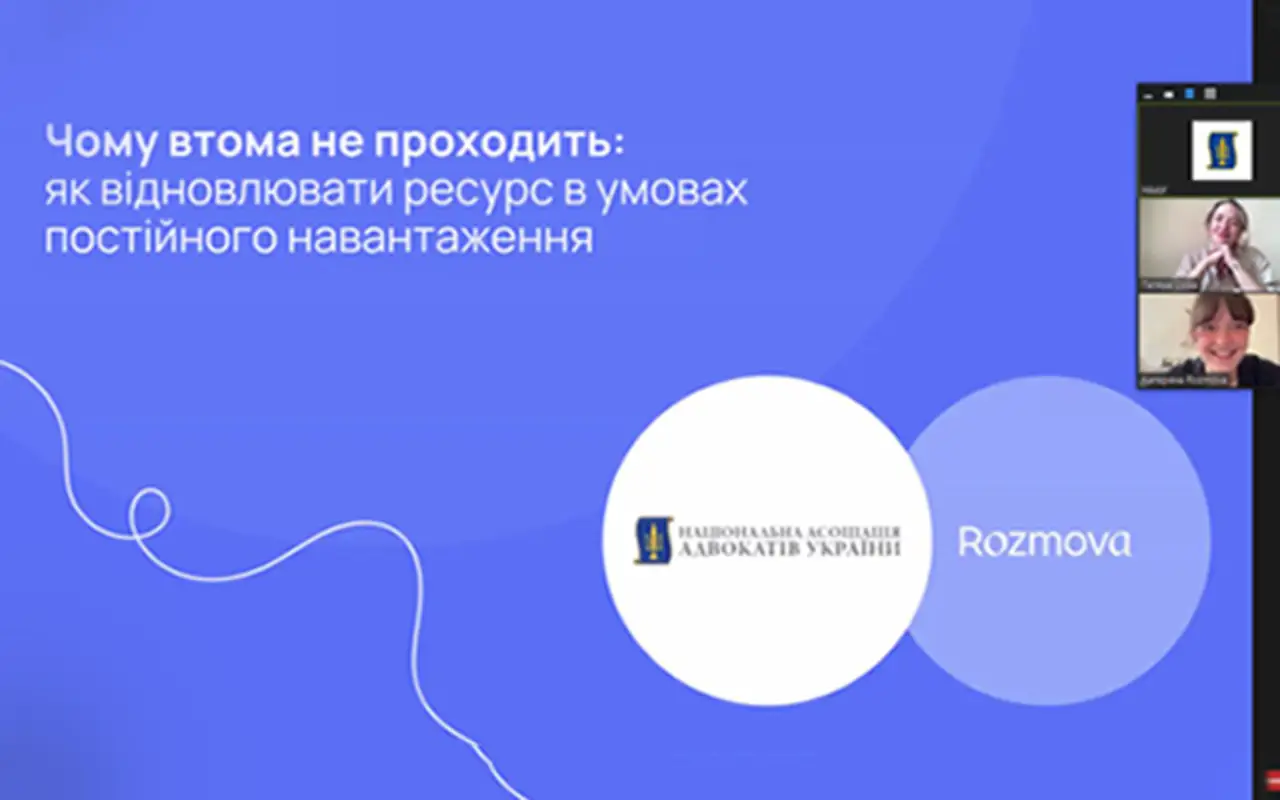
How can an advocate recharge if fatigue persists after the weekend?
Fatigue resulting from prolonged stress does not always go away after sleep, a weekend, or a vacation. In situations of chronic stress, it is important for advocates not only to «take a break» but also to understand exactly which resource has been depleted and what type of rest is needed.
Discussion
Complaints, time limits and prosecutorial powers: what gaps in the CPC do advocates see?
During the pretrial investigation stage, the effectiveness of the defense depends to a large extent on the proper implementation of procedural safeguards: the timely consideration of complaints, the advocate’s access to information regarding the progress of the proceedings and so on.
Guarantees of the practice of law
The NACP’s clarification regarding the declaration of membership in the UNBA should be clarified – BCU
An advocate’s membership in the UNBA is an element of professional status arising by virtue of law, rather than a voluntary private membership in an association. Therefore, failure to disclose it in a declaration should not automatically lead to the conclusion of unethical conduct or the concealment of a private interest.
Publications

Volodymyr Matsko Extradition during wartime: when the risks outweigh the request

Volodymyr Matsko Extradition as a systemic form of rights violations

Victoria Yakusha, Law and Business The anti-corruption vertical cannot «take care» of the Bar as an institution, - acting head of the HQDCB

Censor.net Protecting advocates – protecting justice: addressing concerns about the new law

Ihor Kolesnykov A BRIEF SUMMARY REGARDING THE APPLICATION OF THE ORDER ON EXTENDED CONFISCATION IN LATVIA REGARDING FINANCIAL ASSETS OF…

Valentyn Gvozdiy WORKING IN A WAR ZONE

Lydia Izovitova Formula of perfection

Sergiy Vylkov Our judicial system is so built that courts do not trust advocates