


Valentin Gvozdiy: Ukraine’s ratification of the Convention for the Protection of the Profession of Lawyer – is a matter with concrete implications

Exactly one year ago, on May 13, 2025, in Luxembourg, during the 134th session of the Committee of Ministers of the Council of Europe, the Convention for the Protection of the Profession of Lawyer was opened for signature. Today, the Verkhovna Rada Committee on legal policy held a working meeting to prepare for its ratification. Between these two dates lies a year, during which (on March 9) Ukraine became the 28th signatory state. We spoke about this new phase with the Vice President of the UNBA, BCU Valentin Gvozdiy, who was personally involved in the preparation of this international instrument.
— Valentin Anatoliyovych, before discussing the current state of affairs, it is worth recalling how this story began. What was it like from behind the table where the Convention was drafted?
— The very idea of an international treaty specifically dedicated to the protection of the legal profession took shape over more than a decade. In 2017–2018, the Parliamentary Assembly of the Council of Europe, in Recommendation No. 2121 and in the report of the Committee on Legal Affairs and Human Rights, justified the need for such an instrument. In 2020, the Parliamentary Assembly adopted Resolution No. 2348 and Recommendation No. 2188, in which it explicitly called for the creation of a legally binding instrument to protect advocates. Both documents emerged in response to an alarming European trend: a rise in reports of attacks on advocates, threats, harassment, and obstruction of their professional duties. These incidents occurred not only in countries outside the European legal space — they were also documented in Council of Europe member states.
In 2022, the Council of Europe’s European Committee on Legal Cooperation established a separate body to draft the document — the Committee of Experts on the Protection of Advocates (abbreviated as CJ-AV — Editor’s note.). It consisted of fifteen members. Fourteen of them were national experts, each officially representing their respective Council of Europe member state. The fifteenth was a full-time Council of Europe official who served as the Committee’s chairman in his capacity as its permanent secretary. I had the honor of being one of those fourteen, representing Ukraine — and at the very first meeting, the Committee elected me as its vice-chair.
— Isn’t that too many participants, and from different countries at that? Why make things so complicated?
— This composition predetermined the main feature of our work: no provision could be drafted based solely on the experience of a single national legal system. Everything that made it into the text had to pass through the filter of fourteen different legal traditions.
The Committee wasn’t made up of just advocates — among us were representatives of the ministries of justice from various countries, representatives of prosecutors’ offices, and academic legal scholars. In practice, this turned out to be one of the Committee’s greatest strengths. Each of us represented a different role within the justice system — and it was precisely thanks to this that we managed to avoid the risk of the Convention becoming a document «by advocates, for advocates».
I would like to say a few words about Professor Jeremy McBride — a British barrister and international consultant to the Council of Europe who worked with us throughout the entire process. At moments when the discussion reached its most complex points, it was his academic authority, level-headedness, and knowledge of the case law of the European Court of Human Rights that allowed us to find wording acceptable to all parties. He did not vote — the Committee members did. But his participation in finding a solution was, in my experience, invaluable. The chairman of the CJ-AV Committee was Christoph Heinrichs — a representative of the Council of Europe and a member of the European Committee on Legal Cooperation. His role as permanent chairman ensured continuity in the process between our sessions.
— What was the most difficult part?
— The hardest part was drafting a provision that would be acceptable to different jurisdictions. In Europe, within the Council of Europe, there are forty-six legal systems, and regarding the organization of the legal profession, they share both common and radically different features. In the United Kingdom, there have historically been two distinct legal professions — solicitors and barristers. In Germany, the admission process and disciplinary procedures are structured fundamentally differently than in continental systems. In the Scandinavian countries, the tradition of bar self-governance has its own distinct features. In France, bar associations are organized according to a model that is not exactly replicated anywhere else in Europe.
And the Committee’s task was to find wording that protects the same essence of the profession across all these different organizational forms. Each provision went through dozens of iterations — it was discussed, rewritten, adjusted to incorporate feedback, and discussed again. Some of the most sensitive provisions were adopted only by a simple majority vote, as it was impossible to reach a consensus. For over two years, we worked meticulously refining every word — both in the main text and in the Explanatory Report, which was adopted alongside it. What we ended up with — in my opinion — is an excellent result of compromise. It is the best possible outcome, given the need to preserve the document’s universality.
— What does the Convention offer Ukrainian advocates? Please describe its key provisions.
— The text of the Convention itself consists of 24 articles in five sections, plus an Annex on the privileges and immunities of the monitoring body. Section II contains the core — substantive provisions that define exactly how the framework of an advocate’s daily work changes after a State Party ratifies the Convention.
Article 4 establishes that national legislation must guarantee the independence of professional associations of advocates and their self-governing nature; elections to governing bodies must take place without external interference; the state is obligated to consult with professional associations in a timely and effective manner regarding any proposed changes to legislation that directly concern the professional activities of advocates.
Article 5 stipulates that the conditions for admission to the profession, its continuation, and renewal must be established by law, based on objective, relevant, and transparent criteria, and must not be discriminatory. Decisions on these matters are made by a professional association or other independent body and are subject to appeal before an independent and impartial court.
Article 6 — the core of the Convention. The right to offer and provide legal assistance. The right to freely choose clients and terminate relationships. The right to prompt and effective access to clients, even when they are deprived of their liberty. The right to have an advocate recognized as an authorized representative. The right to effective access to materials held by public authorities and courts. The right to file motions, including for the recusal of a judge or prosecutor. The right to participate effectively in all court proceedings. The right to inform the public about their services. An advocate shall not be held civilly or criminally liable for statements made in good faith and in good conscience while representing a client’s interests. An advocate is not obligated to disclose information received from a client or materials prepared in connection with legal work. And separately—a principle which, in my view, is one of the most important in the Convention: an advocate shall not suffer adverse consequences because they are identified with a client or with the client’s cause.
Article 7 guarantees advocates freedom of speech: the right to publicly inform about clients’ cases, the right to promote the rule of law and participate in public discussions on existing and proposed legislation, and the right to propose reforms in these areas.
Article 8 establishes standards for disciplinary proceedings: grounds for sanctions are based exclusively on professional standards established by law; proceedings are conducted before an independent body in accordance with the guarantees of a fair trial; decisions are subject to appeal before an independent and impartial court; any prohibition on the right to practice the profession may be imposed only for the most serious violations and must comply with the principles of legality, non-discrimination, and proportionality.
Article 9 establishes special safeguards: the right of an advocate to a defense counsel of their own choosing in the event of deprivation of liberty; the mandatory presence of an independent advocate or a representative of a professional association during a search, seizure, or copying of documents used by an advocate in the course of their professional activities; the obligation of states to refrain from attacks, threats, harassment, or unlawful interference in an advocate’s work and to conduct effective investigations into such cases.
— Rights are all well and good, but how do we ensure they are upheld? Won’t this international instrument turn into mere recommendations?
— The most fundamental difference between the Convention and previous Council of Europe documents on this subject is the presence of a fully-fledged monitoring mechanism. Section III of the Convention establishes a Group of Experts on the Protection of the Advocate's Profession, consisting of eight to twelve members elected by the Committee of the Parties from among candidates nominated by the States Parties. Members of the Group are elected for four years with the possibility of re-election once. No two members of the Group may be citizens of the same state. The composition must ensure gender and geographical balance.
The Group will monitor the implementation of the Convention in cycles. Parties provide information through questionnaires. The Group may receive information from civil society organizations, professional associations, and national human rights institutions. If information is insufficient, it may conduct country visits. Based on the assessment results, a report containing conclusions and recommendations is prepared and published together with the State’s comments. Separately, Article 13 provides for an urgent procedure: if credible information is received regarding a situation requiring immediate attention to prevent serious violations, the Group may request an urgent special report from the state and, in justified cases, conduct an investigation, including through a visit to the state’s territory.
In other words, the Convention on the Protection of Advocates is a genuine mechanism that compels the state not only to draft proper regulations but also to apply them in practice. This is the fundamental difference between a legally binding treaty and a recommendation.
— But in addition to signing, the Convention must still be ratified by the participating countries. What is happening in Europe?
– Yes, that’s correct. According to the Council of Bars and Law Societies of Europe (CCBE), as of May 2026, twenty-nine states have signed the Convention. Spain and Slovakia are expected to sign in the near future.
According to the Convention, it will enter into force on the first day of the month following the expiration of three months from the date on which eight instruments of ratification have been deposited, with at least six of them belonging to member states of the Council of Europe.
At the same time, the ratification process in European countries is only just beginning. And according to available information, to date, none of the signatory states has officially submitted a bill to its parliament for the ratification of the Convention.
— Why is that?
— This can be explained by two main factors. The first is standard procedural timelines. Preparing for ratification takes anywhere from two—three months (under a procedure without parliamentary approval) to approximately eighteen months (with parliamentary approval).
Given that only one year has passed since the Convention was opened for signature until Ukraine signed it, the signatory states are mostly at the preliminary administrative stage—internal coordination and preparation of supporting materials.
The second factor concerns the member states of the European Union. On August 8, 2025, the European Commission notified member states of the possibility of signing the Convention and initiating national ratification procedures; however, EU member states will only be able to deposit their instruments of ratification after the Council of the EU adopts a decision on signing and approving the Convention on behalf of the Union. The relevant Council decisions are expected in the coming weeks. The delay is related to determining the division of exclusive and shared competences between the Union and the member states—a standard procedural issue for any international instruments in which some provisions fall within the EU’s competence.
According to the CCBE, the situation in individual jurisdictions is as follows. In the French Republic, the Ministry of Justice is preparing to introduce minor amendments to the Code of Criminal Procedure to bring national legislation into line with the provisions of the Convention; only after this is the actual ratification procedure expected to begin. In the United Kingdom, the ratification process has already begun; its completion is projected for the fourth quarter of 2026. In the Principality of Andorra, ratification is planned for 2026. Other signatory states have not publicly announced target dates for ratification or intermediate stages of domestic preparation.
Therefore, I can predict that a realistic timeline for the Convention’s entry into force is the second half of 2027. However, the exact timing will depend on the pace of national procedures in the signatory states.
— How do Ukraine’s processes compare to those of other countries?
— Today, Ukraine took its first formal step toward ratification — it held a working meeting in the Verkhovna Rada Committee on legal policy in the format provided for by Article 9 of the Law «On international treaties of Ukraine». The meeting was attended by representatives of the Office of the President, the Cabinet of Ministers, the Ministry of Justice, the Ministry of Foreign Affairs and the Ukrainian National Bar Association. In other words, all the key institutions that are to participate in the ratification process were gathered around the same table that day.
Therefore, our country can objectively be among the first states to deposit their instruments of ratification.
— Why the rush? Is this some matter of prestige?
— Not at all. Ukraine’s ratification of the Convention on the Protection of the Profession of Lawyer — is a matter of concrete consequences.
The first is political and legal. The sooner Ukraine ratifies the Convention, the sooner its provisions will become part of national legislation.
And this, in turn, is directly in line with the logic of fulfilling the criteria for opening the first negotiation cluster «Fundamentals» with the European Union, for which, according to European Commissioner for Enlargement Marta Kos, Ukraine is preparing in the coming weeks. Thus, the ratified Convention will serve as evidence of the state’s readiness to meet international standards in one of the key components of Cluster 1— the protection of the independence of the legal profession.
The second consequence is international. The sooner Ukraine completes ratification, the stronger its position will be within the Convention’s monitoring mechanism itself. The first composition of the Group of Experts will be formed from among candidates nominated by the States Parties; the first thematic cycles will set monitoring standards for years to come. To be among the first is to be among those who shape common European practice, not among those who merely adapt to it.
— What about the domestic procedure? What difficulties might arise during the ratification process on the Ukrainian side?
— Article 9 of the Law «On international treaties of Ukraine» provides for submission for ratification by the President or the Cabinet of Ministers with the relevant supporting documentation, including a justification of the advisability of ratification, an assessment of the financial implications, and information on the compliance of national legislation with the Convention. This documentation requires time and resources from the relevant ministries.
Furthermore, some provisions of the Convention, particularly Article 9 regarding searches and the copying of documents used by advocates in their professional practice, require harmonization with the provisions of the Criminal Procedure Code that govern the conduct of investigative actions. This issue does not block ratification — the Convention contains sufficient direct regulation — but requires a clear position on the extent to which national legislation will be amended in parallel with ratification or after it.
That is why I have high hopes for the relevant parliamentary Committee, which today brought together all the parties responsible for resolving these issues at a meeting. This is the starting point from which we can realistically move forward.
— So a year has passed since the Convention was opened for signature, and today the ratification process was launched in parliament. What are your personal impressions and feelings about the future?
— In reality, the period between these dates encompassed a process that usually spans years of negotiations, expert discussions, and text revisions. I had the privilege of witnessing this journey from the inside —a s one of the fourteen national experts who drafted the Convention, and as the Vice President of the UNBA, involved in its implementation in Ukraine.
I am proud that among the fourteen European voices at that table in Strasbourg was the voice of Ukraine.
And I am convinced that the Convention will continue to work for many years to protect Ukrainian advocates and advocates in all states that accede to it, as an instrument that protects not only the profession but also its clients, equal access to justice, and the rule of law in general.
The full interview with the Vice President of the UNBA, BCU Valentin Gvozdiy is available at this link.
Popular news
Guarantees of the practice of law
Ombudsman calls for a firm response to violence against advocates
Every instance of obstruction of an advocate’s lawful activities, use of physical force, delaying an investigation, or concealment of evidence must be subject to a proper legal assessment. The state is obligated to ensure that the right to a defense is a genuine guarantee.
Greetings
The UNBA congratulates Denis Maslov on his appointment as Minister of Justice
Denis Maslov’s many years of experience as a advocate, his work as a judge and his tenure as chairman of the Verkhovna Rada of Ukraine’s Committee on legal policy have given him a deep understanding of how the legal system functions and the challenges it faces.
Legislation
The Verkhovna Rada explained why the section on advocacy should be removed from the anti-corruption strategy
The section on advocacy and legal aid in the draft anti-corruption strategy for 2026–2030 goes beyond the scope of anti-corruption policy and is inconsistent with the constitutional guarantees of the independence of the legal profession.
Guarantees of the practice of law
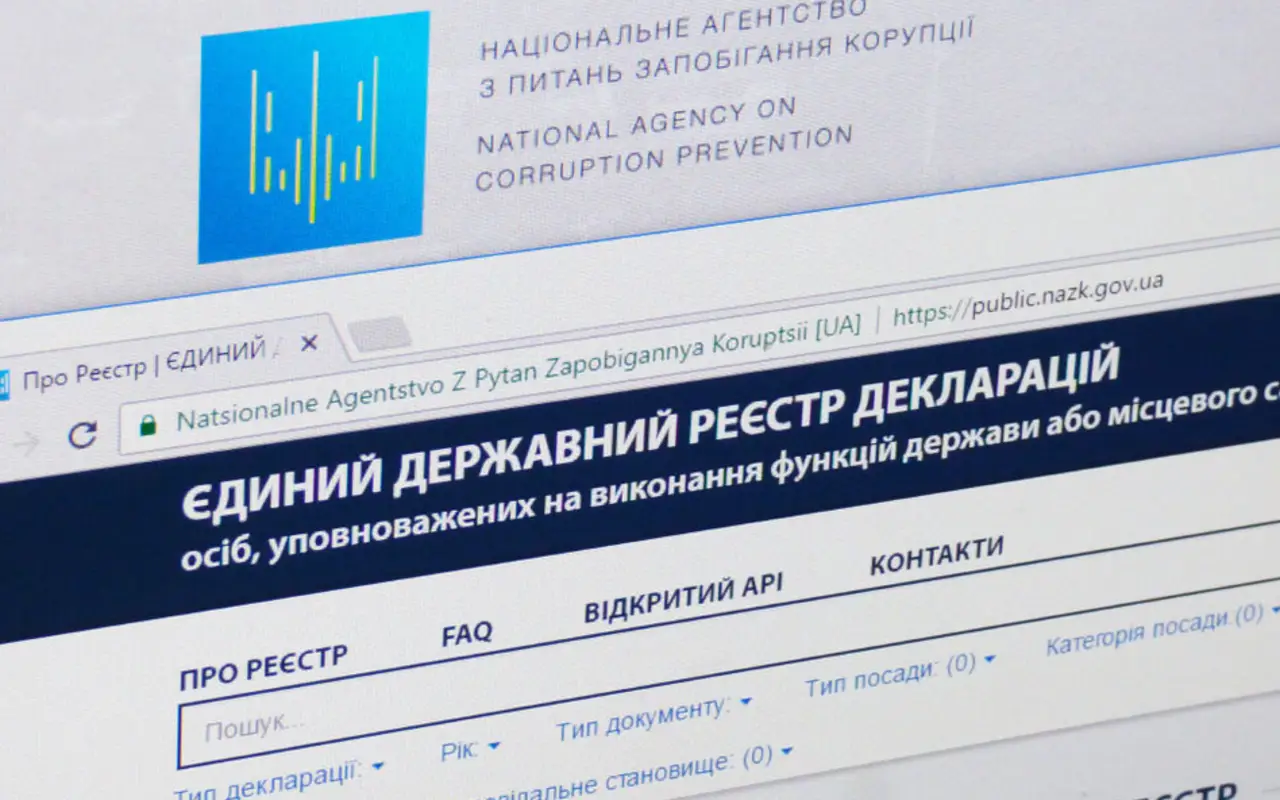
The NACP’s clarification regarding the declaration of membership in the UNBA should be clarified – BCU
An advocate’s membership in the UNBA is an element of professional status arising by virtue of law, rather than a voluntary private membership in an association. Therefore, failure to disclose it in a declaration should not automatically lead to the conclusion of unethical conduct or the concealment of a private interest.

Discussion
The history of Ukrainian constitutionalism was discussed during a lecture
To mark Ukraine’s Constitution Day, the Center for research on the legal profession and law of the UNBA in collaboration with the «Bykivnia Graves» National Historical and Memorial Reserve organized an online lecture on the history of the Ukrainian constitutional process.
Legislation
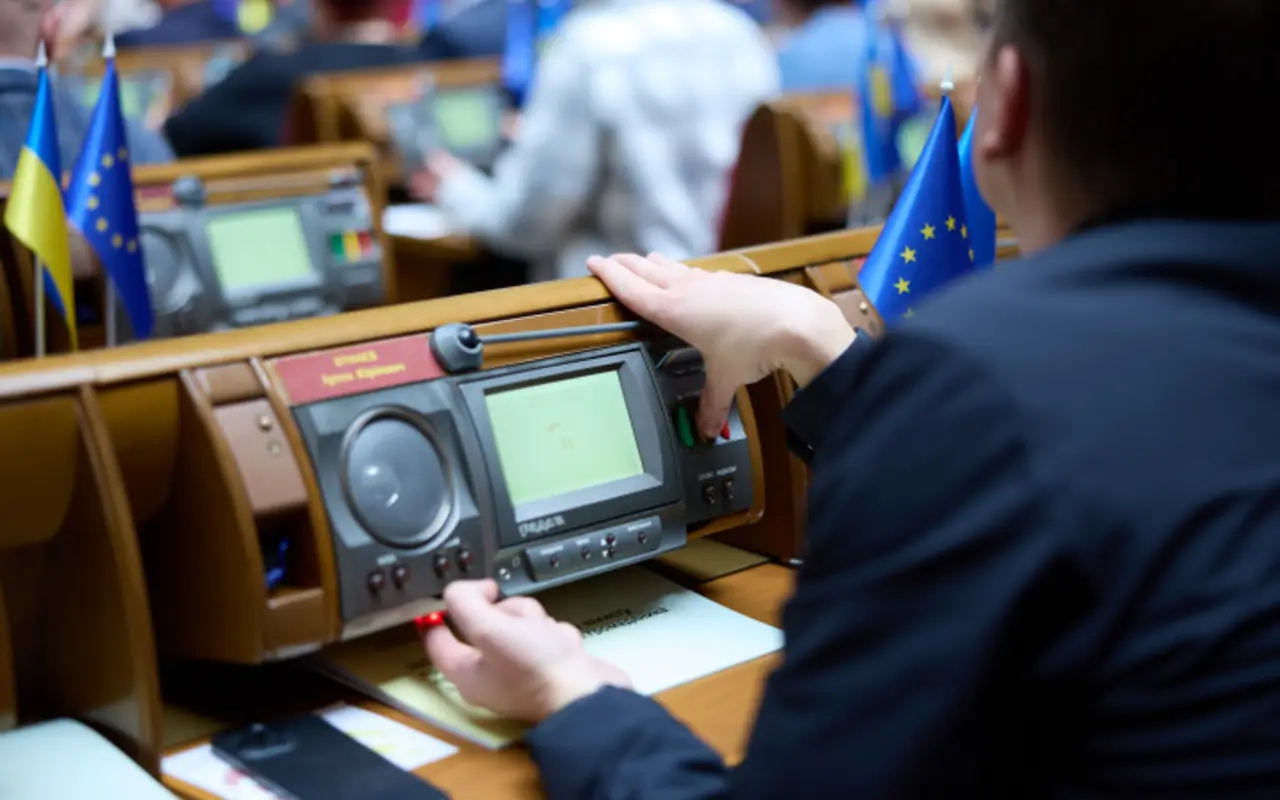
The UNBA is counting on the swift ratification of the Convention on the Protection of the Professions of Lawyer
The ratification of the Council of Europe Convention on the Protection of the Professions of Lawyer must be accompanied by targeted amendments to legislation to strengthen safeguards for advocates, but should not be used as a pretext for dismantling the self-governing model of advocacy.

Legal defence of military personnel
Advocates are expanding their legal support for the military and affected businesses
Legal assistance for military personnel should begin with simple and quick consultations, but it should not end there. Typical requests from brigades are compiled into summaries, digital services and proposals to government agencies.
Interaction
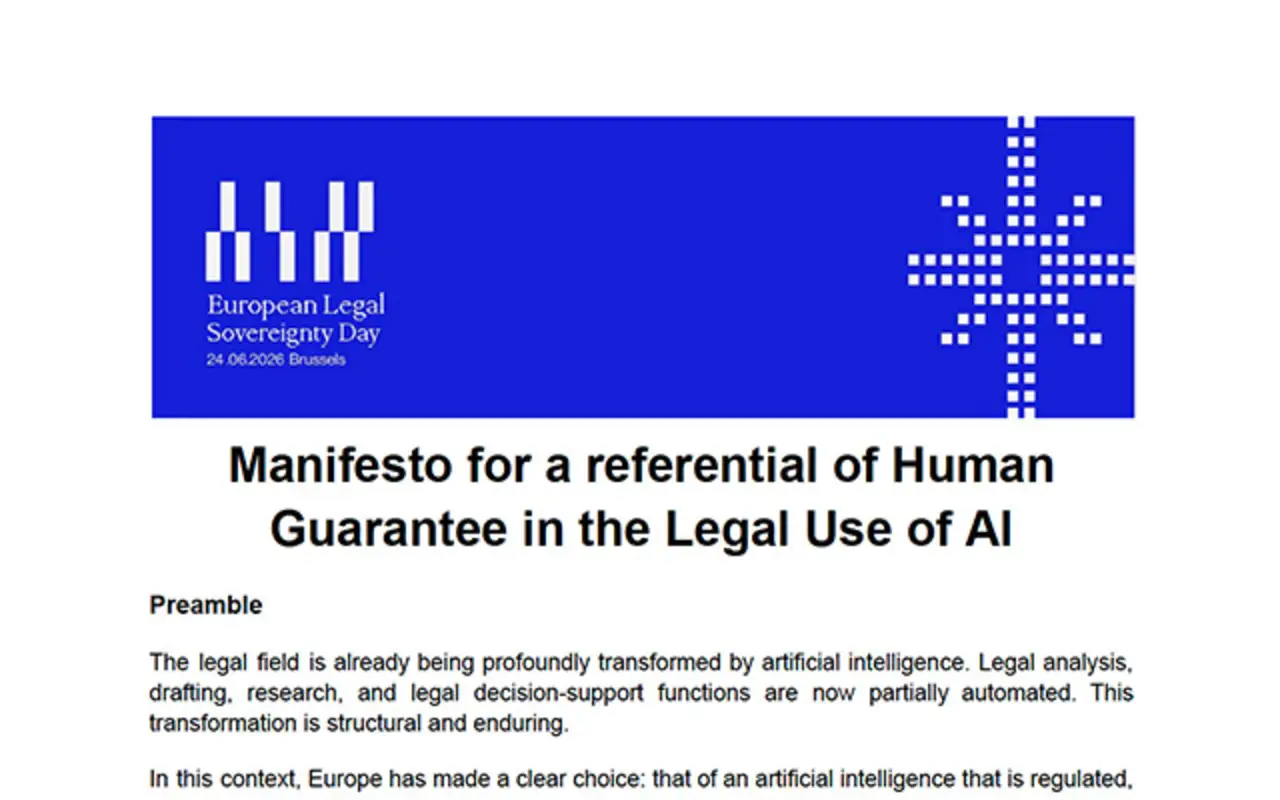
A manifesto on AI in law was presented in Europe. The UNBA has joined the initiative
On June 24, as part of European Legal Sovereignty Day, which took place in Brussels, the Manifesto for a Referential of Human Guarantee in the Legal Use of AI was presented.
Publications

Volodymyr Matsko Extradition during wartime: when the risks outweigh the request

Volodymyr Matsko Extradition as a systemic form of rights violations

Victoria Yakusha, Law and Business The anti-corruption vertical cannot «take care» of the Bar as an institution, - acting head of the HQDCB

Censor.net Protecting advocates – protecting justice: addressing concerns about the new law

Ihor Kolesnykov A BRIEF SUMMARY REGARDING THE APPLICATION OF THE ORDER ON EXTENDED CONFISCATION IN LATVIA REGARDING FINANCIAL ASSETS OF…

Valentyn Gvozdiy WORKING IN A WAR ZONE

Lydia Izovitova Formula of perfection

Sergiy Vylkov Our judicial system is so built that courts do not trust advocates