


Guarantees for the protection of citizens' rights during pre-trial investigations were discussed at the UNBA
Protecting citizens’ rights during the pre-trial investigation requires, above all, proper judicial oversight, clear rules for the parties to criminal proceedings, and practical mechanisms for addressing violations.
Joint efforts
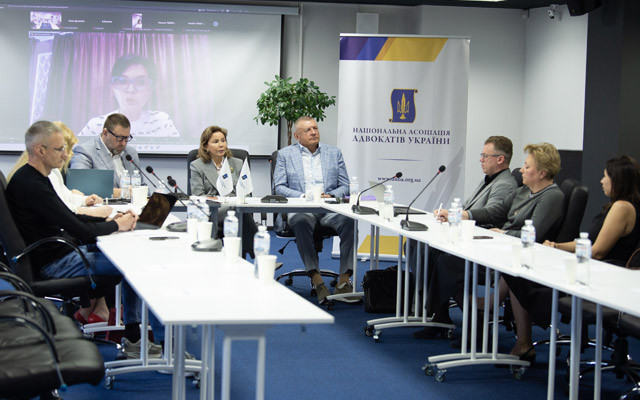
This was discussed by participants at the roundtable «Protecting the constitutional rights of Ukrainian citizens during pre-trial investigations», which took place on June 1 at the UNBA. The event was organized by the UNBA Committee on the rule of law in cooperation with the UNBA Committee on legal practice.
Opening the discussion, the chairman of the Committee on the rule of law Marina Stavniychuk, who served as moderator, noted that the purpose of the event was to identify issues for further work on shaping law enforcement practices grounded in the rule of law, respect for human dignity, rights and freedoms, and guarantees for their realization.
According to her, the issue of the quality of criminal procedural legislation remains relevant, particularly given the number of amendments to the current Criminal Procedure Code. She also noted that with this roundtable, two UNBA Committees are launching a series of joint discussions, which other Committees may also join. The goal of this work is to prepare systematic and balanced amendments.
Co-moderator and deputy chairman of the Committee on legal practice Volodymyr Martynenko emphasized that the event brings together inter-committee work within the UNBA and should help develop practical changes for the pre-trial investigation stage. According to him, these developments should become part of the overall work on updating criminal procedural law so that the protection of citizens’ rights and legitimate interests is ensured by rules that are clear to all parties to the criminal process.
Statistics as a signal
An analysis of statistics on pre-trial investigation and judicial oversight was presented by advocate and former Deputy Prosecutor General Oleksiy Baganets. According to the data he cited, 492,000 criminal cases were entered into the Unified Register of Pre-trial Investigations (URPI) in 2024, but the actual number of reports and complaints of crimes received by law enforcement agencies and the prosecutor’s office was significantly higher. However, law enforcement agencies and the prosecutor’s office failed to ensure their full registration, as required by law. In this regard, he drew attention to complaints regarding the failure to enter information into the Unified Register of Pre-trial Investigations: in 2024, investigating judges reviewed 36,000 such complaints, of which 20,000, or 57%, were upheld.
Another set of statistics concerned guarantees of the inviolability of the home. According to the speaker, in 2024, investigators and prosecutors filed 93,000 motions for search warrants, and the rate at which they were granted by investigating judges was nearly 84%. Moreover, this percentage has been increasing every year. Separately, he cited data on entering a residence without the owner’s presence: in 2024, 659 such motions were filed, 90% of which were granted.
Regarding the seizure of property, O. Baganets noted that in 2024, such seizures were imposed in 112,000 cases, and the percentage of denials of such motions dropped to 6%. According to him, by the end of 2024, 78% of active property seizures had been imposed in cases that were either closed or had been under investigation for a long time.
Speaking about pretrial detention, the speaker cited data on 18,000 motions granted in 2024 and a 91% approval rate by investigating judges.
O. Baganets also focused on covert investigative activities. According to him, in 2024, 12,000 complaints regarding the unlawful use of covert investigative activities were filed with investigating judges, and 42% of these complaints were granted.
The expert linked these figures to the problem of the effectiveness of prosecutorial oversight, the quality of judicial review, and the actual observance of human rights during pre-trial investigations (the full text of O. Baganets’ speech at the roundtable can be downloaded via this link).
Mechanisms are not working
Participants in the discussion addressed practical challenges that advocates face during pre-trial investigations. A member of the UNBA Committee on legal practice Andriy Izovita drew attention to Article 303 of the CPC, which outlines the list of decisions, actions, or omissions that may be appealed at this stage. According to him, in practice, there are issues that cannot be appealed during the pre-trial investigation but actually affect citizens’ rights, particularly property rights, freedom of movement, and restrictions on liberty. Therefore, in his opinion, this list needs to be revised.
Among the problems with judicial oversight, he also cited the formalistic nature of the review of complaints and motions. According to A. Izovita, the review of such complaints is often merely formal: investigating judges do not always delve into the circumstances, citing the limits of judicial oversight at the pre-trial investigation stage, and the texts of decisions are often formulaic.
He specifically addressed the timeframes for reviewing complaints. Although the CPC sets time limits, in practice three days can turn into three months or more, which negates the very need for the defense to appeal to the investigating judge.
Another problem cited was the defense’s access to information necessary to substantiate complaints. Specifically, this concerned the inability to obtain data regarding the progress of criminal proceedings, the composition of the team of investigators and prosecutors and the involvement of specific procedural officials in the proceedings.
V. Martynenko supported this argument, citing the example of the Unified Register of Pre-trial Investigations (URPI) case file. He noted that even during the trial phase, it can be difficult for the defense to determine whether a specific investigator or prosecutor was part of the relevant team and whether they had the authority to perform procedural actions in the proceedings.
Advocate Tetyana Lezhukh cited the following practical problems: failure to execute or untimely execution of investigative judges’ rulings, abuse of the status of secrecy, formal consideration of the defense’s motions, inequality of the parties’ procedural opportunities in gathering evidence, and the lack of an effective mechanism to monitor an investigator’s inaction after receiving a ruling.
Advocate Oleksandr Levytskyi provided a practical example regarding the seizure of electronic devices. According to him, during searches, law enforcement officers often seize mobile phones and laptops, even though they are not interested in the device itself, but rather in the information it contains. At the same time, when asked to copy the necessary data, investigators cite a lack of technical capability or specialists. In this regard, he proposed that search warrants include a requirement to engage a specialist who could work with the data storage devices without seizing the devices themselves, if possible.
Separately, O. Levytskyi drew attention to the problem of enforcing rulings to lift property seizures. According to him, even after a corresponding motion is granted, law enforcement agencies may fail to return the property, citing a lack of materials, failure to receive the ruling, or uncertainty regarding the person responsible for enforcing it.
Precautions against liability
A member of the UNBA Committee on legal practice Oleg Shram discussed the protection of constitutional rights in criminal proceedings from the perspective of criminal law.
He noted that the pre-trial investigation stage has the greatest impact on rights such as personal freedom and inviolability, property rights, the right to engage in business activities, the right to defense, and the confidentiality of private communications.
In his view, certain legislative changes have weakened safeguards against law enforcement officers’ liability for rights violations in criminal proceedings. In particular, he cited the amendments to Article 364 of the Criminal Code in February and May 2014, as well as the declaration of unconstitutionality of Article 375 of the Criminal Code, which provided for the liability of judges for rendering knowingly unjust decisions. According to O. Shram, these changes have led to a situation where a significant portion of unlawful actions in criminal proceedings that did not result in direct material damage have effectively gone unpunished.
He also drew attention to the articles of the Criminal Code that provide for liability for knowingly unlawful detention, violation of the right to defense, coercion to testify, obstruction of lawful economic activity, and other infringements of rights in criminal proceedings. At the same time, he noted, the results of investigations into such crimes are virtually nonexistent. As an example, the speaker cited data showing that over the past year, only one criminal case under Article 372 of the Criminal Code—concerning the prosecution of a knowingly innocent person—was referred to court, while no cases involving knowingly unlawful detentions were brought to court.
Separately, O. Shram focused on the disciplinary liability of prosecutors. According to him, in response to disciplinary complaints regarding the procedural activities of prosecutors, complainants often receive formal rejections citing the independence of the prosecutor in criminal proceedings.
In the context of interference in business activities, he cited data showing that from June of last year through March 30, 2026, out of 23,000 criminal proceedings involving businesses, 9,000 were closed following an investigation. In his view, this raises the question of the accountability of investigators and prosecutors for unfounded criminal prosecution and the associated restrictions on rights.
In conclusion, O. Shram noted that without restoring safeguards and ensuring the inevitability of accountability for intentional violations of constitutional rights, it is impossible to reach a higher level of human rights protection in pre-trial investigations.
Continuation on a broader platform
During the discussion, V. Martynenko addressed the chairman of the Subcommittee on the organization of public safety and order of the Verkhovna Rada Committee on law enforcement Oleksandr Danutsa with a proposal to consider holding a separate event at the parliamentary committee or in another format with the participation of law enforcement agencies and the prosecutor’s office. The MP suggested that a formal request be sent to him and stated that he was ready to initiate a discussion of this issue within the Committee.
At the end of the event, V. Martynenko noted that the issues discussed could not be fully addressed by a single roundtable. According to him, the UNBA will utilize various platforms to achieve practical results and reform the mechanisms that affect the observance of citizens’ rights in criminal proceedings.
M. Stavniychuk summarized that several practical tasks had already emerged during the discussion: harmonizing the terminology of criminal procedural law with other laws to ensure a uniform understanding among all participants in proceedings; developing a new methodology for unified statistics in pre-trial investigations and aligning it with judicial statistics; and reinstating preventive measures of liability for violations of pre-trial investigation procedures.
She also reported that the UNBA plans to continue its work in a broader format, involving judges, prosecutors, police, and other participants in criminal proceedings, in order to arrive at joint solutions.
Popular news
Guarantees of the practice of law
Preparations for the ratification of the Convention on the Protection of the Professions of Lawyer are in the final stages
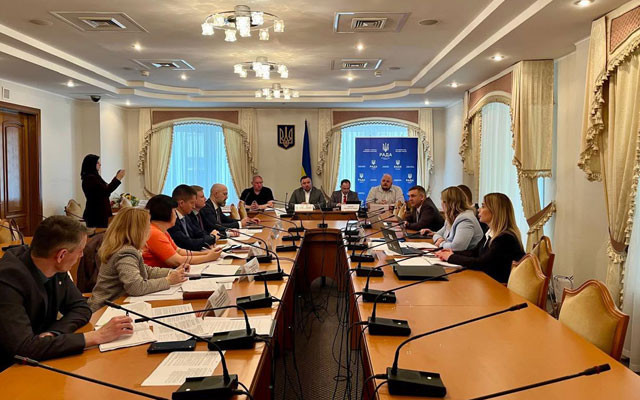
On June 9, the Verkhovna Rada Committee on legal policy held a working meeting to prepare for the ratification of the Council of Europe Convention on the Protection of the Professions of Lawyer. The Ministry of Justice and the Ukrainian National Bar Association agreed on approaches to draft laws regarding the ratification and implementation of the Convention. Participants have been given 10 days to prepare the draft laws that will be submitted for consideration.
Announcements
Internships at German law firms: IRZ is accepting applications from Ukrainians
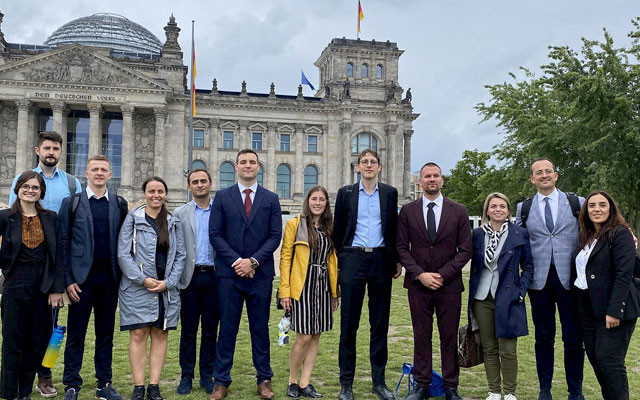
In 2026, the German Foundation for International Legal Cooperation (IRZ) plans to organize a multilateral internship program for young advocates from partner countries. Participants will attend an introductory seminar in Bonn and complete internships at law firms in Germany.
Guarantees of the practice of law
Restrictions on the right to legal assistance in pretrial detention centers are unacceptable – statement by the BCU
The Bar Council of Ukraine has stated that it is unacceptable to restrict the right to professional legal assistance, the guarantees of legal practice, and the confidentiality of communications between advocates and clients in pretrial detention facilities operated by the State Criminal-Executive Service of Ukraine.
European integration
The UNBA presented the CCBE with an overview of legal reform and challenges
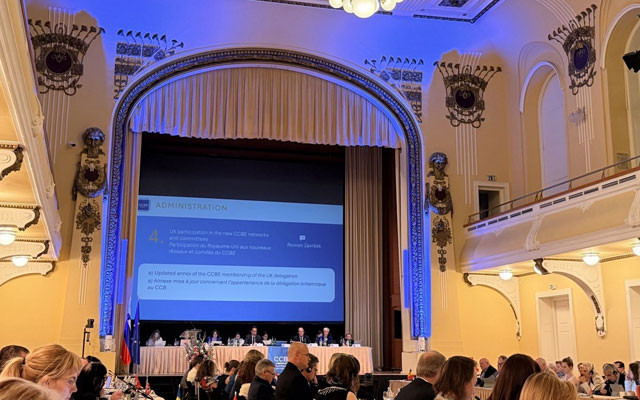
Reform of the legal profession, Ukraine’s European integration commitments, guarantees of the profession’s independence, and practices of bar self-governance in European countries — these issues were the subject of discussion at the Council of Bars and Law Societies of Europe (CCBE).
Rule of Law Roadmap
The UNBA is compiling the findings of the subgroups regarding the implementation of the Rule of Law Roadmap
Today, May 28, the Ukrainian National Bar Association hosted a meeting of the Coordination Bureau of the Working Group on the implementation of the Rule of Law Roadmap regarding the reform of the advocacy profession. Following a series of meetings by thematic subgroups, the work is now moving to the stage of consolidating proposals and preparing a coordinated package of recommendations.
Discussion
UNBA discussed removing barriers at border crossings for families with children with disabilities
Families of children with disabilities face additional requirements when traveling abroad, particularly regarding consular registration. What is happening and what changes are needed to remove these obstacles were discussed during the roundtable «Borders without barriers for families of children with disabilities».
Discussion
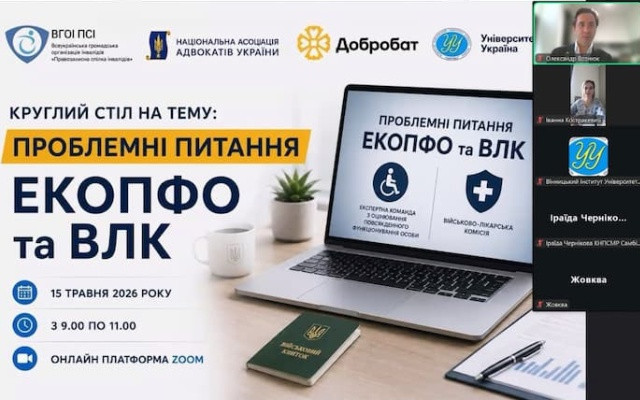
New rules, old problems: the UNBA discussed the work of the ETAIDF and MMC
The reform of medical-social assessment and military medical commissions has changed procedures but has not resolved practical issues. People face situations where documents are not issued, decisions are based on technicalities, assessments are delayed, and they struggle to demonstrate their actual health status in specific life situations.
Discussion
Co-parenting shouldn't be reduced to a 50/50 formula, — roundtable discussion
Following a divorce, joint custody can serve as a mechanism for ensuring equal parental rights. However, this model requires clear criteria and cannot be applied automatically without taking into account the child’s age, the level of conflict between the parents, the risk of violence, and the feasibility of enforcing the future decision.
Publications

Volodymyr Matsko Extradition during wartime: when the risks outweigh the request

Volodymyr Matsko Extradition as a systemic form of rights violations

Victoria Yakusha, Law and Business The anti-corruption vertical cannot «take care» of the Bar as an institution, - acting head of the HQDCB

Censor.net Protecting advocates – protecting justice: addressing concerns about the new law

Ihor Kolesnykov A BRIEF SUMMARY REGARDING THE APPLICATION OF THE ORDER ON EXTENDED CONFISCATION IN LATVIA REGARDING FINANCIAL ASSETS OF…

Valentyn Gvozdiy WORKING IN A WAR ZONE

Lydia Izovitova Formula of perfection

Sergiy Vylkov Our judicial system is so built that courts do not trust advocates