UNBA discussed removing barriers at border crossings for families with children with disabilities
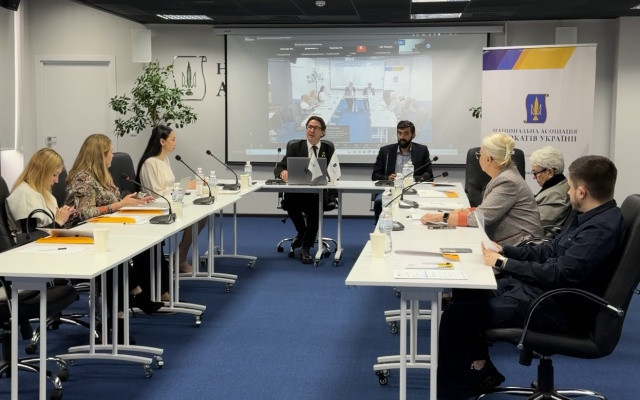
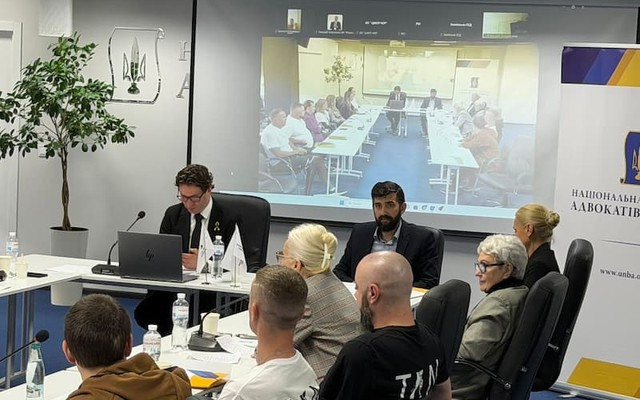
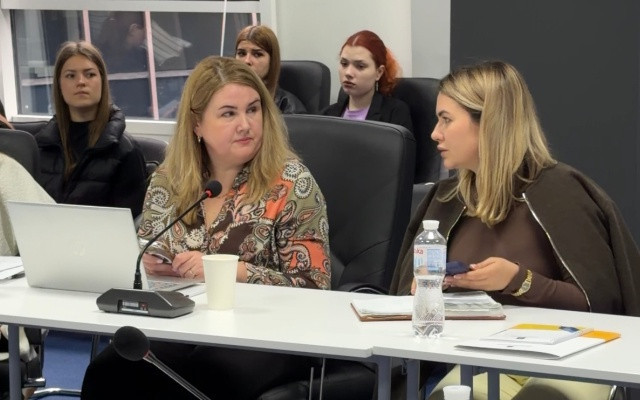
Families of children with disabilities face additional requirements when traveling abroad, particularly regarding consular registration. What is happening and what changes are needed to remove these obstacles were discussed during the roundtable «Borders without barriers for families of children with disabilities».
On May 18, the Committee on the protection of the rights of persons with disabilities of the Ukrainian National Bar Association brought together advocates, human rights defenders, representatives of the civil society sector, local communities, government agencies and the education sector for an open discussion.
Opening the discussion, chairman of the Committee Oleksandr Voznyuk explained that the roundtable was dedicated to the Rules for Crossing the State Border by Citizens of Ukraine, approved by Cabinet Resolution No. 57 of January 27, 1995, and the issue of their application to families of children with disabilities. According to him, the issue concerns requirements that lawyers and civil society representatives view as discriminatory toward children with disabilities who cross the border. After all, such additional conditions are established at the sub-legislative level, and in the context of European integration processes, the relevant regulations require revision.
The rules require the accompanying adult to register the child with a disability with the consulate within seven days. According to a member of the Committee Ivanka Kostrakevych this requirement is unlawful, as the law does not establish such an obligation. The advocate cited her own experience of visiting the Ukrainian consulate in Berlin, where she had to wait for several hours with her child, and emphasized that such a procedure creates an additional burden for parents of children with disabilities. She noted that she can understand consular registration for certain categories of children (for example, those deprived of parental care, or children being transported by residential care facilities), but not as a requirement for a child with a disability.
During the discussion, the Solotvyno territorial community cited a specific case from practice. The community was approached by the father of an adult with a disability since childhood. He had traveled abroad with his child for medical treatment, after which the child remained there with a sister who lives abroad, while the father returned to Ukraine. When he later wanted to travel to bring the child back, he was not allowed to cross the border. The community representative explained that under current regulations, if the parent and child did not return at the same time, this creates a problem for the accompanying parent to leave the country again.
Another practical aspect was highlighted by dean of the Faculty of international trade and law at the State University of Trade and Economics Yulia Goncharova. She noted that in the summer, many children will be traveling for vacation or rehabilitation, and therefore, getting to an embassy or consulate in the heat will be even more difficult. According to her, waiting in line for several hours with a child in another country, without knowing the language and without certainty that all documents are properly prepared, creates a particular challenge for the family.
A representative of the NGO «League of Justice of Ukraine» Sofia Kopach highlighted the state’s ability to ensure the rule of law in practice, linking the issue under discussion to European integration processes. According to her, the Cabinet of Ministers’ resolution should serve as a mechanism for implementing the law and must not create additional barriers for specific categories of citizens. Such an approach, as the speaker noted, contradicts the UN Convention on the Rights of Persons with Disabilities and the EU Charter of Fundamental Rights.
In this context, the requirement for consular registration for children with disabilities and seriously ill children raises questions about its proportionality and compliance with the principle of legal certainty, as well as the best interests of the child.
In a broader context, a member of the UNBA Committee Viktor Vovnyuk suggested viewing this issue as reflecting the state’s approach to children with disabilities. According to him, the state may grant a certain right or opportunity, but simultaneously require dozens of documents for its implementation. As a result, the child is effectively unable to exercise such a right, or the parents forgo the opportunity. V. Vovnyuk emphasized that for children with disabilities, accessing rehabilitation, treatment, travel abroad, or stays at camps should be simpler than for other citizens, not the other way around. Separately, he drew an analogy with military personnel with disabilities, who also should not have to collect several times more documents than other citizens.
In conclusion, O. Voznyuk invited participants to submit ideas, comments, and suggestions regarding the issues raised during the discussion. He noted that the organizers are open to further communication, and similar meetings will continue to be held. He also thanked the participants who joined the discussion, particularly veterans, community representatives, families, caregivers, and everyone working on issues related to children and people with disabilities.
Popular news
European integration
Lidiya Izovitova: In the context of European integration reforms, advocacy is a partner of the state, not a target of reform
The war has significantly altered the working conditions for advocates, while European integration has presented the profession with new institutional challenges. The ongoing negotiation process covers issues such as the rule of law, judicial independence, fundamental rights, justice, freedom and security.
Guarantees of the practice of law
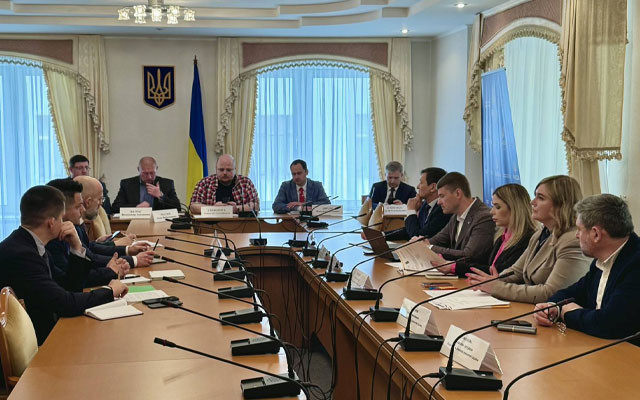
The Verkhovna Rada discussed the next steps for ratifying the Convention on the Protection of the Professions of Lawyer
The Verkhovna Rada Committee on legal policy held a working meeting to prepare for the ratification of the Convention for the Protection of the Profession of Lawyer. The meeting was attended by members of parliament, representatives of the Office of the President, the Ministry of Justice, the Ministry of Foreign Affairs and the Ukrainian National Bar Association.
Guarantees of the practice of law
Valentin Gvozdiy: Ukraine’s ratification of the Convention for the Protection of the Profession of Lawyer – is a matter…
Exactly one year ago, on May 13, 2025, in Luxembourg, during the 134th session of the Committee of Ministers of the Council of Europe, the Convention for the Protection of the Profession of Lawyer was opened for signature. Today, the Verkhovna Rada Committee on legal policy held a working meeting to prepare for its ratification. Between these two dates lies a year, during which (on March 9) Ukraine became the 28th signatory state. We spoke about this new phase with the Vice President of the UNBA, BCU Valentin Gvozdiy, who was personally involved in the preparation of this international instrument.
Support
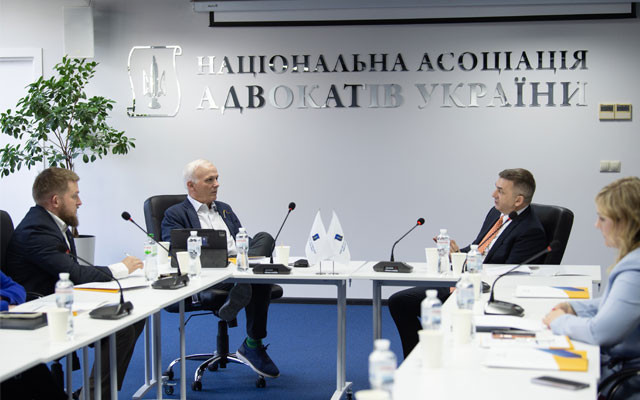
Mental health, archives and cybersecurity: The UNBA and the IBA reviewed the progress of joint projects
The Ukrainian National Bar Association and the International Bar Association (IBA) reviewed the progress of joint projects that are of practical importance in the context of the war: supporting the mental health of advocates, digitizing archives, and strengthening the cybersecurity of the legal infrastructure.
Rule of Law Roadmap
The UNBA is developing a model for reforming the legal profession
The reform of the advocacy profession is part of the negotiation process regarding Ukraine’s accession to the European Union, and the Rule of Law Roadmap explicitly identifies the Ukrainian National Bar Association as one of the key stakeholders in the process.
Legal defence of military personnel
Missing in action: advocates explain the procedure to the families of servicemembers
As part of the «Advocate+» pilot project, advocates continue to work with military personnel in the brigades, helping to resolve practical legal issues — ranging from social benefits and payments to undergoing medical examinations and processing paperwork.

Guarantees of the practice of law
Police to investigate the NACP's attempts to reform advocacy
The Office of the Prosecutor General has opened a criminal investigation into alleged abuse of power by employees of the National Agency for Corruption Prevention.
Interaction
Advocates and patent attorneys combine their expertise in the field of intellectual property
Joint legislative proposals, expert opinions on regulatory changes and professional discussions on key issues in the field of intellectual property will form the basis of cooperation between the Ukrainian National Bar Association and the National Association of Patent Attorneys of Ukraine.
Publications

Volodymyr Matsko Extradition during wartime: when the risks outweigh the request

Volodymyr Matsko Extradition as a systemic form of rights violations

Victoria Yakusha, Law and Business The anti-corruption vertical cannot «take care» of the Bar as an institution, - acting head of the HQDCB

Censor.net Protecting advocates – protecting justice: addressing concerns about the new law

Ihor Kolesnykov A BRIEF SUMMARY REGARDING THE APPLICATION OF THE ORDER ON EXTENDED CONFISCATION IN LATVIA REGARDING FINANCIAL ASSETS OF…

Valentyn Gvozdiy WORKING IN A WAR ZONE

Lydia Izovitova Formula of perfection

Sergiy Vylkov Our judicial system is so built that courts do not trust advocates