


Tax residency of Ukrainians abroad: what matters
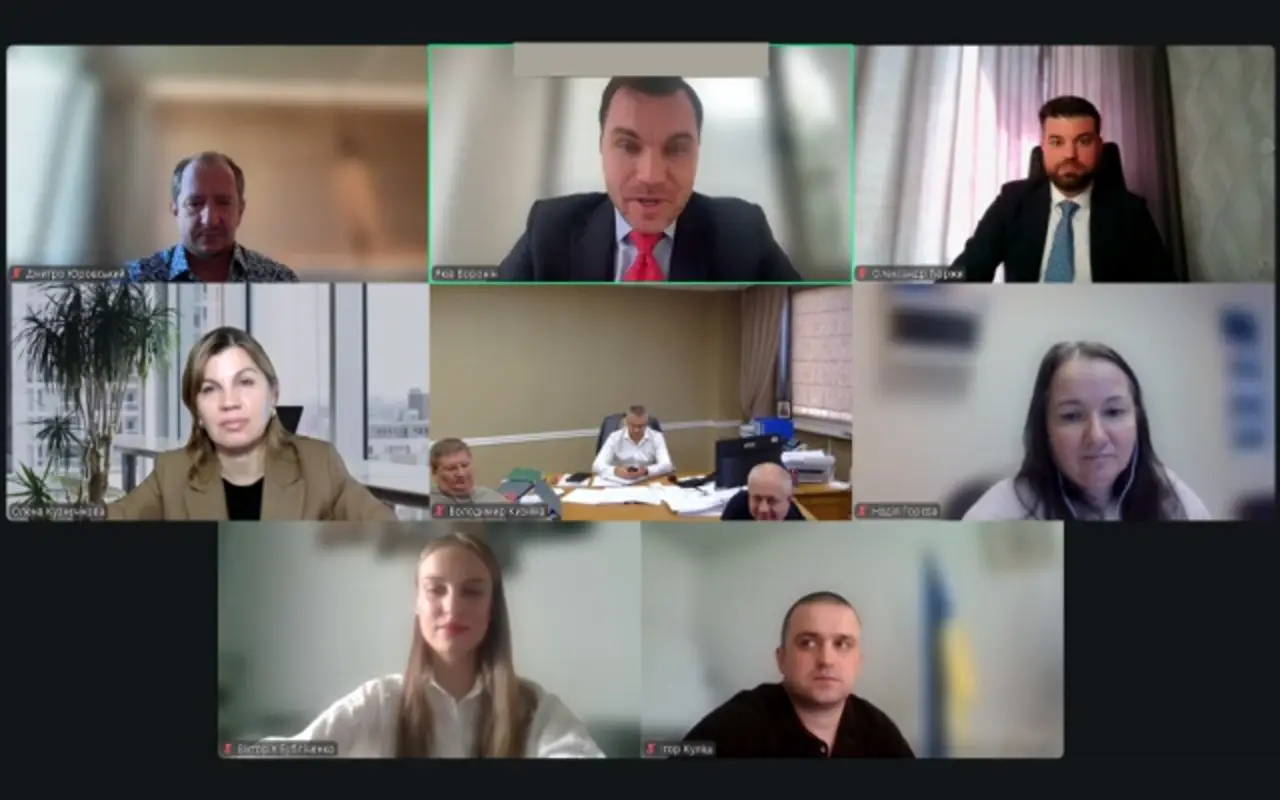
The determination of tax residency for Ukrainians who have been living abroad for an extended period depends on the combination of their personal and economic ties to each country. The established status determines the procedure for reporting income, paying taxes and fulfilling CFC reporting obligations.
This was discussed on September 15 during the webinar «Tax residency of Ukrainian citizens in wartime: determination criteria, dual residency, tax consequences and CFC reporting», organized by the UNBA Committee on customs and tax law.
In his opening remarks, Committee chairman Yakov Voronin drew attention to the legal uncertainty faced by Ukrainians living and working abroad. He cited the refusal to issue a certificate of Ukrainian tax residency as one possible mechanism for confirming residency status: in his view, such a document could serve as evidence that an individual does not meet the residency criteria and could give rise to corresponding legal consequences.
At the same time, practices among regional tax authorities vary. According to the advocate, some authorities refuse to issue the certificate if a person does not meet the residency criteria, while others consider the ownership of an apartment or house in Ukraine to be a defining characteristic of Ukrainian residency. Therefore, the tax authorities’ position regarding the uniform application of these rules requires harmonization.
He identified the fulfillment of CFC obligations following a change in residency as a separate issue. A person who becomes a tax resident of another country ceases to be a CFC controller under Ukrainian rules; however, the law does not provide for a specific mechanism to report this change. In practice, some taxpayers or their representatives submit applications or notifications regarding the loss of residency, so this issue requires separate regulation.
Committee Council member Viktoria Bublichenko explained that status is initially determined according to the national laws of each country. If both countries recognize a person as their resident, an international treaty is applied, under which permanent residence, center of vital interests, habitual residence, and citizenship are assessed in sequence.
Ownership of an apartment or house does not always mean that a person has a permanent residence: what matters is whether they can use it on a permanent basis. The center of vital interests is determined by a combination of circumstances, including the family’s place of residence, business activities, real estate, bank accounts, and place of business. Under the conventional approach, no single factor is decisive on its own.
The 183-day criterion in Ukrainian law is based on the actual number of days spent in Ukraine. Under international treaties, however, the regularity of the stay and whether it has become part of the individual’s established way of life are assessed.
Advocate and international tax expert Olena Kuznechikova advised compiling a body of evidence regarding the center of vital interests. This may include information on border crossings, housing documents, bank statements, and data on children’s education, employment, business activities, and asset management.
Information from government agencies, banks, and third parties carries greater evidentiary weight. Personal statements and explanations carry less weight if not supported by external documents.
To have tax paid abroad credited toward tax liability in Ukraine, a document from a competent foreign authority specifying the income and the amount of tax is required. State Tax Service representative Vyacheslav Dotsenko cited common mistakes such as submitting an employer’s certificate instead of a document from a competent authority, the absence of information regarding the tax paid, or the lack of a translation or proper formatting of the document.
The webinar moderator, Committee member Oleksandr Gyurzy drew attention to court precedent regarding individual tax consultations. He cited a case involving Germany, in which the court upheld the tax authority’s position, as well as cases concerning residency in Cyprus and Estonia, where the courts ruled in favor of the taxpayers and overturned the State Tax Service’s consultations. In the latter cases, the courts reasoned that the tax authority must assess residency, as it is directly related to taxation.
According to O. Gyurzy, requests for individual tax consultations often contain only an explanation of travel abroad without documents confirming the actual circumstances. Therefore, it is advisable to submit, along with the request, evidence of the family’s residence, children’s education, receipt of medical services, payment of housing and living expenses, and other ties to the relevant country.
In this regard, V. Dotsenko clarified that an individual tax consultation is prepared based on the information and documents provided by the specific taxpayer. If, during a court appeal, an individual submits new evidence, it may differ from the materials on which the State Tax Service based its consultation. At the same time, a consultation provided to one individual cannot be used by other taxpayers to confirm their own status.
Ukrainian law does not require the State Tax Service to issue a certificate of loss of residency. This was noted by the deputy chairman of the Committee Dmytro Yurovsky. In some EU countries, after an application and supporting evidence are submitted, the change in status is recorded in the tax registry.
Deputy director of the Department of international taxation at the Ministry of Finance Nadiya Goreva explained that a certificate of resident status is intended for the application of an international treaty in another country. Ukrainian law does not provide for a separate procedure for recognizing an individual as a non-resident or for issuing a universal document confirming such status.
The Ministry of Finance representative reported that the agency has begun work on updating the definition of a tax resident as part of preparations for legislative changes. Various proposals have been submitted regarding the draft law published in February: some suggest leaving the current definition of a resident unchanged, while others propose making 183 days the key or sole criterion. Work on this issue will continue throughout the year with the involvement of experts.
A representative of the State Tax Service Ihor Kulish noted that the current CFC reporting requirements do not allow for the loss of resident status to be reported. The State Tax Service will propose that the Ministry of Finance consider a corresponding amendment while preparing a draft law to improve CFC rules.
Y. Voronin proposed that the Ministry of Finance involve the UNBA Committee in further work on tax residency rules and establish a joint working group to discuss legislative proposals. N. Goreva supported this proposal and noted that it would be possible to resume such work after the completion of priority legislative initiatives related to Ukraine’s European integration commitments.
Popular news
Support
Protecting the legal profession, cybersecurity and support for advocates: common themes for the IBA and the UNBA
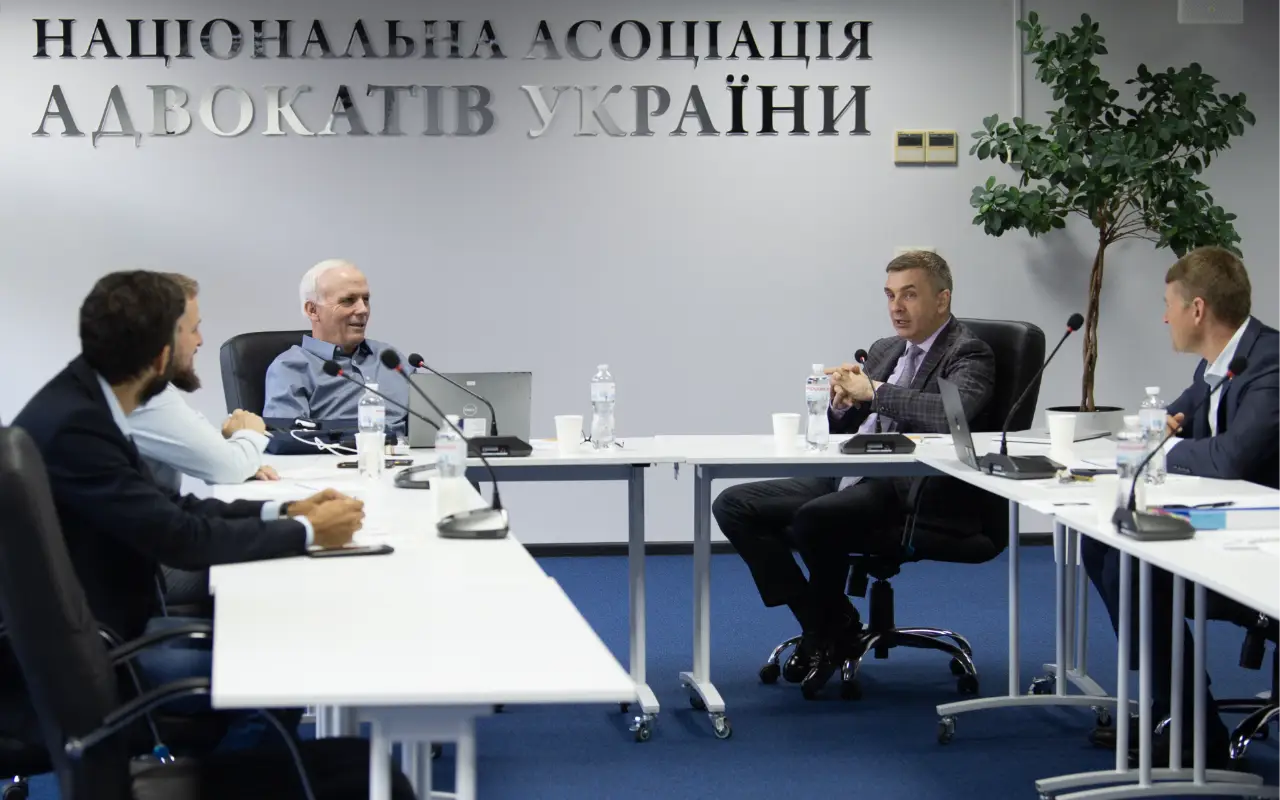
On September 18, a working meeting was held at the office of the Ukrainian National Bar Association with Executive Director of the International Bar Association (IBA) Mark Ellis. The parties discussed the Ukrainian advocacy profession’s participation in European legal processes, the protection of the UNBA’s digital infrastructure, psychological support for advocates and future areas of cooperation.
Educational events
Tax residency of Ukrainians abroad: what matters
The determination of tax residency for Ukrainians who have been living abroad for an extended period depends on the combination of their personal and economic ties to each country. The established status determines the procedure for reporting income, paying taxes and fulfilling CFC reporting obligations.
War
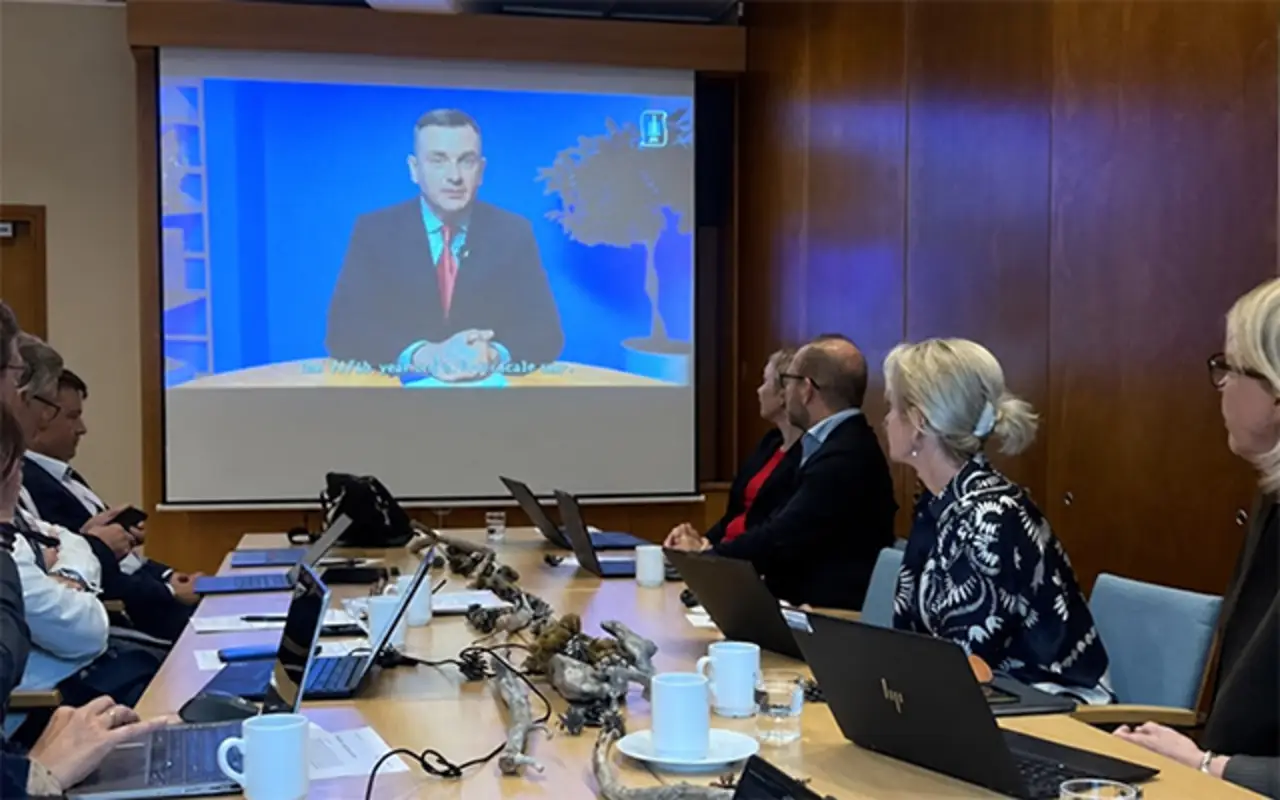
Are Europe's advocacy associations prepared for a potential war? V. Gvozdiy shared lessons from the Ukrainian experience
The continuity of the bar’s self-governance, the protection of professional registries and archives, as well as equal guarantees of employment for advocates, judges, and prosecutors must be enshrined in advance in legislation in the event of war or another emergency.

Educational events
How DISC helps manage «tigers», «monkeys», «elephants» and «turtles»
The same instruction from a manager may motivate one employee to take action, while leaving another without the necessary guidance. People perceive work tasks differently: for some, a deadline and the expected outcome are enough, while others need explanations, time or a detailed plan.

Legislation
The Verkhovna Rada is preparing a bill to implement the Convention on the Protection of the Professions of Lawyer
Members of Parliament plan to introduce a bill in the near future to implement the main provisions of the Council of Europe Convention on the Protection of the Professions of Lawyer. This parliamentary initiative may also prompt the government to expedite the preparation of the ratification package.
Educational events
What an advocate should consider when a fee dispute escalates into a complaint to the QDBC
If an advocate files a lawsuit seeking to recover fees from a client, the client may in turn file a complaint with the High Qualification and Disciplinary Commission of the Bar in an effort to compel the advocate to withdraw the lawsuit. How do the advocacy’s disciplinary bodies handle such cases?

Edition
Veteran-advocates returning to the practice of law: the UNBA has prepared recommendations
Military service is incompatible with the practice of law; therefore, an advocate suspends their practice for the duration of their service. However, upon returning, they must reinstate their right to practice law, refresh their knowledge and reestablish their organizational and digital processes.

Educational events
Energy, focus and priorities: how an advocate should plan their day
A rigid workday schedule becomes irrelevant when your routine depends on air raid alerts and disrupted sleep caused by nighttime explosions. Under such conditions, advocates should assess the resources they can actually manage.
Publications

Vasyl Kolishnyi, «Law and Business» Supporting mental health should become part of the professional culture of the Bar, - H. Udovenko

Volodymyr Matsko Extradition during wartime: when the risks outweigh the request

Volodymyr Matsko Extradition as a systemic form of rights violations

Victoria Yakusha, Law and Business The anti-corruption vertical cannot «take care» of the Bar as an institution, - acting head of the HQDCB

Censor.net Protecting advocates – protecting justice: addressing concerns about the new law

Ihor Kolesnykov A BRIEF SUMMARY REGARDING THE APPLICATION OF THE ORDER ON EXTENDED CONFISCATION IN LATVIA REGARDING FINANCIAL ASSETS OF…

Valentyn Gvozdiy WORKING IN A WAR ZONE

Lydia Izovitova Formula of perfection