


Energy, focus and priorities: how an advocate should plan their day
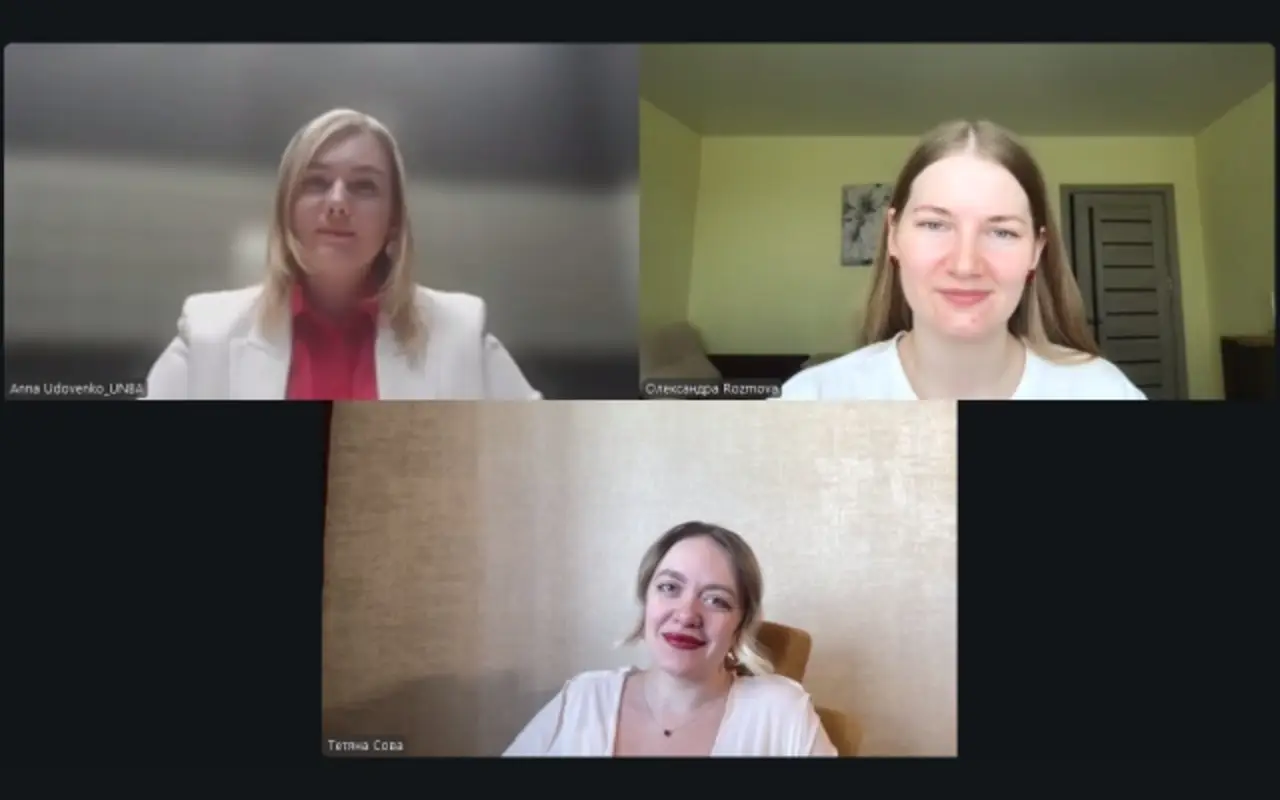
A rigid workday schedule becomes irrelevant when your routine depends on air raid alerts and disrupted sleep caused by nighttime explosions. Under such conditions, advocates should assess the resources they can actually manage.
Practical psychologist Tetyana Sova discussed these resources during the webinar «Why time management doesn’t work: how to work effectively without overloading yourself». The event was organized by the Ukrainian National Bar Association with the support of the International Bar Association (IBA).
According to T. Sova, traditional time management is based on the expectation that a person controls their day. In the reality of war, however, schedules are affected by anxiety, the need to take shelter, transportation restrictions, helping others, and sleep deprivation. Because of this, the same plan requires different levels of effort on different days: after a peaceful night, a person has one level of resources; after shelling or only a few hours of sleep, another.
Therefore, the psychologist suggested shifting the focus from controlling time to managing energy, attention and priorities.
Energy determines the level of physical, emotional, and mental strength. Attention is spent on stimuli: messages, calls, emails, and switching between tasks. And the choice of priorities depends on anxiety, the emotional tone of tasks, habits and perceptions of responsibility.
To assess one’s workload, T. Sova proposed an exercise using hypothetical «time hryvnias». At the start of the day, a person imaginarily receives 1,000 units and then assesses the remaining balance and the largest expenditures. Such «transactions” can include a complex task, a trip, daily chores, multitasking, nervous tension, or minor tasks.
It’s also worth identifying activities that restore some of the expended energy. Exercise, watching a movie, or studying can provide «cashback» if they make a person feel better afterward. Some activities, on the other hand, drain energy without producing noticeable results. Conducting this kind of self-assessment throughout the workweek will help you see the true cost of your daily routines.
It’s best to start planning by assessing your physical and emotional state, your chronotype, and the times of day when different types of work come more easily. Next, identify one main task for the day with a specific outcome. To stay motivated, consider what completing it will bring peace of mind, income, respect or praise.
If a task causes anxiety, you can break it down into smaller steps until you arrive at a simple action you can take right now: open your laptop, launch the necessary program, or read a message. The speaker advised tackling tasks that require concentration in blocks: for example, 45 minutes of work followed by a 10-minute break. Deadlines, reminders, and to-do lists should be transferred to calendars, notebooks and notes to free up your memory.
In summary, T. Sova noted that the key issue is the wise use of a limited resource. To do this, you need to protect your attention from unnecessary switching and structure your work into focused blocks.
Popular news
War
Are Europe's advocacy associations prepared for a potential war? V. Gvozdiy shared lessons from the Ukrainian experience
The continuity of the bar’s self-governance, the protection of professional registries and archives, as well as equal guarantees of employment for advocates, judges, and prosecutors must be enshrined in advance in legislation in the event of war or another emergency.

Educational events
How DISC helps manage «tigers», «monkeys», «elephants» and «turtles»
The same instruction from a manager may motivate one employee to take action, while leaving another without the necessary guidance. People perceive work tasks differently: for some, a deadline and the expected outcome are enough, while others need explanations, time or a detailed plan.

Legislation
The Verkhovna Rada is preparing a bill to implement the Convention on the Protection of the Professions of Lawyer
Members of Parliament plan to introduce a bill in the near future to implement the main provisions of the Council of Europe Convention on the Protection of the Professions of Lawyer. This parliamentary initiative may also prompt the government to expedite the preparation of the ratification package.
Educational events
What an advocate should consider when a fee dispute escalates into a complaint to the QDBC
If an advocate files a lawsuit seeking to recover fees from a client, the client may in turn file a complaint with the High Qualification and Disciplinary Commission of the Bar in an effort to compel the advocate to withdraw the lawsuit. How do the advocacy’s disciplinary bodies handle such cases?
Educational events
Energy, focus and priorities: how an advocate should plan their day
A rigid workday schedule becomes irrelevant when your routine depends on air raid alerts and disrupted sleep caused by nighttime explosions. Under such conditions, advocates should assess the resources they can actually manage.

Greetings
The UNBA honored the winners of the «In the language of prose» contest and opened a fashion exhibition
The competition was organized by the UNBA Committee on humanitarian issues and creative initiatives in cooperation with the Center for advocacy and legal research. Two dozen advocates from various regions of Ukraine submitted their works to the competition committee for consideration. The entries were evaluated based on originality, the relevance of the chosen topic and the level of technical skill.

Discussion
What is holding back funding for gas-fired power generation – discussion between businesses and banks at the UNBA
To provide loans for new gas-fired power generation projects, banks require a predictable cash flow, an investor’s equity contribution, and risk-sharing mechanisms. A business model that relies solely on a preferential gas price is not a sufficient basis for financing.
Educational events
Preparing a court argument: 7 tips for advocates
When preparing a courtroom speech, it is best to begin by formulating the decision the advocate is asking the court to render. Next, the structure of the speech should be built around this outcome, strong arguments should be selected, and weak points should be addressed.
Publications

Vasyl Kolishnyi, «Law and Business» Supporting mental health should become part of the professional culture of the Bar, - H. Udovenko

Volodymyr Matsko Extradition during wartime: when the risks outweigh the request

Volodymyr Matsko Extradition as a systemic form of rights violations

Victoria Yakusha, Law and Business The anti-corruption vertical cannot «take care» of the Bar as an institution, - acting head of the HQDCB

Censor.net Protecting advocates – protecting justice: addressing concerns about the new law

Ihor Kolesnykov A BRIEF SUMMARY REGARDING THE APPLICATION OF THE ORDER ON EXTENDED CONFISCATION IN LATVIA REGARDING FINANCIAL ASSETS OF…

Valentyn Gvozdiy WORKING IN A WAR ZONE

Lydia Izovitova Formula of perfection