






The UNBA warned against restricting advocates' rights during the implementation of the Convention
The Ukrainian National Bar Association supported the adoption in principle of draft laws aimed at harmonizing national legislation with the Council of Europe Convention on the Protection of the Professions of Lawyer, and also highlighted the need to refine them in preparation for the second reading.
The relevant Committees of the UNBA have prepared proposals regarding the draft laws registered with the Verkhovna Rada:
- No. 16105 dated September 28, 2026, «On amendments to the Law of Ukraine «On the advocacy and the practice of law» and other legislative acts of Ukraine in connection with the ratification of the Council of Europe Convention on the Protection of the Professions of Lawyer» (the expert opinion was submitted to the Verkhovna Rada Committee on legal policy);
- No. 16106 dated September 28, 2026, «On amendments to the Criminal Procedure Code of Ukraine and the Law of Ukraine «On the National Police» in connection with the ratification of the Council of Europe Convention on the Protection of the Professions of Lawyer» (comments were sent to the Verkhovna Rada Committee on law enforcement).
Sector-specific Law
Advocates supported the objectives of Bill No. 16105 and its key provisions: the introduction of the term «potential client», the state’s obligation to consult with advocacy regarding changes in legislation, the extension of attorney-client privilege to information about potential clients and information in the digital environment, and the presence of representatives of the UNBA at court hearings in civil, commercial and administrative proceedings.
However, the new wording of Part 2 of Article 20 of the Law extends all professional rights of an advocate to a person whose right to practice law has been suspended or terminated, including due to a disciplinary offense or a court judgment. Meanwhile, the Convention covers only unlawful suspensions or terminations and only to the extent of professional rights, freedom of expression, and measures to protect professional associations.
The proposed provision contradicts Articles 31 and 32 of the Law and undermines the essence of disciplinary sanctions. A person without advocate status would, in particular, gain the right to make advocate inquiries, gather information, and interview individuals. The UNBA proposes to delete this provision and, in Article 23 (Guarantees of the practice of law) of the Law, to extend to such persons the guarantees of attorney-client privilege, the prohibition on identification with the client, freedom of expression, and protection against attacks.
On similar grounds, the UNBA has proposed removing provisions that grant assistants, interns, and employees of advocates the right to inform the public about clients’ cases. The Convention does not require this, and the proposed provision contradicts Article 22 of the Law, under which these individuals are bound by attorney-client privilege. After all, an advocate may make public statements regarding a client’s case only with the client’s consent.
Furthermore, the draft law fails to implement a number of obligations under the Convention to which the explanatory note refers. For example, regarding the prohibition on equating an advocate with a client, the UNBA proposes to stipulate that an advocate may not suffer adverse consequences including prosecution, restrictions on professional rights, discrediting, or public condemnation based on whom they defend or represent or which cases they handle. Also missing is the right of a detained advocate to meet with a representative of the regional bar association or the UNBA, as well as the state’s obligation to ensure a prompt and effective investigation of attacks on advocates.
Advocates pointed out that Articles 397–400 of the Criminal Code, which establish liability for interference in professional activities, threats, violence, property damage, and attempts on a person’s life, protect only the defense counsel or representative of the individual. The UNBA proposes extending these provisions to advocates regardless of the type of legal practice, as well as to individuals working with advocates.
The provision in the draft regarding consultations with advocacy does not reflect the Convention’s requirements regarding their timeliness and effectiveness and does not establish any mechanism; therefore, it will remain merely a declaration. It is proposed that draft legislation directly affecting the professional activities of advocacy be submitted to the UNBA prior to its adoption or enactment, that at least 30 days be allowed for the UNBA to provide its opinion, and that this opinion be considered during the drafting process.
CPC
Bill No. 16106 is intended to enshrine in the Criminal Procedure Code the guarantees of independent legal practice provided for by the Convention. To this end, it is proposed to amend the CPC by adding a new Article 482-3 on the specific features of criminal proceedings involving advocates, to classify attorney-client privilege as a legally protected secret, to allow representatives of the UNBA to participate in court proceedings involving advocates, and to require the police to report attacks on advocates.
However, the UNBA emphasized that this article does not fully replicate the provisions on professional guarantees enshrined in Article 23 of the Law «On the advocacy and the practice of law». Furthermore, in a number of respects, the proposed wording is weaker than the current provision. Given that, during criminal proceedings, a law that contradicts the Code is not applied, the weaker version of the CPC would effectively replace the stronger provision of the Law. Such a consequence is inconsistent with the purpose of implementing the Convention.
A key concern relates to notifying the regional bar association of a search or other procedural actions involving an advocate. The current Law requires that the bar association be notified “in a timely manner,” but this phrase has been removed from the draft bill. Under this wording, a notification sent at the very start of a search would technically comply with the Code, but the presence of a bar association representative would become impossible.
Advocates propose not only retaining the requirement for «in advance» but also specifying a minimum timeframe, since the very vagueness of the term «in advance» is currently the main source of disputes in practice. The UNBA proposes notifying the bar no later than five hours before the start of the procedural action in a manner that ensures confirmation of receipt, with the time between 9:00 p.m. and 7:00 a.m. not counting toward this deadline. If a representative of the Bar Association fails to appear, items, documents, and data storage devices that may contain attorney-client privilege must be seized without reviewing their contents, sealed, and transferred to the investigating judge within 24 hours. It is proposed that evidence obtained without notifying the Bar Association be deemed inadmissible.
The UNBA also drew attention to the issue of entering an advocate’s residence or other premises prior to the issuance of a ruling by an investigating judge, as permitted by Part 3 of Article 233 of the Code of Criminal Procedure. Neither the draft law nor the relevant statute regulates this, although in practice it is precisely this mechanism cited as a means to prevent the destruction of documents that is used to conduct searches of an advocate’s premises without prior notification of the BCU. Meanwhile, in its judgment in the case of «Korniets et al. v. Ukraine» dated July 10, 2025, the European Court of Human Rights concluded that the search for items or evidence does not in itself constitute an urgent case within the meaning of Part 3 of Article 233 of the Code of Criminal Procedure.
Therefore, the UNBA proposes to supplement Article 482-3 with a special rule. Entry into an advocate’s premises without a court order shall be permitted only for the purpose of saving human lives or property or for the immediate pursuit of suspects, and may not be carried out for the purpose of searching for or seizing items and documents. In such a case, the search shall begin no earlier than two hours after the bar association has been notified, and the seized items shall be sealed and shall not be examined until a ruling is issued by the investigating judge.
Regarding the notification of the regional bar association about the detention of an advocate, the UNBA cautioned that the phrase «immediately, but no later than 24 hours» will, in practice, become the standard timeframe for fulfilling this obligation. During this time, the detained advocate may already have been interrogated and brought before an investigating judge. Furthermore, the provision regarding notification of the application of a preventive measure has been omitted from the regulation. Advocates propose setting a time limit of no later than one hour.
Another concern relates to the procedure for obtaining authorization to conduct operational-investigative measures and investigative actions (detention, imposition of a preventive measure in the form of pretrial detention or house arrest, search, and violation of the confidentiality of correspondence, telephone conversations, telegraphic and other communications) against an advocate. The UNBA objects to replacing the submission of a motion by the Prosecutor General, his deputy, or the head of a regional prosecutor’s office with their approval: this would allow a lower-level prosecutor to apply to an investigating judge, while the head’s involvement would be reduced to merely signing off on the request.
Popular news
Rule of Law Roadmap
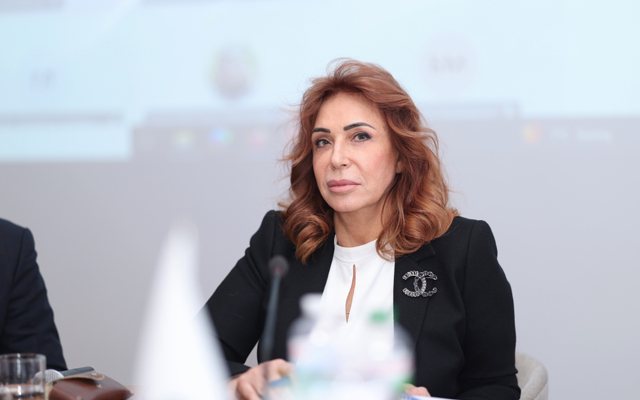
Lidiya Izovitova: reform of the advocacy profession should make the profession stronger and individuals better protected
The Ukrainian advocacy community is finalizing work on a new version of the relevant law. The roadmap on the rule of law has set the fourth quarter of 2026 as the deadline for achieving results in this area. The draft is intended to ensure safeguards for the practice of law through mechanisms of accountability for violations.

Abroad
The first country to ratify the Convention on the Protection of the Professions of Lawyer
Bosnia and Herzegovina became the first country to ratify the Council of Europe Convention on the Protection of the Professions of Lawyer (CETS No. 226). The country signed the Convention on March 17, 2026, so it took just over seven months to ratify it.
Support
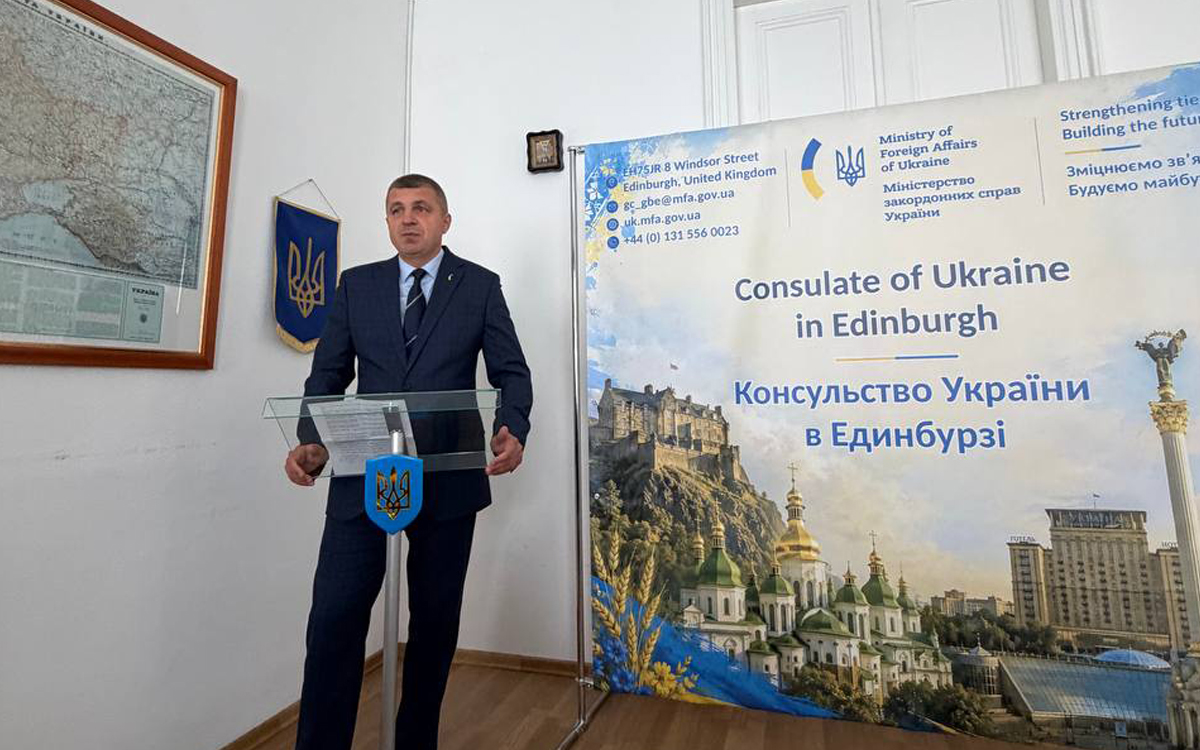
In Edinburgh expressed gratitude to those who are helping Ukrainian advocates and citizens
Since the start of the full-scale invasion, Scottish legal institutions and the Ukrainian community, with the participation of the UNBA, have been helping Ukrainian advocates obtain their qualifications and Ukrainians receive legal assistance. The parties are now planning joint professional and educational events.
Educational events
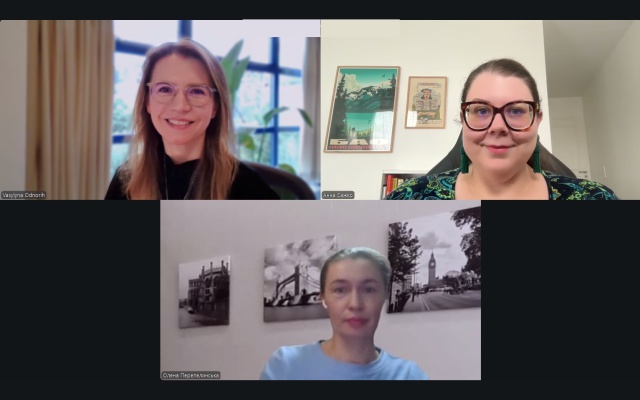
What to do when you need immediate protection in the LCIA
A dispute with a counterparty has been referred to the London Court of International Arbitration (LCIA), but it will take several weeks to appoint the arbitrators, and the client needs legal representation immediately? This can be achieved through an emergency arbitrator or expedited tribunal formation.
Educational events
An advocate's meeting with a client outside the office: how to conduct it without giving away too much
If a client suggests meeting in a public place, keep in mind that any name or amount mentioned aloud could be overheard by bystanders. Therefore, it’s important to plan ahead regarding the table, seating arrangements, and the scope of the conversation.

Legislation
The UNBA explained what could undermine the plan to introduce plea agreements
Information regarding who pays whom, how much, and on what grounds under a plea agreement must be made public. However, as long as this information is classified as a state secret or personal data, the court will continue to be able to close proceedings and restrict access to judgments.
Interaction
The UNBA and the German Institute for Eastern Law will prepare joint legal opinions
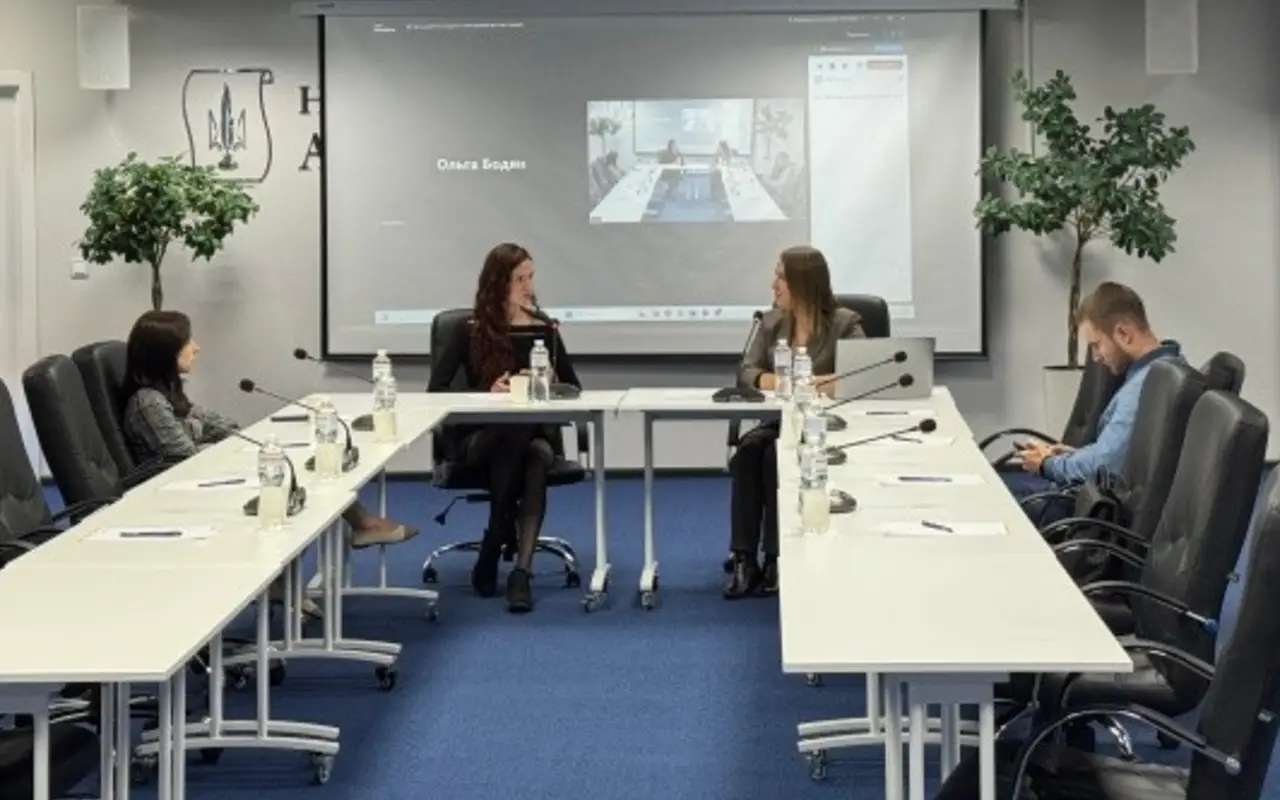
Ukrainian advocates and German legal scholars will jointly prepare comparative legal studies, expert opinions, and professional events. The UNBA reached this agreement with the Institute for Eastern European Law in Regensburg, which has been researching the laws of Central and Eastern European countries for nearly 70 years.
Educational events
What an advocate can delegate to an assistant, colleagues and AI — and what they cannot
An advocate can delegate even a complex lawsuit to an assistant, consult with colleagues daily, and ask artificial intelligence to find relevant case law. However, it is up to the advocate to proofread the document, verify every reference, and decide what to disclose about the client’s case.
Publications

Vasyl Kolishnyi, «Law and Business» Supporting mental health should become part of the professional culture of the Bar, - H. Udovenko

Volodymyr Matsko Extradition during wartime: when the risks outweigh the request

Volodymyr Matsko Extradition as a systemic form of rights violations

Victoria Yakusha, Law and Business The anti-corruption vertical cannot «take care» of the Bar as an institution, - acting head of the HQDCB

Censor.net Protecting advocates – protecting justice: addressing concerns about the new law

Ihor Kolesnykov A BRIEF SUMMARY REGARDING THE APPLICATION OF THE ORDER ON EXTENDED CONFISCATION IN LATVIA REGARDING FINANCIAL ASSETS OF…

Valentyn Gvozdiy WORKING IN A WAR ZONE

Lydia Izovitova Formula of perfection

