






An emergency search cannot be used as a means to circumvent the guarantees of the legal profession – UNBA

A search without a warrant issued by an investigating judge is permissible only if it is followed by prompt and effective judicial oversight. Otherwise, an urgent situation becomes a means of circumventing the guarantees of the inviolability of the home and attorney-client privilege.
The Ukrainian National Bar Association drew attention to this following an analysis of Draft Law No. 15488-3 dated August 24, 2026, «On amendments to the Criminal Procedure Code of Ukraine regarding the improvement of procedures for conducting searches in urgent cases, as well as the registration of reports and reports of criminal offenses», which the Verkhovna Rada adopted as a basis.
The draft law combines two sets of amendments that differ in subject matter. The first set concerns urgent entry into a person’s home or other premises without a warrant from an investigating judge, subsequent judicial oversight of such entry, and the disposition of seized property. It is proposed to include the consideration of motions filed by interested parties, to introduce the right to appeal such rulings, and to set time limits: a motion must be filed with the court no later than 72 hours after the search, and the court must consider the motion no later than three days thereafter. The second set of amendments links the obligation to enter information into the Unified Register of Pretrial Investigations solely to statements that contain «sufficient evidence regarding circumstances that may indicate the commission of a criminal offense».
The UNBA supported the objective of the first section. These changes are aimed at complying with the European Court of Human Rights (ECHR) ruling in the case of «Korniets et al. v. Ukraine». In that case, the Court found a violation of Article 8 (the right to respect for private and family life) of the Convention, because subsequent judicial review of urgent searches was initiated only by the prosecution, conducted without the person’s participation, and was not subject to appeal. At the same time, according to advocates, the amendments in the draft adopted as a basis do not ensure effective oversight. A search may remain without judicial review for up to six days (up to 72 hours for filing a motion and up to three days for consideration). The circle of participants is limited to owners, excluding legal entities and actual possessors (users), and their procedural rights, as well as the subject matter and standard of judicial review, are not defined.
The UNBA noted that the draft law is primarily intended for searches of residential premises. However, the Constitution and Part 3 of Article 233 (inviolability of a person’s home or other property) of the Code of Criminal Procedure establish a uniform regime for other types of a person’s property as well: offices, warehouses, and production facilities, as well as vehicles. Practice, as summarized by the UNBA, indicates that urgent entry is particularly common into office and production facilities, primarily on the grounds of «saving property» (preventing the destruction of documents and data).
A key concern relates to safeguards for the practice of advocacy. The draft law contains no provisions regarding urgent entry into an advocate’s residence or other premises, the premises of a law firm or association, or the search of the advocate themselves and their devices. The safeguards under Article 23 of the Law «On the advocacy and the practice of law» are based on the existence of a prior ruling by an investigating judge. This judicial decision must include a list of items and documents, advance notice to the regional bar association, and the presence of its representative. The emergency entry procedure requires neither a ruling nor prior notice, and thus de facto allows for the circumvention of each of these safeguards, the UNBA emphasizes. Subsequent judicial review does not compensate for this, as the seized documents and storage media may already have been examined by that point.
Therefore, the UNBA insists on amending the draft law to include provisions regarding an advocate’s residence and other property, the premises where legal practice is conducted, as well as an advocate’s vehicles and devices. According to these provisions:
- entry for the purpose of preventing the destruction of property and documents is not permitted; entry for the purpose of saving property is permitted only to eliminate a threat resulting from an emergency situation, without conducting a search;
- the regional bar association must be notified immediately prior to the start of the search (inspection);
- documents, storage media, and devices may be seized only in a sealed condition without examination; thereafter, a motion must be filed with the investigating judge, which is considered with the participation of the advocate and a representative of the regional bar association. The seized items may not be examined until a ruling is issued;
- information constituting attorney-client privilege is inadmissible as evidence regardless of the outcome of the proceedings.
These guarantees are an integral part of the implementation of the Council of Europe Convention on the Protection of the Professions of Lawyer (CETS No. 226), and the approaches to its implementation have been agreed upon by the Ministry of Justice and the UNBA. The UNBA is convinced that passing the law without these guarantees creates a new inconsistency between national legislation and the Convention on the eve of its ratification.
Amendments to Article 214 (initiation of a pretrial investigation) and Article 303 (decisions, actions, or omissions by an investigator, inquiry officer, or prosecutor that may be appealed during a pretrial investigation, and the right to appeal) of the CPC are unrelated to the purpose of the bill and cannot be supported, the UNBA notes. The introduction of the «sufficient evidence» criterion for entering information into the Unified Register of Pre-trial Investigations replicates the preliminary inquiry under the 1960 CPC without even the safeguards inherent in that earlier code. Furthermore, the threshold for registering a complaint is set higher than the standard required by the CPC for a search warrant.
In light of the above, during the finalization of Draft Law No. 15488-3 for the second reading, the UNBA proposed, in particular, to set the deadline for applying to an investigating judge as «immediately, but no later than twenty-four hours from the completion of the search (inspection)», and the deadline for consideration «no later than forty-eight hours» and to specify the consequences of missing these deadlines. It is also proposed to introduce mandatory written documentation of the grounds for urgency, as well as audio and video recording of searches conducted without a court order. The UNBA proposes limiting the ground of «saving property» to the rescue of property from emergencies and removing the amendments to Articles 214 and 303 of the Code of Criminal Procedure.
In addition, the UNBA considers it necessary to extend safeguards to searches and inspections of a person’s other premises, to regulate the inspection of crime scenes, voluntary consent to entry, the inspection of vehicles, and the seizure of electronic information systems and documents of business entities. The comments also address the legal regime governing seized property and the need to take into account Constitutional Court Decision No. 8-r(II)/2026 dated July 21, 2026.
The UNBA is ready to participate in the meetings of the Committee and the working group and to provide a summary of advocates’ practices regarding urgent searches.
These and other proposals, as well as the corresponding expert opinion, were prepared by the UNBA Committee on criminal law and procedure and the Committee on the protection of advocates’ rights and guarantees of legal practice. The President of the UNBA, BCU Lidiya Izovitova forwarded all materials to the Verkhovna Rada Committee on law enforcement, which is preparing draft law No. 15488-3 for its second reading.
Popular news
Legislation
The UNBA warned against restricting advocates' rights during the implementation of the Convention
The Ukrainian National Bar Association supported the adoption in principle of draft laws aimed at harmonizing national legislation with the Council of Europe Convention on the Protection of the Professions of Lawyer, and also highlighted the need to refine them in preparation for the second reading.

Legal defence of military personnel
Guarantees in the event of detention and procedures for military personnel: recommendations from the UNBA Committee
Most often, military personnel turn to advocates regarding frozen bank accounts and delays in discharge. Step-by-step procedures have been prepared for such situations. A guide on one-time financial assistance has been provided for the families of those killed in action. And the new regulations governing the stay of mobilized individuals at TCCs require changes regarding guarantees of communication with an advocate.

Guarantees of the practice of law
Ratification first, reform second: Valentin Gvozdiy on the Council of Europe Convention
Albania and Bosnia and Herzegovina have ratified the Council of Europe Convention on the Protection of the Professions of Lawyer. Eight ratifications are required for it to enter into force, so Ukraine may still be among the states that will activate the mechanism for monitoring guarantees for the legal profession.

Rule of Law Roadmap
Lidiya Izovitova: reform of the advocacy profession should make the profession stronger and individuals better protected
The Ukrainian advocacy community is finalizing work on a new version of the relevant law. The roadmap on the rule of law has set the fourth quarter of 2026 as the deadline for achieving results in this area. The draft is intended to ensure safeguards for the practice of law through mechanisms of accountability for violations.
Abroad
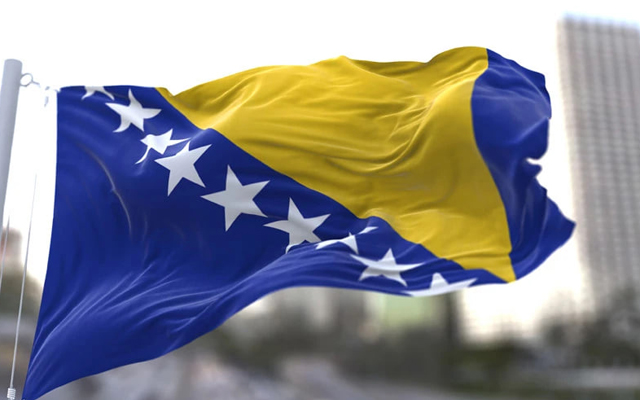
The first country to ratify the Convention on the Protection of the Professions of Lawyer
Bosnia and Herzegovina became the first country to ratify the Council of Europe Convention on the Protection of the Professions of Lawyer (CETS No. 226). The country signed the Convention on March 17, 2026, so it took just over seven months to ratify it.
Discussion
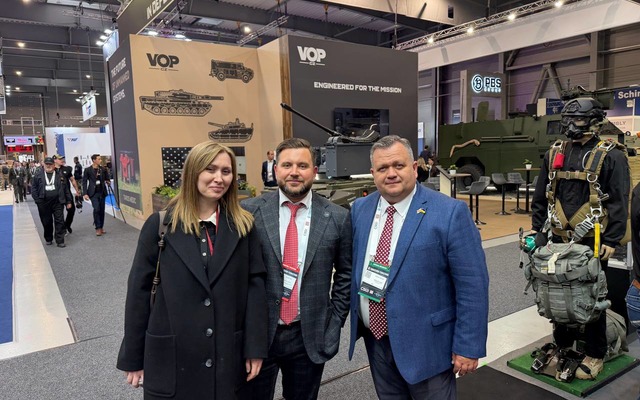
Civil security and guidelines for investors: representatives of the UNBA attend a forum in Prague
How to establish a business in Ukraine, protect investments, and comply with regulatory requirements — these were the issues that foreign companies in the security sector discussed with representatives of the UNBA during an international forum in Prague.
Legislation
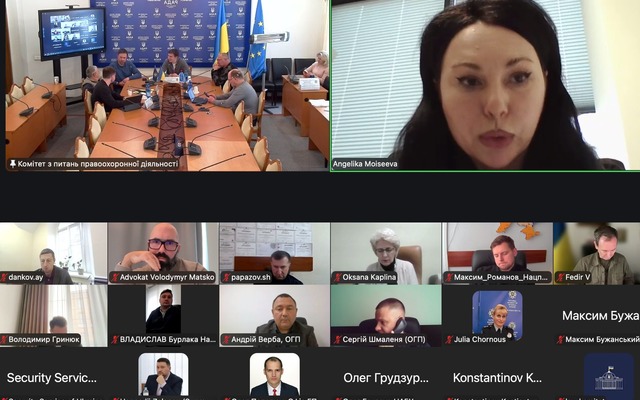
An emergency search without a warrant? What changes are advocates proposing to the CPC
The Verkhovna Rada is preparing a consolidated draft of amendments to the Criminal Procedure Code regarding searches in urgent cases without a prior ruling by an investigating judge. The UNBA insists that judicial oversight following such a search must be effective, and that homeowners must be full participants in the procedure.
Discussion
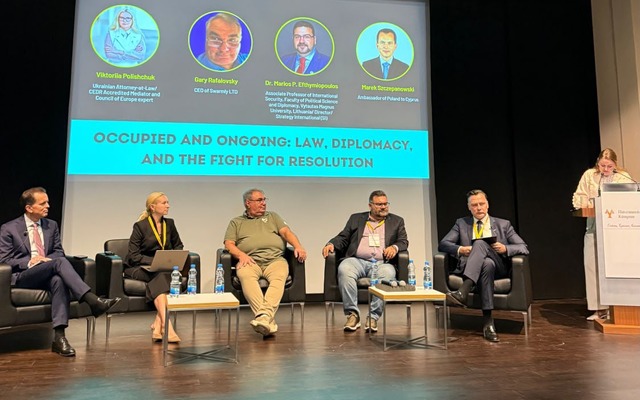
In Nicosia discussions focused on the protection of labor rights under occupation
How can a person’s labor rights be protected if the employer, the archives, and the employment record book remain in the occupied territory? And does a court that takes into account a document issued there legitimize the occupying authority?
Publications

Vasyl Kolishnyi, «Law and Business» Supporting mental health should become part of the professional culture of the Bar, - H. Udovenko

Volodymyr Matsko Extradition during wartime: when the risks outweigh the request

Volodymyr Matsko Extradition as a systemic form of rights violations

Victoria Yakusha, Law and Business The anti-corruption vertical cannot «take care» of the Bar as an institution, - acting head of the HQDCB

Censor.net Protecting advocates – protecting justice: addressing concerns about the new law

Ihor Kolesnykov A BRIEF SUMMARY REGARDING THE APPLICATION OF THE ORDER ON EXTENDED CONFISCATION IN LATVIA REGARDING FINANCIAL ASSETS OF…

Valentyn Gvozdiy WORKING IN A WAR ZONE

Lydia Izovitova Formula of perfection

