






Abolishing expert testimony will lower the quality of expert evaluations — UNBA

If an expert’s report lists the details of documents regarding professional activity instead of a forensic expert’s certificate, the parties and the courts will have no basis for determining the expert’s level of expertise. The assessment will become subjective and the admissibility of evidence will be open to manipulation.
This issue was highlighted by the UNBA Committee on expert support for legal practice following an analysis of Draft Law No. 16049 dated September 7, 2026, «On amending Article 102 of the Criminal Procedure Code of Ukraine regarding information to be included in an expert opinion».
The draft law is linked to an initiative that provides for the abolition of the certification of forensic experts, the issuance of certificates, and the maintenance of the State Register of Certified Forensic Experts.
The document proposes amending paragraph 1 of part 1 of Article 102 (Content of the Expert Opinion) of the CPC. Instead of a certificate confirming the court expert’s qualification and length of service, the opinion will specify the expert’s area of specialized knowledge, the type, content, and duration of their professional activity, as well as the details of documents confirming such activity.
Advocates have pointed out that the requirement to specify the details of documents confirming such activity is ambiguous, and the draft law does not contain a clear list of documents that adequately confirm the duration of professional activity. In the opinion of the UNBA, verifying the details of references, diplomas, or certificates will lead to subjective assessments by the parties and will not provide a basis for determining the expert’s level of professionalism. This will open the door to manipulation by unscrupulous participants in the proceedings regarding the admissibility of evidence and will prolong the litigation process.
The UNBA also warned against a decline in the quality standards of expert examinations. The elimination of the mandatory reference to a certificate opens the door to involving any individual with a higher education degree and at least five years of general work experience in their field. Among them may be those who have never worked in the field of forensic expertise and are unfamiliar with the requirements of procedural law. This will inevitably lead to a decline in the quality of expert examinations.
Separately, the advocates emphasized the importance of the State Register of Certified Forensic Experts. This is a public government resource containing official information about an expert’s training, their passing of the qualification exam, and the status of their disciplinary record. Replacing these official criteria with an arbitrary list of general requirements will make it impossible for the state to monitor the qualifications of forensic experts, the UNBA notes.
The UNBA’s comments also address the risk of methodological manipulation and contradictory conclusions. As a result, the court will effectively be unable to objectively evaluate the evidence in a case.
The comments and proposals of the Ukrainian National Bar Association have been submitted to the Verkhovna Rada Committee on law enforcement.
Popular news
Legislation
The UNBA warned against restricting advocates' rights during the implementation of the Convention
The Ukrainian National Bar Association supported the adoption in principle of draft laws aimed at harmonizing national legislation with the Council of Europe Convention on the Protection of the Professions of Lawyer, and also highlighted the need to refine them in preparation for the second reading.

Legal defence of military personnel
Guarantees in the event of detention and procedures for military personnel: recommendations from the UNBA Committee
Most often, military personnel turn to advocates regarding frozen bank accounts and delays in discharge. Step-by-step procedures have been prepared for such situations. A guide on one-time financial assistance has been provided for the families of those killed in action. And the new regulations governing the stay of mobilized individuals at TCCs require changes regarding guarantees of communication with an advocate.

Guarantees of the practice of law
Ratification first, reform second: Valentin Gvozdiy on the Council of Europe Convention
Albania and Bosnia and Herzegovina have ratified the Council of Europe Convention on the Protection of the Professions of Lawyer. Eight ratifications are required for it to enter into force, so Ukraine may still be among the states that will activate the mechanism for monitoring guarantees for the legal profession.

Rule of Law Roadmap
Lidiya Izovitova: reform of the advocacy profession should make the profession stronger and individuals better protected
The Ukrainian advocacy community is finalizing work on a new version of the relevant law. The roadmap on the rule of law has set the fourth quarter of 2026 as the deadline for achieving results in this area. The draft is intended to ensure safeguards for the practice of law through mechanisms of accountability for violations.

Abroad
The first country to ratify the Convention on the Protection of the Professions of Lawyer
Bosnia and Herzegovina became the first country to ratify the Council of Europe Convention on the Protection of the Professions of Lawyer (CETS No. 226). The country signed the Convention on March 17, 2026, so it took just over seven months to ratify it.
Discussion
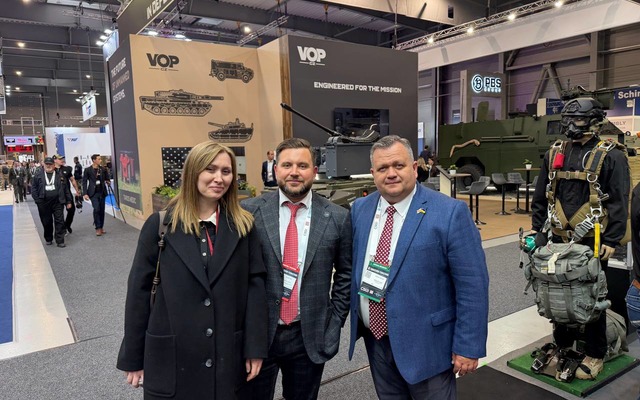
Civil security and guidelines for investors: representatives of the UNBA attend a forum in Prague
How to establish a business in Ukraine, protect investments, and comply with regulatory requirements — these were the issues that foreign companies in the security sector discussed with representatives of the UNBA during an international forum in Prague.
Legislation
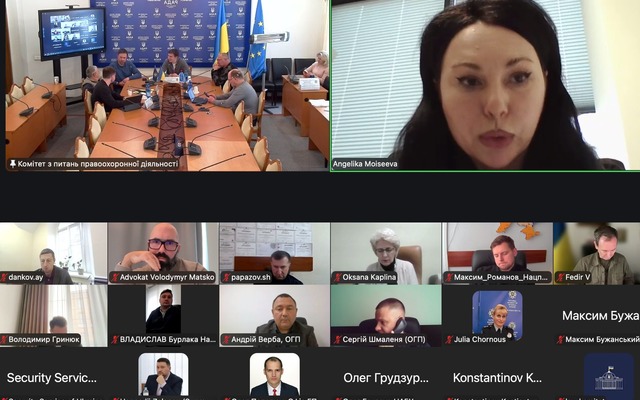
An emergency search without a warrant? What changes are advocates proposing to the CPC
The Verkhovna Rada is preparing a consolidated draft of amendments to the Criminal Procedure Code regarding searches in urgent cases without a prior ruling by an investigating judge. The UNBA insists that judicial oversight following such a search must be effective, and that homeowners must be full participants in the procedure.
Discussion
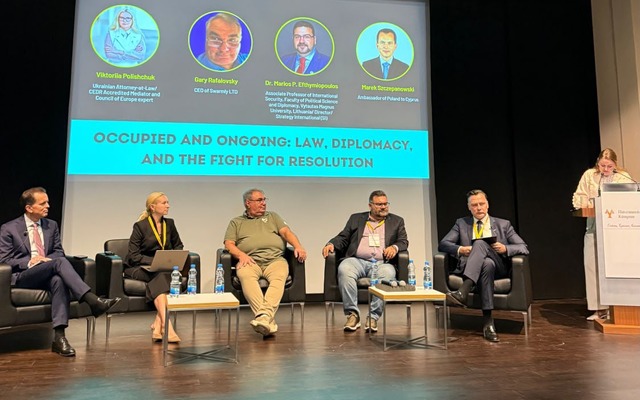
In Nicosia discussions focused on the protection of labor rights under occupation
How can a person’s labor rights be protected if the employer, the archives, and the employment record book remain in the occupied territory? And does a court that takes into account a document issued there legitimize the occupying authority?
Publications

Vasyl Kolishnyi, «Law and Business» Supporting mental health should become part of the professional culture of the Bar, - H. Udovenko

Volodymyr Matsko Extradition during wartime: when the risks outweigh the request

Volodymyr Matsko Extradition as a systemic form of rights violations

Victoria Yakusha, Law and Business The anti-corruption vertical cannot «take care» of the Bar as an institution, - acting head of the HQDCB

Censor.net Protecting advocates – protecting justice: addressing concerns about the new law

Ihor Kolesnykov A BRIEF SUMMARY REGARDING THE APPLICATION OF THE ORDER ON EXTENDED CONFISCATION IN LATVIA REGARDING FINANCIAL ASSETS OF…

Valentyn Gvozdiy WORKING IN A WAR ZONE

Lydia Izovitova Formula of perfection

