






An international arrest warrant cannot be based on an investigator's assumptions – UNBA
Measures for locating, extraditing, and interrogating individuals abroad must be applied on the basis of objective and verifiable evidence, under judicial oversight, and with guarantees of the right to a defense, rather than at the discretion of the pretrial investigation authority.
This conclusion was reached by the UNBA Committee on cybersecurity and virtual assets following an analysis of the government’s draft Law No. 16092 dated September 21, 2026, «On amendments to the Criminal Procedure Code of Ukraine and other legislative acts of Ukraine regarding international cooperation during criminal proceedings».
The need for these changes is linked, in particular, to compliance with MONEYVAL recommendations, FATF standards, and obligations regarding cooperation with the European Public Prosecutor’s Office (EPPO). The draft law provides for the submission of requests for legal assistance and extradition via electronic communications and defines the point at which an international search begins. It also allows courts, under martial law, to question witnesses and victims abroad via videoconference and establishes a time limit for pre-extradition detention prior to the actual transfer of a person.
Advocates generally supported the bill’s objectives but noted that a number of provisions are formulated using evaluative terms. For example, the proposed new version of Article 281 (Search for a Suspect) of the Code of Criminal Procedure links the issuance of a search warrant to the existence of “sufficient grounds to believe” that the person has left or is outside Ukraine. In the advocates’ view, this wording lacks verifiable criteria. At the same time, placing a suspect on an international wanted list serves as grounds for initiating an Interpol Red Notice and an extradition arrest abroad. It also serves as a prerequisite for a special pretrial investigation. Therefore, the grounds must be based on objective information, not the investigator’s subjective assumptions. This refers, in particular, to data from the State Border Guard Service of Ukraine, the National Central Bureau of Interpol in Ukraine or the competent authorities of a foreign state.
The UNBA proposes that an international search warrant be issued only for offenses in connection with which an extradition request may be made. The resolution proposes specifying the information on the basis of which the person’s presence outside Ukraine has been established. A copy of the resolution must be sent to the advocate no later than the next business day. In addition, advocates consider it necessary to allow appeals against a resolution declaring a person wanted to be filed with an investigating judge and, to this end, to amend Article 303 of the Code of Criminal Procedure. Insufficiently substantiated decisions lead to refusals by the Interpol General Secretariat and foreign states to grant extradition. This damages Ukraine’s reputation as a requesting party.
The UNBA supported the introduction of video-conference questioning of individuals located abroad. The bill limits the scope of those to be questioned to witnesses and victims only. However, a significant number of suspects and defendants are abroad not for the purpose of evading justice. Participation in a videoconference allows a person to exercise their right to be present and to defend themselves in person. Furthermore, convictions handed down in the absence of the defendant complicate extradition. Therefore, online questioning must also be permitted for suspects or defendants, provided they submit a request or give their consent, and their right to confidential communication with their defense counsel is guaranteed.
Advocates pointed out that if criminal proceedings are closed, Ukraine’s request for the person’s extradition must be withdrawn, rather than “may be withdrawn,” as the draft law proposes. After all, detaining a person abroad on the basis of such a request no longer has any legal grounds. The 30-day detention period for the actual transfer of the person must be a maximum limit and may not be extended. Otherwise, the provision will become a mechanism for extending detention beyond twelve months through successive court orders.
In addition, the UNBA’s comments on Draft Law No. 16092 concern the validity period of a permit for temporary access to property and documents abroad, the suspension of proceedings during international events, the verification of electronic requests, the transfer of confiscated property, and the mandatory participation of a defense attorney when a foreign sentence is brought into conformity with Ukrainian law.
For each of these comments, the UNBA has proposed amendments to the relevant provisions and requests that the Verkhovna Rada Committee on law enforcement take these proposals into account when finalizing the draft law.
Popular news
Legislation
The UNBA warned against restricting advocates' rights during the implementation of the Convention
The Ukrainian National Bar Association supported the adoption in principle of draft laws aimed at harmonizing national legislation with the Council of Europe Convention on the Protection of the Professions of Lawyer, and also highlighted the need to refine them in preparation for the second reading.

Legal defence of military personnel
Guarantees in the event of detention and procedures for military personnel: recommendations from the UNBA Committee
Most often, military personnel turn to advocates regarding frozen bank accounts and delays in discharge. Step-by-step procedures have been prepared for such situations. A guide on one-time financial assistance has been provided for the families of those killed in action. And the new regulations governing the stay of mobilized individuals at TCCs require changes regarding guarantees of communication with an advocate.

Guarantees of the practice of law
Ratification first, reform second: Valentin Gvozdiy on the Council of Europe Convention
Albania and Bosnia and Herzegovina have ratified the Council of Europe Convention on the Protection of the Professions of Lawyer. Eight ratifications are required for it to enter into force, so Ukraine may still be among the states that will activate the mechanism for monitoring guarantees for the legal profession.
Rule of Law Roadmap
Lidiya Izovitova: reform of the advocacy profession should make the profession stronger and individuals better protected
The Ukrainian advocacy community is finalizing work on a new version of the relevant law. The roadmap on the rule of law has set the fourth quarter of 2026 as the deadline for achieving results in this area. The draft is intended to ensure safeguards for the practice of law through mechanisms of accountability for violations.
Abroad
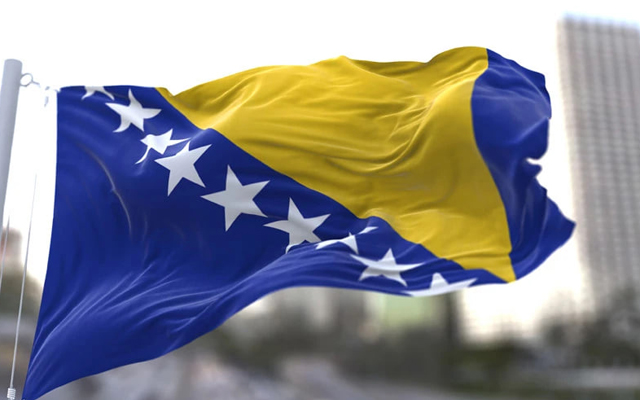
The first country to ratify the Convention on the Protection of the Professions of Lawyer
Bosnia and Herzegovina became the first country to ratify the Council of Europe Convention on the Protection of the Professions of Lawyer (CETS No. 226). The country signed the Convention on March 17, 2026, so it took just over seven months to ratify it.
Discussion
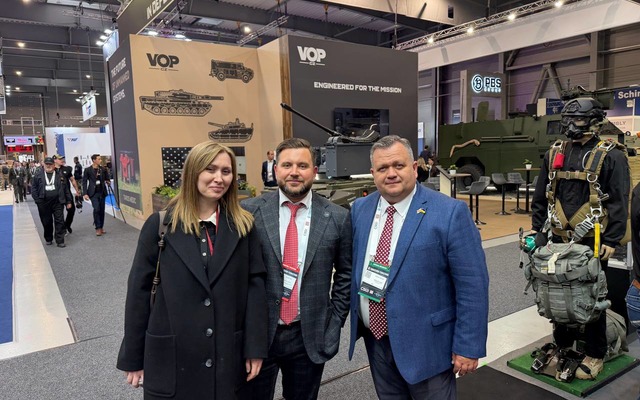
Civil security and guidelines for investors: representatives of the UNBA attend a forum in Prague
How to establish a business in Ukraine, protect investments, and comply with regulatory requirements — these were the issues that foreign companies in the security sector discussed with representatives of the UNBA during an international forum in Prague.
Legislation
An emergency search without a warrant? What changes are advocates proposing to the CPC
The Verkhovna Rada is preparing a consolidated draft of amendments to the Criminal Procedure Code regarding searches in urgent cases without a prior ruling by an investigating judge. The UNBA insists that judicial oversight following such a search must be effective, and that homeowners must be full participants in the procedure.
Discussion
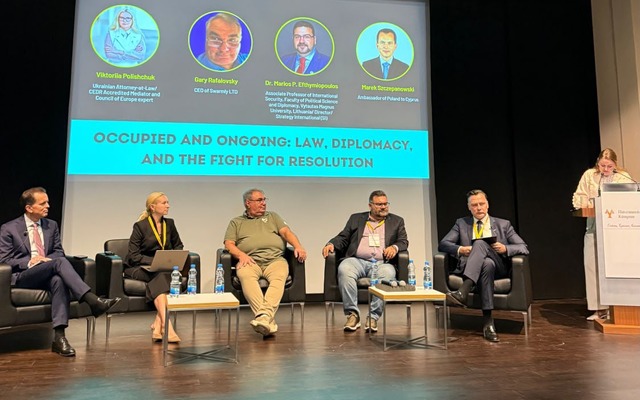
In Nicosia discussions focused on the protection of labor rights under occupation
How can a person’s labor rights be protected if the employer, the archives, and the employment record book remain in the occupied territory? And does a court that takes into account a document issued there legitimize the occupying authority?
Publications

Vasyl Kolishnyi, «Law and Business» Supporting mental health should become part of the professional culture of the Bar, - H. Udovenko

Volodymyr Matsko Extradition during wartime: when the risks outweigh the request

Volodymyr Matsko Extradition as a systemic form of rights violations

Victoria Yakusha, Law and Business The anti-corruption vertical cannot «take care» of the Bar as an institution, - acting head of the HQDCB

Censor.net Protecting advocates – protecting justice: addressing concerns about the new law

Ihor Kolesnykov A BRIEF SUMMARY REGARDING THE APPLICATION OF THE ORDER ON EXTENDED CONFISCATION IN LATVIA REGARDING FINANCIAL ASSETS OF…

Valentyn Gvozdiy WORKING IN A WAR ZONE

Lydia Izovitova Formula of perfection

