The Supreme Court reminded the rules of recovery of expenses for professional legal assistance by the court

One of the main principles of civil proceedings is the reimbursement of court costs to the party in whose favor the court decision was made. The costs associated with the proceedings include the costs of legal aid.
The rules under which this principle of legal proceedings is implemented were considered by the panel of judges of the First Judicial Chamber of the Civil Court of Cassation of the Supreme Court. The relevant decision of 28.09.2023 in case 686/31892/19 was recently published in the Unified State Register of Court Decisions.
The company that filed the lawsuit lost the dispute to its employees. Since their lawyers had filed applications for reimbursement of professional legal fees before the end of the court arguments, the court recovered these costs from the company by an additional decision.
When reviewing the additional decision on the plaintiff's complaint, the appellant stated that the court had been provided with documents on the scope of services provided by the lawyer and the work performed and their cost, as defined by the Code of Civil Procedure. Therefore, the court justifiably ordered the plaintiff to reimburse the expenses incurred for professional legal assistance, as this amount was proven, documented and met the criterion of reasonable necessity of such expenses.
The company filed a cassation appeal, referring to the misapplication of substantive law by the courts of previous instances and violation of procedural law. In particular, the complainant referred to the fact that the cost calculations submitted by the lawyers did not contain the approval of the amounts of court costs by their clients, as their signatures were missing. The court of first instance did not have an objective opportunity to verify the actual agreement of the parties on the amount of the fee of one of the lawyers. Also, the complainant considered one of the orders to be improper (not certifying the lawyer's authority to represent the client's interests), since it stated that legal aid was provided in «courts of all instances», instead of a separately determined court in which the case was being considered.
The panel of judges of the CCU recalled the criteria to be applied when determining the amount of legal aid expenses. According to the requirements of Art. 137 of the Code of Civil Procedure, the costs associated with legal assistance of a lawyer shall be borne by the parties, except in cases of legal assistance provided by the state.
Based on the results of the case, the costs of legal assistance of a lawyer shall be distributed between the parties along with other court costs. For the purposes of distribution of court costs:
1) the amount of expenses for the legal aid of an advocate, including the advocate's fee for representation in court and other legal aid related to the case, including preparation for its consideration, collection of evidence, etc. as well as the cost of the services of an assistant advocate shall be determined in accordance with the terms of the agreement for provision of legal aid and on the basis of relevant evidence regarding the scope of services and work performed and their cost paid or payable by the relevant party or third party;
2) the amount to be paid as reimbursement of the advocate's expenses necessary for the provision of legal aid shall be determined in accordance with the terms of the agreement for provision of legal aid on the basis of relevant evidence confirming the relevant expenses.
In case of non-compliance with the requirements, the court may, at the request of the other party, reduce the amount of legal aid costs to be distributed between the parties. However, the burden of proving the disproportionality of the costs is on the party filing the motion to reduce the costs.
Article 141 of the Code of Civil Procedure stipulates that other court costs related to the case are borne by the defendant in case of satisfaction of the claim, and by the plaintiff in case of dismissal of the claim.
The amount of expenses paid or to be paid by a party in connection with the proceedings is determined by the court on the basis of evidence submitted by the parties (contracts, invoices, etc.). Such evidence shall be submitted before the end of the court hearings in the case or within five days after the court decision is made, provided that the party has made a corresponding statement to this effect before the end of the court hearings in the case.
The composition and amount of expenses related to the payment of legal aid shall be the subject of proof in the case. To confirm these circumstances, the court shall be provided with a legal aid agreement (contract of assignment, legal services agreement, etc.), documents evidencing payment of the fee and other expenses related to the provision of legal aid, executed in accordance with the procedure established by law (receipt to the cash receipt order, payment order with a bank stamp or other bank document, cash receipts, business trip certificates).
Thus, if a party documents that it has incurred legal aid expenses, namely, a legal aid agreement, an act of acceptance of services rendered, payment documents for such services, and a calculation of such expenses, the court has no grounds to refuse to recover these expenses from the party in whose favor the court decision was made.
In the case at hand, the district court, whose conclusion was agreed by the court of appeal, considered that the applicants had provided proper, admissible, sufficient and reliable evidence to confirm the legal aid costs incurred, which should be recovered from the plaintiff in favor of the applicants, since the court dismissed the claim.
The Supreme Court also agreed with these conclusions. It proceeded from the fact that, pursuant to Article 137 of the Code of Civil Procedure, the amount of expenses for attorney's fees should be commensurate with the amount of the case:
1) the complexity of the case and the work (services) performed by the advocate;
2) the time spent by the advocate for the performance of the relevant work (provision of services);
3) the scope of services rendered by the advocate and work performed;
4) the price of the claim and (or) the importance of the case for the party, including the impact of the case resolution on the reputation of the party or public interest in the case.
When determining the amount of reimbursement of expenses, the court must proceed from the criterion of the reality of attorney's fees (establishing their validity and necessity), as well as the criterion of the reasonableness of their amount, based on the specific circumstances of the case and the financial condition of both parties.
The same criteria are applied by the European Court of Human Rights when awarding court costs under Article 41 of the Convention for the Protection of Human Rights and Fundamental Freedoms. Thus, in the case of East/West Alliance Limited v. Ukraine (application no. 19336/04), it is stated that the applicant is entitled to compensation for court and other costs only if it is proved that such costs were actual and unavoidable and their amount is reasonable. The same legal conclusion was made by the Grand Chamber of the Supreme Court in case No. 755/9215/15-ц (Resolution of 19.02.2020).
The existence of contractual relations between the attorneys and their clients in the case under consideration was confirmed by the order and legal aid agreements. The case file contained approximate calculations of the costs of professional legal assistance, acts of acceptance of work, and payment receipts.
Therefore, the Supreme Court concluded, the individuals had proved that they had been provided with services by lawyers, and therefore the costs of legal aid should be reimbursed in the amount determined by the district court.
The panel of judges rejected the applicant's arguments that the warrant was inadequate evidence.
After all, in accordance with paragraph 4 of the Regulations on the order for the provision of legal (legal) assistance, approved by the decision of the Bar Council of Ukraine dated 12.04.2019 No. 41, the order issued by an attorney, law office, law firm must contain the mandatory details provided for by this Regulation.
In particular, according to subparagraph 12.4 of paragraph 12 of the Regulations, the warrant must contain the name of the body in which legal aid is provided by the advocate.
The name of the body means both the name of a particular body and the name of a group of bodies defined in paragraph 2 of part one of Article 20 of the Law «On the Bar and Practice of Law» (for example, judicial bodies, state authorities, local self-government bodies, pre-trial investigation bodies, law enforcement agencies, etc.)
Taking into account the above, the Supreme Court concluded that the indication in the warrant in the column «Name of the body in which legal aid is provided» that legal aid is provided in courts of all instances is a sufficient and necessary confirmation that the advocate is authorized to provide legal aid to the client and represent his or her interests in any courts of Ukraine and therefore does not require clarification/indication of the territorial, instance, subject matter and subjective jurisdiction of the courts.
Popular news
Rule of Law Roadmap
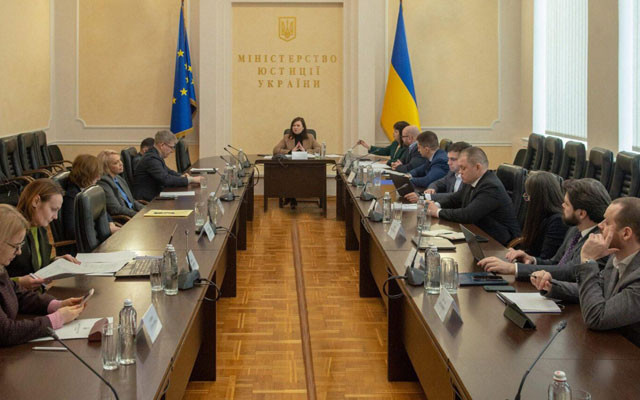
Reform without data and advocacy: what the Ministry of Justice’s launch has revealed
The Ministry of Justice hosted the first meeting of the working group on bar reform. But instead of professional preparation of legislative changes, we saw exactly what Armada Network Director Dale Armstrong had spoken about the day before in Kyiv: not reform, but a struggle for control over the agenda through a narrow circle of “stakeholders” who create an echo chamber of influence for themselves.
Rule of Law Roadmap
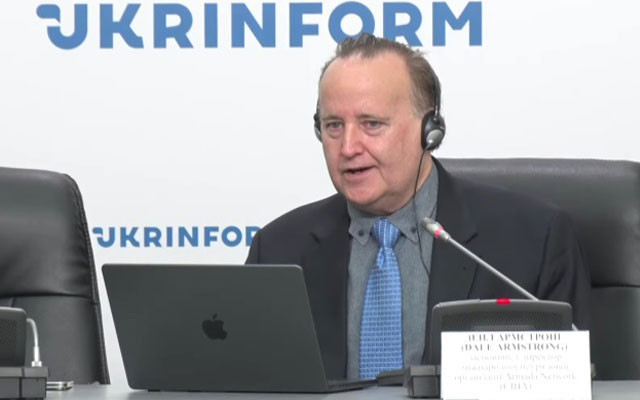
Advocacy, European integration and the limits of intervention: an American report presented in Kyiv
Following its presentation in Brussels, the report «The Ukrainian advocacy in the context of the rule of law and European integration» made its way to Kyiv. It highlighted critical issues both in understanding the very nature of the self-governing profession and in the emergence of a «shadow market» surrounding the Ukrainian advocacy.

Discussion
ETAIDF and MMC: where the system fails
The new system for assessing a person’s daily functioning and the practice of undergoing medical-legal examinations have already raised numerous questions — ranging from unclear procedures to difficulties in appealing decisions. These issues were examined by advocates during the roundtable discussion «Problematic issues of the ETAIDF and MMC», organized by the UNBA Committee on the protection of the rights of persons with disabilities and the All-Ukrainian public organization «Human rights union of persons with disabilities».
Rule of Law Roadmap
Organization of advocacy: subgroup agrees on approaches to regulatory reform
On March 13, a meeting was held of the «Organization of the advocacy and self-government» subgroup of the Working Group on the implementation of the Rule of Law Roadmap regarding bar reform. The event was conducted via videoconference.
Guarantees of the practice of law
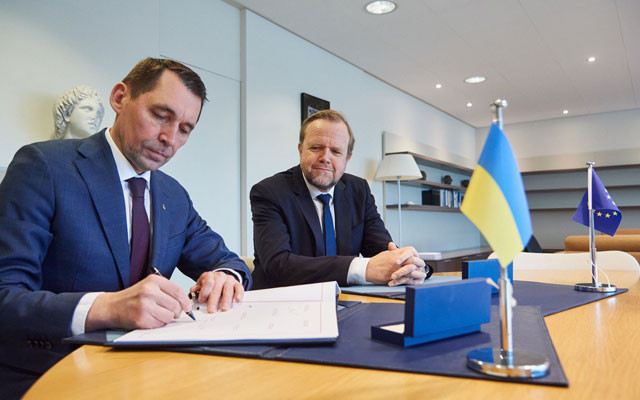
Ukraine has signed the Convention for the Protection of the Profession of Lawyer
Today, on 9 March, Ukraine's Permanent Representative to the Council of Europe Mykola Tochytskyi signed the Council of Europe Convention for the Protection of the Profession of Lawyer. This makes our country the 28th to sign this important international treaty.

Discussion
Detention as a rule: the UNBA discussed standards for proving risks
The state interferes most intensively with the human right to liberty when choosing a preventive measure. At this stage, the standard of proof of risk becomes the actual measure of the real meaning of the presumption of innocence.
European integration
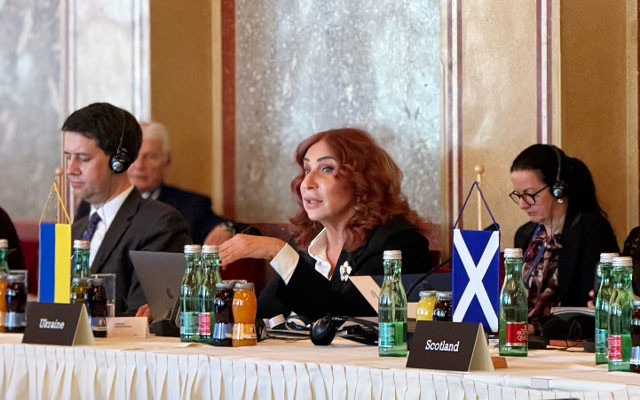
«Freedom or security» — a false formula: speech by L. Izovitova at the conference of bar presidents
Is the state protecting society from crime today, or is it gradually destroying the rule of law under the guise of this fight? These alarming trends were outlined by the President of the UNBA, BCU Lidiya Izovitova, during her speech at the 54th European Conference of bar presidents.
Discussion
AI in advocacy and justice: ethics, regulation, limits of application
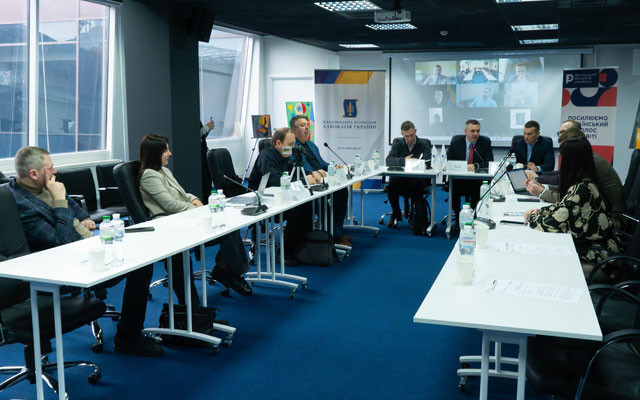
The Ukrainian National Bar Association held a roundtable discussion entitled «Artificial Intelligence in the цork of advocates: ethics, responsibility, legal process engineering». Participants discussed how artificial intelligence systems are already being used in the professional activities of advocates and where the ethical boundaries of what is permissible lie.
Publications

Volodymyr Matsko Extradition during wartime: when the risks outweigh the request

Volodymyr Matsko Extradition as a systemic form of rights violations

Victoria Yakusha, Law and Business The anti-corruption vertical cannot «take care» of the Bar as an institution, - acting head of the HQDCB

Censor.net Protecting advocates – protecting justice: addressing concerns about the new law

Ihor Kolesnykov A BRIEF SUMMARY REGARDING THE APPLICATION OF THE ORDER ON EXTENDED CONFISCATION IN LATVIA REGARDING FINANCIAL ASSETS OF…

Valentyn Gvozdiy WORKING IN A WAR ZONE

Lydia Izovitova Formula of perfection

Sergiy Vylkov Our judicial system is so built that courts do not trust advocates