What to do if the guardianship and custody authority does not send a written opinion
The Family Code of Ukraine imposes, among other things, an obligation on the guardianship and custody authority to submit a written opinion on the resolution of the dispute. However, it is not uncommon for a government agency to ignore this obligation.
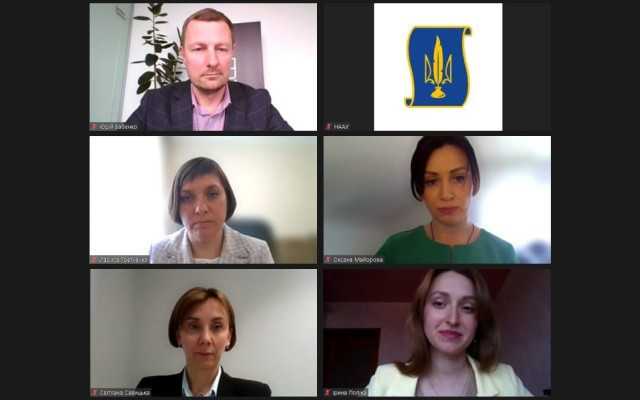
Attorneys discussed how to prevent such cases at a roundtable discussion held by the UNBA Family Law Committee on the occasion of the International Family Day.
Larysa Gretchenko, the Chairman of the Committee, emphasized the importance of the participation of the guardianship and custody authority in resolving family disputes in court as a guarantor of the protection of children's rights in situations of possible conflict of interest of parents, one of the principles of which is to ensure the best interests of the child. The analysis of the powers of the guardianship and custody authority which carries out activities related to the protection of children's rights indicates that the response tool and evidence is the conclusion as a final document on the circumstances of the child's residence, upbringing and maintenance, which is drawn up for personal files on the expediency (inexpediency) of certain actions or response measures in relation to the child, and is also sent to the court in the framework of consideration of certain categories of family disputes.
She noted that in the face of the challenges of martial law, family relations have undergone dynamic changes, and the types of family disputes and approaches of judicial practice to their resolution have also been transformed. The Procedure for the conduct of activities related to the protection of children's rights by guardianship and custody authorities, approved by the Cabinet of Ministers Resolution No. 866 of 24.09.2008, has been updated by amendments about 10 times over the past 2 years. By the Resolution of the OP CCC of the Supreme Court of 11.12.2023 in case No. 523/19706/19, the Joint Chamber departed from numerous conclusions of the CCC/SC in considering a dispute on determining the place of residence with one of the parents, which relate to the mandatory nature of the conclusion of the guardianship and custody authority. According to the newly established approach provided for in parts 4.5 of Article 19 of the Family Code, the binding nature of the conclusion of the guardianship and custody authority in the relevant categories of civil cases cannot be absolutized. Disagreeing with the conclusions of the Joint Chamber, Judge of the CCC of the Supreme Court Vasyl Krat expressed a separate opinion dated 11.12.2023 in case No. 523/19706/19.
The court practice on the issue of submission of a written opinion by the guardianship and trusteeship authority was highlighted by Yuriy Babenko, the Deputy Chairman of the Committee. In particular, he analyzed the position of the OP of the CCC of the Supreme Court of 11.12.2023 in case No. 523/19706/19, noting the advantages and risks of its practical application in resolving family disputes.
Describing the motives behind the Opinion of the CCC of the Supreme Court, Y. Babenko emphasized that the conclusions provided for in Article 19 of the CCU cannot be absolutized. If an opinion cannot be obtained, the court must resolve the dispute on the basis of the evidence available in the case. If the guardianship authority refuses to provide an opinion, this circumstance does not mean that it is impossible to consider and resolve the dispute. The opposite approach is tantamount to denial of access to justice.
This approach is general in nature and is quite fair in cases where the opinion cannot be obtained due to:
- the child's stay outside the country;
- the child's stay in the uncontrolled territory;
- inability to establish the child's whereabouts, etc.
As the advantages of the position expressed in the decision of 11.12.2023 in case No. 523/19706/19, the lawyer noted the impact on access to justice, legal certainty of the issue raised, assistance in reducing the time for consideration of a family dispute by the court, the use of a less formal approach to the consideration of court cases, as well as reducing the risk of abuse of procedural rights by the defendant.
According to the Deputy Chairman of the UNBA Committee, in the absence of the opinion of the guardianship and custody authority, the level of control over ensuring the best interests of the child in resolving a family dispute disappears and the likelihood of abuse of procedural rights by the plaintiff increases.
Svitlana Savytska, Deputy Chairman of the Committee, emphasized the content of Article 19 of the Family Code, namely, parts 4 and 5. Thus, part 4 states that «when a court considers disputes regarding the participation of one of the parents in the upbringing of a child, the child's place of residence, eviction of a child, removal of a child from the place of residence, recognition of a child as having lost the right to use a dwelling, deprivation and restoration of parental rights, visits to the child by a mother or father deprived of parental rights, removal of a child from a person who holds him or her not on the basis of law or a court decision, management of the child's property by parents, cancellation of adoption and invalidation of adoption, both parents must be represented». Part 5 of this article states that the guardianship and custody authority shall submit a written opinion to the court on the resolution of the dispute.
The lawyer summarized: we can agree with the conclusion of the Supreme Court in case No. 523/19706/19 that the binding nature of the conclusion of the guardianship and custody authority in the relevant categories of civil cases cannot be absolutized.
According to the lawyer, the participation of the guardianship and custody authority, in particular in intra-family matters, has not been properly regulated since the adoption of the Family Code of Ukraine. Since 2014, Ukraine has been reforming the decentralization of power in order to move away from the centralized model of state governance. The main idea of decentralization was to ensure the capacity of local self-government and build an effective territorial system of management of all spheres of life in Ukraine.
On June 12, 2020, the Cabinet of Ministers adopted 24 resolutions to determine the administrative centers and approve the territories of communities in the regions. As a result, 1469 territorial communities have been established in Ukraine (including 31 communities in the uncontrolled territory of Donetsk and Luhansk oblasts). The Resolution of the Verkhovna Rada of Ukraine No. 807-IX of 17.07.2020, as amended on 23.08.2023 «On the Formation and Liquidation of Districts», defined new districts with their administrative centers.
In order to fulfill the powers delegated to city, village, and settlement councils in the field of child protection, it is recommended that each territorial community establish a children's service as a structural unit of the council's executive body.
Given the creation of 1469 territorial communities, each of them has its own local government body, which performs the functions of a guardianship and custody body and must have a children's service within its executive body. The quantitative result of establishing a children's service in each community has almost been achieved, but the worst part is that in most cases such a service is formal, incompetent, and therefore not in the best interests of the child.
Direct communication with children, identification of children in need of social and other types of protection is carried out at the level of territorial communities, so the children's services established in communities must be powerful both in terms of material and technical means and professionalism. And today the state must work on this.
The joint activities of lawyers, judges, children's services, etc. should be aimed solely at observing the best interests of each child, without manipulation and abuse, and should comply with the principle of good faith. These principles should be at the forefront of any issue concerning a child.
Oksana Mayorova, a member of the Committee's Council, described the reasons why courts hear cases without the participation of the guardianship and custody authority and/or in the absence of an opinion. According to her, Ukrainian courts have faced the problem of the impossibility of the parties providing the opinion of the guardianship and custody authority for objective reasons since 2014. After the occupation of eastern Ukraine and the Autonomous Republic of Crimea, it became impossible to obtain such a conclusion regarding children who were in the occupied territories. The situation became much more complicated after the full-scale invasion of Russia in February 2022. The speaker characterized the situations when the guardianship and custody authority cannot provide an opinion or express its opinion on the dispute, namely:
1) the child's stay outside the country and the inability to find out the child's actual situation and provide an opinion
2) the child's stay in the uncontrolled territory and the inability of the guardianship and custody authority to establish reliable information about the child's living and upbringing conditions;
3) concealment of the actual place of residence or stay of the child by one of the parents, which affects the determination of the authorized body at the child's location and verification of relevant information;
4) insufficient evidence or information for a conclusion caused by the unwillingness of one of the parents to cooperate in the process of collecting information about the child or other circumstances;
5) a conflict of interest is caused by the personal interest of an employee of the guardianship and custody authority in the resolution of a family dispute.
Iryna Popika, the Secretary of the Committee, presented an overview of the practice of resolving family disputes in 2024, taking into account the position expressed in the resolution of the OP CCC of the Supreme Court of 11.12.2023.
After the introduction of martial law on the territory of the state, it is common for guardianship and custody authorities to refuse to provide written opinions on the procedure for resolving a dispute, arguing that it is not possible, in particular, to examine the living conditions of the parent who is abroad, or that the child is not at the address of residence in Ukraine. Such refusals were often an obstacle to the consideration of the case and therefore did not contribute to the protection of the rights and interests of the child.
However, after the adoption of the resolution of the OP CCC of the Supreme Court of 11.12.2023 in case No. 523/19706/19, the courts mostly adhere to the position that the conclusion of the guardianship and custody authority is one of the evidence in the case and its absence alone cannot be an unconditional basis for dismissing the claims and resolving the case on the merits.
The speaker analyzed the rulings of the Supreme Court of 24.01.2024 in case No. 450/4288/21, of 14.02.2024 in case No. 756/12509/21, of 02.05.2024 in case No. 335/12058/21, the ruling of the Kyiv Court of Appeal of 28.02.2024 in case No. 757/20618/20-ц, the decision of the Pervomaiskyi District Court of Chernivtsi Chernivtsi of 25.01.2024 in case No. 725/10006/23, the decision of the Dolyna District Court of Kirovohrad Region of 07.03.2024 in case No. 388/1670/23, the decision of the Ordzhonikidze District Court of Zaporizhzhia of 18.04.2024 in case No. 335/1787/23, etc.
For example, the Supreme Court's ruling of 14.02.2024 in case No. 756/12509/21, which refers to the legal opinion expressed in the decision of the OP CCC of the Supreme Court of 11.12.2023 in case No. 523/19706/19, states that «state authorities and local self-government bodies, by providing an opinion, act in parallel with the court - protecting the rights and interests of the child, and thereby help the court to protect in accordance with part one of Article 2 of the Civil Procedure Code of Ukraine. Such opinions are undoubtedly of great importance for the court to make a lawful, reasonable and fair decision. After all, the conclusion of state and local authorities is formed taking into account the experience in a particular area, within the competence of the relevant authority and on the basis of its powers. However, failure to take such protective actions on the part of the authority in the form of failure to submit an opinion cannot serve as a ground for refusal or delay in protection by the court, since the administration of justice, protection of the rights and interests of children cannot be made dependent on the ability of the authorities to exercise their powers».
The analyzed court decisions show that in resolving disputes in which the participation of guardianship and custody authorities is mandatory, in the absence of a conclusion of the guardianship and custody authority, courts take into account the procedural behavior of the parties, in particular, what measures the parties took to obtain the relevant conclusion, the actions taken by the parties that prevented the guardianship and custody authorities from exercising their powers (unauthorized change of residence of the child, repeated change of residence during the proceedings, failure to provide the address of the actual place of residence, etc.
The roundtable participants also discussed the issue of different procedural status of the guardianship and custody authority: plaintiff, third party and authority from which the court order requires an opinion in a family dispute. The subject of discussion was various practical situations when the guardianship and custody authority submitted to the court statements on the merits, procedural statements, but without actual participation in court hearings; an opinion submitted to the court on the merits of the dispute with a request to consider the case in the absence of the guardianship and custody authority, as well as cases when an opinion of the so-called formal or narrowed content was submitted, indicating that the authority supports the court decision to be made as a result of the case.
The attorneys agreed on the importance of the participation of the child welfare agency in the proceedings concerning the rights and interests of the child and exchanged views on how to «neutralize» the reasons for the court proceedings without the participation of the child welfare agency or in the absence of an opinion.
At the end of the discussion, L. Gretchenko summarized that high-quality protection of children's rights is possible only if officials and other employees involved in the work of the system of state bodies and local governments perform their duties professionally, in good faith and in good faith, and also gave examples of certain court rulings in response to the improper exercise of their powers to protect children's rights by the guardianship and custody authority.
Popular news
Support
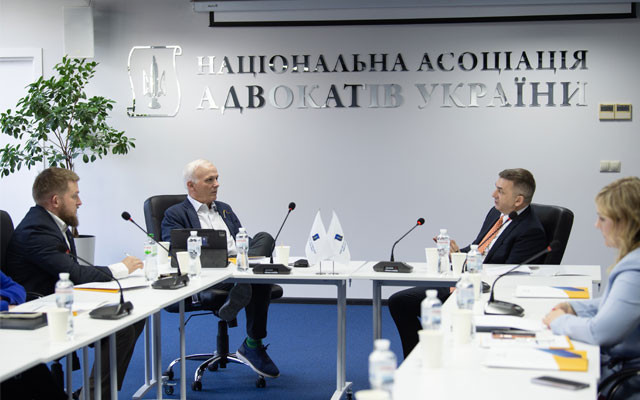
Mental health, archives and cybersecurity: The UNBA and the IBA reviewed the progress of joint projects
The Ukrainian National Bar Association and the International Bar Association (IBA) reviewed the progress of joint projects that are of practical importance in the context of the war: supporting the mental health of advocates, digitizing archives, and strengthening the cybersecurity of the legal infrastructure.
Rule of Law Roadmap
The UNBA is developing a model for reforming the legal profession
The reform of the advocacy profession is part of the negotiation process regarding Ukraine’s accession to the European Union, and the Rule of Law Roadmap explicitly identifies the Ukrainian National Bar Association as one of the key stakeholders in the process.

Legal defence of military personnel
Missing in action: advocates explain the procedure to the families of servicemembers
As part of the «Advocate+» pilot project, advocates continue to work with military personnel in the brigades, helping to resolve practical legal issues — ranging from social benefits and payments to undergoing medical examinations and processing paperwork.

Guarantees of the practice of law
Police to investigate the NACP's attempts to reform advocacy
The Office of the Prosecutor General has opened a criminal investigation into alleged abuse of power by employees of the National Agency for Corruption Prevention.
Interaction
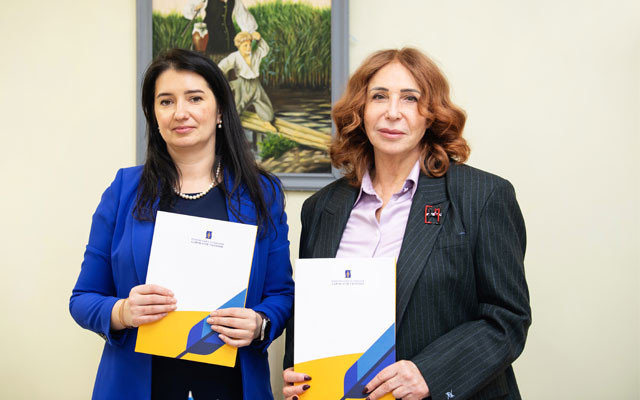
Advocates and patent attorneys combine their expertise in the field of intellectual property
Joint legislative proposals, expert opinions on regulatory changes and professional discussions on key issues in the field of intellectual property will form the basis of cooperation between the Ukrainian National Bar Association and the National Association of Patent Attorneys of Ukraine.
Interaction
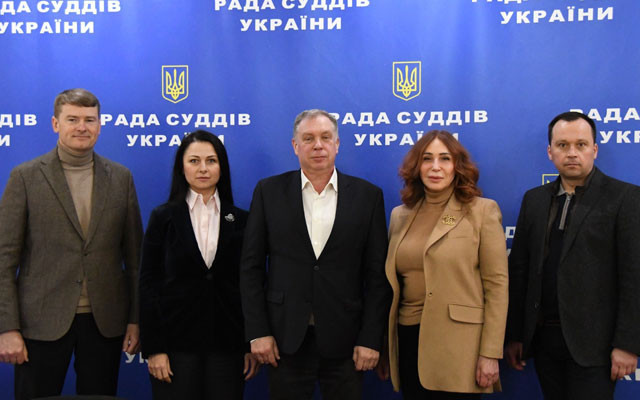
The UNBA and the Council of Judges of Ukraine are expanding their professional dialogue
On April 24, a working meeting was held between the President of the UNBA, BCU Lidiya Izovitova and the Chairman of the Council of Judges of Ukraine Vitaliy Salikhov. Topics discussed included formats for cooperation between bar and judicial self-governing bodies, the development of joint ethical standards, and the formation of a Selection Committee for the recruitment of members of the High Council of Justice.
Legal defence of military personnel
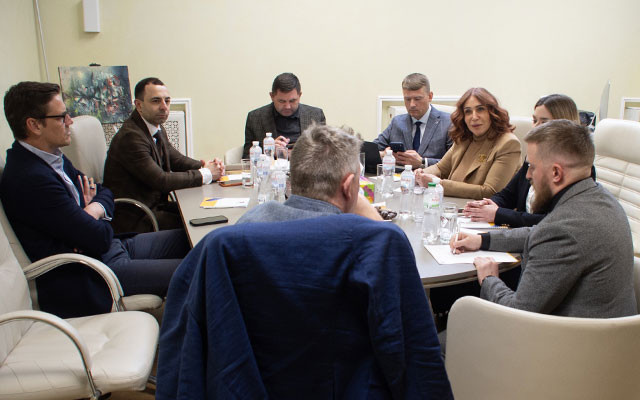
The model for legal assistance to veterans was discussed at the UNBA
A working meeting was held at the Ukrainian National Bar Association, during which representatives of the advocacy profession, the Ministry of Veterans Affairs of Ukraine and a foreign expert discussed approaches to providing legal aid to veterans, the role of the advocacy profession in this system, and the experience of other countries.
Guarantees of the practice of law
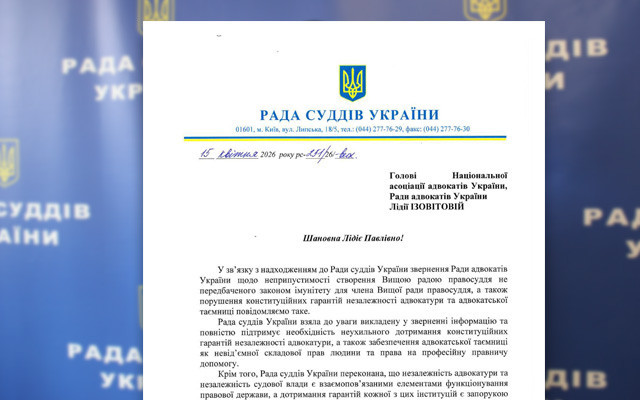
The CJU has endorsed guarantees of the legal profession’s independence and has proposed a meeting with the BCU
The Council of Judges of Ukraine has responded to a letter from the Bar Council of Ukraine regarding the inadmissibility of the High Council of Justice granting immunity to a member of the High Council of Justice — a privilege not provided for by law — as well as regarding violations of constitutional guarantees of the independence of the legal profession and attorney-client privilege.
Publications

Volodymyr Matsko Extradition during wartime: when the risks outweigh the request

Volodymyr Matsko Extradition as a systemic form of rights violations

Victoria Yakusha, Law and Business The anti-corruption vertical cannot «take care» of the Bar as an institution, - acting head of the HQDCB

Censor.net Protecting advocates – protecting justice: addressing concerns about the new law

Ihor Kolesnykov A BRIEF SUMMARY REGARDING THE APPLICATION OF THE ORDER ON EXTENDED CONFISCATION IN LATVIA REGARDING FINANCIAL ASSETS OF…

Valentyn Gvozdiy WORKING IN A WAR ZONE

Lydia Izovitova Formula of perfection

Sergiy Vylkov Our judicial system is so built that courts do not trust advocates