The Supreme Court reminded of the proportionality of legal aid costs to the complexity of the case

When deciding on the reimbursement of expenses for professional legal assistance, the court must make sure that the claimed expenses are proportionate to the complexity of the proceedings, and that the scope of services provided by the lawyer and the time spent meet the criterion of the reality of such expenses.
This was emphasized by the Criminal Court of Cassation of the Supreme Court in case No. 521/3869/22 (decision of 19.08.2024 published in the Unified State Register of Court Decisions).
While reviewing the verdict in the criminal case, the cassation instance also resolved the issue of reimbursement of expenses incurred by the victims and the civil defendant for legal aid.
The Supreme Court reminded that according to clause 3 of part 1 of Article 91 of the CPC, the amount of procedural costs is one of the circumstances to be proved in criminal proceedings.
The legal basis for reimbursement of expenses for legal aid is an agreement concluded with a lawyer-representative, as well as documents evidencing payment of fees and other expenses related to the provision of legal aid, executed in accordance with the procedure established by law (receipt to a cash receipt order, payment order with a bank stamp or other bank document, cash receipts, business trip certificates).
Thus, in order to determine the amount of procedural expenses for legal aid to be reimbursed, in addition to the legal aid agreement, a person must also provide the original documents confirming these expenses, as well as procedurally confirm the provision of legal services (a procedural document drawn up, a procedural action taken (participation in investigative (search) actions or familiarization with procedural documents, etc.)
The CCU also referred to the conclusion set out in paragraph 21 of the supplementary resolution of the Grand Chamber of the Supreme Court of February 19, 2020 in case No. 755/9215/15-ц, when determining the amount of compensation, the court must proceed from the criterion of the reality of attorneys' fees (establishing their validity and necessity), as well as the criterion of the reasonableness of their amount, based on the specific circumstances of the case and the financial condition of the parties.
In other words, when deciding on the reimbursement of expenses for professional legal assistance, the court must make sure that the claimed expenses are proportionate to the complexity of the proceedings, and that the scope of services provided by the attorney and the time spent on the provision of such services meet the criterion of the reality of such expenses. The court must also take into account the reasonableness of the amount of expenses for professional legal assistance and whether their recovery will not constitute an excessive burden for the other party.
Although the current criminal procedural legislation does not establish a list of evidence to be provided to the court to confirm the costs of professional legal aid, it obliges to provide evidence to confirm the amount of procedural costs, including such assistance, which is the subject of proof in criminal proceedings (Article 91 of the CPC).
The materials of the proceedings showed that the victims, the civil plaintiff and the lawyer had concluded an agreement on providing the latter with legal assistance. During the trial, this lawyer represented their interests. The lawyer, as a representative of the victims and the civil plaintiff, prepared statements of claim that were filed with the court for compensation for damages, including procedural expenses for legal aid.
The CCU noted that the courts did not properly assess the defense's arguments that the procedural costs recovered from the convict were overstated.
They also failed to assess the validity of the factual data set out in the calculation of the work performed, where a lawyer provided legal assistance to three persons in one criminal proceeding, the case concerned mostly the same factual circumstances, and the calculation reflected 5 hours of primary consultation and 5 hours of secondary consultation for each victim and civil plaintiff.
The high judges considered such violations to be significant, and therefore the court decisions regarding the recovery of legal aid costs cannot be considered lawful and reasonable.
In view of this, the verdict in this part was canceled and a new trial in the court of first instance was ordered in civil proceedings.
Popular news
Rule of Law Roadmap
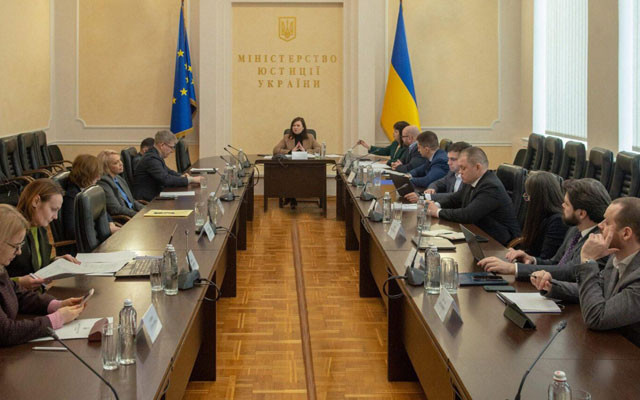
Reform without data and advocacy: what the Ministry of Justice’s launch has revealed
The Ministry of Justice hosted the first meeting of the working group on bar reform. But instead of professional preparation of legislative changes, we saw exactly what Armada Network Director Dale Armstrong had spoken about the day before in Kyiv: not reform, but a struggle for control over the agenda through a narrow circle of “stakeholders” who create an echo chamber of influence for themselves.
Rule of Law Roadmap
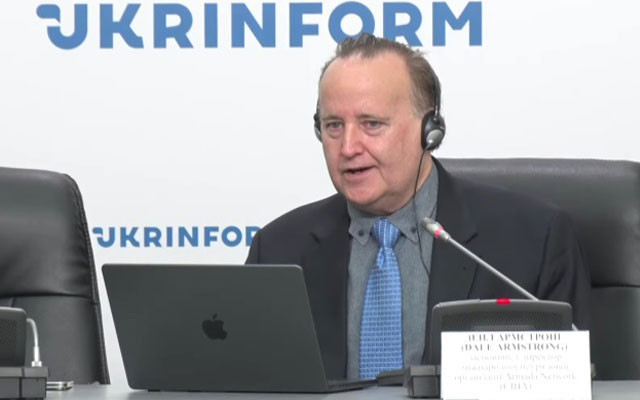
Advocacy, European integration and the limits of intervention: an American report presented in Kyiv
Following its presentation in Brussels, the report «The Ukrainian advocacy in the context of the rule of law and European integration» made its way to Kyiv. It highlighted critical issues both in understanding the very nature of the self-governing profession and in the emergence of a «shadow market» surrounding the Ukrainian advocacy.
Rule of Law Roadmap
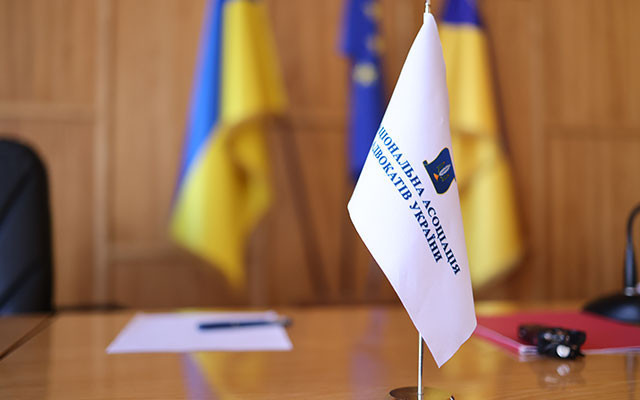
Organization of advocacy: subgroup agrees on approaches to regulatory reform
On March 13, a meeting was held of the «Organization of the advocacy and self-government» subgroup of the Working Group on the implementation of the Rule of Law Roadmap regarding bar reform. The event was conducted via videoconference.
Guarantees of the practice of law
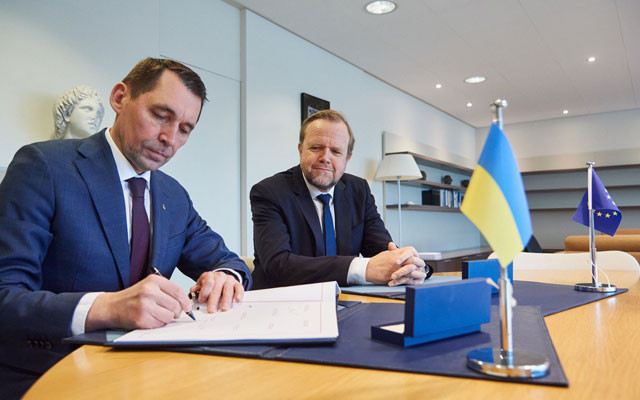
Ukraine has signed the Convention for the Protection of the Profession of Lawyer
Today, on 9 March, Ukraine's Permanent Representative to the Council of Europe Mykola Tochytskyi signed the Council of Europe Convention for the Protection of the Profession of Lawyer. This makes our country the 28th to sign this important international treaty.
European integration
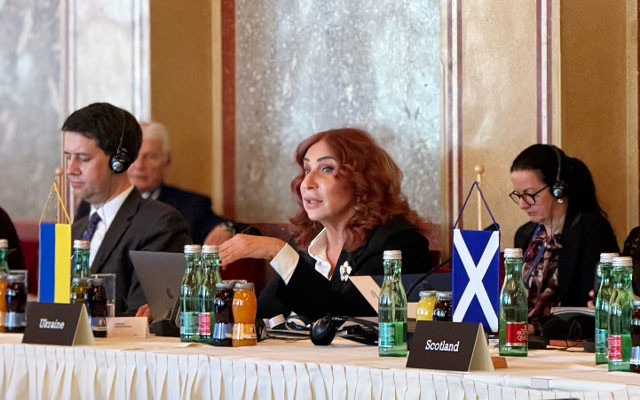
«Freedom or security» — a false formula: speech by L. Izovitova at the conference of bar presidents
Is the state protecting society from crime today, or is it gradually destroying the rule of law under the guise of this fight? These alarming trends were outlined by the President of the UNBA, BCU Lidiya Izovitova, during her speech at the 54th European Conference of bar presidents.
Discussion
AI in advocacy and justice: ethics, regulation, limits of application
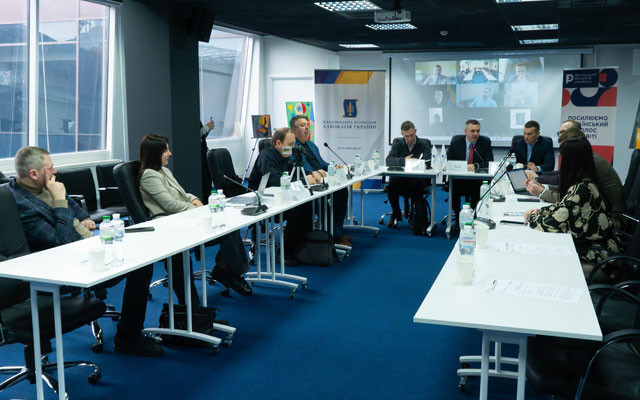
The Ukrainian National Bar Association held a roundtable discussion entitled «Artificial Intelligence in the цork of advocates: ethics, responsibility, legal process engineering». Participants discussed how artificial intelligence systems are already being used in the professional activities of advocates and where the ethical boundaries of what is permissible lie.

European integration
Researchers from the USA explain how shadow reports became a grant service
Shadow reporting often becomes a tool for the grant economy and competition for influence on policy. Such «expertise» replaces impartial analysis with the delegitimization of bar self-government, masks conflicts of interest, and is used as a channel for external pressure on the institution.
European integration
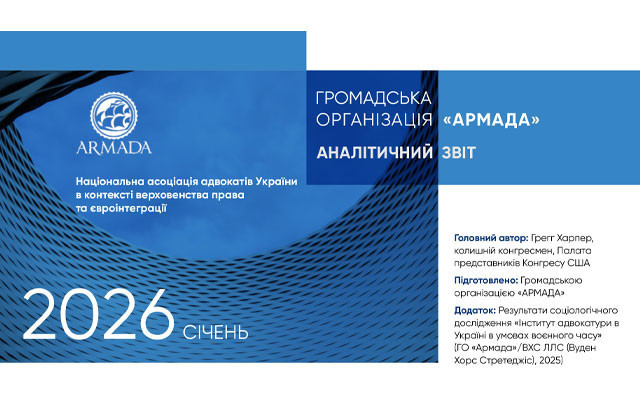
A translation of the report on advocacy presented to the European Parliament has been published
A translation of a research report on the Ukrainian advocacy profession in wartime, previously presented to the European Parliament in Brussels, has been published. The document is presented as a basis for discussion on the rule of law, Ukraine's European integration aspirations, and countering Russian disinformation in the legal sphere.
Publications

Volodymyr Matsko Extradition during wartime: when the risks outweigh the request

Volodymyr Matsko Extradition as a systemic form of rights violations

Victoria Yakusha, Law and Business The anti-corruption vertical cannot «take care» of the Bar as an institution, - acting head of the HQDCB

Censor.net Protecting advocates – protecting justice: addressing concerns about the new law

Ihor Kolesnykov A BRIEF SUMMARY REGARDING THE APPLICATION OF THE ORDER ON EXTENDED CONFISCATION IN LATVIA REGARDING FINANCIAL ASSETS OF…

Valentyn Gvozdiy WORKING IN A WAR ZONE

Lydia Izovitova Formula of perfection

Sergiy Vylkov Our judicial system is so built that courts do not trust advocates