


Home quote
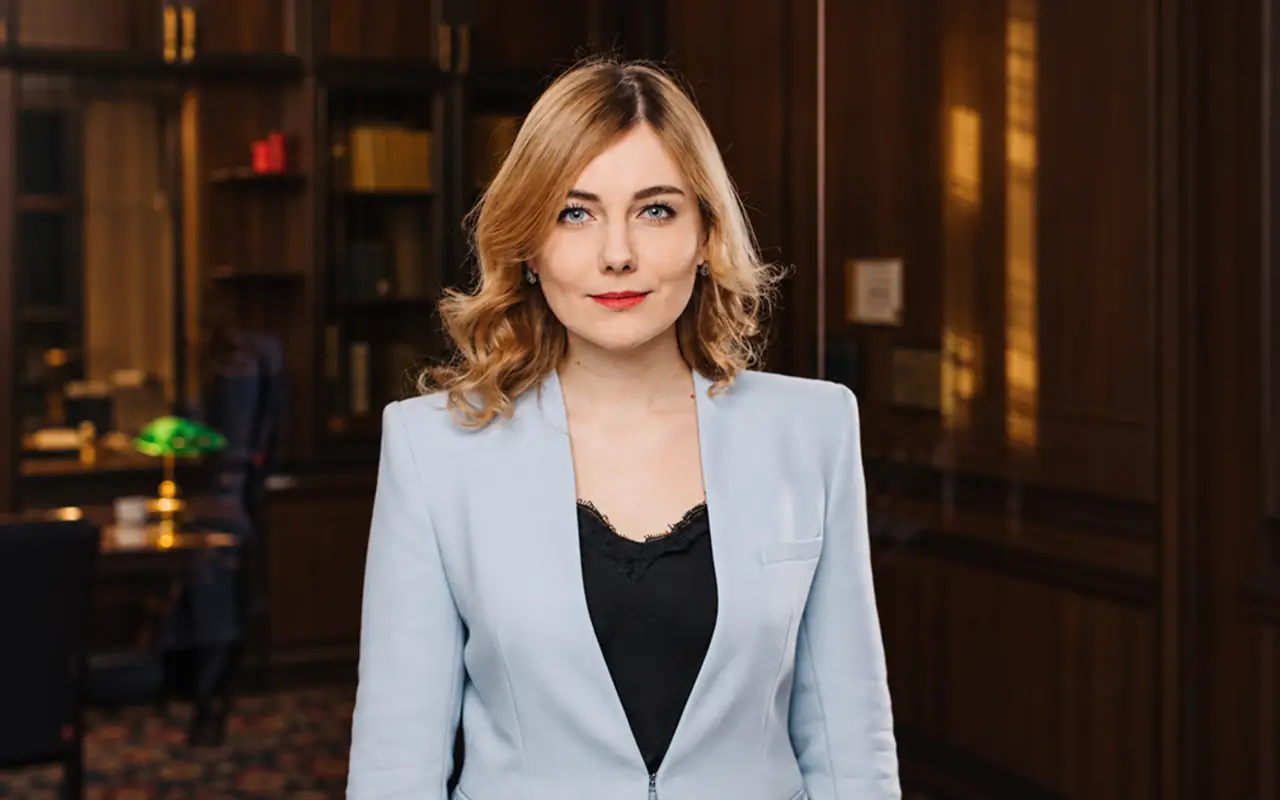
«Mental health support has become available to advocates in many formats, each of which is in real demand», - project coordinator for the UNBA and the IBA Hanna Udovenko
Publications
Supporting mental health should become part of the professional culture of advocacy, - H. Udovenko
Stress is an integral part of the advocate profession, but recent years have added new risks to the usual workload—ranging from chronic exhaustion to the pressures associated with working under martial law. In late 2024, the UNBA and the International Bar Association (IBA) launched a project to support advocates’ mental health. «ZiB» spoke with project coordinator Hanna UDOVENKO about how the professional community’s attitude toward psychological support has changed during this time, which formats have proven to be in demand and what systematic support should look like.
«The profession itself entails a heightened psychological burden»
– Hanna, a person’s mental health is often viewed as a private matter. But surely there is a point beyond which one’s psychological state becomes a professional issue and can affect the quality of work. Where is that line for an advocate?
— In the legal profession, there are almost no «neutral» decisions. An advocate constantly works in conditions of conflict, time constraints, high responsibility for the consequences of their actions, and strong emotional involvement on the part of the client. Here, it is critically important to maintain the ability to calmly analyze the situation, identify risks, not overlook details and not make decisions under the influence of one’s own stress or exhaustion.
This is most evident in communication with clients. An advocate must listen to the client but at the same time separate facts from emotions, explain the realistic prospects of the case, sometimes say unpleasant things, and all the while maintain professional distance. Therefore, when prolonged stress or exhaustion makes it harder to concentrate, weigh decisions, or calmly conduct such a conversation, this already creates professional risks. Perhaps this is where the line you’re asking about lies.
And in this regard, mental health is one of the essential prerequisites for high-quality legal assistance. Knowledge, experience, and professional ethics provide an advocate with the tools, while their psychological state determines how effectively they can use them and fulfill the duties imposed on them by law. And the importance of the quality of legal assistance extends far beyond specific contractual relationships or internal matters of the profession. For, let me remind you, everyone’s right to professional legal assistance is explicitly enshrined in the Constitution of Ukraine.
— So, even in peacetime, the advocate profession is associated with high levels of stress. What has changed in recent years: what psychological pressures do advocates face most often today?
— Yes, high professional stress did not arise because of the war. The increase in the number of threats, harassment, attacks on advocates, and interference in their professional activities became one of the reasons for drafting the Council of Europe Convention on the Protection of the Professions of Lawyer, which Ukraine signed on March 9, 2026.
Council of Europe documents explicitly list among such risks pressure related to professional activities, interference in confidential communications with clients, searches, surveillance, and the conflation of the advocate with the client… In other words, even before the current situation in Ukraine, it was clear that the profession itself entails heightened psychological stress.
In the context of war, two additional types of stress have been added to this. The first is common to everyone: air raid alerts, missile strikes, disrupted sleep, and prolonged uncertainty. The second is purely professional. An advocate may represent a person in a socially sensitive case for example, defending someone accused of a war crime and thereby become the target of public aggression or be effectively equated with their client’s position.
The Ukrainian National Bar Association has documented cases where advocates were notified of suspicions regarding their clients’ cases. And the President of the UNBA, BCU Lidiya Izovitova, pointed out that fear of persecution may force advocates to refuse to defend clients in high-profile cases.
There are quite a few such cases. The UNBA regularly reports instances of advocates being denied access to clients at the TCC, intimidation, the serving of summonses while performing professional duties, as well as physical violence. There have been cases where an advocate was beaten while working at a TCC and suffered a broken leg, and in another instance, an advocate was detained while performing professional duties, beaten, and drafted into military service despite a valid deferment. The ombudsman has already drawn attention to these problems, demanding a principled response from state authorities.
It is clear that, under such conditions, relying solely on each advocate’s personal resilience is not enough. We need stable and systematic mechanisms to help restore this resilience in a timely manner and prevent situations from escalating to the point of exhaustion or professional burnout. That is why, together with the IBA, we launched a project to support advocates’ mental health.
«There is a need for this kind of assistance, but financial considerations also play a significant role in the decision»
— So it’s been going on for almost two years now. To what extent did what you observed during the project’s implementation align with your initial expectations?
— At the outset, we were guided by fairly specific needs that were already apparent in the legal community at the time. These included burnout, anxiety, panic attacks, and the effects of prolonged stress. We also identified specific groups facing particular challenges: female advocates balancing their practice with additional family responsibilities; young colleagues who were losing sight of their professional prospects; and advocates from regions under constant shelling. Therefore, from the outset, the project had two practical formats: individual psychotherapy sessions and regular psychoeducational events.
Incidentally, during these events, it became clear that the need extended beyond simply overcoming acute crisis situations. Advocates were also interested in practical matters: how to distinguish fatigue from burnout, when to seek help from a psychologist, how to recover from stress, and how to manage anxiety, conflicts, perfectionism, and overload. In other words, the conversation has shifted to daily professional well-being. This is clearly reflected in the topics of the webinars we hold regularly.
As for individual assistance, within the framework of the project, advocates can receive a certificate that covers the cost of consultations with a specialist. Each advocate independently chooses a psychologist or psychotherapist on the Rozmova platform. It’s important to us that all specialists approved to work on the platform have the appropriate educational credentials and undergo document verification — this ensures the quality of the services our colleagues receive.
Initially, the certificate was worth 1,000 hryvnias, but it was later increased to 4,000 so that advocates could pay for at least a few sessions and determine whether working with a particular specialist was a good fit for them or not. After that, in just two weeks, we received about 30 requests. That’s when we realized that there is indeed a need for this kind of assistance, but the decision to seek it is significantly influenced by the financial conditions involved.
So I would say that our initial understanding of the problem was confirmed, but the project itself has gradually expanded.
— How do you choose topics for your psychoeducational sessions? Is it a pre-determined program, or does the agenda change depending on the issues the advocates themselves bring up?
— So far, as part of the project, we’ve discussed anxiety, sleep and rest, conflicts, emotional intelligence, workaholism and perfectionism, recovery from stress, traumatic experiences, communication with military personnel and veterans, meditation, and psychological burnout. The topics are quite diverse, but they all have a practical connection to how advocates work, make decisions, communicate with clients, and recover.
The agenda for our events is shaped based on requests from the advocates themselves. After each event, advocates have the opportunity to fill out a special form where they provide feedback on the webinar they attended, ask questions, and suggest topics they’d like to see covered in the future.
After that, together with our partners from the Rozmova platform, I select a speaker who best matches the request. The main criterion is practical experience specifically in the field the event is dedicated to, not just formal status. We always plan our events a month in advance.
«People decide for themselves what they’ll work on with a psychologist»
— Attending a webinar is one thing; actually changing professional habits is another. How do you know these events are effective? What can be considered the project’s results today?
— I agree: the question is whether interest in the topic translates into practical action. One level is when a person attends a webinar and receives information. Another is when they begin to recognize their own state, use certain techniques, change their work habits, or seek individual help. These are precisely the things that can be considered signs that the project is working.
As of today, 43 webinars have been held as part of the project; they take place every two weeks. Along with positive feedback after each event, we also track quantitative metrics: the number of registered and actual participants, the percentage of those who stay until the end of the event, and statistics on views of recordings after the event.
It is noteworthy that many webinars generate the majority of their views after the event has concluded, meaning the recording serves as a standalone educational resource. Recordings of the events we host are stored on the UNBA’s YouTube channel, as well as in the archive of our dedicated platform. This helps advocates rewatch a webinar that interested them and practice the techniques shared by experts at a time that is convenient for them.
Additionally, after each event, the speakers prepare articles on the topics covered in the webinars, which are posted on the project’s platform. We do this so that everyone can choose the format that works best for them when engaging with the information.
So, as of today, I would say the main result is that mental health support has become accessible to advocates in many different formats, each of which is in real demand.
— Individual psychological counseling is obviously a much more sensitive format than an open webinar. Is there still a barrier for Ukrainian advocates: «I have to handle this on my own»?
— It seems that such a barrier does indeed remain. Advocates generally have a control-oriented mindset: you have to be in control of the situation, provide answers, handle the workload, and be a pillar of support for your client. Because of this, seeking psychological help can be perceived as an admission of personal weakness. Although in practice, it’s more about timely replenishment of one’s resources.
That’s why we took this into account when designing the individual support mechanism. Within the project, an advocate does not need to explain their personal circumstances to the UNBA, describe the problem, or justify why they need counseling. To receive a certificate, the only requirement verified is their status as an advocate. This is a matter of principle: the individual decides for themselves what they will work on with the psychologist, and the professional organization merely provides access to this opportunity.
And the project’s experience has shown that there is demand for this format. If assistance is sufficiently accessible (and does not require a person to disclose their circumstances), then the barrier is significantly lowered. Such respect for privacy, in my opinion, is no less important here than the financial support mechanism itself.
«Taking care of oneself is not a departure from professional duty, but a prerequisite for it»
— Would you say that the legal community’s attitude toward mental health is changing, that advocates today feel comfortable discussing these issues?
— Yes, this change is noticeable, and it has taken place in a relatively short time. Just a few years ago, the topic of mental health was almost never discussed publicly in legal circles: fatigue, burnout, or anxiety were viewed as private matters not to be discussed with colleagues, let alone at professional events. The profession has traditionally demanded the image of a person who can withstand any strain without visible consequences. Today, the way we talk about this has changed: advocates are increasingly asking on their own about the possibility of obtaining certification and are participating more actively in related events.
The reason, in my opinion, is that the community has come to realize a simple correlation. An advocate works for a client, and the quality of that work directly depends on the advocate’s own state of mind: the ability to maintain focus, hold one’s ground under pressure, and make well-considered decisions amid uncertainty.
In the context of constant stress and war, maintaining this state is difficult for many colleagues, and to deny this would be to ignore reality. That is why more and more advocates are coming to understand that taking care of oneself is not a departure from professional duty but a prerequisite for it: one must first take care of one’s own well-being to be able to effectively defend others.
I believe that the ability to listen to oneself, recognize one’s limits in a timely manner, and seek support is not a sign of weakness, but rather a sign of professional maturity and strength. A community that allows itself to talk about this becomes more resilient, and this change is one of the most important developments in recent years. That is precisely why working on this project is so important to me.
— Assuming that psychological resilience affects an advocate’s professional effectiveness, what should the next step be?
— I think the next step is precisely to stop viewing these mechanisms as a temporary response to the crisis. The war has drastically increased the workload, but the need for such tools will not disappear in the post-war period.
And in my view, mental health support must become part of the professional culture of advocacy: regular mental health education, access to individual support, efforts to prevent burnout, recovery skills, and professional boundaries. It is important for advocates to turn to these tools not only when they are already completely exhausted, but proactively.
The project itself, a collaboration between the UNBA and the IBA, has already proven its effectiveness. Therefore, I see the logical next step today as expanding the topics covered, involving specialists, refining individual formats, and analyzing feedback from advocates. And here, cooperation with the IBA can be particularly important as a long-term partnership — for exchanging best practices and supporting new formats.
It is telling that interest in this project has extended beyond Ukraine’s borders. An increasing number of foreign advocacy organizations are reaching out to us asking for more details about it, and I regularly provide them during international meetings — particularly as part of our collaboration with CCBE. Colleagues are interested not only in the idea itself but also in the practical details: how the formats are structured, how the practical and educational components are combined, how feedback is collected, how experts are involved, and how participants’ confidentiality is ensured. Many of them say outright that they would like to incorporate certain elements into their own programs, and we are already discussing joint initiatives.
To a certain extent, this is to be expected. The Ukrainian advocacy profession today operates under conditions that European colleagues have not faced in decades, and the solutions we were forced to find to maintain the profession’s functionality during wartime are proving relevant to them as well: workload, burnout, and anxiety are shared problems; it’s just that they manifested more acutely and earlier for us. Therefore, the experience gained under difficult circumstances becomes Ukraine’s contribution to the European professional community, rather than merely a tool for domestic use. For me, this confirms that the project has value that extends beyond the boundaries of a single jurisdiction.
The next step could involve transitioning from a standalone project to a sustainable support system. In other words, psychological education, individual support, burnout prevention, and working within professional boundaries should exist as tools that are always available to advocates. Another logical step would be to gradually integrate this topic into the system of professional training for advocates, so that mental health is viewed as a component of professional competence.
The interview was published in «Law and Business».
Hanna Udovenko
project coordinator for the UNBA and the IBA
Other publications author
Publications

Vasyl Kolishnyi, «Law and Business» Supporting mental health should become part of the professional culture of advocacy, - H. Udovenko

Volodymyr Matsko Extradition during wartime: when the risks outweigh the request

Volodymyr Matsko Extradition as a systemic form of rights violations

Victoria Yakusha, Law and Business The anti-corruption vertical cannot «take care» of the Bar as an institution, - acting head of the HQDCB

Censor.net Protecting advocates – protecting justice: addressing concerns about the new law

Ihor Kolesnykov A BRIEF SUMMARY REGARDING THE APPLICATION OF THE ORDER ON EXTENDED CONFISCATION IN LATVIA REGARDING FINANCIAL ASSETS OF…

Valentyn Gvozdiy WORKING IN A WAR ZONE

Lydia Izovitova Formula of perfection