Reimbursement of expenses for legal services in court proceedings: from theory to practice
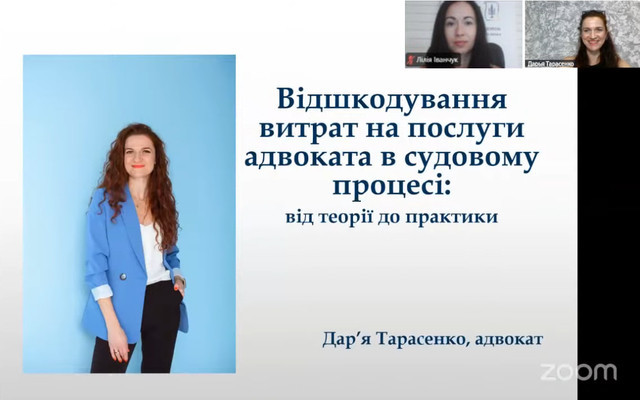
What are the pros and cons of claiming reimbursement of legal fees in court proceedings, what documents need to be submitted, how to object to the recovery of such costs, and when can the court reduce the amount?
These issues were discussed by advocates during a webinar organized by the Bar Council of Ivano-Frankivsk Region in cooperation with the regional representative of the UNBA NextGen Lilia Ivanchuk. Advocate Daria Tarasenko was invited to speak at the event.
The speaker reminded that, according to paragraph 14 of the Recommendations of the Committee of Ministers of the Council of Europe (CMCE) to member states on measures facilitating access to justice (on measures facilitating access to justice) No. R(81)7, except in special circumstances, the winning party should, in principle, be reimbursed by the losing party for the costs and expenses, including lawyers' fees, which it has reasonably incurred in connection with the proceedings.
The procedure for recovering costs related to legal assistance provided by an advocate is provided for in Article 134 of the Code of Administrative Procedure, Article 137 of the Code of Civil Procedure, and Article 126 of the Code of Commercial Procedure. The Administrative Court of Cassation in case No. 240/32993/23 noted (decision of 23.01.2025) that the purpose of recovering legal aid costs is not only to compensate the party in whose favor the decision was made for the losses incurred, but also, in a certain sense, to encourage the authority to refrain from actions that would subsequently necessitate the restoration of the violated rights and interests of individuals and legal entities in the sphere of public law relations.
Restoring financial justice for the client, preventing future violations of the law by the defendant, and encouraging the defendant to resolve the dispute before the court renders a decision are, in the speaker's opinion, the arguments that an advocate should use when deciding whether to recover the costs of legal assistance provided to the client from the opponent. Of course, it is possible that the case will be delayed and the court decision will take effect. Additional time will also be needed to prepare the necessary documents, and the client may be disappointed by the court's reduction of the amount of compensation.
At the same time, a claim for reimbursement of the costs of legal services may be made in the statement of claim (for the defendant in the response to the statement of claim, and for a third party in written explanations. To do this, the following must be submitted to the court:
- contract with the advocate;
- addendum to the contract specifying the amount of the fee (if the contract itself does not contain such a condition);
- description of the work (services provided) performed by the advocate (not required for a fixed fee, according to the practice of the Supreme Court).
It is also recommended to submit an invoice for the lawyer's services and a receipt for payment of the lawyer's services.
It is possible to object to the recovery of costs in full on the grounds of the absence of the necessary documents and the untimeliness of the claim.
A statement requesting a reduction in the amount of compensation must contain a justification as to why the amount of the claimed expenses is disproportionate to the complexity of the case, the value of the claim, the volume of materials in the case, the number of procedural documents prepared, the number of hearings, the duration of the court proceedings, etc.
In case of non-compliance with the requirements of part five of Article 134 of the Code of Administrative Procedure, the court may reduce the amount of legal aid costs to be distributed between the parties, but only at the request of the other party, which is obliged to prove that the costs are disproportionate to the services provided by the advocate.
However, in practice, courts are increasingly taking the initiative to reduce the reimbursement of costs related to the provision of legal assistance by an advocate and which are recovered in favor of the party whose claims have been satisfied by the court, noted D. Tarasenko. In her opinion, such actions of the court are contrary to the law, as noted by the Grand Chamber of the Supreme Court in case No. 755/9215/15-ц (decision of 19.02.2020): it is the interested party who must take certain actions aimed at recovering the costs of professional legal assistance from the other party, and the other party has the right to raise appropriate objections to such claims, which excludes the court's initiative to recover the costs of professional legal assistance from one of the parties without appropriate action on the part of that party.
The speaker provided practical advice to the audience on how to claim reimbursement of legal aid costs, explained the specifics of recovery in appeal and cassation proceedings, provided samples of procedural documents, and links to relevant court decisions.
Popular news
Rule of Law Roadmap
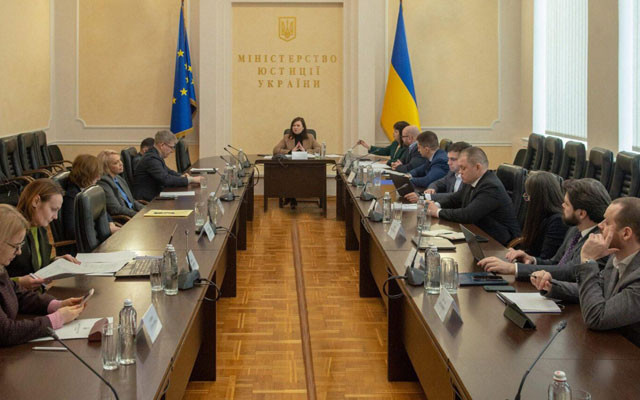
Reform without data and advocacy: what the Ministry of Justice’s launch has revealed
The Ministry of Justice hosted the first meeting of the working group on bar reform. But instead of professional preparation of legislative changes, we saw exactly what Armada Network Director Dale Armstrong had spoken about the day before in Kyiv: not reform, but a struggle for control over the agenda through a narrow circle of “stakeholders” who create an echo chamber of influence for themselves.
Rule of Law Roadmap
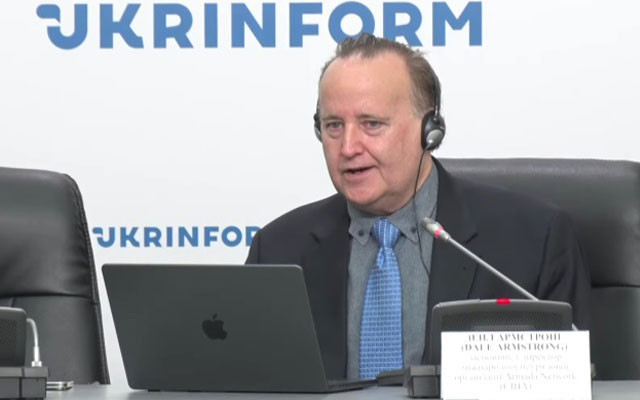
Advocacy, European integration and the limits of intervention: an American report presented in Kyiv
Following its presentation in Brussels, the report «The Ukrainian advocacy in the context of the rule of law and European integration» made its way to Kyiv. It highlighted critical issues both in understanding the very nature of the self-governing profession and in the emergence of a «shadow market» surrounding the Ukrainian advocacy.
Rule of Law Roadmap
Organization of advocacy: subgroup agrees on approaches to regulatory reform
On March 13, a meeting was held of the «Organization of the advocacy and self-government» subgroup of the Working Group on the implementation of the Rule of Law Roadmap regarding bar reform. The event was conducted via videoconference.
Guarantees of the practice of law
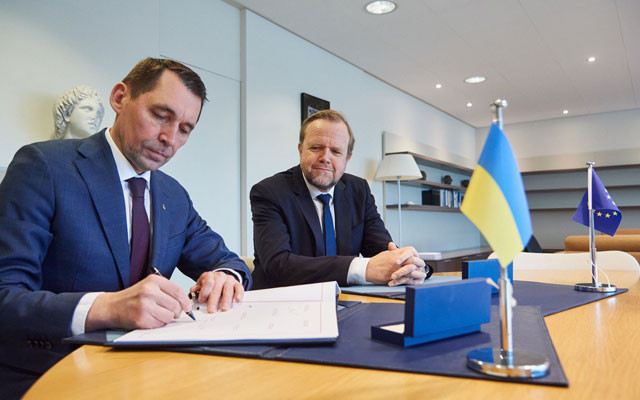
Ukraine has signed the Convention for the Protection of the Profession of Lawyer
Today, on 9 March, Ukraine's Permanent Representative to the Council of Europe Mykola Tochytskyi signed the Council of Europe Convention for the Protection of the Profession of Lawyer. This makes our country the 28th to sign this important international treaty.

Discussion
Detention as a rule: the UNBA discussed standards for proving risks
The state interferes most intensively with the human right to liberty when choosing a preventive measure. At this stage, the standard of proof of risk becomes the actual measure of the real meaning of the presumption of innocence.
European integration
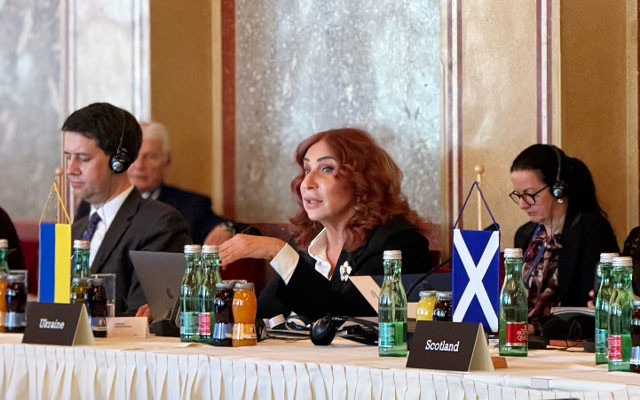
«Freedom or security» — a false formula: speech by L. Izovitova at the conference of bar presidents
Is the state protecting society from crime today, or is it gradually destroying the rule of law under the guise of this fight? These alarming trends were outlined by the President of the UNBA, BCU Lidiya Izovitova, during her speech at the 54th European Conference of bar presidents.
Discussion
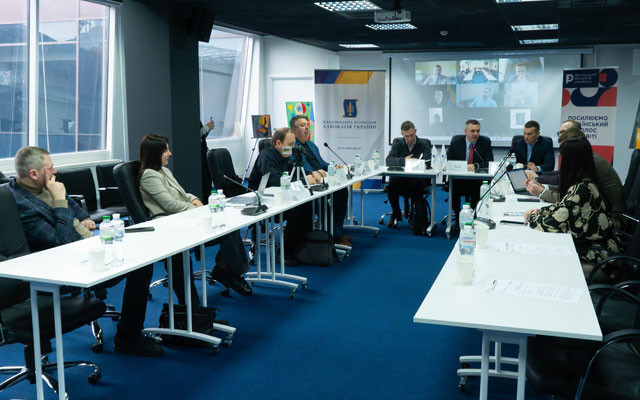
AI in advocacy and justice: ethics, regulation, limits of application
The Ukrainian National Bar Association held a roundtable discussion entitled «Artificial Intelligence in the цork of advocates: ethics, responsibility, legal process engineering». Participants discussed how artificial intelligence systems are already being used in the professional activities of advocates and where the ethical boundaries of what is permissible lie.
European integration
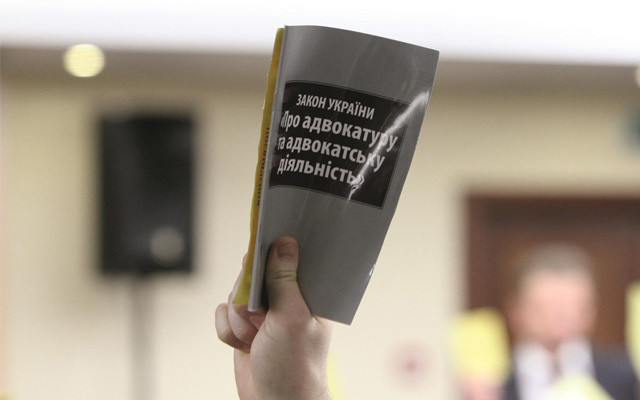
The Roadmap does not provide for the dismantling of the current model of advocacy — report
The Roadmap on the rule of law is not a law, directive, or other binding regulatory act and, accordingly, does not establish direct legal obligations regarding a specific institutional model of bar self-government.
Publications

Volodymyr Matsko Extradition during wartime: when the risks outweigh the request

Volodymyr Matsko Extradition as a systemic form of rights violations

Victoria Yakusha, Law and Business The anti-corruption vertical cannot «take care» of the Bar as an institution, - acting head of the HQDCB

Censor.net Protecting advocates – protecting justice: addressing concerns about the new law

Ihor Kolesnykov A BRIEF SUMMARY REGARDING THE APPLICATION OF THE ORDER ON EXTENDED CONFISCATION IN LATVIA REGARDING FINANCIAL ASSETS OF…

Valentyn Gvozdiy WORKING IN A WAR ZONE

Lydia Izovitova Formula of perfection

Sergiy Vylkov Our judicial system is so built that courts do not trust advocates