Venice Commission warned of risks of changes to disciplinary procedures for Ukrainian judges

The European Commission for Democracy through Law (Venice Commission) and the Council of Europe Directorate for Human Rights and Rule of Law are preparing an assessment of draft laws concerning the judicial system and the status of judges in Ukraine.
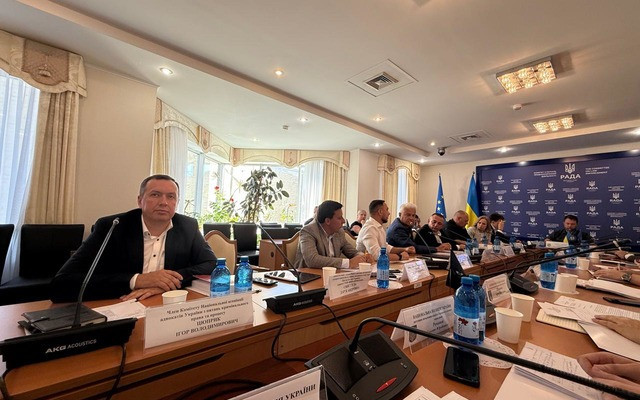
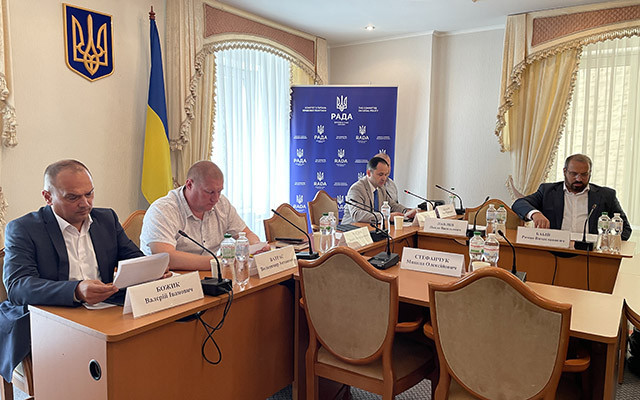
Lidiya Izovitova, the President of the Ukrainian National Bar Association, the Bar Council of Ukraine, took part in consultations held yesterday, July 24.
She reported that the highest body of the bar self-government had approved a conclusion on draft laws Nos. 13165, 13165-1, and 13165-2, which was sent to all members of the Venice Commission and the Council of Europe Office in Ukraine.
In particular, L. Izovitova spoke about the introduction of the institution of temporary suspension of a judge from the administration of justice for up to four months in connection with disciplinary proceedings, with a categorical prohibition on appealing such a decision.
According to the Ukrainian National Bar Association, this creates three critical problems:
First, it violates the constitutional principles of independence of the judiciary, the right to a fair trial, and the right to legal assistance. The prohibition of appeal makes defense illusory.
Second, criminal procedure mechanisms are being unjustifiably transferred to disciplinary proceedings, where there are no a priori risks to society.
Third, it creates a basis for manipulation, where disciplinary complaints can be used to remove «inconvenient» judges, creating an atmosphere of fear among judges.
The Bar Council of Ukraine concluded that the changes are conceptually unjustified and systematically dangerous for independent justice.
The President of the UNBA, BCU also drew the attention of international experts to violations of international legal norms.
The proposed mechanism, as it prohibits appeals against decisions on the temporary suspension of judges, is contrary to Article 6 of the Convention for the Protection of Human Rights and Fundamental Freedoms, which guarantees the right to a fair trial and an effective remedy.
The mechanism also does not comply with the 1985 UN Basic Principles on the Independence of the Judiciary, which prohibit external pressure on judges without appropriate procedural guarantees.
Therefore, the application of repressive measures against a judge before the fact of a violation has been established is contrary to the presumption of innocence and the principle of proportionality, concluded L. Izovitova. Such changes transform the legal system from an instrument of justice into a mechanism of control.
The President of the UNBA, BCU expressed her conviction that any changes to the legislation on the judiciary must be balanced, proportionate and strengthen the independence of the judiciary, rather than creating risks for interference in the administration of justice.
Popular news
Guarantees of the practice of law
The process of signing the Convention on the protection of the profession of advocate was taken under control by t…
The Ministry of Justice sent the text of the translation of the Council of Europe Convention on the protection of the advocate to the Ministry of Foreign Affairs «for review and approval». The main legal authority also expressed its support for the Ministry of Foreign Affairs regarding the signing and ratification of this Convention.
Guarantees of the practice of law
Statement by the UNBA Committee on the «National Police investigation»
The media is spreading news that the National Police of Ukraine is allegedly investigating a criminal offense committed by the leadership of the Ukrainian National Bar Association.
Discussion
Without the protection of advocates, there will be no fair trials in Ukraine — forum in Odesa
Identifying an advocate with their client undermines the foundations of justice, as it deprives individuals of the opportunity to exercise their right to defense, forces advocates to avoid participating in high-profile cases, and ultimately renders procedural guarantees meaningless. Without this, fair trial is impossible.
Guarantees of the practice of law
The number of cases where advocates are identified with their clients is growing – UNBA report
Advocates are increasingly being held hostage to political processes, with them being equated with their clients. Such actions undermine the independence of the profession and create an atmosphere of intimidation, as a result of which Ukrainian citizens are deprived of their right to defense.
Legislation
What data is sufficient to initiate an investigation – UNBA comments on draft law No. 12439
The problem of law enforcement pressure on business remains one of the most acute for the Ukrainian economy. The lack of regulation of certain procedures in the Criminal Procedure Code leads to abuses, as a result of which entrepreneurs find themselves in a state of legal uncertainty.

Guarantees of the practice of law
Law on advocacy and the Council of Europe Convention: the UNBA assessed compliance (comparative table)
The Ukrainian National Bar Association has prepared and published a comparative table showing the extent to which Ukrainian legislation complies with the provisions of the Council of Europe Convention on the protection of the profession of advocate.
Guarantees of the practice of law
The Verkhovna Rada is waiting for the Minister of Justice to take action on signing the Convention on the protection of t…
Ukraine, which was directly involved in the preparation of the world's first Council of Europe Convention on the protection of the profession of advocate, has still not signed it. There appear to be no formal objections, but no real steps have been taken towards accession either.

Abroad
Australian advocate apologizes in court for fake AI quotes
In Australia, a royal advocate apologized to a judge for submitting documents in a criminal case against a teenager accused of murder that contained fabricated quotes and non-existent court decisions generated by artificial intelligence.
Publications

Censor.net Protecting advocates – protecting justice: addressing concerns about the new law

Ihor Kolesnykov A BRIEF SUMMARY REGARDING THE APPLICATION OF THE ORDER ON EXTENDED CONFISCATION IN LATVIA REGARDING FINANCIAL ASSETS OF…

Valentyn Gvozdiy WORKING IN A WAR ZONE

Lydia Izovitova Formula of perfection

Sergiy Vylkov Our judicial system is so built that courts do not trust advocates

Iryna Vasylyk Advocacy in the proclamation of Independence of Ukraine

Oleksandr DULSKY When we cross the border of the Supreme Anti-Corruption Court, we get into another department of the National Anti-Corruption…

Vadym Krasnyk The UNBA will work, and all obstacles and restrictions are only temporary inconveniences