The implementation of the CCBE Recommendations on the qualification of Ukrainian advocates will establish the principle of reciprocity in the relevant legislation of EU countries – Lidiya Izovitova
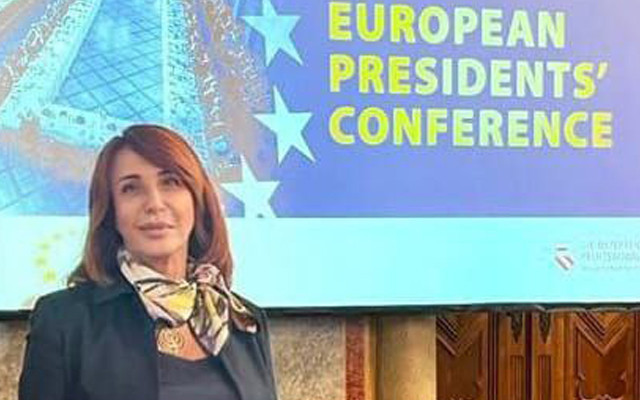
«On June 24, the Standing Committee of the CCBE adopted Recommendations on the Qualification of Ukrainian Lawyers. This document marks the beginning of the opening of borders between Ukraine and EU member states in terms of access to the legal services market,” explains Lidiya Izovitova, President of the UNBA».
According to the President of the UNBA, BCU, the newly adopted document is the result of many years of international activity by the UNBA, which, since its inception, has insisted on the introduction of the principle of reciprocity in the relevant legislation on advocacy in EU and WTO countries.
Thus, the Law of Ukraine «On the advocacy and the practice of law», adopted in 2012 in accordance with the PACE resolution and the conclusion of the Venice Commission, contains a section on the status of foreign advocates. In other words, for 10 years now, the market for legal services in Ukraine has not only been declaratively open, but also practically accessible and regulated for foreign colleagues.
Accordingly, the relevant national law reflects the principle of reciprocity, which is a European standard. In addition, this principle is enshrined in the terms of Ukraine's membership in the World Trade Organization (WTO) and must be implemented in the legislation on advocacy of other WTO member countries.
However, to date, the relevant Recommendations have not been adopted, and access to European practice for Ukrainian advocates has remained difficult.
The issue of recognition of Ukrainian advocates' qualifications in European countries has become particularly acute in recent months, when the need for such a decision by European regulators has become apparent.
During all recent international events, Lidiya Izovitova has called not only for the earliest possible adoption of the CCBE recommendations, but also for the implementation of the principle of reciprocity in the practical decisions of European advocate associations. In particular, the chairman of the UNBA has repeatedly noted that additional steps that could simplify the adaptation of Ukrainian advocates to the requirements of European markets could include grants or opportunities for free language and legal training, as well as advanced training courses in the law of European countries.
«The CCBE notes that the recognition of professional qualifications can only be carried out in accordance with the rules and exceptions provided for in the GATS and is regulated at the national level. The approach to Ukrainian advocates varies from state to state. The CCBE states that it is ready for any coordination activities in this matter and refers to a number of recommendations for legal and advocate associations of EU member states to encourage steps that will help Ukrainian advocates», - the CCBE Recommendations say.
The regulatory basis for this document was Recommendation 2022/554 of April 5, 2022, in which the European Commission called on member states to take specific measures to recognize the qualifications of people fleeing Russia's invasion of Ukraine.
«The CCBE can only confirm its commitment to approximating the fundamentals of national rules falling under the scope of international treaties and declares its readiness for any coordination activities that may be necessary, especially given the current unforeseen circumstances», - the Recommendations state.
In particular, the document refers to the need to minimize formal requirements: to accept forms of confirmation of facts other than original documents, to waive certain requirements or certified translations, to reduce or eliminate costs such as annual fees, etc. It also states that information about Ukrainian advocates is contained in the URAU, from which foreign advocacy can obtain information about their Ukrainian colleagues to confirm their qualifications.
CCBE recommendations on the qualifications of Ukrainian advocates (unofficial translation)
For reference: The Council of Bars and Law Societies of Europe (CCBE) represents bar and law societies in 46 countries, and through them, more than one million European advocates.
The CCBE member law and bar associations have appointed contact persons for primary legal assistance in most countries.
The photo shows Lidiya Izovitova during events in Vienna to mark the signing of the Declaration of European Lawyers in Support of the Rule of Law.
Popular news
Guarantees of the practice of law
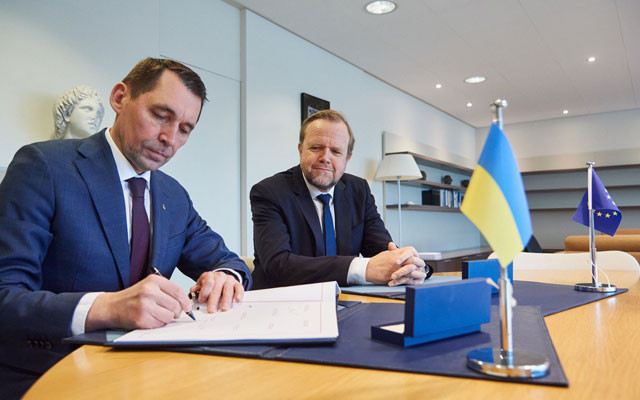
Ukraine has signed the Convention for the Protection of the Profession of Lawyer
Today, on 9 March, Ukraine's Permanent Representative to the Council of Europe Mykola Tochytskyi signed the Council of Europe Convention for the Protection of the Profession of Lawyer. This makes our country the 28th to sign this important international treaty.
European integration
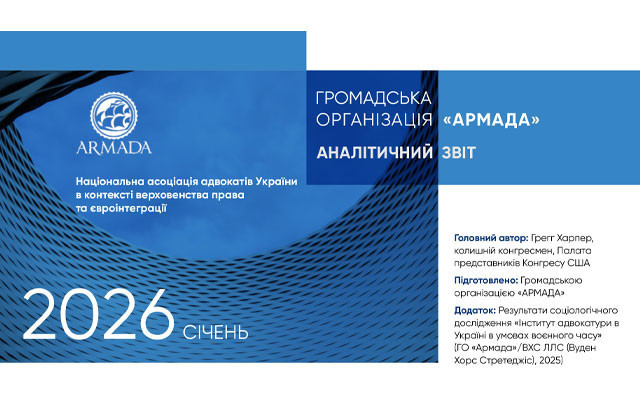
A translation of the report on advocacy presented to the European Parliament has been published
A translation of a research report on the Ukrainian advocacy profession in wartime, previously presented to the European Parliament in Brussels, has been published. The document is presented as a basis for discussion on the rule of law, Ukraine's European integration aspirations, and countering Russian disinformation in the legal sphere.

Legal defence of military personnel
How to formalize discharge from military service: practical workshop
The issue of discharge from military service remains one of the most pressing and complex for Ukrainian defenders and their families. Due to constant changes in legislation, military personnel often face refusals to discharge them from service or even to consider their reports.
Legislation
The Verkhovna Rada Committee criticized the format of the government working group on advocacy
The implementation of the Roadmap on the rule of law (approved by Cabinet of Ministers Resolution No. 475-r of May 14, 2025) in relation to advocacy raises the practical question of who exactly should prepare legislative changes and how.
Self-government
The BCU demands a review of the composition of the government working group on reforming the advocacy profession
The President of the UNBA, BCU Lidiya Izovitova, appealed to the Cabinet of Ministers of Ukraine to review the composition of the working group on improving legislation in the field of advocacy and legal practice.
Guarantees of the practice of law
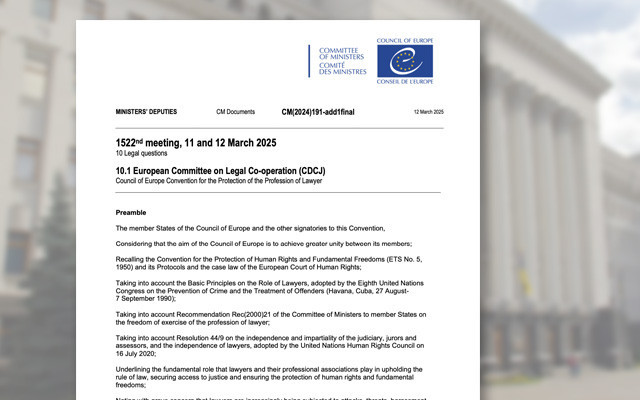
The President has determined, who will sign the Convention for the Protection of the Profession of Lawyer
President of Ukraine Volodymyr Zelenskyy authorized Ukraine's Permanent Representative to the Council of Europe Mykola Tochytskyi to sign the Council of Europe Convention for the Protection of the Profession of Lawyer.
Abroad
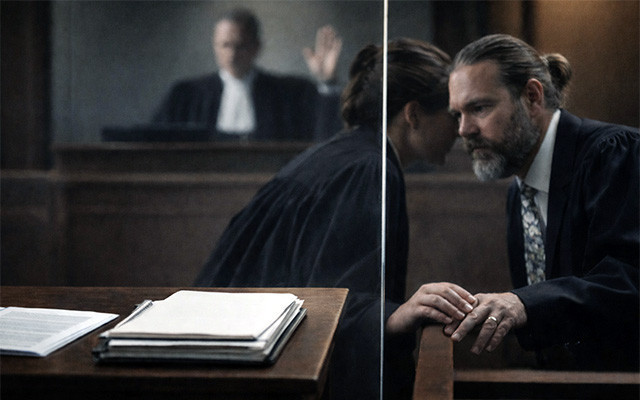
Advocate's romance with prosecutor halts criminal case in Canada
In Montreal (Quebec, Canada), a court suspended proceedings against eight defendants accused of illegal cannabis trafficking and money laundering after it was revealed that the prosecutor in the case and one of the advocates were in a secret intimate relationship.
Legislation
After the war amnesty for criminals or exemption from responsibility?
To ensure national reconciliation, rehabilitation of persons who have been persecuted for political reasons, restoration of justice, and establishment of lasting peace, it is proposed to introduce an amnesty after the war.
Publications

Volodymyr Matsko Extradition during wartime: when the risks outweigh the request

Volodymyr Matsko Extradition as a systemic form of rights violations

Victoria Yakusha, Law and Business The anti-corruption vertical cannot «take care» of the Bar as an institution, - acting head of the HQDCB

Censor.net Protecting advocates – protecting justice: addressing concerns about the new law

Ihor Kolesnykov A BRIEF SUMMARY REGARDING THE APPLICATION OF THE ORDER ON EXTENDED CONFISCATION IN LATVIA REGARDING FINANCIAL ASSETS OF…

Valentyn Gvozdiy WORKING IN A WAR ZONE

Lydia Izovitova Formula of perfection

Sergiy Vylkov Our judicial system is so built that courts do not trust advocates