CCBE appeals to the Ukrainian President for the third time over violation of advocates' rights

The Council of Bars and Law Societies of Europe (CCBE) has sent a third intervention letter to Ukrainian President Petro Poroshenko and the leadership of law enforcement agencies — the Prosecutor General's Office and the National Anti-Corruption Bureau of Ukraine (NABU) — regarding the inadmissibility of numerous violations of advocates' rights and guarantees of legal practice, calling for an investigation into such cases.
The CCBE represents advocate associations and law societies in 45 countries, which together represent more than 1 million European advocates.
The CCBE sent a similar letter on April 5, 2016, calling for an independent and comprehensive investigation into the murders of advocates Yuriy Grabovskiy, Viktor Loiko, Oleksandr Gruzkov, and Yuriy Ignatenko. In another letter dated April 6, 2016, the CCBE drew attention to cases of searches and seizures of advocates, which were reported to European partners by the Ukrainian National Bar Association. Based on this information, the CCBE stated that state authorities in Ukraine do not comply with European and international standards when conducting searches and seizures.
The CCBE reminds the Ukrainian side that the aforementioned letters were forwarded to the Prosecutor General's Office, the National Police, the Security Service of Ukraine, and the State Fiscal Service, but «none of the replies from these authorities even briefly mention the cases we cited in our letters».
«Given that the Ukrainian National Bar Association continues to inform us of new violations, we have concluded that the situation in Ukraine has not improved. The list of violations that we have become aware of includes, but is not limited to, physical violence, human rights violations, violations of the professional rights of advocates, illegal searches and seizures, denial of access to clients, illegal wiretapping, and the identification of advocates with their clients», - states the third intervention letter from CCBE President Michel Benisch.
Regarding the searches of advocates and seizures of documents, the CCBE separately highlights cases of violations during searches conducted on July 5 by NABU detectives in several offices of advocates and law firms. Referring to information from the UNBA, the CCBE states that, in addition to procedural violations by the investigating judge who issued the search warrant, during the search itself, NABU detectives illegally gained access to lawyers' files, viewed, read, took notes, and familiarized themselves with documents containing information that constitutes attorney-client privilege. It should also be noted that they gained access to, viewed, read, took notes on, and familiarized themselves with documents that also constitute attorney-client privilege but were not related to the case they were investigating. The CCBE already pointed out this problem in its letter of April 6 and again reminds the Ukrainian side of the guarantees of legal practice provided by the Law «On advocacy and legal practice» and the practice of the European Court of Human Rights.
In its third intervention letter, the CCBE also recalls the incompatibility of cases of denial of access to clients by advocates with the Council of Europe's Recommendation No. R (2000)21.
Separately, the CCBE refers to the illegal wiretapping of advocates' telephone conversations, which constitutes interference in private conversations between clients and advocates. This practice is contrary to Principle 22 of the UN Basic Principles on the Role of Advocates, which states that «governments shall recognize and respect all communications and consultations between advocates and their clients in the context of their professional relationship». Recommendation No. R (2000) 21 of the Council of Europe also stipulates that «all necessary measures should be taken to ensure the confidentiality of the relationship between an advocate and his or her client». Interference in private conversations between a client and their advocate is prohibited by paragraph 9 of Article 23 of the Law of Ukraine «On advocacy and legal practice».
The letter to the President of Ukraine also mentions the inadmissibility of the practice of identifying an advocate with a client, as this contradicts the Principle of the UN Basic Principles on the Role of Advocates and the Law of Ukraine «On advocacy and legal practice».
«Given the crucial role of advocates in the administration of justice and in ensuring and protecting the rule of law, the CCBE condemns the above violations. Of particular concern is the fact that in many cases it is the law enforcement authorities themselves who violate the rights of advocates. In this context, it is particularly important to ensure the protection of advocates' rights, as their violation inevitably affects the right of Ukrainian citizens to a fair trial, as enshrined in the European Convention on Human Rights. Advocates play a central role in ensuring the protection of human rights and fundamental freedoms, and therefore the CCBE respectfully requests that you investigate the above-mentioned facts and take all measures to prevent abuses against advocates in the future», - reads the letter from the head of the CCBE to the President of Ukraine and the leadership of law enforcement agencies.
Full text of the letter (translation)
Popular news
Guarantees of the practice of law
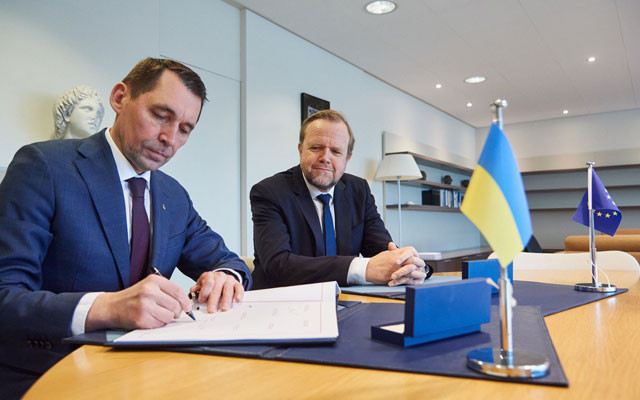
Ukraine has signed the Convention for the Protection of the Profession of Lawyer
Today, on 9 March, Ukraine's Permanent Representative to the Council of Europe Mykola Tochytskyi signed the Council of Europe Convention for the Protection of the Profession of Lawyer. This makes our country the 28th to sign this important international treaty.
European integration
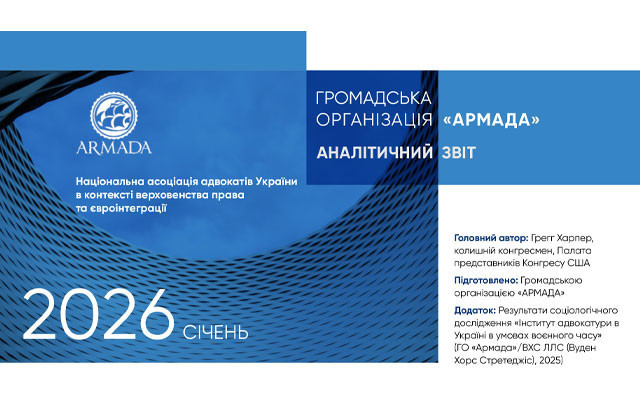
A translation of the report on advocacy presented to the European Parliament has been published
A translation of a research report on the Ukrainian advocacy profession in wartime, previously presented to the European Parliament in Brussels, has been published. The document is presented as a basis for discussion on the rule of law, Ukraine's European integration aspirations, and countering Russian disinformation in the legal sphere.

Legal defence of military personnel
How to formalize discharge from military service: practical workshop
The issue of discharge from military service remains one of the most pressing and complex for Ukrainian defenders and their families. Due to constant changes in legislation, military personnel often face refusals to discharge them from service or even to consider their reports.
Legislation
The Verkhovna Rada Committee criticized the format of the government working group on advocacy
The implementation of the Roadmap on the rule of law (approved by Cabinet of Ministers Resolution No. 475-r of May 14, 2025) in relation to advocacy raises the practical question of who exactly should prepare legislative changes and how.
Self-government
The BCU demands a review of the composition of the government working group on reforming the advocacy profession
The President of the UNBA, BCU Lidiya Izovitova, appealed to the Cabinet of Ministers of Ukraine to review the composition of the working group on improving legislation in the field of advocacy and legal practice.
Guarantees of the practice of law
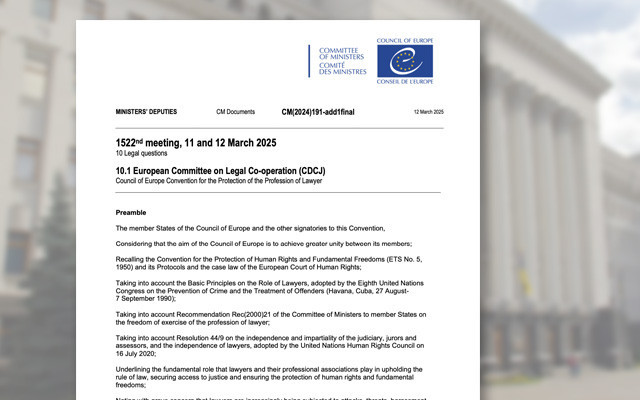
The President has determined, who will sign the Convention for the Protection of the Profession of Lawyer
President of Ukraine Volodymyr Zelenskyy authorized Ukraine's Permanent Representative to the Council of Europe Mykola Tochytskyi to sign the Council of Europe Convention for the Protection of the Profession of Lawyer.
Abroad
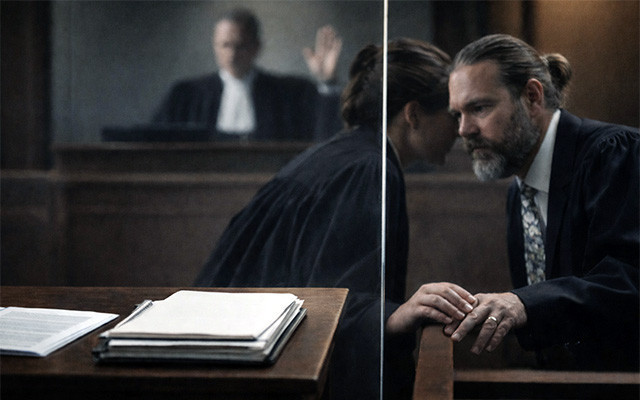
Advocate's romance with prosecutor halts criminal case in Canada
In Montreal (Quebec, Canada), a court suspended proceedings against eight defendants accused of illegal cannabis trafficking and money laundering after it was revealed that the prosecutor in the case and one of the advocates were in a secret intimate relationship.
Legislation
After the war amnesty for criminals or exemption from responsibility?
To ensure national reconciliation, rehabilitation of persons who have been persecuted for political reasons, restoration of justice, and establishment of lasting peace, it is proposed to introduce an amnesty after the war.
Publications

Volodymyr Matsko Extradition during wartime: when the risks outweigh the request

Volodymyr Matsko Extradition as a systemic form of rights violations

Victoria Yakusha, Law and Business The anti-corruption vertical cannot «take care» of the Bar as an institution, - acting head of the HQDCB

Censor.net Protecting advocates – protecting justice: addressing concerns about the new law

Ihor Kolesnykov A BRIEF SUMMARY REGARDING THE APPLICATION OF THE ORDER ON EXTENDED CONFISCATION IN LATVIA REGARDING FINANCIAL ASSETS OF…

Valentyn Gvozdiy WORKING IN A WAR ZONE

Lydia Izovitova Formula of perfection

Sergiy Vylkov Our judicial system is so built that courts do not trust advocates