


The limits of criticism of the court by an advocate were examined by the ECHR

An advocate has the right to sharply criticize the actions of the court within the proceedings if this is necessary to defend the client, and not to personally insult the judge. Punishment for such words is possible only in exceptional cases and should not force advocates to remain silent.
These conclusions were made by the European Court of Human Rights in the case of Marko Tešić v. Serbia (application No. 61891/19, judgment of 04.11.2025).
The advocate was fined for contempt of court in criminal proceedings in which he was defending a client accused of attempted murder. In his written objections to the evidence submitted to the court, the advocate stated that he was forced to request a five-minute recess during the trial in order to «cool down the heated emotions of the presiding judge». The national courts found these statements to be offensive, damaging to the honor and reputation of the court and the presiding judge, and fined the advocate.
He appealed to the European Court of Human Rights, arguing that such punishment violated his right to freedom of expression, guaranteed by Article 10 of the Convention for the Protection of Human Rights and Fundamental Freedoms. In particular, he insisted that his written comments were evaluative judgments about the judge's conduct of the proceedings and were part of the exercise of his client's right to effective defense.
The Government's representative did not dispute that the fine imposed on the applicant for contempt of court constituted an interference with his right to freedom of expression. At the same time, he argued that the expression «heated passions» used by the applicant could be perceived as a euphemism for describing symptoms commonly associated with menopause in women and was therefore a sexist comment. The government acknowledged that in other contexts this expression could refer to excessive tension, escalation of conflict, or an emotionally exaggerated reaction — with a hint of personal hostility — but insisted that in the circumstances of this case, such language went beyond permissible criticism of the judiciary.
The ECHR found that the interference with the applicant's freedom of expression in this case was based on Article 231 of the Serbian Criminal Procedure Code, which provides for the possibility of imposing a fine on a defense lawyer for insulting the court or any other participant in the proceedings. Therefore, such interference was «prescribed by law». Furthermore, it is not disputed that it pursued the legitimate aim of maintaining the authority of the judiciary within the meaning of Article 10(2) of the Convention.
In assessing the proportionality of the interference, the European Court reiterated its established position that the nature and severity of the sanction imposed should be taken into account in this regard. After all, any interference with the exercise of freedom of expression may have a “chilling effect” on the exercise of that freedom. The relatively moderate amount of the fine does not in itself eliminate the risk of such an effect, which is all the more unacceptable in the case of an advocate called upon to provide effective protection for his clients.
Applying these approaches to the circumstances of the case, the Court first drew attention to the context of the statements. The contested statements were made in the context of criminal proceedings and directly concerned the conduct of the court hearing and the performance of the duty to actively defend the client's interests. The comments were made in writing, addressed to the court, and were not intended for publication or dissemination in the media. Unlike media criticism, the document was not public in nature.
The ECHR acknowledged that although the objections were sharply worded and sarcastic in tone, the content of the document focused on the violations committed, rather than on the personal qualities or integrity of the judge. The Strasbourg court saw no reason to believe that the advocate's sole purpose was to humiliate the court or undermine the authority of justice, and emphasized that the advocate had the right to insistently and even sharply defend his client's procedural guarantees. «Even if such statements were atypical in terms of tone, the use of a «biting tone» when criticizing the judiciary in procedural submissions has repeatedly been found to be compatible with Article 10 of the Convention», - the Court recalled.
In assessing the sanction imposed, the ECHR noted that the amount of the fine was close to the maximum possible under national law and exceeded the applicant's declared income for two months, which increased the risk of a deterrent effect on other advocates. In the absence of evidence of abuse of procedural rights on the part of the applicant, the Court concluded that the domestic courts had not provided «adequate and sufficient» reasons and had not struck a fair balance between the interests of maintaining the authority of the judiciary and freedom of expression. Such interference was not «necessary in a democratic society» and the ECHR found a violation of Article 10 of the Convention.
Popular news
European integration
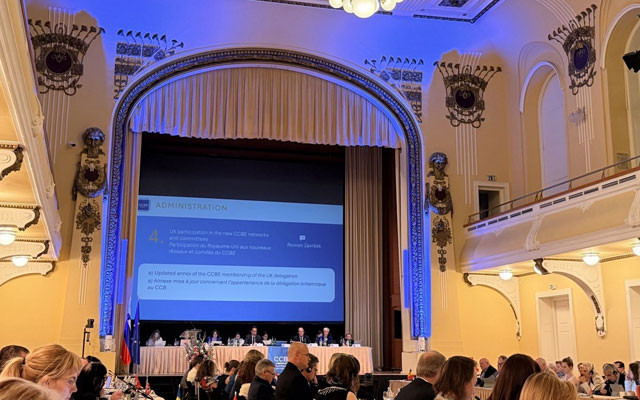
The UNBA presented the CCBE with an overview of legal reform and challenges
Reform of the legal profession, Ukraine’s European integration commitments, guarantees of the profession’s independence, and practices of bar self-governance in European countries — these issues were the subject of discussion at the Council of Bars and Law Societies of Europe (CCBE).

Rule of Law Roadmap
The UNBA is compiling the findings of the subgroups regarding the implementation of the Rule of Law Roadmap
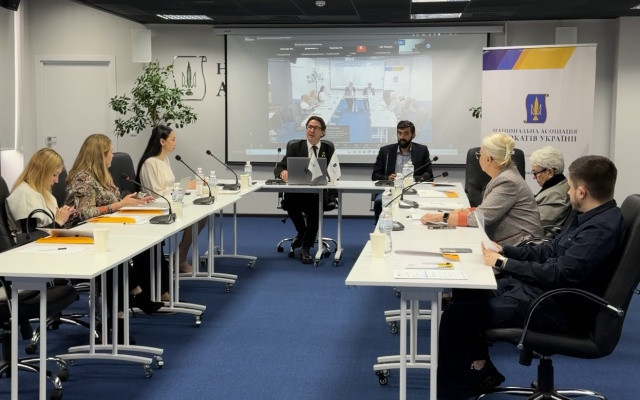
Today, May 28, the Ukrainian National Bar Association hosted a meeting of the Coordination Bureau of the Working Group on the implementation of the Rule of Law Roadmap regarding the reform of the advocacy profession. Following a series of meetings by thematic subgroups, the work is now moving to the stage of consolidating proposals and preparing a coordinated package of recommendations.
Discussion
UNBA discussed removing barriers at border crossings for families with children with disabilities
Families of children with disabilities face additional requirements when traveling abroad, particularly regarding consular registration. What is happening and what changes are needed to remove these obstacles were discussed during the roundtable «Borders without barriers for families of children with disabilities».
Discussion
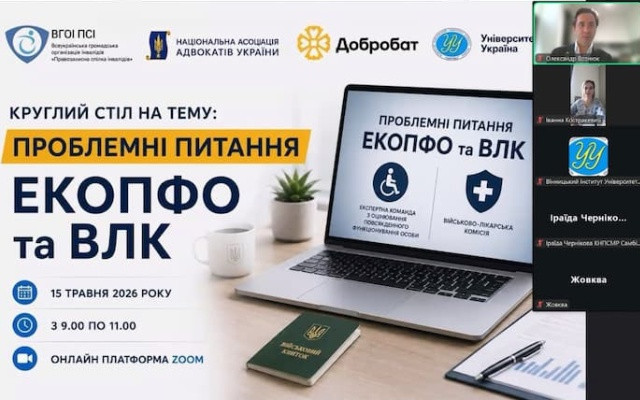
New rules, old problems: the UNBA discussed the work of the ETAIDF and MMC
The reform of medical-social assessment and military medical commissions has changed procedures but has not resolved practical issues. People face situations where documents are not issued, decisions are based on technicalities, assessments are delayed, and they struggle to demonstrate their actual health status in specific life situations.

Discussion
Co-parenting shouldn't be reduced to a 50/50 formula, — roundtable discussion
Following a divorce, joint custody can serve as a mechanism for ensuring equal parental rights. However, this model requires clear criteria and cannot be applied automatically without taking into account the child’s age, the level of conflict between the parents, the risk of violence, and the feasibility of enforcing the future decision.

Legislation
Penalties for errors in military registration require clear rules, – UNBA
The liability of officials for violations of military registration rules must be legally defined, proportionate, and effectively enforceable. Otherwise, the new fines will not protect citizens from registration errors but will create additional risks.

Educational events
How an advocate can find clients when starting a legal practice
Starting a law practice undoubtedly requires professional knowledge. At the same time, a clear understanding of one’s own area of specialization, clients, and communication channels is essential for success.

European integration
Lidiya Izovitova: In the context of European integration reforms, advocacy is a partner of the state, not a target of reform
The war has significantly altered the working conditions for advocates, while European integration has presented the profession with new institutional challenges. The ongoing negotiation process covers issues such as the rule of law, judicial independence, fundamental rights, justice, freedom and security.
Publications

Volodymyr Matsko Extradition during wartime: when the risks outweigh the request

Volodymyr Matsko Extradition as a systemic form of rights violations

Victoria Yakusha, Law and Business The anti-corruption vertical cannot «take care» of the Bar as an institution, - acting head of the HQDCB

Censor.net Protecting advocates – protecting justice: addressing concerns about the new law

Ihor Kolesnykov A BRIEF SUMMARY REGARDING THE APPLICATION OF THE ORDER ON EXTENDED CONFISCATION IN LATVIA REGARDING FINANCIAL ASSETS OF…

Valentyn Gvozdiy WORKING IN A WAR ZONE

Lydia Izovitova Formula of perfection

Sergiy Vylkov Our judicial system is so built that courts do not trust advocates