Foreign element: advocates discussed practical aspects of marriage and divorce
When is a marriage considered to be a marriage with a foreign element? What law applies to its consequences and dissolution? How is a foreign divorce decree recognized in Ukraine and what documents are required for this? When is the Civil Registry Office sufficient, and when is a court required?
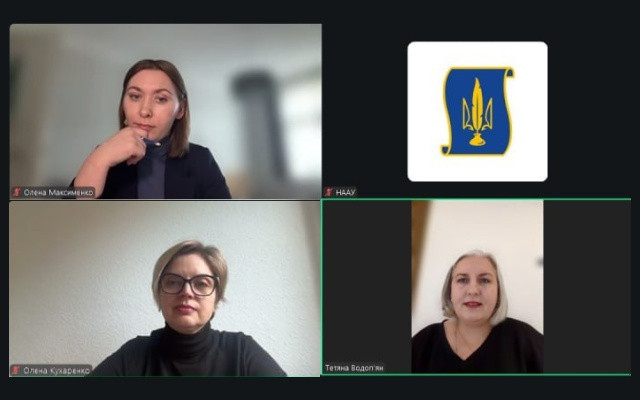
These and other questions were discussed by advocates during a webinar on «The international aspect of marriage and divorce: experience, problems, and legal recognition», organized by the family law Committee of the Ukrainian National Bar Association.
Three signs
The representative of the Committee in the Rivne region Tetyana Vodopyan began with a basic clarification: when it comes to marriage with a foreign element, it is first necessary to determine what exactly is considered a foreign element in private law relations. The Family Code applies to domestic family situations, but in international cases, according to her, the Law «On international private law» comes to the fore.
The speaker explained that a foreign element in family legal relations can manifest itself through one of three signs: when at least one of the participants is a foreigner or a stateless person; when the object of the legal relationship is located in another state; or when the legal fact took place abroad. In particular, for family practice, the decisive factors are most often the composition of the parties and the place where the marriage was concluded or dissolved.
Separately, T. Vodopyan drew attention to the rules for choosing the law applicable to the legal consequences of marriage. She referred to Article 60 of the Law on private international law and described the sequence of conflict of laws regulation: priority is given to the personal law of the spouses; if it is impossible to establish it, the law of the common place of residence; in the absence of such a criterion, the law of the state with which the spouses have the closest connection. Also, according to her, the spouses may determine the applicable law by agreement, in particular in a marriage contract.
Speaking about marriage registration in Ukraine, the speaker emphasized the national regime: foreigners who marry in the Civil Registry Office are subject to Ukrainian rules. At the same time, the right to marry of each person is determined by their personal law, but is exercised without contradicting the requirements in force in Ukraine. If the marriage is concluded outside Ukraine, its validity in Ukraine, as the speaker explained, is linked to the law of the country of conclusion, and in the case of the participation of a Ukrainian citizen, also to compliance with the requirements of the Family Code regarding the grounds for the validity of marriage.
In the concluding part of the report, she drew attention to apostilles, consular legalization, or the application of bilateral legal assistance agreements if they eliminate the need for additional certification of documents, as well as the need to translate documents written in a foreign language.
The Czech package
The representative of the UNBA in the Czech Republic Olena Maksymenko shared her experience of working in that country. She immediately outlined a conceptual difference that is important for family cases: in addition to marriage, there is also partnership in the Czech Republic. According to her, a partnership is a long-term relationship between two persons of the same sex, which, like marriage, is created through state registration. The speaker noted that the rights of partners are the same as those of spouses, extending to joint property and the possibility of adoption «with some nuances».
Moving on to divorce, O. Maksymenko emphasized that in the Czech Republic, even with the consent of the spouses, it is a judicial procedure. If there are joint minor children, the divorce is considered as a «package», and the court first decides on issues related to the child and his or her interests: custody (joint or sole), contact with the parent who lives separately, including personal and indirect contact via electronic means of communication. The speaker emphasized an approach that she called typical for European countries: equal parental responsibility and the child's right to the active participation of both parents in their upbringing, which is why «in the vast majority of cases» joint custody is preferred.
The court then examines alimony obligations. O. Maksymenko gave approximate percentages of the payer's income: from birth to 5 years old — 11–15%, 6–9 years old — 13–17%, 10–14 years old — 15–19%, 15–17 years old — 16–22%, 18+ — 19–25%. She also noted that if the child continues their education, maintenance can continue on average until the age of 26. As an example of a common model, the speaker described a «50/50» situation, where the child spends equal time with each parent, and alimony payments can be made «to each other's account».
If one of the parents does not agree with the established custody arrangement, the appeal suspends the entry into force of the decision as a whole, including the wording on the dissolution of the marriage. Among the new features that, according to her, will come into effect in 2026, she mentioned the simplification of divorce by mutual consent and the possibility of considering a case in the absence of one of the spouses if there is a written statement of consent and a finding of «profound breakdown» of the marriage.
Divorced, but not
Divorce abroad does not mean automatic termination of marriage in Ukraine. This was emphasized by the representative of the Committee in the Odesa region Olena Kukharenko, who regularly deals with divorces of Ukrainian citizens abroad and with a typical request from clients and colleagues: how to «legalize» a divorce issued by a foreign court for Ukraine.
The speaker described situations where people receive a foreign decision with a wording about divorce, consider the issue closed, but later face practical consequences: the need to change their surname, remarry, formalize inheritance or property rights, sell or buy real estate. At this point, she said, it comes as a «surprise» to them that the marriage continues to exist in Ukrainian registries.
O. Kukharenko linked the popularity of the «foreign route» to perceived savings: in a number of European countries, certain categories of persons can count on free legal aid, which encourages them to seek a solution «on the spot» without involving a Ukrainian advocate. At the same time, she stressed that a foreign decision does not automatically become legally binding in Ukraine. For it to be effective, it is necessary to apply to the civil registry authorities or, if the issue cannot be resolved through registration actions or there are deficiencies in the documents, to apply to a Ukrainian court with a request for recognition of the foreign decision. As a result, as the speaker noted, a person is often forced to go through the procedure «twice»: first abroad and then in Ukraine.
Among the typical problems, she mentioned the absence of an apostille or proper translation, conflicts due to different citizenship or residence in different countries, as well as procedural violations during foreign proceedings (in particular, improper notification of the defendant). The speaker drew attention to a practical detail: some foreign decisions do not specify the date of entry into force, and in such cases, a separate document must be obtained from the court. She cited examples where Ukrainian courts recognized foreign decisions provided that the proper set of documents was submitted, and where applications were returned or left without consideration due to the lack of confirmation of the decision's entry into force. In conclusion, O. Kukharenko outlined the need for a clear algorithm for the Civil Registry Office are subject to Ukrainian rules and uniform explanations of the procedure in order to reduce legal uncertainty.
Popular news
Guarantees of the practice of law
Ukraine has signed the Convention for the Protection of the Profession of Lawyer
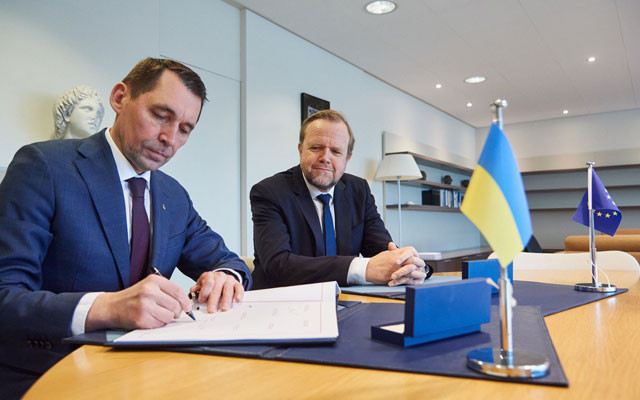
Today, on 9 March, Ukraine's Permanent Representative to the Council of Europe Mykola Tochytskyi signed the Council of Europe Convention for the Protection of the Profession of Lawyer. This makes our country the 28th to sign this important international treaty.
European integration
A translation of the report on advocacy presented to the European Parliament has been published
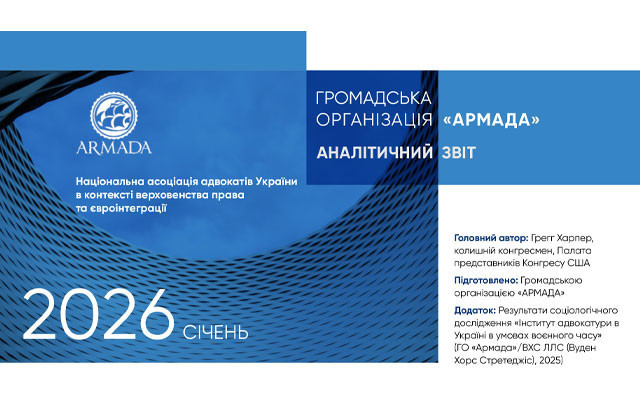
A translation of a research report on the Ukrainian advocacy profession in wartime, previously presented to the European Parliament in Brussels, has been published. The document is presented as a basis for discussion on the rule of law, Ukraine's European integration aspirations, and countering Russian disinformation in the legal sphere.

Legal defence of military personnel
How to formalize discharge from military service: practical workshop
The issue of discharge from military service remains one of the most pressing and complex for Ukrainian defenders and their families. Due to constant changes in legislation, military personnel often face refusals to discharge them from service or even to consider their reports.
Legislation
The Verkhovna Rada Committee criticized the format of the government working group on advocacy
The implementation of the Roadmap on the rule of law (approved by Cabinet of Ministers Resolution No. 475-r of May 14, 2025) in relation to advocacy raises the practical question of who exactly should prepare legislative changes and how.
Self-government
The BCU demands a review of the composition of the government working group on reforming the advocacy profession
The President of the UNBA, BCU Lidiya Izovitova, appealed to the Cabinet of Ministers of Ukraine to review the composition of the working group on improving legislation in the field of advocacy and legal practice.
Guarantees of the practice of law
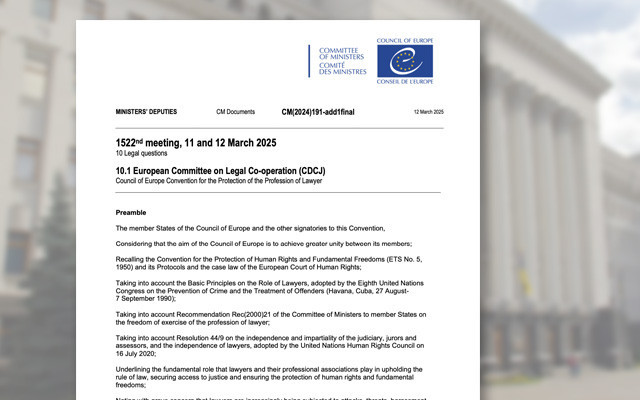
The President has determined, who will sign the Convention for the Protection of the Profession of Lawyer
President of Ukraine Volodymyr Zelenskyy authorized Ukraine's Permanent Representative to the Council of Europe Mykola Tochytskyi to sign the Council of Europe Convention for the Protection of the Profession of Lawyer.
Abroad
Advocate's romance with prosecutor halts criminal case in Canada
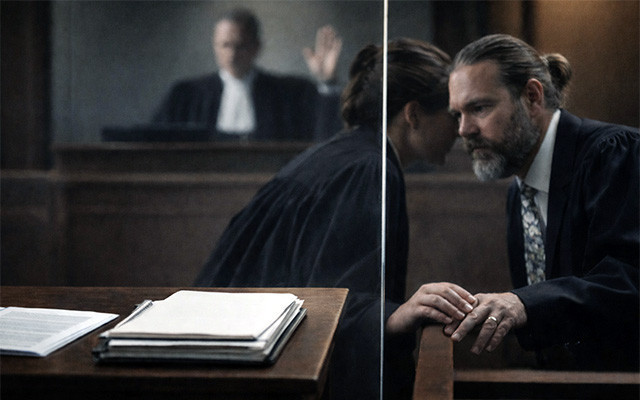
In Montreal (Quebec, Canada), a court suspended proceedings against eight defendants accused of illegal cannabis trafficking and money laundering after it was revealed that the prosecutor in the case and one of the advocates were in a secret intimate relationship.
Legislation
After the war amnesty for criminals or exemption from responsibility?
To ensure national reconciliation, rehabilitation of persons who have been persecuted for political reasons, restoration of justice, and establishment of lasting peace, it is proposed to introduce an amnesty after the war.
Publications

Volodymyr Matsko Extradition during wartime: when the risks outweigh the request

Volodymyr Matsko Extradition as a systemic form of rights violations

Victoria Yakusha, Law and Business The anti-corruption vertical cannot «take care» of the Bar as an institution, - acting head of the HQDCB

Censor.net Protecting advocates – protecting justice: addressing concerns about the new law

Ihor Kolesnykov A BRIEF SUMMARY REGARDING THE APPLICATION OF THE ORDER ON EXTENDED CONFISCATION IN LATVIA REGARDING FINANCIAL ASSETS OF…

Valentyn Gvozdiy WORKING IN A WAR ZONE

Lydia Izovitova Formula of perfection

Sergiy Vylkov Our judicial system is so built that courts do not trust advocates