BCU: NACP initiatives regarding the Bar are unconstitutional interference
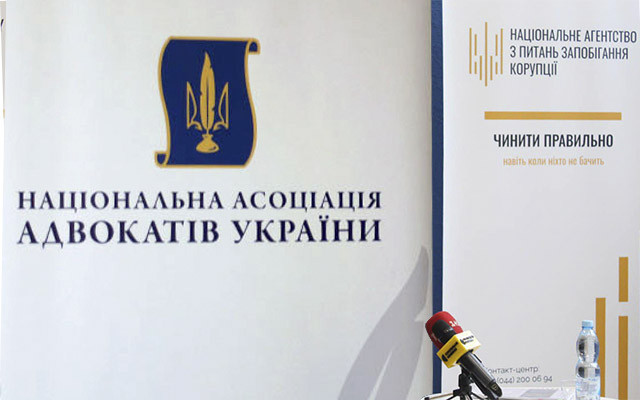
The Bar Council of Ukraine has condemned the initiatives to reform the Bar proposed by the National Agency on Corruption Prevention as direct, gross and systematic interference by the executive branch in the activities of an independent constitutional institution.
The Bar Council of Ukraine approved a corresponding open statement on the unconstitutional attempts to nationalise the Bar and the NACP's interference in the activities of the self-governing professional community during an extraordinary meeting on 31 December.
It should be recalled that the day before, the NACP held an event entitled “Public discussion of the draft Anti-Corruption Strategy for 2026-2030 in relation to the Bar.”
Among other things, a representative of the NACP made a statement that, allegedly, in accordance with the Roadmap on the Rule of Law, the state is obliged to interfere in the activities of 16 institutions, including the Bar.
However, this position is a gross misrepresentation of the content of this document. The UNBA categorically rejects this interpretation as legally flawed, manipulative and incompatible with the very logic of the Roadmap.
The full text of the open statement is provided below:
Appendix to the decision of the BCU
No. 158 of 31 December 2025
OPEN STATEMENT
regarding unconstitutional attempts to nationalise the Bar and interference by the National Agency on Corruption Prevention in the activities of the self-governing professional community
The Ukrainian National Bar Association, which represents the Ukrainian Bar in accordance with the Law of Ukraine “On the Bar and Practice of Law," expresses its strong protest against the actions of the National Agency on Corruption Prevention (NACP) that took place on 30 December 2025 during the organisation and conduct of the so-called "public discussion" of the draft Anti-Corruption Strategy for 2026-2030 in the part concerning the Bar.
The Ukrainian Bar considers this event and the initiatives proposed within its framework to be a direct, gross and systematic interference by the executive branch in the activities of the independent constitutional institution of the Bar, which contradicts the Constitution of Ukraine, the principle of the rule of law and international standards for the protection of Bar. Such actions pose a real threat to the self-governing nature of the Bar, narrowing the guarantees of its independence and, as a result, violating the right of every person to effective and independent professional legal services.
The statement by the NACP representative that, according to the Roadmap on the Rule of Law, the state is obliged to interfere in the activities of 16 institutions, which unjustifiably include the Bar, is a gross distortion of the content of this document. The Ukrainian National Bar Association categorically rejects this interpretation as legally flawed, manipulative and incompatible with the very logic of the Roadmap, which does not provide for any state interference in the activities of the independent constitutional institution of the Bar.
Firstly, the Roadmap is not a direct action act and does not empower any state authority to interfere in the activities of independent constitutional institutions. It is a framework policy document aimed at harmonising reforms with European standards, rather than expanding the powers of executive bodies beyond the Constitution and laws of Ukraine.
Secondly, the assertion of "state interference" in the activities of the Bar directly contradicts the content of the section of the Roadmap devoted to the Bar, which, on the contrary, proceeds from the need to preserve and strengthen its independence, developing self-government, accountability to the professional community, and the evolutionary improvement of existing mechanisms, rather than their dismantling or replacement by state control.
Thirdly, the NACP's position demonstrates a fundamental misunderstanding of the limits of state power and the nature of the Bar as a constitutional institution. Equating the Bar with institutions over which the state can exercise regulatory or administrative influence is categorically unacceptable. According to Article 131-2 of the Constitution of Ukraine, the Bar is an independent constitutional institution, not a subject of public administration or an object of state policy of the executive branch.
The reference by representatives of the NACP to the Roadmap on the Rule of Law, approved by Order of the Cabinet of Ministers of Ukraine No. 475-r of 14 May 2025, “Certain Issues of Ensuring the Negotiation Process on Ukraine's Accession to the European Union under Cluster 1 “Fundamentals of the EU Accession Process”, as an alleged basis for “state interference” in the activities of the Bar, is a deliberate distortion of the content of this document. The Roadmap is of a framework and programmatic nature, is not a direct action act, and cannot change the constitutional status of the Bar, expand the powers of executive authorities, or legitimise state interference in the self-government of the Bar.
No strategy, roadmap or other government document can abolish or restrict the constitutional guarantee of the independence of the Bar. Attempts by the National Agency on Corruption Prevention, beyond its own legally defined discretion, to impose its own vision of legislative changes on the Bar indicate a search for “influential entities” beyond its powers and are unconstitutional in nature. Such actions pose a direct threat to the independence of the Bar and the right of every person to effective and independent professional legal services.
The UNBA considers these actions to be an attempt to illegally expand the sphere of influence of the NACP at the expense of the constitutional institution of the Bar.
Fourth, the NACP's interpretation of the Roadmap effectively replaces the concept of "state policy in the field of the rule of law" with the concept of "administrative control over the Bar," which directly contradicts European standards, in particular PACE Recommendation No. 21 (1995), Recommendation R(2000)21 of the Committee of Ministers of the Council of Europe and the Council of Europe Convention on the Protection of the Profession of Lawyer (2025).
In this context, the statement by the NACP representative about "the state's obligation to interfere in the activities of the Bar" is not only legally unfounded but also dangerous, as it legitimises an attempt to undermine the independence of the Bar under the guise of a strategic document, which in its content and purpose does not provide for any such interference.
The Ukrainian National Bar Association considers this position of the NACP to be a deliberate substitution of legal logic with arbitrary administrative discretion and an attempt to illegally expand its powers as an executive body, which will inevitably have systemic negative consequences for the right to a fair trial, the right to defence and trust in justice in Ukraine.
According to Article 131-2 of the Constitution of Ukraine, the Bar is an independent constitutional institution, and any statements about the "duty of the state to interfere" in its activities are unconstitutional in nature and incompatible with the European standards of the Council of Europe and the principles of the UN regarding the role of advocates.
The NACP, as a central executive body with special status, is authorised, in accordance with the Law of Ukraine "On Prevention of Corruption," to formulate and implement state anti-corruption policy within the limits defined by law. At the same time, the NACP does not have constitutional or legislative discretion to formulate, initiate or model state policy in the field of the legal profession and Bar self-government, which by their nature belong to independent constitutional institutions.
Attempts to impose changes on the Bar under the pretext of developing an "anti-corruption strategy", in particular regarding the procedure for access to the profession, the organisation of Bar self-government bodies, disciplinary procedures or financial mechanisms for their activities, indicate that the NACP has exceeded its powers as directly defined by law.
Taken together, this indicates an attempt to replace independent Bar self-government with elements of state administrative control. This approach directly contradicts Article 131-2 of the Constitution of Ukraine, which guarantees the independence of the Bar, as well as the European standards of the Council of Europe and the UN Basic Principles on the Role of Lawyers.
The scheduling of discussions on issues directly related to the Bar and justice on the penultimate day of the year, as well as the deliberate selection of participants without adequate professional representation of the Bar, indicate a conscious desire to imitate dialogue instead of conducting real consultations with the professional community.
The UNBA is forced to note that this is not an isolated case, but a deliberate and intentional substitution of legal representation, which is systematically repeated with the participation of the same individuals at several public events organised with the participation of state institutions. This is not a coincidence, but a systematic and deliberate substitution of the representation of the Bar, where the real professional community of over 70,000 advocates is deliberately replaced by a few of the same individuals without any mandate, who are artificially positioned as “Bar experts”.
At the same time, the level of so-called "expertise" of these individuals is extremely low, and the only reason for their systematic presence at such events is their involvement in foreign grant programmes, rather than professional experience, the trust of the legal community or participation in Bar self-government bodies.
In fact, this is a deliberate institutional manipulation, whereby the formation of an artificially selected group of "speakers" that is systematically used at various events creates a false narrative about the position of the Bar, which has no representative or professional basis. Such a narrative does not reflect the will and position of a professional community of over 70,000 advocates, but is the result of a deliberate substitution of the Bar by a limited circle of individuals who lack a mandate and proper professional competence.
We would like to draw particular attention to the lack of transparency in the formation of the so-called "experts" and the obvious risks of collusion among individuals involved by the NACP in the preparation and public presentation of proposals concerning the Bar. An analysis of the personal composition of the "pseudo-experts" reveals the existence of strong ties between individual participants and organisations in the grant sector, which could not and should not have been overlooked by the NACP as the body responsible by law for preventing and resolving conflicts of interest.
According to information from open sources and public professional profiles, some of the individuals involved by the NACP in "expert" work are associated with the Ukrainian Bar Association (UBA) NGO and the NGO "Tomorrows Lawyer," in particular through participation in joint projects and programmes implemented with donor (grant) support. We would like to draw your attention to the fact that publicly available information also indicates the existence of overlaps between individual participants in these initiatives and persons who have been associated with the NACP in the past. This objectively calls into question the impartiality of the formation of the pool of persons whom the NACP positions as "experts on Bar issues."
During the "public discussion" organised by the NACP, after questions were asked about the composition of the experts and the criteria for their selection, the public did not receive a transparent answer on the merits; instead, there were calls to refrain from commenting on this issue. Such behaviour is incompatible with the principles of openness and accountability declared by the NACP and only reinforces doubts about the real motives behind the formation of the "expert" panel.
Moreover, the actions taken to select this group of individuals show signs of a potential conflict of interest, which is particularly dangerous precisely because the NACP is a body that has the legal authority to provide explanations and set standards in the field of conflict of interest prevention. In this regard, the UNBA publicly raises a fundamental question: who will ensure the identification and proper resolution of conflicts of interest in the actions of NACP officials themselves, and how, if such risks arise in processes initiated and organised by the NACP?
Furthermore, the proposals systematically promoted by the speakers involved are neither new nor anti-corruption.
The course of the so-called "discussion" on 30 December demonstrated a profound degradation of ethical standards on the part of the event organisers. Particular outrage was caused by the publicly voiced proposal of one of the NACP representatives to allow the use of non-standard language as an allegedly acceptable tool for the realisation of freedom of speech and thought.
The tolerance of profanity by official representatives of the NACP during a public event of a state body is categorically unacceptable. Such statements and approaches have nothing to do with freedom of speech or the standards of a democratic society, and only demonstrate the level of the so-called "new standards" that are being imposed on the Bar - a profession based on high ethical, intellectual and professional principles.
The tolerance of profanity by official representatives of the NACP during a public event is unacceptable and demonstrates not freedom of speech, but the devaluation of Rules of Professional Conduct that are being imposed on the Bar.
Taking into account the above circumstances and recognising the importance of the independence of the Bar as a constitutional institution and its role in ensuring the right to a fair trial and professional legal services, the Ukrainian National Bar Association states that the results of the so-called "public discussion" held by the National Agency on Corruption Prevention on 30 December 2025, in section 2.3 "Bar and Legal Aid" have no legal consequences, as they were obtained in gross violation of the principles of representation of the Bar and without proper consultation with the only representative of the professional community defined by law.
The UNBA insists that the section concerning the Bar and Bar self-government cannot be part of the Anti-Corruption Strategy for 2026-2030 and should be excluded from the draft as it was prepared outside the powers of the NACP, in violation of the Constitution of Ukraine and international standards of Bar independence.
In view of the above, the Ukrainian National Bar Association appeals to the President of Ukraine, as the guarantor of compliance with the Constitution of Ukraine, to draw attention to the facts of interference by the executive branch in the activities of the independent constitutional institution of the Bar and to take the measures provided for by the Constitution to ensure the guarantees of its independence, enshrined in Article 131-2 of the Constitution of Ukraine.
The Ukrainian National Bar Association also appeals to the Verkhovna Rada of Ukraine to refrain from approving the Anti-Corruption Strategy for 2026-2030 insofar as it relates to the Bar and Bar self-government, as the relevant provisions have been drafted in violation of the Constitution of Ukraine, beyond the powers of the NACP and without proper consultation with the sole representative of the Bar defined by law.
The UNBA emphasises that no strategic or programmatic documents can legitimise state interference in the self-governing and independent Bar, and that ignoring these reservations creates direct risks of violating the right to a fair trial and the right to professional legal services.
The Ukrainian National Bar Association requests that the Cabinet of Ministers of Ukraine provide a proper legal and institutional assessment of the actions of the National Agency on Corruption Prevention and take into account the position outlined above during the further consideration and approval of strategic documents of the state.
At the same time, the UNBA appeals to international institutions, in particular the Council of Bars and Law Societies of Europe (CCBE), the Council of Europe, relevant bodies of the United Nations, as well as other international partners of Ukraine, to inform them about systematic attempts by certain state institutions to interfere with the independence of the Bar and to replace proper consultations with manipulative practices.
The Bar Council of Ukraine confirms its openness to constructive, professional and sincere dialogue with state authorities, provided that the Constitution of Ukraine, the principle of the rule of law and international standards for the protection of the Bar are unconditionally observed, while reserving the right to use all national and international mechanisms to protect the independence of the Bar and human rights in Ukraine.
Popular news
Legislation
The Verkhovna Rada Committee criticized the format of the government working group on advocacy
The implementation of the Roadmap on the rule of law (approved by Cabinet of Ministers Resolution No. 475-r of May 14, 2025) in relation to advocacy raises the practical question of who exactly should prepare legislative changes and how.
Self-government
The BCU demands a review of the composition of the government working group on reforming the advocacy profession
The President of the UNBA, BCU Lidiya Izovitova, appealed to the Cabinet of Ministers of Ukraine to review the composition of the working group on improving legislation in the field of advocacy and legal practice.
Discussion
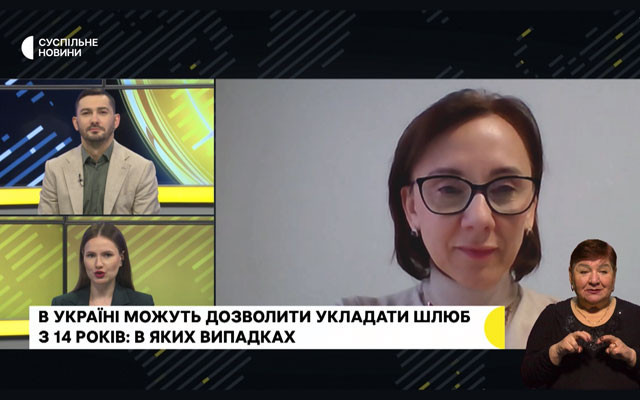
Why lowering the age of marriage lacks legal logic
Although until 2012 there was a provision in family law that allowed children to marry from the age of 14 under certain circumstances, its return to Ukrainian law would contradict international obligations and the logic of criminal law.
European integration
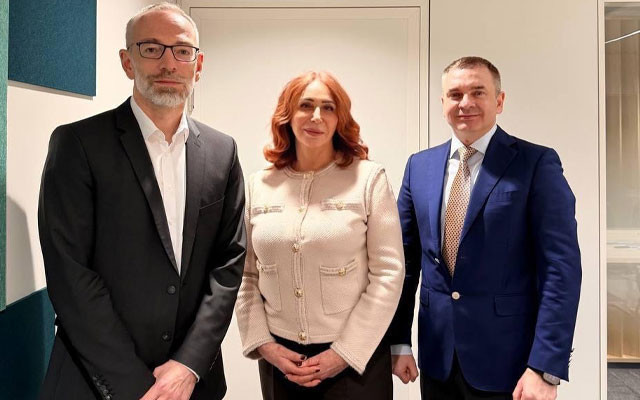
Open dialogue between the UNBA and the European Commission on the path to EU
The Ukrainian National Bar Association held a working meeting in Brussels with Mr Wolfgang Nozar, Head of Unit for Governance, Rule of Law and Financial Assistance, Directorate-General for Enlargement and Eastern Neighbourhood (DG ENEST), European Commission.
Self-government
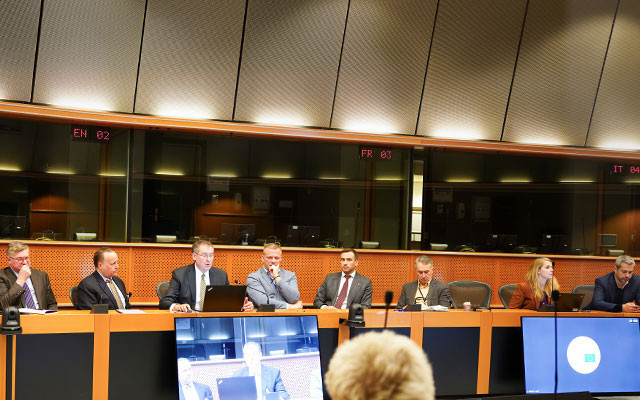
A report on Ukrainian advocacy was presented in the European Parliament
Can a shadow report on advocacy replace the political framework of the Roadmap on the rule of law with demands for the restructuring of self-government? Where is the line between accountability and the seizure of institutions? And how can we respond to narratives with data rather than impressions?
European integration
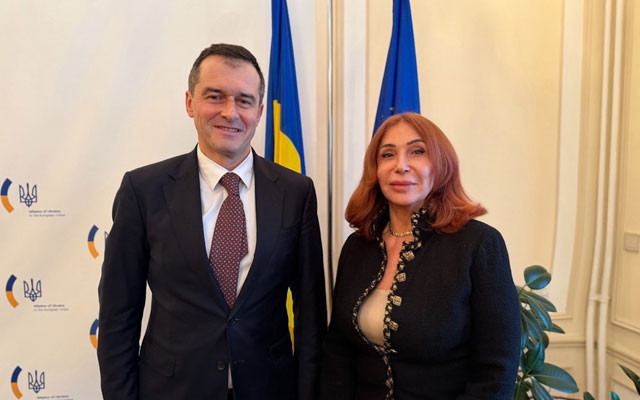
UNBA and Ukraine's representation to the EU have synchronized their priorities
On February 5, in Brussels, the President of the UNBA, BCU Lidiya Izovitova held a working meeting with the Ambassador Extraordinary and Plenipotentiary of Ukraine, Representative of Ukraine to the European Union Vsevolod Chentsov.

Guarantees of the practice of law
Proceedings opened following attack on advocate in Dnipro
The Committee for the protection of advocates' rights and guarantees of legal practice of the UNBA appealed to law enforcement agencies in connection with an advocate's report of an attack while performing his professional duties. The information was entered into the Unified Register of Pre-trial Investigations and a pre-trial investigation was initiated.
Abroad
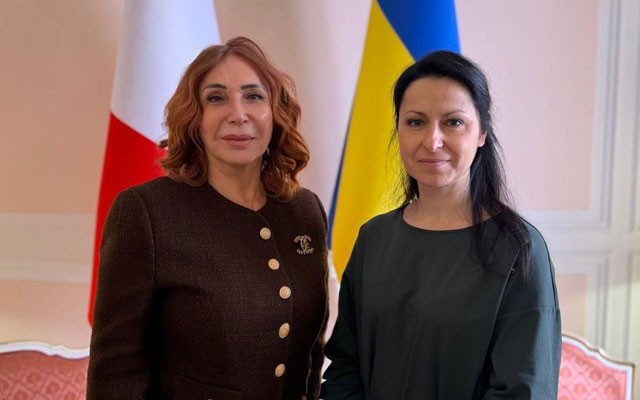
The Ukrainian Embassy in Italy has provided information on the legal aspects of the Roadmap
On February 2, the President of the UNBA, BCU, Lidiya Izovitova, held a meeting with the Chargé d'Affaires of the Embassy of Ukraine in the Italian Republic Oksana Amjadin.
Publications

Volodymyr Matsko Extradition as a systemic form of rights violations

Victoria Yakusha, Law and Business The anti-corruption vertical cannot «take care» of the Bar as an institution, - acting head of the HQDCB

Censor.net Protecting advocates – protecting justice: addressing concerns about the new law

Ihor Kolesnykov A BRIEF SUMMARY REGARDING THE APPLICATION OF THE ORDER ON EXTENDED CONFISCATION IN LATVIA REGARDING FINANCIAL ASSETS OF…

Valentyn Gvozdiy WORKING IN A WAR ZONE

Lydia Izovitova Formula of perfection

Sergiy Vylkov Our judicial system is so built that courts do not trust advocates

Iryna Vasylyk Advocacy in the proclamation of Independence of Ukraine