Advocacy is a responsible entity, not a critic of reform — V. Gvozdiy
The Roadmap on the Rule of Law is not a basis for restructuring the model of advocacy, but a framework for verifying and improving the already European-oriented system. At the same time, part of the work has already been done, so further progress should be made in the form of coordinated and practical decisions.
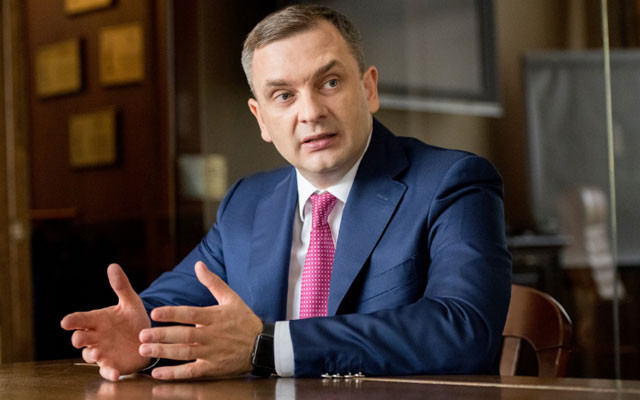
This was stated by the Vice President of the UNBA, BCU Valentin Gvozdiy at the meeting of the Working Group on the implementation of the Roadmap, which took place on January 2.
According to him, the Ukrainian National Bar Association considers the implementation of the Roadmap in relation to advocacy to be a practical priority in negotiations on EU accession. Advocacy acts as a responsible entity for the implementation of the state plan, rather than as an «outside critic» of the reform.
V. Gvozdiy emphasized that advocacy has already completed some of the tasks through its own self-government decisions, and gave three examples. The first is the update of the rules for the activities of foreign advocates in Ukraine. By its decision No. 100 of 17 October 2025, the BCU brought internal regulations into line with the requirements of two EU directives (on the temporary provision of services and on the permanent practice under the professional title of the country of origin) and detailed the procedures for entry into the URAU and information exchange with foreign authorities. In this way, Ukraine demonstrated the «legal compatibility» of its domestic model with the EU legal market and its readiness for mutual recognition of rules.
The second example is disciplinary procedures. Advocacy is working on the predictability and fairness of disciplinary proceedings, seeking a balance between guarantees for the advocate and effective protection of applicants' rights and maintenance of ethical standards. The EU assesses not the existence of institutions on paper, but their ability to act transparently and fairly.
The third example is continuous professional development. V. Gvozdiy noted that thanks to the programs of the Higher School of Advocacy (in particular, regarding standards of procedural rights in criminal proceedings), this task of the Roadmap has also already been completed.
After that, the deputy head of the UNBA, BCU outlined the starting conditions for work: the 2012 law and the institutional model of advocacy were built on independence, self-government, and professional responsibility from the very beginning, so further changes should be evolutionary, not reformist in the sense of breaking the model. He named digitalization, electronic services, and modern approaches to regulating the profession as the main new drivers of change.
A separate semantic emphasis was placed on institutional stability during the war: self-government bodies are working, access to the profession and disciplinary mechanisms are functioning, and digital services are developing. According to V. Gvozdii, this demonstrates the system's ability to fulfill its obligations even in crisis conditions, which is important for the trust of society and international partners.
In conclusion, he outlined a plan for the future: a significant part of the tasks in the field of advocacy should be implemented by the fourth quarter of 2026, and the Working Group was created precisely to agree on proposals, conduct consultations, and prepare regulatory changes and their implementation within this timeframe. Separately, V. Gvozdiy laid out the mechanics of interaction with international partners: to provide translations of key decisions and provisions for analysis and proposals so that the exchange of practices is practical and not just «for the sake of reporting».
Popular news
European integration
A translation of the report on advocacy presented to the European Parliament has been published
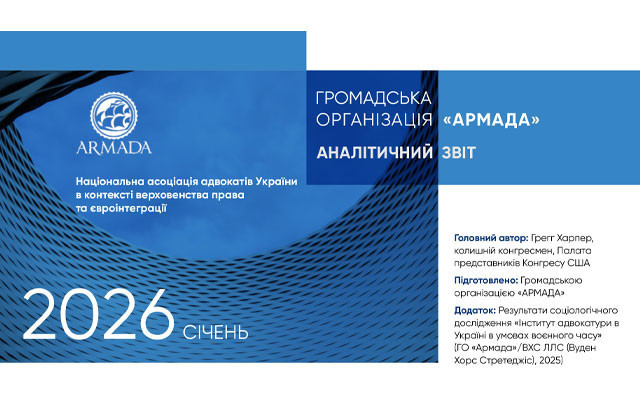
A translation of a research report on the Ukrainian advocacy profession in wartime, previously presented to the European Parliament in Brussels, has been published. The document is presented as a basis for discussion on the rule of law, Ukraine's European integration aspirations, and countering Russian disinformation in the legal sphere.
Legislation
The Verkhovna Rada Committee criticized the format of the government working group on advocacy
The implementation of the Roadmap on the rule of law (approved by Cabinet of Ministers Resolution No. 475-r of May 14, 2025) in relation to advocacy raises the practical question of who exactly should prepare legislative changes and how.
Self-government
The BCU demands a review of the composition of the government working group on reforming the advocacy profession
The President of the UNBA, BCU Lidiya Izovitova, appealed to the Cabinet of Ministers of Ukraine to review the composition of the working group on improving legislation in the field of advocacy and legal practice.
Guarantees of the practice of law
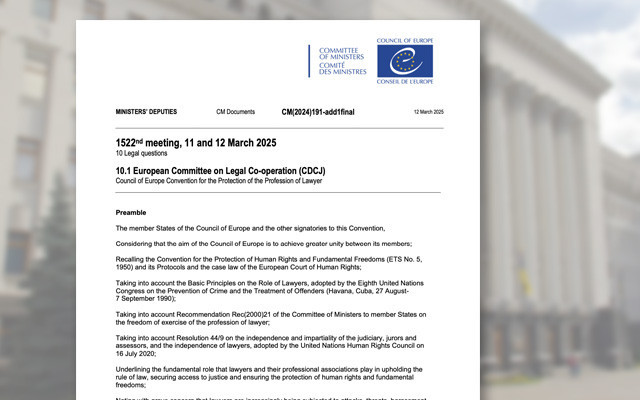
The President has determined, who will sign the Convention for the Protection of the Profession of Lawyer
President of Ukraine Volodymyr Zelenskyy authorized Ukraine's Permanent Representative to the Council of Europe Mykola Tochytskyi to sign the Council of Europe Convention for the Protection of the Profession of Lawyer.
Discussion
Why lowering the age of marriage lacks legal logic
Although until 2012 there was a provision in family law that allowed children to marry from the age of 14 under certain circumstances, its return to Ukrainian law would contradict international obligations and the logic of criminal law.
European integration
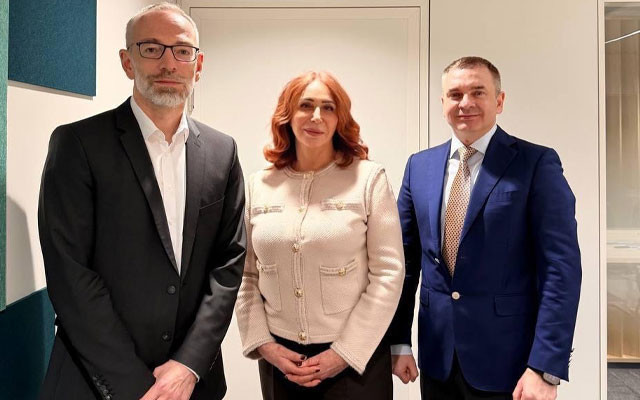
Open dialogue between the UNBA and the European Commission on the path to EU
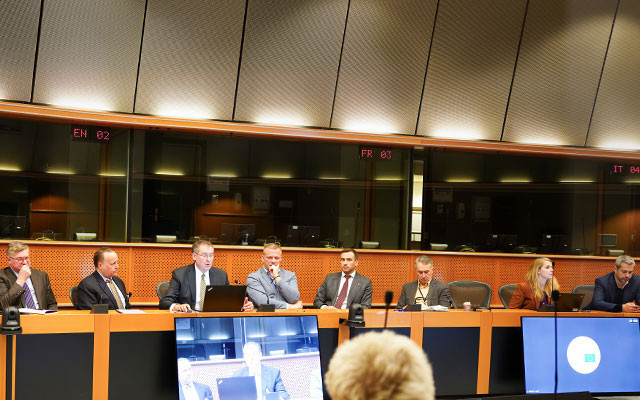
The Ukrainian National Bar Association held a working meeting in Brussels with Mr Wolfgang Nozar, Head of Unit for Governance, Rule of Law and Financial Assistance, Directorate-General for Enlargement and Eastern Neighbourhood (DG ENEST), European Commission.
Self-government
A report on Ukrainian advocacy was presented in the European Parliament
Can a shadow report on advocacy replace the political framework of the Roadmap on the rule of law with demands for the restructuring of self-government? Where is the line between accountability and the seizure of institutions? And how can we respond to narratives with data rather than impressions?
European integration
UNBA and Ukraine's representation to the EU have synchronized their priorities
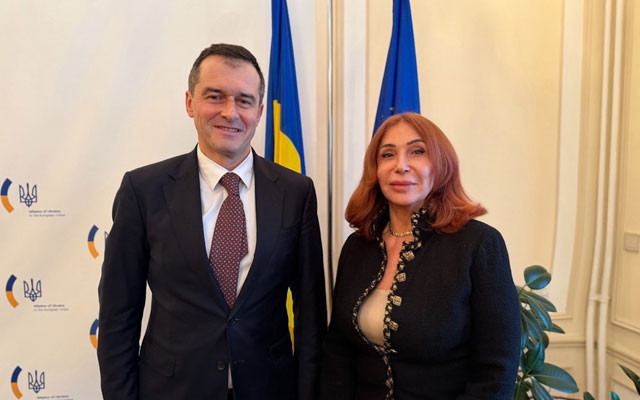
On February 5, in Brussels, the President of the UNBA, BCU Lidiya Izovitova held a working meeting with the Ambassador Extraordinary and Plenipotentiary of Ukraine, Representative of Ukraine to the European Union Vsevolod Chentsov.
Publications

Volodymyr Matsko Extradition as a systemic form of rights violations

Victoria Yakusha, Law and Business The anti-corruption vertical cannot «take care» of the Bar as an institution, - acting head of the HQDCB

Censor.net Protecting advocates – protecting justice: addressing concerns about the new law

Ihor Kolesnykov A BRIEF SUMMARY REGARDING THE APPLICATION OF THE ORDER ON EXTENDED CONFISCATION IN LATVIA REGARDING FINANCIAL ASSETS OF…

Valentyn Gvozdiy WORKING IN A WAR ZONE

Lydia Izovitova Formula of perfection

Sergiy Vylkov Our judicial system is so built that courts do not trust advocates

Iryna Vasylyk Advocacy in the proclamation of Independence of Ukraine