Transitional justice and the integration of Ukrainians: a debate in the UK
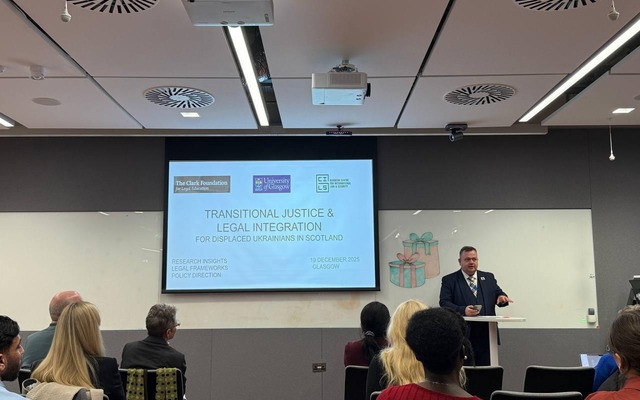
An interdisciplinary discussion on transitional justice and the legal integration of displaced Ukrainians in Scotland took place in Glasgow. Lawyers, academics, and human rights defenders discussed access to justice, support for displaced lawyers, and standards of independence for advocacy.
The event was organized by Ukrainian advocate, British Academy researcher, and lecturer in international law and the law of armed conflict at the University of Glasgow Larysa Zhdanina. She noted that contemporary transitional justice is not limited to court proceedings, compensation, or commissions, but should focus on the rights, dignity, experiences, and futures of people who have suffered from war and mass displacement. She separately emphasized the importance of integrating displaced Ukrainians, preserving their professional identity, and ensuring their participation in the life of their host countries.
Contemporary approaches to transitional justice in the context of global change were outlined by Peter Jackson, Professor of Global Security at the University of Glasgow and Executive Director of the Scottish Council. He emphasized the role of international institutions in restoring trust in state and supranational bodies, as well as in forming sustainable legal systems in the post-conflict period.
Professor Jen Eng of the Go Justice Center at the University of Glasgow Law School focused on the rights of displaced persons, access to justice, and the challenges of integrating Ukrainians into the legal and social systems of host countries. In this context, she emphasized the need for systematic support and adaptation of professional practices for displaced lawyers.
Olga Maksymiak, CEO of the Integravia Foundation, advisor to the New Scots program and member of the cross-party group on Ukraine in the Scottish Parliament Olga Maksymiak spoke about the practical aspects of legal support for displaced persons in Scotland, in particular administrative and migration procedures, as well as the role of legal aid in ensuring social stability and effective integration.
Ukrainian advocate Yevheniia Filippova shared her own experience of preparing for and taking qualifying exams for admission to the solicitor profession. She outlined the difficulties faced by Ukrainian lawyers in other jurisdictions and emphasized the need for professional support and adaptation of practice for integration into the UK legal system.
Professor of European law at the University of Glasgow Law School Maria Fletcher emphasized the importance of international law and European standards in the processes of legal integration, protection of the rights of displaced persons, and restoration of justice in post-conflict societies.
Member of the Scottish Human Rights Commission Rosemary Agnew and director of the Scottish Human Rights Consortium Charlie McMillan highlighted the practical aspects of shaping a culture of human rights in legal systems. In particular, they discussed the protection of children, ensuring gender equality, and the role of civil society organizations in strengthening trust in the legal system and supporting democratic institutions.
Researcher and applied linguistics expert Shadi Salem drew attention to the sociocultural aspects of displaced persons' adaptation, language and psychological barriers, preservation of cultural and professional identity, and the importance of taking into account the experience of displaced persons when shaping policy and legal practice in host countries.
The representative of the UNBA in the United Kingdom Oleksandr Chernykh, emphasized the role of Ukrainian advocates and the community in protecting European values and democratic society. He stressed that every Ukrainian today is a reminder of the price of democracy, as Ukraine has been resisting armed aggression for more than ten years, effectively defending the European model of civilization.
He focused separately on the high standards of the legal profession and justice in the United Kingdom and the need to integrate these approaches into the practice of Ukrainian advocates in order to strengthen the rule of law and trust in the legal system.
O. Chernykh also emphasized the Council of Europe Convention for the Protection of the Profession of Lawyer, developed with the active participation of the UNBA. He noted that one of the key participants in the preparation of the Convention was the Vice President of the UNBA, BCU Valentin Gvozdiy, who was a member of the Committee of Experts. The implementation of the provisions of the Convention by the member states of the Council of Europe should become a common guarantee of the independence of legal practice, the protection of attorney-client privilege, effective self-government of advocacy, and a unified European approach to the protection of justice and professional standards.
O. Chernykh's report also addressed the challenges facing advocacy in wartime, in particular threats to the safety of advocates, pressure on institutions of justice, difficulties in accessing the courts, and the need to maintain professional independence and ethical standards in difficult circumstances.
Following the discussion, participants emphasized that the role of Ukrainian advocates and the diaspora in Scotland is important for protecting the rights of displaced persons, strengthening the rule of law, implementing international standards of professional ethics, developing international cooperation and exchange of experience, and integrating displaced Ukrainians into the legal systems of host countries. Such meetings support professional dialogue and help maintain standards of justice even in times of war and post-conflict.
Popular news
Guarantees of the practice of law
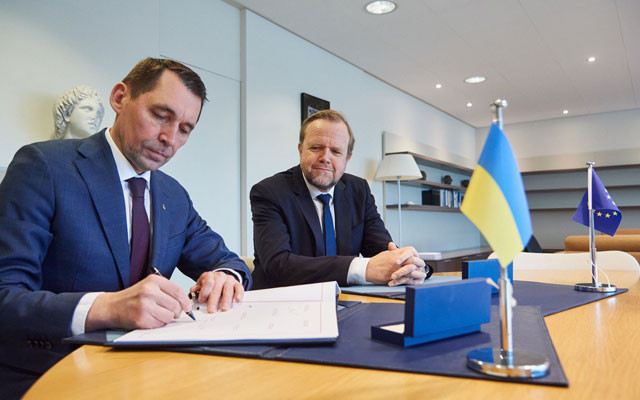
Ukraine has signed the Convention for the Protection of the Profession of Lawyer
Today, on 9 March, Ukraine's Permanent Representative to the Council of Europe Mykola Tochytskyi signed the Council of Europe Convention for the Protection of the Profession of Lawyer. This makes our country the 28th to sign this important international treaty.
European integration
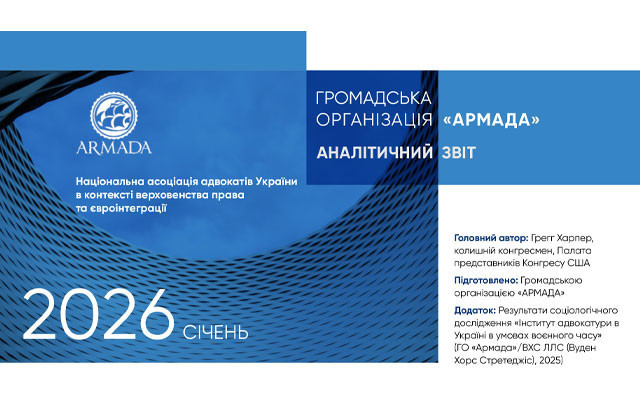
A translation of the report on advocacy presented to the European Parliament has been published
A translation of a research report on the Ukrainian advocacy profession in wartime, previously presented to the European Parliament in Brussels, has been published. The document is presented as a basis for discussion on the rule of law, Ukraine's European integration aspirations, and countering Russian disinformation in the legal sphere.

Legal defence of military personnel
How to formalize discharge from military service: practical workshop
The issue of discharge from military service remains one of the most pressing and complex for Ukrainian defenders and their families. Due to constant changes in legislation, military personnel often face refusals to discharge them from service or even to consider their reports.
Legislation
The Verkhovna Rada Committee criticized the format of the government working group on advocacy
The implementation of the Roadmap on the rule of law (approved by Cabinet of Ministers Resolution No. 475-r of May 14, 2025) in relation to advocacy raises the practical question of who exactly should prepare legislative changes and how.
Self-government
The BCU demands a review of the composition of the government working group on reforming the advocacy profession
The President of the UNBA, BCU Lidiya Izovitova, appealed to the Cabinet of Ministers of Ukraine to review the composition of the working group on improving legislation in the field of advocacy and legal practice.
Guarantees of the practice of law
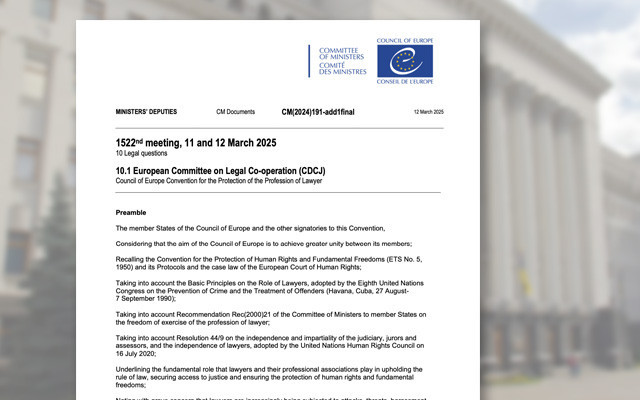
The President has determined, who will sign the Convention for the Protection of the Profession of Lawyer
President of Ukraine Volodymyr Zelenskyy authorized Ukraine's Permanent Representative to the Council of Europe Mykola Tochytskyi to sign the Council of Europe Convention for the Protection of the Profession of Lawyer.
Abroad
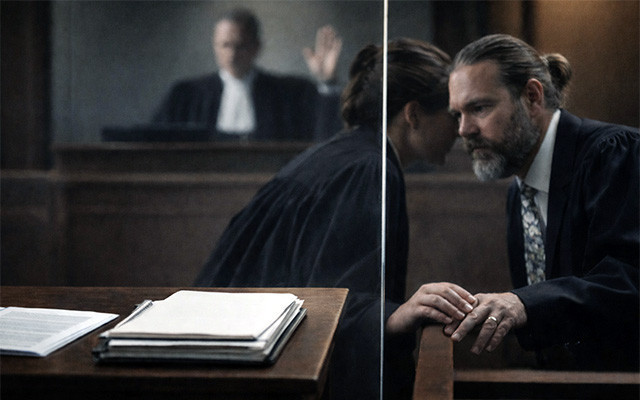
Advocate's romance with prosecutor halts criminal case in Canada
In Montreal (Quebec, Canada), a court suspended proceedings against eight defendants accused of illegal cannabis trafficking and money laundering after it was revealed that the prosecutor in the case and one of the advocates were in a secret intimate relationship.
Legislation
After the war amnesty for criminals or exemption from responsibility?
To ensure national reconciliation, rehabilitation of persons who have been persecuted for political reasons, restoration of justice, and establishment of lasting peace, it is proposed to introduce an amnesty after the war.
Publications

Volodymyr Matsko Extradition during wartime: when the risks outweigh the request

Volodymyr Matsko Extradition as a systemic form of rights violations

Victoria Yakusha, Law and Business The anti-corruption vertical cannot «take care» of the Bar as an institution, - acting head of the HQDCB

Censor.net Protecting advocates – protecting justice: addressing concerns about the new law

Ihor Kolesnykov A BRIEF SUMMARY REGARDING THE APPLICATION OF THE ORDER ON EXTENDED CONFISCATION IN LATVIA REGARDING FINANCIAL ASSETS OF…

Valentyn Gvozdiy WORKING IN A WAR ZONE

Lydia Izovitova Formula of perfection

Sergiy Vylkov Our judicial system is so built that courts do not trust advocates