

How will the group responsible for implementing the Roadmap for advocacy operate?

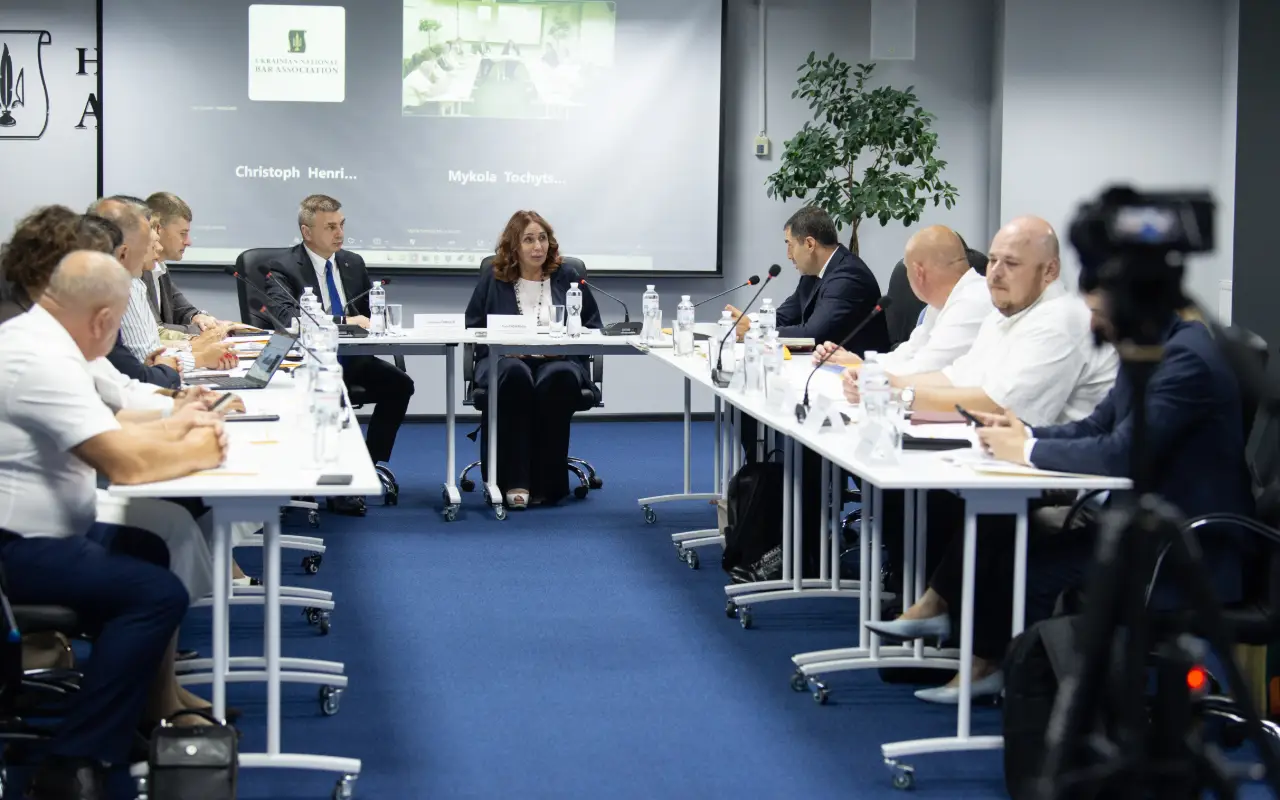
The working group on the implementation of the Roadmap on the rule of law in the area of advocacy will operate at several levels: plenary meetings as a platform for adopting framework decisions, a coordination bureau for compiling documents and calendar control, and thematic subgroups for preparing norms and their justification. International experts will verify the results against European standards and «red lines».
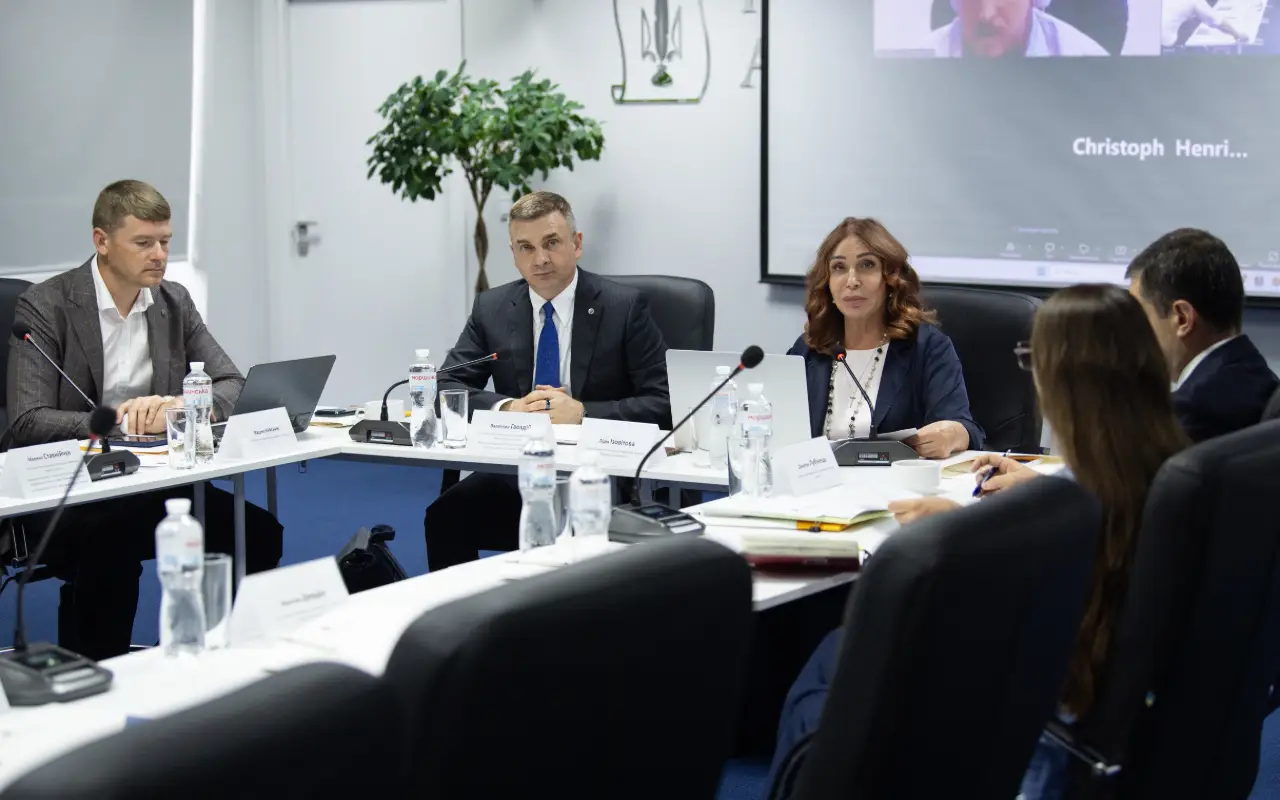
This general structure for the Working Group's activities was proposed by the President of the UNBA, BCU Lidiya Izovitova during the inaugural meeting. The meeting was devoted to agreeing on the framework for further work and the starting positions of the participants.
According to her, plenary meetings should become the key format. It is in the plenary that they plan to approve the principles, priorities, and «red lines» of the Roadmap, adopt the structure of the future draft law on amendments, the final text, and the accompanying package of documents, including an explanatory note and a comparative table.
In order not to overload the plenary sessions with technical issues, the chairman of the UNBA proposed to create a coordination bureau as the «core» of the process management. In her view, it could include the chairman of the Working Group, deputies as co-chairs, the head of the secretariat, an editor-coordinator who would compile the texts, and the heads of the subgroups. The bureau will ensure calendar coordination, deadline control, compilation of completed sections into a single draft, and preparation of issues for plenary consideration.
The substantive level of work will be ensured by subgroups working on sections of the law and thematic blocks. Their output should be short texts of amendments and specific proposals for regulations with justification, including references to European standards and the Roadmap.
L. Izovitova also outlined the mechanics of international experts' participation, emphasizing that this is a quality tool, not «participation for the sake of presence». It is expected that the subgroups will compile a concise list of requests and submit it through the coordination bureau, and experts will provide oral consultations or brief written recommendations on compliance with standards and potential risks.
According to the proposed model, the members of the Working Group are to be divided into subgroups (without the inclusion of international experts). According to the chairman of the UNBA, members of parliament will be able to join subgroups of their choice and receive materials for review and work.
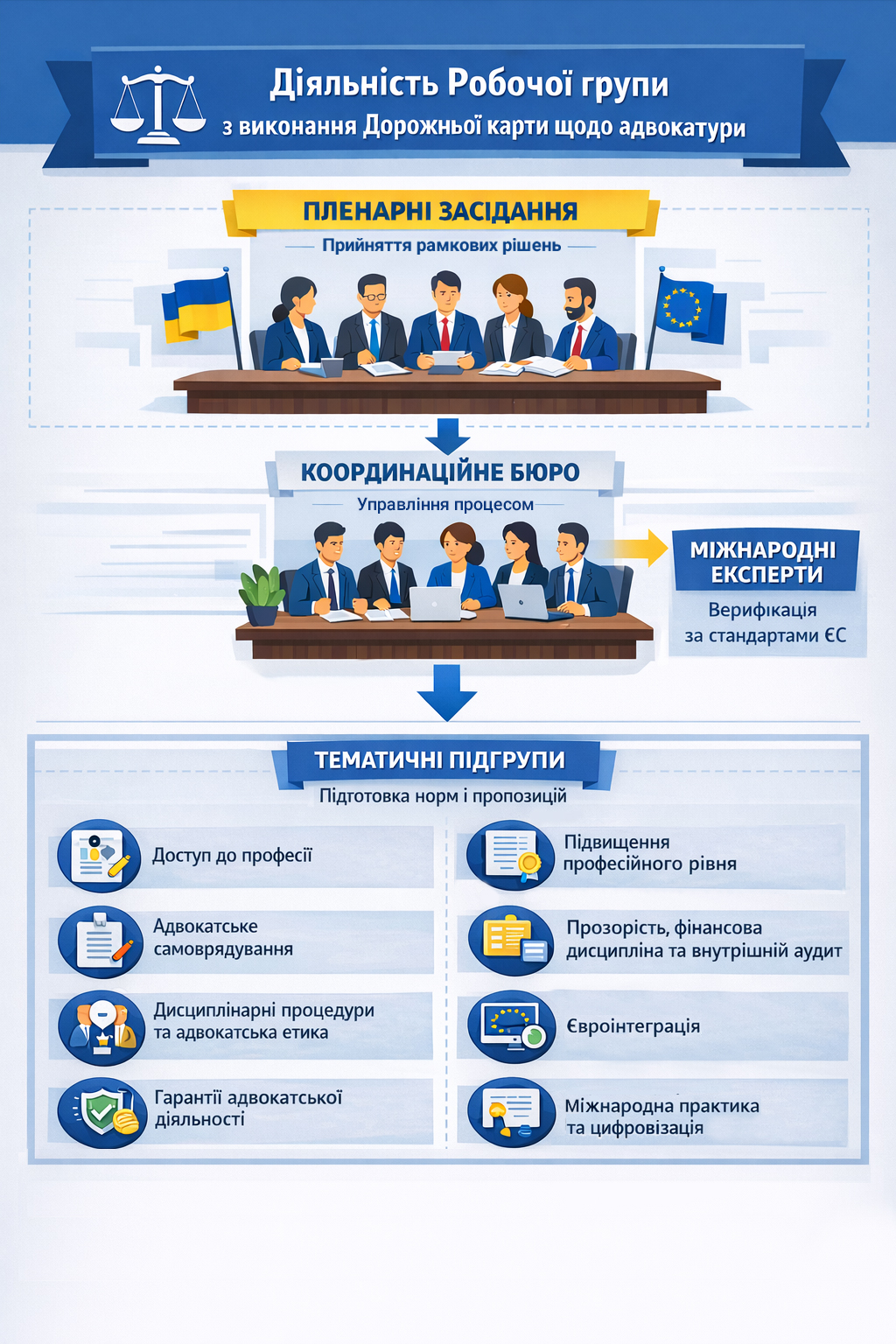
The subject of the subgroups' work will be determined by the following topics: access to the profession; organization of advocacy and self-government; disciplinary procedures and legal ethics; guarantees of legal practice and protection of advocates; transparency, financial discipline, and internal audit; European integration, international practice, and digitization; and professional development.
In conclusion, L. Izovitova emphasized that the goal of the work is not to find a «single correct model» for advocacy (since there are different approaches in Europe), but the principles reflected in current legislation should remain common: independence and self-governance of advocacy, respect for professional ethics, fair disciplinary procedures, real guarantees for the practice of law, transparency, and accountability to the professional community.
Popular news

Legislation
The Verkhovna Rada is preparing a bill to implement the Convention on the Protection of the Professions of Lawyer
Members of Parliament plan to introduce a bill in the near future to implement the main provisions of the Council of Europe Convention on the Protection of the Professions of Lawyer. This parliamentary initiative may also prompt the government to expedite the preparation of the ratification package.
Legislation
The path to ratification of the Convention must not end in yet another delay — L. Izovitova
Ukraine’s preparations for the ratification of the Council of Europe Convention on the Protection of the Professions of Lawyer have already passed key stages. Now, government institutions must submit the matter to the Verkhovna Rada for consideration. In doing so, Ukraine may complete the ratification process faster than EU member states.
Guarantees of the practice of law
Ukraine could be the first to implement a European mechanism for the protection of advocates. What’s holding it back?
Ukraine has a chance to be the first country to ratify the Council of Europe Convention on the Protection of the Professions of Lawyer. Political support for this exists, but the government’s legislative package has not yet been submitted to parliament. Meanwhile, the number of violations of advocates’ rights is on the rise.
Educational events
How can an advocate verify that work has been completed if the client refuses to sign the report?
When billing by the hour, the primary document for determining the fee may be a detailed report on the time spent by the advocate and the work performed. To prevent the client from withholding payment, the contract should specify in advance the procedure for submitting and approving such a report.
Self-government
The BCU took note of the public appeal from the HCJ
The Bar Council of Ukraine has determined that, given the current security situation, it is objectively impossible to hold, in accordance with the procedure established by the Law «On the advocacy and the practice of law», meetings of advocates, regional conferences of advocates and the Congress of Ukrainian Advocates, including for the purpose of electing two members of the High Council of Justice under the quota allocated to the Congress of Ukrainian Advocates.
War
The BCU has launched a digital project «Wall of Remembrance and Honor»
The Bar Council of Ukraine has adopted a resolution to launch the digital project «Wall of Remembrance and Honor». To this end, the UNBA is beginning to collect information on advocates and paralegals who lost their lives as a result of the Russian Federation’s armed aggression against Ukraine.
Legal defence of military personnel
«Advocate+» has expanded its operations to 18 military units
The «Advocate+» project of the Ukrainian National Bar Association, which assigns advocates to military units, has expanded its operations to 18 units. Specialists have already been assigned to the new participants and are set to begin consultations next week.
Edition
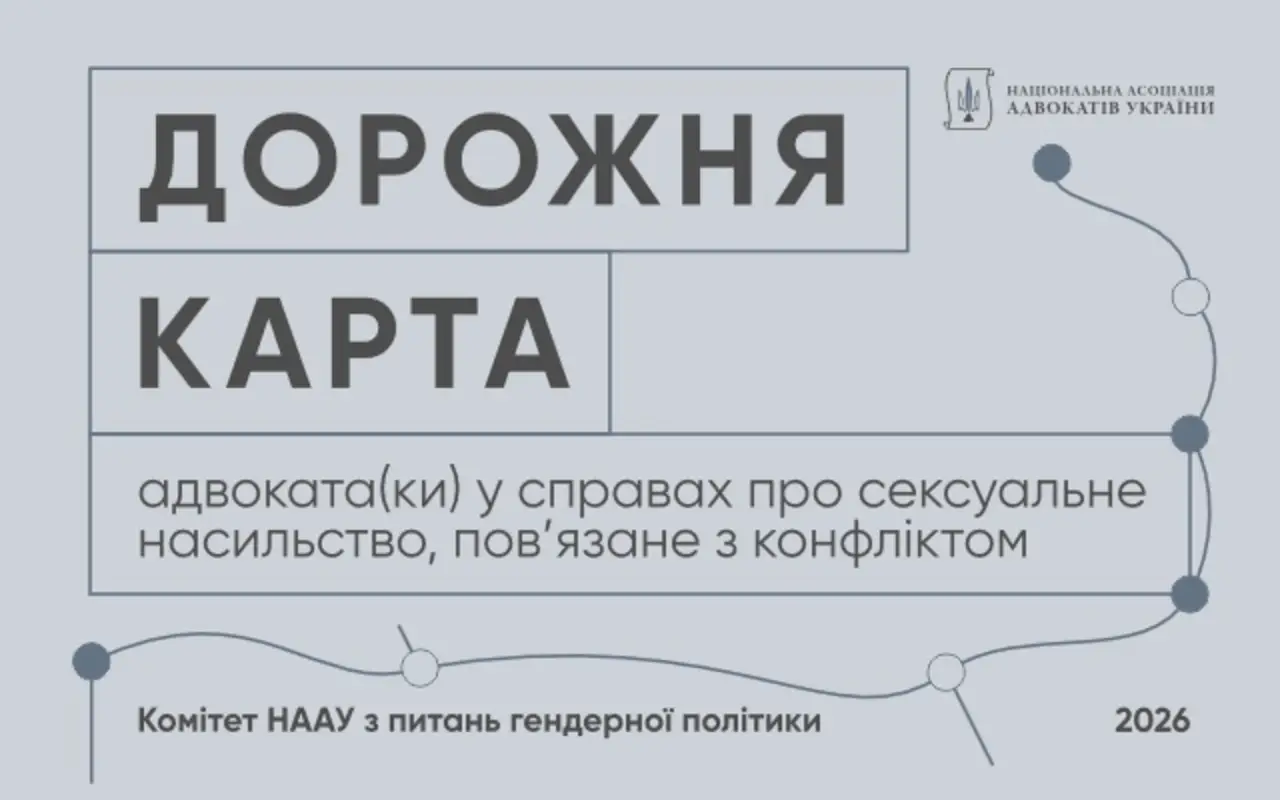
A roadmap for the CRSV cases has been prepared for the advocates
The UNBA Committee on gender policy has prepared a Roadmap for cases of Conflict-Related Sexual Violence.
Publications

Vasyl Kolishnyi, «Law and Business» Supporting mental health should become part of the professional culture of the Bar, - H. Udovenko

Volodymyr Matsko Extradition during wartime: when the risks outweigh the request

Volodymyr Matsko Extradition as a systemic form of rights violations

Victoria Yakusha, Law and Business The anti-corruption vertical cannot «take care» of the Bar as an institution, - acting head of the HQDCB

Censor.net Protecting advocates – protecting justice: addressing concerns about the new law

Ihor Kolesnykov A BRIEF SUMMARY REGARDING THE APPLICATION OF THE ORDER ON EXTENDED CONFISCATION IN LATVIA REGARDING FINANCIAL ASSETS OF…

Valentyn Gvozdiy WORKING IN A WAR ZONE

Lydia Izovitova Formula of perfection