BCU: training advocates is not a function of a state institution
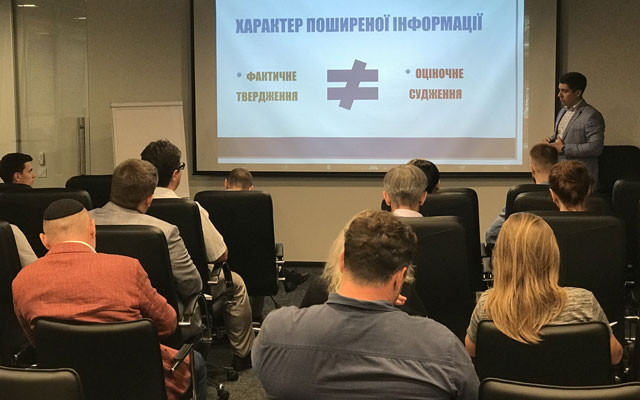
Transferring the functions of improving the professional level of advocates to a state institution within the justice system would contradict international and European standards, which assign the organization of continuing education for advocates to the competence of professional associations of advocates.
This conclusion was reached by the Bar Council of Ukraine following a review of the analytical note by the National Institute for Strategic Studies (hereinafter referred to as NISS) «Training of qualified personnel for the justice system as implementation of the provisions of the Roadmap on the rule of law» on the possibility of including advocacy as «part» the National School of Justice of Ukraine and transferring to this state institution the functions of organizing and administering the professional development of advocates. The decision of the BCU dated 12.12.2025 No. 130 was published on the website of the UNBA.
The BCU noted that Ukraine has already established and is operating a complete, internally coordinated system for improving the professional level of advocates, which is organized by bar self-government bodies, not state bodies. And this system is fully consistent with the provisions of international standards in this professional field.
The basic principles concerning the role of advocates, adopted by the Eighth United Nations Congress on the Prevention of Crime and the Treatment of Offenders (Havana, Cuba, August 27-September 7, 1990), provide for the right of advocates to establish and join self-governing professional associations, which, in particular, should promote the continuing education and professional development of advocates and protect their professional independence.
Recommendation No. R(2000)21 of the Committee of Ministers to the member states of the Council of Europe on the freedom to practice law emphasizes the need for independent professional associations of advocates that establish and maintain professional standards, including in the field of training and professional development.
The documents of the Council of Bars and Law Societies of Europe (CCBE), in particular the Charter of Fundamental Principles of the European Legal Profession, emphasize that only a strong element of self-regulation can ensure the real independence of advocacy from the state. The organization of professional education for advocates by their professional associations is an integral part of this self-regulation.
In particular, the Council of Europe Convention for the Protection of the Profession of Lawyer, adopted on March 12, 2025, in paragraph d of Article 4, established the obligation of states to ensure that professional associations have the opportunity to promote access to the profession, continuing professional education, and the professional development of advocates.
Transferring the functions of organizing and administering the professional development of advocates to a state institution would contradict Articles 59 and 131-2 of the Constitution of Ukraine, which guarantee the independence of advocacy and establish that the principles of its organization and activities are determined exclusively by law.
Such a model would violate the legally enshrined guarantees of bar self-government as a state-guaranteed right of advocates to independently decide on the organization and activities of advocacy, including issues of professional education and professional development.
«An advocate is not an official of a state body, but an independent professional entity acting in the interests of the client, not the state. Therefore, the mechanical inclusion of advocates in the «state school of justice» alongside judges and prosecutors blurs the constitutionally important line between state bodies and civil society institutions and creates institutional dependence of advocacy on the bodies with which advocates must compete in the process (the court, the prosecutor's office)», - the decision states.
On this basis, the BCU decided to inform the Cabinet of Ministers of Ukraine that the Ukrainian advocacy cannot be included in the structure of the National School of Justice of Ukraine as its component, either organizationally or functionally, as this would contradict the constitutionally guaranteed independence of advocacy and the principle of advocacy self-government.
It was also recognized that the model proposed in the NISD analytical note for the creation of a single state institution, the «National School of Justice of Ukraine», which would provide special training for judges, prosecutors, and advocates, does not comply with the provisions of the Constitution of Ukraine, the Law «On advocacy and the practice of law», and contradicts international and European standards regarding the organization of the legal profession and the system of legal education.
A letter was also sent to the Ministry of Justice of Ukraine, the Cabinet of Ministers of Ukraine, and the Office of the President of Ukraine demanding that any illegal initiatives and studies that undermine the constitutionally established independence of the Ukrainian bar be stopped.
Popular news
Guarantees of the practice of law
Ukraine has signed the Convention for the Protection of the Profession of Lawyer
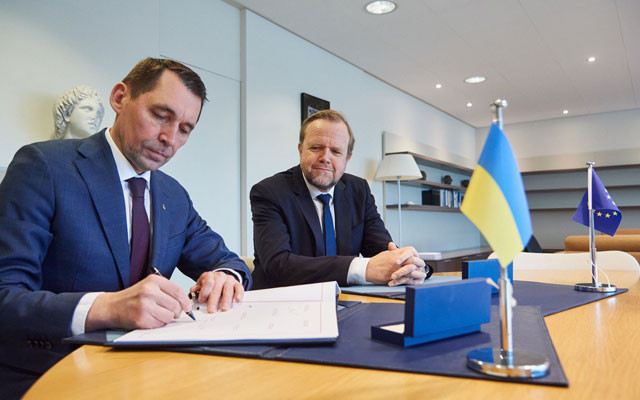
Today, on 9 March, Ukraine's Permanent Representative to the Council of Europe Mykola Tochytskyi signed the Council of Europe Convention for the Protection of the Profession of Lawyer. This makes our country the 28th to sign this important international treaty.
European integration
A translation of the report on advocacy presented to the European Parliament has been published
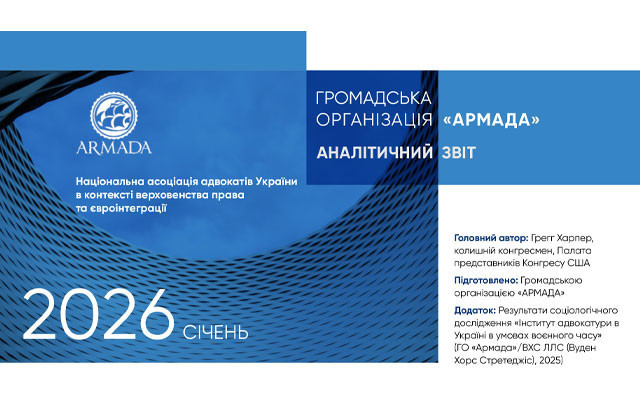
A translation of a research report on the Ukrainian advocacy profession in wartime, previously presented to the European Parliament in Brussels, has been published. The document is presented as a basis for discussion on the rule of law, Ukraine's European integration aspirations, and countering Russian disinformation in the legal sphere.

Legal defence of military personnel
How to formalize discharge from military service: practical workshop
The issue of discharge from military service remains one of the most pressing and complex for Ukrainian defenders and their families. Due to constant changes in legislation, military personnel often face refusals to discharge them from service or even to consider their reports.
Legislation
The Verkhovna Rada Committee criticized the format of the government working group on advocacy
The implementation of the Roadmap on the rule of law (approved by Cabinet of Ministers Resolution No. 475-r of May 14, 2025) in relation to advocacy raises the practical question of who exactly should prepare legislative changes and how.
Self-government
The BCU demands a review of the composition of the government working group on reforming the advocacy profession
The President of the UNBA, BCU Lidiya Izovitova, appealed to the Cabinet of Ministers of Ukraine to review the composition of the working group on improving legislation in the field of advocacy and legal practice.
Guarantees of the practice of law
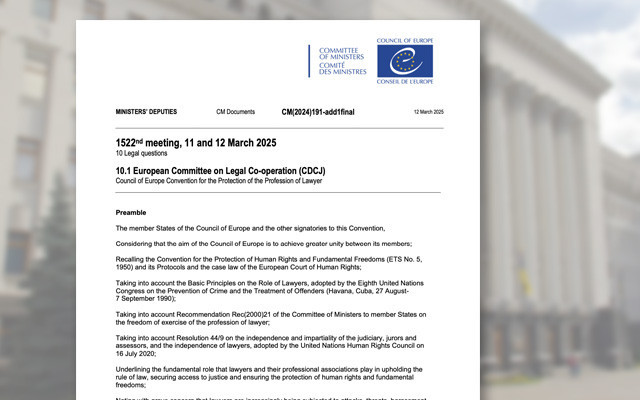
The President has determined, who will sign the Convention for the Protection of the Profession of Lawyer
President of Ukraine Volodymyr Zelenskyy authorized Ukraine's Permanent Representative to the Council of Europe Mykola Tochytskyi to sign the Council of Europe Convention for the Protection of the Profession of Lawyer.
Abroad
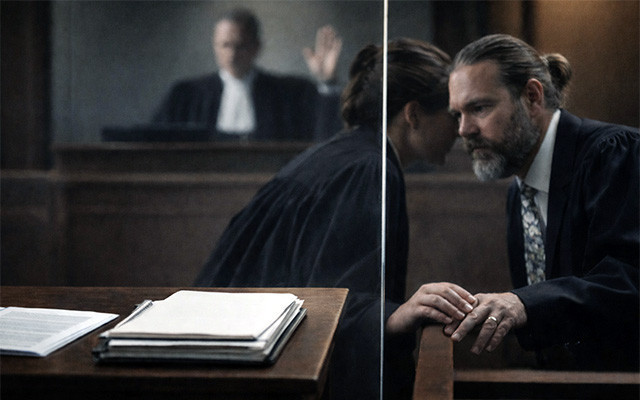
Advocate's romance with prosecutor halts criminal case in Canada
In Montreal (Quebec, Canada), a court suspended proceedings against eight defendants accused of illegal cannabis trafficking and money laundering after it was revealed that the prosecutor in the case and one of the advocates were in a secret intimate relationship.
Legislation
After the war amnesty for criminals or exemption from responsibility?
To ensure national reconciliation, rehabilitation of persons who have been persecuted for political reasons, restoration of justice, and establishment of lasting peace, it is proposed to introduce an amnesty after the war.
Publications

Volodymyr Matsko Extradition during wartime: when the risks outweigh the request

Volodymyr Matsko Extradition as a systemic form of rights violations

Victoria Yakusha, Law and Business The anti-corruption vertical cannot «take care» of the Bar as an institution, - acting head of the HQDCB

Censor.net Protecting advocates – protecting justice: addressing concerns about the new law

Ihor Kolesnykov A BRIEF SUMMARY REGARDING THE APPLICATION OF THE ORDER ON EXTENDED CONFISCATION IN LATVIA REGARDING FINANCIAL ASSETS OF…

Valentyn Gvozdiy WORKING IN A WAR ZONE

Lydia Izovitova Formula of perfection

Sergiy Vylkov Our judicial system is so built that courts do not trust advocates