


Balancing the right to protection and freedom of speech: the position of members of parliament
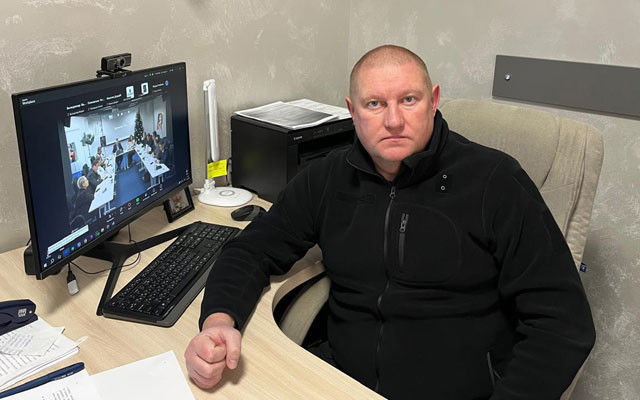
Public identification of advocates with their clients has become a systematic tool of pressure that undermines the right to defense, and fair trials become illusory.
This was emphasized by Volodymyr Vatras, chairman of the Subcommittee on the organization and activities of the bar and legal aid bodies of the Verkhovna Rada Committee on legal policy, during a round table discussion organized by the UNBA on the topic The Law on identification: the balance between the right to defense and freedom of speech». MP Hryhoriy Mamka also participated in the event.
«Since my previous speech on this topic, the situation has not only remained relevant, but has become even more acute, - V. Vatras noted. - The practice of publicly identifying an advocate with a client has, unfortunately, become systematic and turned into a real tool of pressure».
According to him, the identification of advocates with their clients is evident in statements by officials, media publications, information campaigns, and even in some procedural documents. «This trend has become particularly threatening in the context of martial law, when public debate is becoming more emotional and legal boundaries are sometimes consciously or unconsciously ignored», - the MP pointed out. Among the consequences, he cited the creation of an atmosphere of fear and self-censorship in the profession, the undermining of trust in advocacy as an independent element of the justice system, and the actual devaluation of the right to defense, when the performance of professional duties becomes dangerous and undesirable for both the advocate and the person in need of legal assistance.
«As a result, defense becomes a formal human right to a fair trial, illusory, and the state will lose cases in international courts and lose trust in the institution of justice within the country. This is a path that is destructive to the rule of law», - concluded V. Vatras.
The MP emphasized that the Constitution guarantees everyone the right to professional legal assistance and explicitly states that advocacy, whose independence is guaranteed by the state, is responsible for providing it in Ukraine. At the same time, for a long time, these constitutional provisions did not have an adequate mechanism for real protection.
Therefore, Law No. 4547-IX «On amendments to the Code of Ukraine on administrative offenses and the Criminal Code of Ukraine to ensure compliance with guarantees of advocacy» adopted by parliament is intended to fill this gap. «This law is a response to a specific public demand and to the real threats faced by advocates. It was adopted not in the interests of a professional corporation, but in the interests of the state, which seeks to have a strong, independent, and accountable justice system», - the MP is convinced.
V. Vatras placed particular emphasis on the balance between the right to defense and freedom of speech. «I want to emphasize separately that the law does not prohibit journalists from informing the public, does not restrict the right to criticize, and does not establish a taboo on mentioning an advocate in connection with a specific case, - assured the chairman of the relevant subcommittee. - This applies exclusively to cases where an advocate is knowingly or unknowingly presented as an accomplice to the client's actions, creating an image of joint responsibility. Such practice is unacceptable from a legal point of view and contradicts international standards».
Speaking about the role of the legislative branch, V. Vatras emphasized that the Verkhovna Rada «is responsible for ensuring guarantees for the practice of law» and that parliament, recognizing the independence of advocacy «only at the level of principles», must bring the adopted changes «to a logical conclusion and ensure their actual application». He also noted that professional discussion should focus on the practical aspects of applying the law, the risks of its misinterpretation, and the formation of consistent legal practice.
In his speech, H. Mamka supported bringing the topic up for public discussion and noted that the adopted law is the first step in this direction. «In my opinion, this is only the first step in highlighting and solving the problem of identification, - he said. - There is indeed a definition of identification, how it should take place. And indeed, regarding responsibility: if a person identifies a defender and a client, then they must be held accountable. This was also my position in the chamber, my position in the amendments, and my position in the vote itself».
The MP gave an everyday example that society does not transfer the actions or status of an employer to an employee, whereas in the case of advocates, identifying the profession with the client is common practice. The MP also suggested that after the round table, the organization could appeal to the President of Ukraine regarding the issue raised, emphasizing that this position was supported by a vote in the Verkhovna Rada.
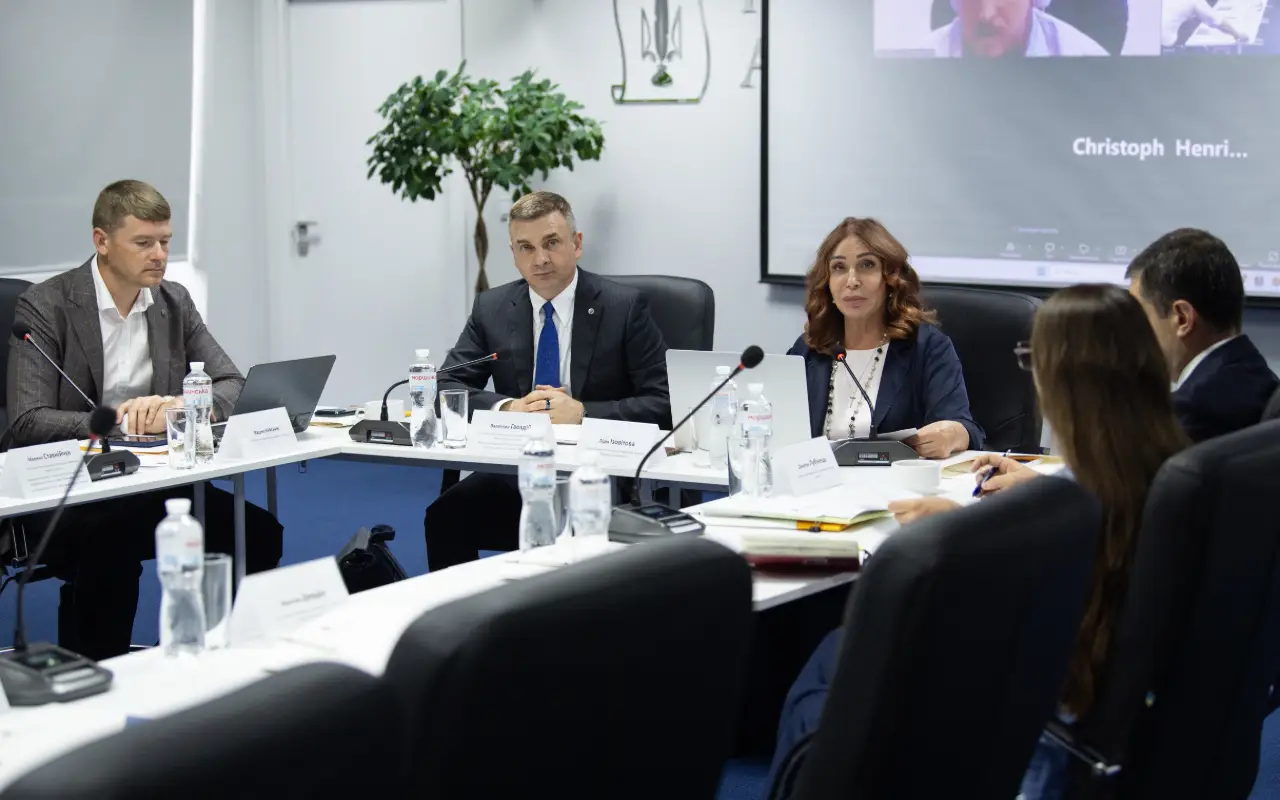
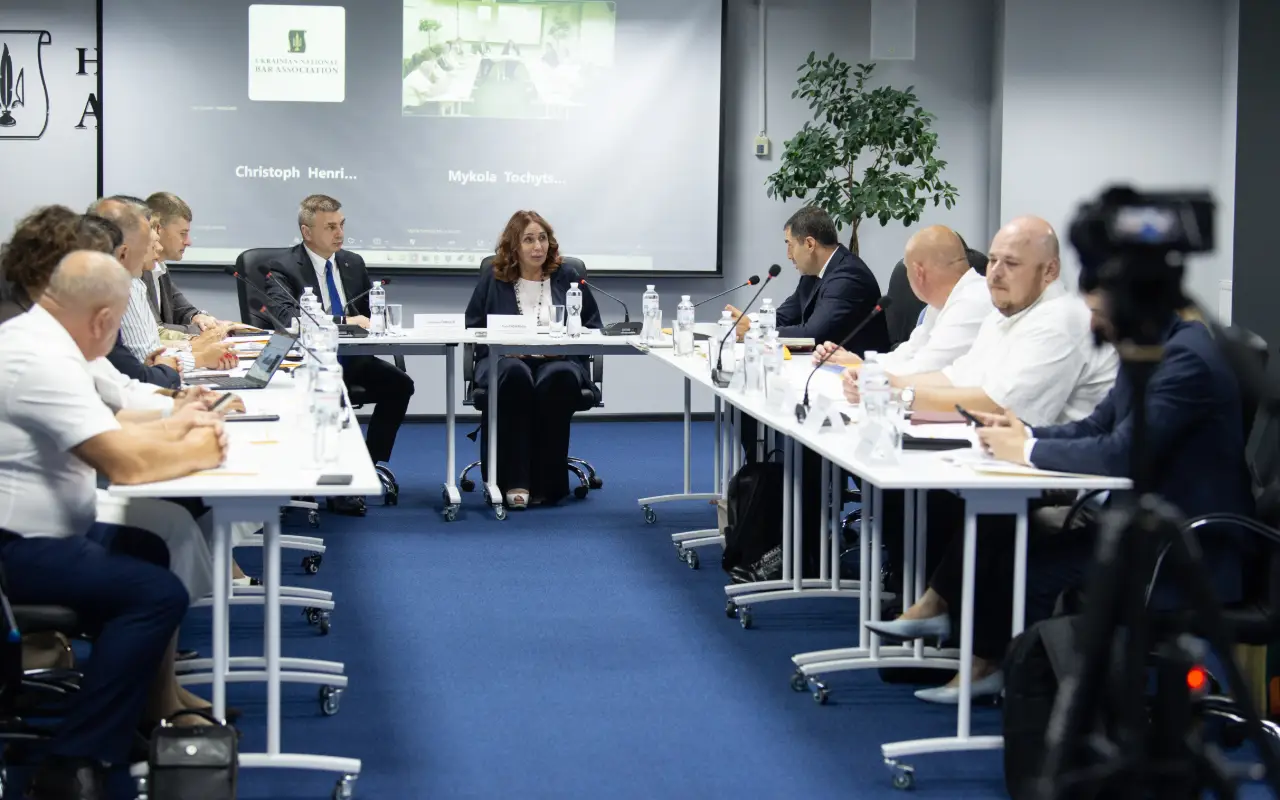
The round table was devoted to discussing the practical aspects of applying legislative changes prohibiting the identification of an advocate with a client in the context of the balance between the right to defense and freedom of speech.
Popular news

Legislation
The Verkhovna Rada is preparing a bill to implement the Convention on the Protection of the Professions of Lawyer
Members of Parliament plan to introduce a bill in the near future to implement the main provisions of the Council of Europe Convention on the Protection of the Professions of Lawyer. This parliamentary initiative may also prompt the government to expedite the preparation of the ratification package.

Educational events
Preparing a court argument: 7 tips for advocates
When preparing a courtroom speech, it is best to begin by formulating the decision the advocate is asking the court to render. Next, the structure of the speech should be built around this outcome, strong arguments should be selected, and weak points should be addressed.
Legislation
The path to ratification of the Convention must not end in yet another delay — L. Izovitova
Ukraine’s preparations for the ratification of the Council of Europe Convention on the Protection of the Professions of Lawyer have already passed key stages. Now, government institutions must submit the matter to the Verkhovna Rada for consideration. In doing so, Ukraine may complete the ratification process faster than EU member states.
Edition
Veterans were provided with algorithms for responding to malfunctions
The UNBA Committee on the protection of victims of armed aggression against Ukraine, compensation mechanisms and European integration legal support for recovery together with the Ministry of Veterans Affairs of Ukraine has prepared the latest Legal Guide for War Veterans.
Guarantees of the practice of law
Ukraine could be the first to implement a European mechanism for the protection of advocates. What’s holding it back?
Ukraine has a chance to be the first country to ratify the Council of Europe Convention on the Protection of the Professions of Lawyer. Political support for this exists, but the government’s legislative package has not yet been submitted to parliament. Meanwhile, the number of violations of advocates’ rights is on the rise.

Educational events
How can an advocate verify that work has been completed if the client refuses to sign the report?
When billing by the hour, the primary document for determining the fee may be a detailed report on the time spent by the advocate and the work performed. To prevent the client from withholding payment, the contract should specify in advance the procedure for submitting and approving such a report.
Self-government
The BCU took note of the public appeal from the HCJ
The Bar Council of Ukraine has determined that, given the current security situation, it is objectively impossible to hold, in accordance with the procedure established by the Law «On the advocacy and the practice of law», meetings of advocates, regional conferences of advocates and the Congress of Ukrainian Advocates, including for the purpose of electing two members of the High Council of Justice under the quota allocated to the Congress of Ukrainian Advocates.
War
The BCU has launched a digital project «Wall of Remembrance and Honor»
The Bar Council of Ukraine has adopted a resolution to launch the digital project «Wall of Remembrance and Honor». To this end, the UNBA is beginning to collect information on advocates and paralegals who lost their lives as a result of the Russian Federation’s armed aggression against Ukraine.
Publications

Vasyl Kolishnyi, «Law and Business» Supporting mental health should become part of the professional culture of the Bar, - H. Udovenko

Volodymyr Matsko Extradition during wartime: when the risks outweigh the request

Volodymyr Matsko Extradition as a systemic form of rights violations

Victoria Yakusha, Law and Business The anti-corruption vertical cannot «take care» of the Bar as an institution, - acting head of the HQDCB

Censor.net Protecting advocates – protecting justice: addressing concerns about the new law

Ihor Kolesnykov A BRIEF SUMMARY REGARDING THE APPLICATION OF THE ORDER ON EXTENDED CONFISCATION IN LATVIA REGARDING FINANCIAL ASSETS OF…

Valentyn Gvozdiy WORKING IN A WAR ZONE

Lydia Izovitova Formula of perfection