From labels to violence: the consequences of identifying an advocate with their client
When a client becomes «toxic», the advocate feels pressure: labels, campaigns, and threats force the advocate to justify themselves, protect their family, and think about safety rather than their position in the case. Under such conditions, the defense gradually becomes a formality.
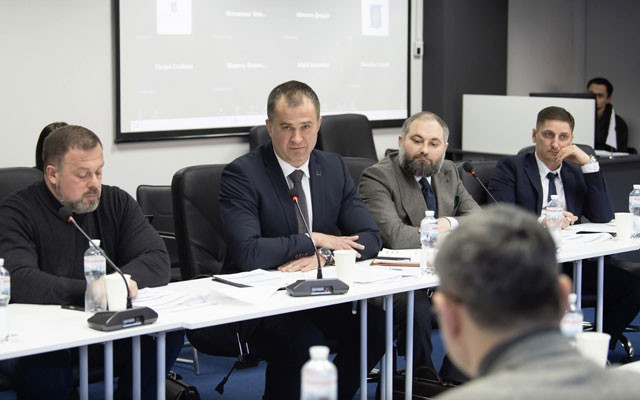
The introduction of liability for violations of guarantees of legal practice was discussed at the round table «The Law on identification: the balance between the right to defense and freedom of speech».
After media representatives expressed their position, members of the relevant Committees of the Ukrainian National Bar Association spoke about the negative consequences of identifying an advocate with a client.
The chairman of the UNBA Committee on information policy and interaction with the media Yuriy Radzievsky addressed media representatives and the public with a proposal to look at the problem «from the inside»: to imagine a situation of unfounded suspicion against oneself or loved ones, when a person is forced to seek an advocate capable of professionally countering the charges. Next, to imagine that a mechanism is triggered to remove the advocate from the case: effective defense provokes resistance from opponents, and the advocate himself becomes a target not for the actions of his client, but for performing his duty. He stressed that in such conditions, the defense weakens, and competitiveness and fairness are gradually leveled out.
The advocate noted that identification often becomes only the first stage of escalation — from public stigmatization to direct threats, property damage, and violence. He cited statistics on the application of Article 397 (Interference in the activities of a defender or representative of a person) of the Criminal Code: in 2025, 121 criminal proceedings were registered, but in none of them was a notice of suspicion issued. In his opinion, this indicates the dysfunctionality of the current mechanism without additional response tools. «I personally have the impression that those who actively oppose the signing of this law (we are talking about Law No. 4547-IX «On amendments to the Code of Ukraine on administrative offenses and the Criminal Code of Ukraine to ensure compliance with the guarantees of advocacy», - ed. note.), simply want to continue to violate the law with impunity, which prohibits the identification of advocates with their clients», - noted Y. Radzievsky.
He also stressed that the law does not prohibit mentioning an advocate or referring to their procedural role, but is directed against associations with the client in the form of negative pressure. Therefore, the claim of an «attack on freedom of speech» misrepresents the essence. «I want to remind you that we are not currently prohibiting anything from being said anywhere. We are now talking about introducing administrative liability for violating an existing ban, - explained the representative of the UNBA. - If we call this law an attack on freedom of speech, we could just as easily call criminal liability for public death threats an attack on freedom of speech».
A member of the same Committee Dmytro Buzanov emphasized that the law prohibiting identification is not intended to «protect the corporate reputation» of the advocacy profession or to single it out as an elite. In his opinion, the protection is intended for the client as the bearer of the constitutional right to protection.
He separately described the mechanism of the «toxic client»: high-profile, politically sensitive, or unpopular cases become a marker that is then «attached» to the advocate in any mention, regardless of the outcome of the proceedings. «This leads to self-censorship in advocacy, where professionals refuse to participate in high-profile cases, fearing for themselves, their families, and their property. As a result, the client is left alone with the state», - the advocate warned.
Commenting on possible abuses, D. Buzanov emphasized that the application of the norm will not be carried out by «advocates», but through a procedure with two safeguards: first, an assessment of the appeal by the regional bar council and the drawing up of a protocol, then consideration by the court, which will either bring the person to justice or refuse. In addition, the advocate is convinced that the limit of freedom of speech is where the destruction of another's right to protection begins.
From the perspective of the practice of appeals seen by the Committee for the protection of lawyers' rights and guarantees of legal practice of the UNBA, the chairman of this Committee Yevgeniy Solodko spoke. According to him, identification is one of the most common reasons for complaints: in 2022, the Committee received 59 appeals, 13 of which concerned identification; in 2023, there were 98 and 21, respectively; in 2024 — 86 and 28; in the first half of 2025 — 43 appeals, 32 of which concerned identification.
Y. Solodko described criminal justice as an environment where the topic sometimes turns into a «show» and «hype», which is no longer journalism, but rather information bribery, and emphasized the delicacy of the process for human rights, in particular the right to a good name. In his opinion, the law should be a step towards ending such information manipulation, and the discussion itself showed that there are points of contact for further improvement of approaches and formulations.
Deputy Y. Solodko Oleksandr Levadniy outlined the topic through the practice of the section's work with law enforcement agencies: visits to searches, detentions, and other investigative actions.
Appeals to the Committee reveal a typical pattern of pressure: after information attacks and identification with the client, the advocate begins to assess the risks to themselves and their family, which affects their willingness to take on or continue high-profile cases, especially with «toxic» clients. He listed the forms of pressure that are recorded in practice: public campaigns, complaints to disciplinary bodies, threats, intimidation.
«When we go to searches, we actually see that the procedure is being grossly violated, mobile devices and computer equipment are being seized. In most cases, this is not justified. This is a form of pressure and intimidation of advocates, which subsequently leads to the advocate being notified of suspicion, as they are effectively identified with their client», - explained the deputy chairman of the Committee for the protection of advocates' rights and guarantees of legal practice.
O. Levadniy also drew attention to the problems of advocates in the FLA system, who do not have the right to choose the types of cases they take on and are therefore particularly vulnerable to public hatred and harassment. He said the expected effect of the law would be to establish definitions and boundaries that would reduce the risks of arbitrary pressure, as well as strengthen the ability to hold those responsible accountable and, accordingly, increase the level of protection of guarantees for the practice of law.
The discussion concluded that for both professions — advocates and journalists — the key issue is not slogans, but clear rules that cannot be used as a tool for procedural influence. The consequences of the adopted changes will depend on how they are applied in practice.
Popular news
Guarantees of the practice of law
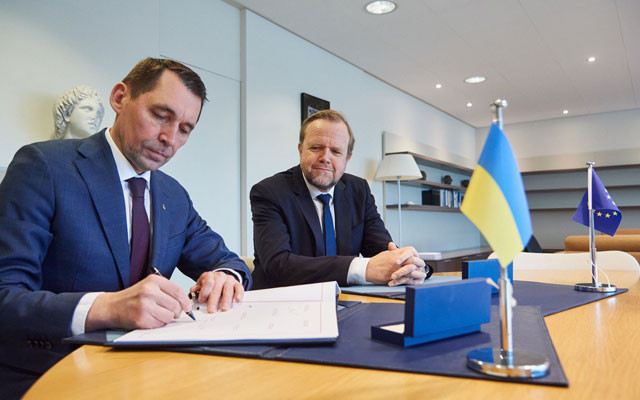
Ukraine has signed the Convention for the Protection of the Profession of Lawyer
Today, on 9 March, Ukraine's Permanent Representative to the Council of Europe Mykola Tochytskyi signed the Council of Europe Convention for the Protection of the Profession of Lawyer. This makes our country the 28th to sign this important international treaty.
European integration
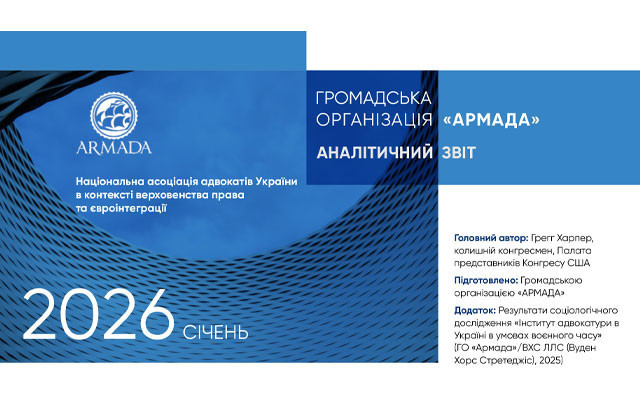
A translation of the report on advocacy presented to the European Parliament has been published
A translation of a research report on the Ukrainian advocacy profession in wartime, previously presented to the European Parliament in Brussels, has been published. The document is presented as a basis for discussion on the rule of law, Ukraine's European integration aspirations, and countering Russian disinformation in the legal sphere.

Legal defence of military personnel
How to formalize discharge from military service: practical workshop
The issue of discharge from military service remains one of the most pressing and complex for Ukrainian defenders and their families. Due to constant changes in legislation, military personnel often face refusals to discharge them from service or even to consider their reports.
Legislation
The Verkhovna Rada Committee criticized the format of the government working group on advocacy
The implementation of the Roadmap on the rule of law (approved by Cabinet of Ministers Resolution No. 475-r of May 14, 2025) in relation to advocacy raises the practical question of who exactly should prepare legislative changes and how.
Self-government
The BCU demands a review of the composition of the government working group on reforming the advocacy profession
The President of the UNBA, BCU Lidiya Izovitova, appealed to the Cabinet of Ministers of Ukraine to review the composition of the working group on improving legislation in the field of advocacy and legal practice.
Guarantees of the practice of law
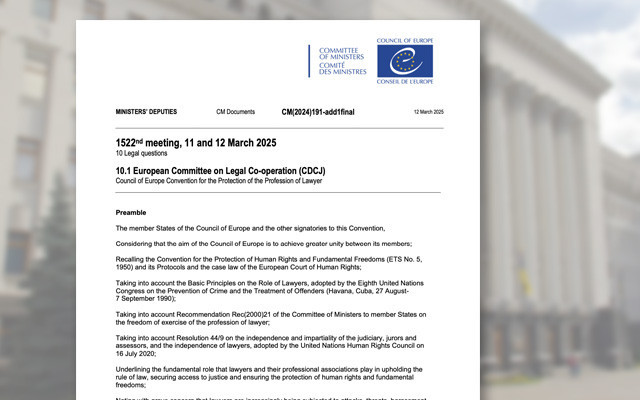
The President has determined, who will sign the Convention for the Protection of the Profession of Lawyer
President of Ukraine Volodymyr Zelenskyy authorized Ukraine's Permanent Representative to the Council of Europe Mykola Tochytskyi to sign the Council of Europe Convention for the Protection of the Profession of Lawyer.
Abroad
Advocate's romance with prosecutor halts criminal case in Canada
In Montreal (Quebec, Canada), a court suspended proceedings against eight defendants accused of illegal cannabis trafficking and money laundering after it was revealed that the prosecutor in the case and one of the advocates were in a secret intimate relationship.
Legislation
After the war amnesty for criminals or exemption from responsibility?
To ensure national reconciliation, rehabilitation of persons who have been persecuted for political reasons, restoration of justice, and establishment of lasting peace, it is proposed to introduce an amnesty after the war.
Publications

Volodymyr Matsko Extradition during wartime: when the risks outweigh the request

Volodymyr Matsko Extradition as a systemic form of rights violations

Victoria Yakusha, Law and Business The anti-corruption vertical cannot «take care» of the Bar as an institution, - acting head of the HQDCB

Censor.net Protecting advocates – protecting justice: addressing concerns about the new law

Ihor Kolesnykov A BRIEF SUMMARY REGARDING THE APPLICATION OF THE ORDER ON EXTENDED CONFISCATION IN LATVIA REGARDING FINANCIAL ASSETS OF…

Valentyn Gvozdiy WORKING IN A WAR ZONE

Lydia Izovitova Formula of perfection

Sergiy Vylkov Our judicial system is so built that courts do not trust advocates