


How court decisions are blocked in Ukraine: survey results
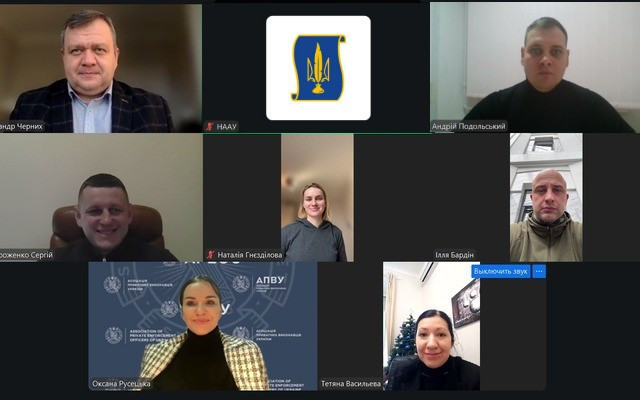
In order to identify mechanisms for counteracting the lawful enforcement of court decisions, the Association of Private Enforcement Officers of Ukraine, together with the UNBA Committee on enforcement of decisions conducted a survey of state and private enforcement officers, advocates and other experts.
The results were presented on January 15.
Seventy respondents took part in the survey, the vast majority of whom have more than 10 years of experience in the field of law. Among the respondents, the professional affiliations included advocates (32.9%), private enforcement agents (30%), state enforcement agents (24.3%), and representatives of other professional groups.
The survey questions concerned, in particular, circumvention of the law, deliberate delaying, and other practices used to block the enforcement of decisions. None of the respondents said they had not encountered such phenomena in their practice: 38.6% said it happened regularly (in more than 25% of cases), 32.9% said it happened constantly (in more than 10% of cases), and 28.6% said it happened occasionally.
Among the common tools for blocking enforcement, respondents most often cited unfounded complaints about the actions of the enforcement officer (62.9%). They also mentioned arrests and other enforcement measures (35.7%), filing of unfounded motions (35.7%), use of bankruptcy procedures (32.9%), and appeals to the court to declare the enforcement document unenforceable (28.6%). Unfounded lawsuits (24.3%), fictitious bankruptcies (24.3%), involvement of law enforcement agencies as a means of pressure or obstruction (17.1%), and attempts to change the method and procedure of enforcement (12.9%) were mentioned separately.
According to the respondents' answers, the debtor's financial situation affects the frequency and intensity of opposition to enforcement: 51.4% said that it always affects, another 44.3% said that it depends on specific circumstances, and 4.3% said that it does not affect. At the same time, 95.7% of respondents cited €100,000 as the benchmark amount above which, in their opinion, the debtor is able to systematically finance legal mechanisms to block enforcement.
A separate section of the survey concerned the balance of rights of the parties and time limits. 72.9% of respondents believe that in enforcement proceedings, the law protects the debtor more, while 27.1% believe it protects the creditor more. Regarding the duration of the delay in the enforcement of claims against property: 54.3% indicated the possibility of virtually unlimited blocking, 18.6% indicated terms of 12 to 24 months, 17.1% indicated terms of 6 to 12 months, and 10% indicated terms of up to 6 months.
Among the recommended tools for protecting creditors' rights, the most frequently mentioned were the initiation of criminal proceedings (52.9%) and property security through the seizure of assets (47.1%). Fines for obstruction of enforcement (30%), additional sureties and pledges (28.6%), and disciplinary liability (27.1%) were also proposed.
During the presentation, the chairman of the Association of Private Enforcement Officers of Ukraine Oksana Rusetska emphasized the need to introduce effective procedural safeguards in the legislation against artificial blocking of enforcement at the stage of compulsory enforcement, as well as the need for an effective response to pressure on private enforcement officers.
Deputy chairman of the UNBA Committee on enforcement of decisions Andriy Podolskyi summarized the results of the survey and outlined the direction for improving regulation, in particular, strengthening liability for intentional non-compliance with court decisions and eliminating loopholes that allow enforcement to be blocked.
A member of the Committee Council Ilya Bardin emphasized the role of enforcement agents as a component of the actual administration of justice and the need for the court to pay attention to the fate of the decision. Among the practical problems, he mentioned, in particular, situations involving the recovery of funds from enforcement officers in the event of the cancellation of electronic auctions, the lack of effective mechanisms of liability for resistance and illegal influence on enforcement officers, the need to expand the powers of enforcement officers to influence debtors, and the reduction of the number of moratoriums that block the enforcement of court decisions.
Proposals to be taken into account when preparing legislative changes were made by Committee Secretary Tetyana Vasilyeva: improving mechanisms for bringing guilty persons to justice under Articles 382, 388, and 342 of the Criminal Code; revision of procedures for locating debtors; revision of existing restrictions on the enforcement of certain types of income; and amendments to the Code of Civil Procedure and the Code of Commercial Procedure regarding the seizure of a debtor's property for the duration of the proceedings to prevent its disposal.
Deputy chairman of the Committee Natalia Gnezdilova emphasized the need to study international practices, develop standards of professional conduct for enforcement officers, and establish rules of ethics.
The results and proposals announced at the end of the event are planned to be used in further work on legislative changes in the field of enforcement of court decisions.
The full results of the survey can be viewed here.
Popular news
European integration
The UNBA presented the CCBE with an overview of legal reform and challenges
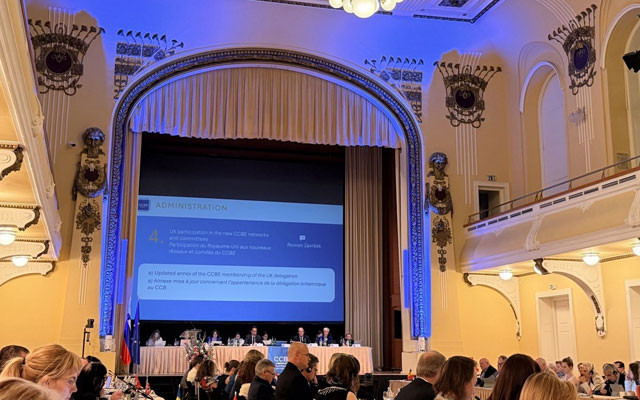
Reform of the legal profession, Ukraine’s European integration commitments, guarantees of the profession’s independence, and practices of bar self-governance in European countries — these issues were the subject of discussion at the Council of Bars and Law Societies of Europe (CCBE).
Rule of Law Roadmap
The UNBA is compiling the findings of the subgroups regarding the implementation of the Rule of Law Roadmap
Today, May 28, the Ukrainian National Bar Association hosted a meeting of the Coordination Bureau of the Working Group on the implementation of the Rule of Law Roadmap regarding the reform of the advocacy profession. Following a series of meetings by thematic subgroups, the work is now moving to the stage of consolidating proposals and preparing a coordinated package of recommendations.
Discussion
UNBA discussed removing barriers at border crossings for families with children with disabilities
Families of children with disabilities face additional requirements when traveling abroad, particularly regarding consular registration. What is happening and what changes are needed to remove these obstacles were discussed during the roundtable «Borders without barriers for families of children with disabilities».
Discussion
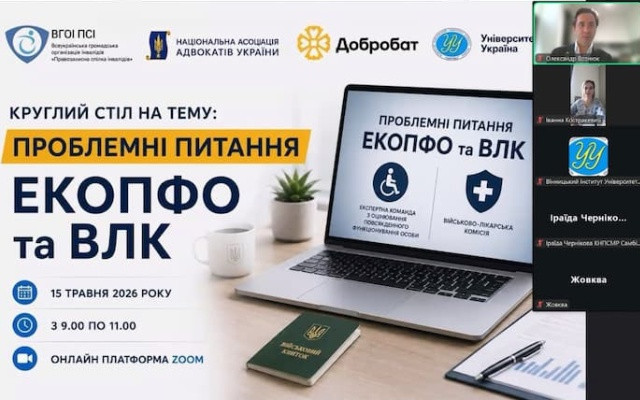
New rules, old problems: the UNBA discussed the work of the ETAIDF and MMC
The reform of medical-social assessment and military medical commissions has changed procedures but has not resolved practical issues. People face situations where documents are not issued, decisions are based on technicalities, assessments are delayed, and they struggle to demonstrate their actual health status in specific life situations.

Discussion
Co-parenting shouldn't be reduced to a 50/50 formula, — roundtable discussion
Following a divorce, joint custody can serve as a mechanism for ensuring equal parental rights. However, this model requires clear criteria and cannot be applied automatically without taking into account the child’s age, the level of conflict between the parents, the risk of violence, and the feasibility of enforcing the future decision.

Legislation
Penalties for errors in military registration require clear rules, – UNBA
The liability of officials for violations of military registration rules must be legally defined, proportionate, and effectively enforceable. Otherwise, the new fines will not protect citizens from registration errors but will create additional risks.

Educational events
How an advocate can find clients when starting a legal practice
Starting a law practice undoubtedly requires professional knowledge. At the same time, a clear understanding of one’s own area of specialization, clients, and communication channels is essential for success.
European integration
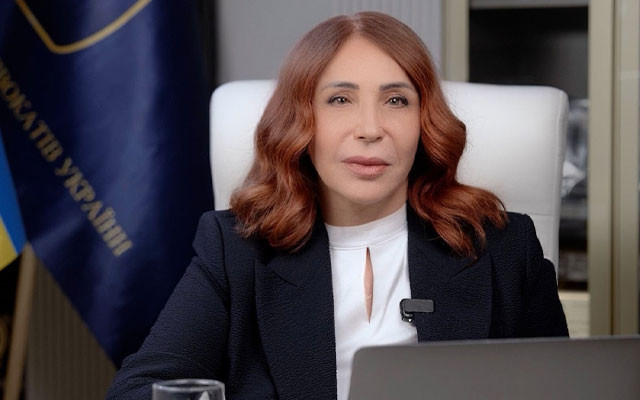
Lidiya Izovitova: In the context of European integration reforms, advocacy is a partner of the state, not a target of reform
The war has significantly altered the working conditions for advocates, while European integration has presented the profession with new institutional challenges. The ongoing negotiation process covers issues such as the rule of law, judicial independence, fundamental rights, justice, freedom and security.
Publications

Volodymyr Matsko Extradition during wartime: when the risks outweigh the request

Volodymyr Matsko Extradition as a systemic form of rights violations

Victoria Yakusha, Law and Business The anti-corruption vertical cannot «take care» of the Bar as an institution, - acting head of the HQDCB

Censor.net Protecting advocates – protecting justice: addressing concerns about the new law

Ihor Kolesnykov A BRIEF SUMMARY REGARDING THE APPLICATION OF THE ORDER ON EXTENDED CONFISCATION IN LATVIA REGARDING FINANCIAL ASSETS OF…

Valentyn Gvozdiy WORKING IN A WAR ZONE

Lydia Izovitova Formula of perfection

Sergiy Vylkov Our judicial system is so built that courts do not trust advocates