

The coordinator of the Committees commented on Yermak's «new position» at the UNBA

The recent appointment of advocate Andriy Yermak as chairman of one of the newly formed Committees of the Ukrainian National Bar Association has sparked a series of critical media publications.
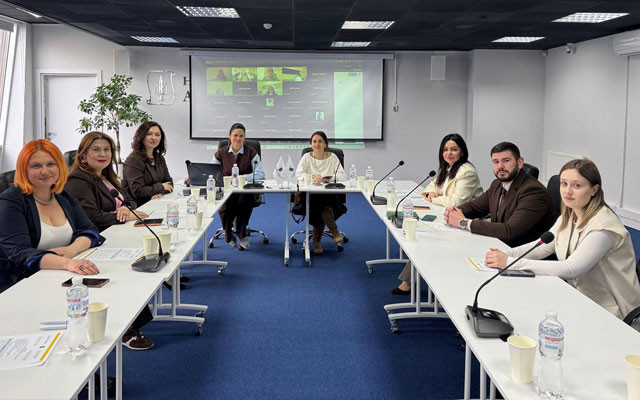
Svitlana Hrusko, coordinator of the UNBA Committees, commented on the association's decision and explained the motives behind the creation, tasks and functions of the Committee on the protection of victims of armed aggression against Ukraine, compensation mechanisms and European integration legal support for recovery, headed by advocate Yermak.
«The Ukrainian National Bar Association is a self-governing institution, independent of the state. The relevant law defines the UNBA as a non-governmental, non-profit professional organization that unites all advocates in Ukraine and was created to ensure the implementation of the tasks of advocate self-government. Accordingly, the activities of advocacy are not financed from the state budget, but at the expense of the advocates themselves — primarily through annual contributions to ensure the functioning of the bodies of bar self-government», - explained S. Hrusko.
According to her, the internal organizational activities of the UNBA, in particular the creation of Committees and the determination of their areas of work, fall within the scope of the self-governing powers of the advocacy.
«According to the UNBA Charter, permanent or temporary working bodies, including Committees in various areas, may be created to implement the tasks defined by law. The UNBA Committees are advisory in nature, and participation in their work, including leadership, is carried out on a voluntary basis», - the coordinator noted.
Svitlana Hrusko reported that advocate Andriy Yermak approached the association's leadership with an initiative to create a new Committee, providing a corresponding justification of its feasibility and a plan of action.
«It is common practice for a professional organization when advocates initiate the development of new areas of work and are ready to take on the organization of relevant activities on a voluntary basis. Such initiatives are evaluated primarily in terms of their usefulness to advocacy and society», - she emphasized.
That is why the President of the UNBA Lidiya Izovitova supported the initiative to develop, on the basis of the association, a direction for the legal protection of victims of armed aggression against Ukraine, proposed by advocate A. Yermak, whose professional experience covers practical legal practice since 1995, as well as significant experience in organizational work and interaction with state institutions in the field of justice reform and legal policy formation.
As previously reported, the Committee's main tasks include developing practical algorithms for recording damage and forming an evidence base, preparing recommendations for seeking compensation within the framework of national and international compensation mechanisms, and developing legal instruments to protect victims.
Particular attention will be paid to the development of standards for legal assistance to military personnel and veterans, their family members, families of the deceased, missing persons, internally displaced persons, and other citizens who have suffered damage as a result of armed aggression.
«The identified tasks will be implemented in cooperation with the Committee on military law, the Committee on free legal aid and the Center for methodological assistance and coordination of the volunteer movement of advocates for the legal protection of military personnel at the UNBA. There are a significant number of related issues in these areas, which have been raised repeatedly by the Ukrainian National Bar Association», - added S. Hrusko.
It should be noted that the functioning of the free legal aid system is regularly raised at meetings of the Bar Council of Ukraine. In particular, in October last year, the situation of advocates working in frontline regions was discussed. Despite the increased level of risk and conditions close to combat, they do not receive any similar allowances or coefficients that are provided for judges, prosecutors, or police officers. Advocates are also not provided with personal protective equipment while performing their professional duties.
In addition, bar self-government bodies drew attention to the risks of non-transparent approaches to concluding and renewing contracts in the FLA system. For example, in April 2024, the Bar Council of Ukraine considered a situation where an advocate's contract was not renewed after he asked questions about the distribution of assignments and remuneration, while new competitions were announced in parallel.
The BCU also noted as a separate problem the need to ensure confidential communication between advocates and clients in territorial recruitment centers and the denial of access to advocates to conscripts. In this regard, the Council officially appealed to the General Staff and the Ministry of Defense with a request to equip all TCCs with separate rooms for advocates to work in, to ensure unhindered access and to guarantee the confidentiality of communication.
«All these issues, although directly related to the activities of advocates, at the same time directly affect the implementation of the constitutional guarantee of the right to legal assistance. That is why they require a systematic solution at the state level. We are convinced that the creation of a new Committee will strengthen work in these undoubtedly important areas», - concluded the coordinator of the UNBA Committees.
Popular news
Guarantees of the practice of law
Preparations for the ratification of the Convention on the Protection of the Professions of Lawyer are in the final stages
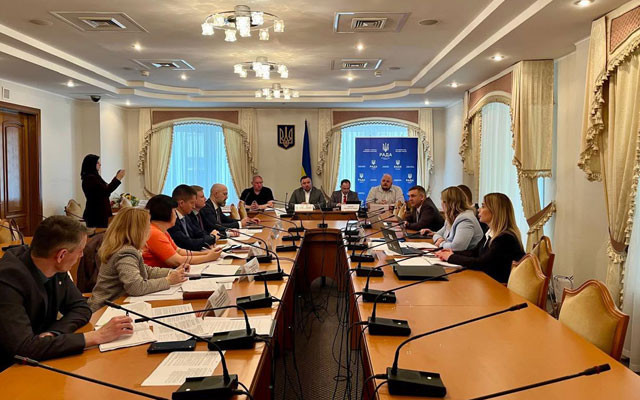
On June 9, the Verkhovna Rada Committee on legal policy held a working meeting to prepare for the ratification of the Council of Europe Convention on the Protection of the Professions of Lawyer. The Ministry of Justice and the Ukrainian National Bar Association agreed on approaches to draft laws regarding the ratification and implementation of the Convention. Participants have been given 10 days to prepare the draft laws that will be submitted for consideration.
Announcements
Internships at German law firms: IRZ is accepting applications from Ukrainians
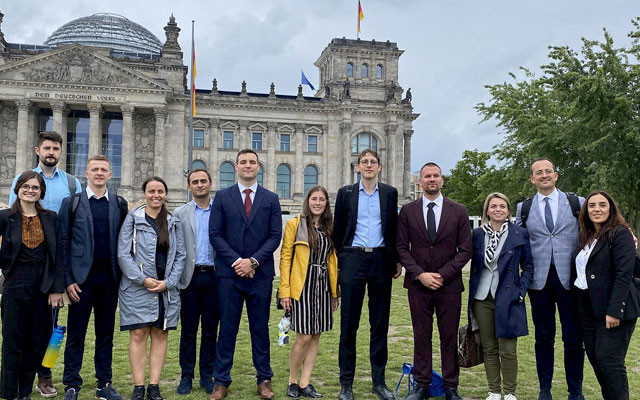
In 2026, the German Foundation for International Legal Cooperation (IRZ) plans to organize a multilateral internship program for young advocates from partner countries. Participants will attend an introductory seminar in Bonn and complete internships at law firms in Germany.
Guarantees of the practice of law
Restrictions on the right to legal assistance in pretrial detention centers are unacceptable – statement by the BCU
The Bar Council of Ukraine has stated that it is unacceptable to restrict the right to professional legal assistance, the guarantees of legal practice, and the confidentiality of communications between advocates and clients in pretrial detention facilities operated by the State Criminal-Executive Service of Ukraine.
European integration
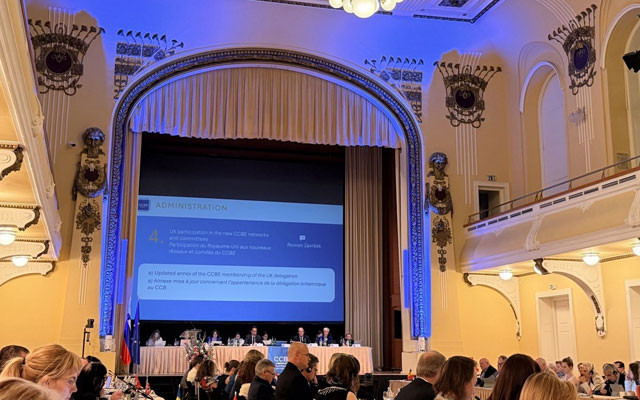
The UNBA presented the CCBE with an overview of legal reform and challenges
Reform of the legal profession, Ukraine’s European integration commitments, guarantees of the profession’s independence, and practices of bar self-governance in European countries — these issues were the subject of discussion at the Council of Bars and Law Societies of Europe (CCBE).
Rule of Law Roadmap
The UNBA is compiling the findings of the subgroups regarding the implementation of the Rule of Law Roadmap
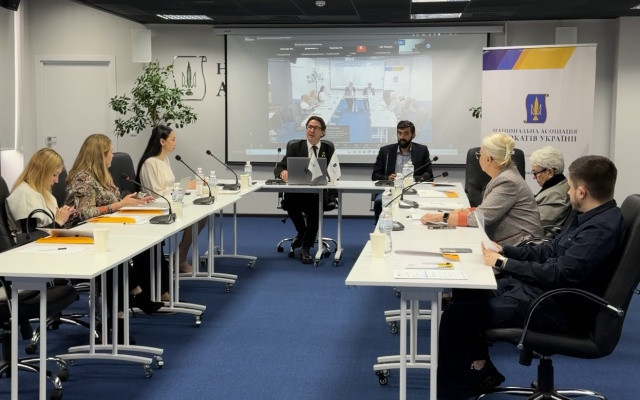
Today, May 28, the Ukrainian National Bar Association hosted a meeting of the Coordination Bureau of the Working Group on the implementation of the Rule of Law Roadmap regarding the reform of the advocacy profession. Following a series of meetings by thematic subgroups, the work is now moving to the stage of consolidating proposals and preparing a coordinated package of recommendations.
Discussion
UNBA discussed removing barriers at border crossings for families with children with disabilities
Families of children with disabilities face additional requirements when traveling abroad, particularly regarding consular registration. What is happening and what changes are needed to remove these obstacles were discussed during the roundtable «Borders without barriers for families of children with disabilities».
Discussion
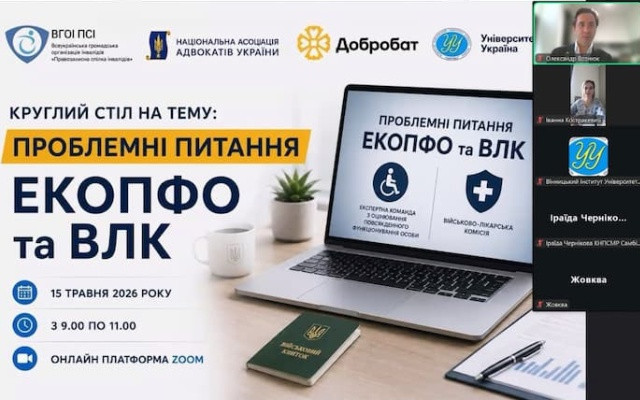
New rules, old problems: the UNBA discussed the work of the ETAIDF and MMC
The reform of medical-social assessment and military medical commissions has changed procedures but has not resolved practical issues. People face situations where documents are not issued, decisions are based on technicalities, assessments are delayed, and they struggle to demonstrate their actual health status in specific life situations.
Discussion
Co-parenting shouldn't be reduced to a 50/50 formula, — roundtable discussion
Following a divorce, joint custody can serve as a mechanism for ensuring equal parental rights. However, this model requires clear criteria and cannot be applied automatically without taking into account the child’s age, the level of conflict between the parents, the risk of violence, and the feasibility of enforcing the future decision.
Publications

Volodymyr Matsko Extradition during wartime: when the risks outweigh the request

Volodymyr Matsko Extradition as a systemic form of rights violations

Victoria Yakusha, Law and Business The anti-corruption vertical cannot «take care» of the Bar as an institution, - acting head of the HQDCB

Censor.net Protecting advocates – protecting justice: addressing concerns about the new law

Ihor Kolesnykov A BRIEF SUMMARY REGARDING THE APPLICATION OF THE ORDER ON EXTENDED CONFISCATION IN LATVIA REGARDING FINANCIAL ASSETS OF…

Valentyn Gvozdiy WORKING IN A WAR ZONE

Lydia Izovitova Formula of perfection

Sergiy Vylkov Our judicial system is so built that courts do not trust advocates