Investments in cogeneration: opportunities and barriers discussed at the UNBA
Simultaneous production of electricity and heat could strengthen the energy resilience of communities and businesses. However, in practice, the development of such solutions is hampered not only by financing, but also by complex procedures, network restrictions, and legal uncertainty.
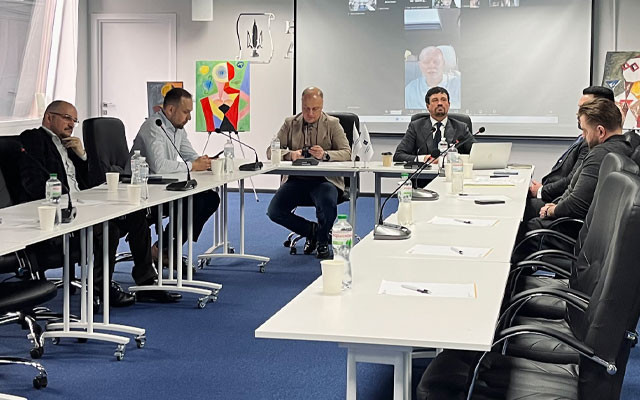
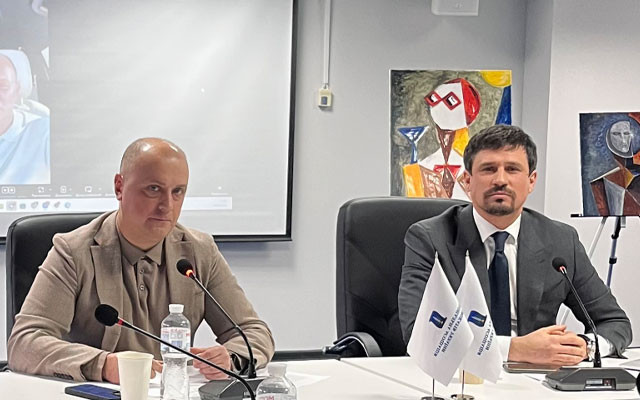
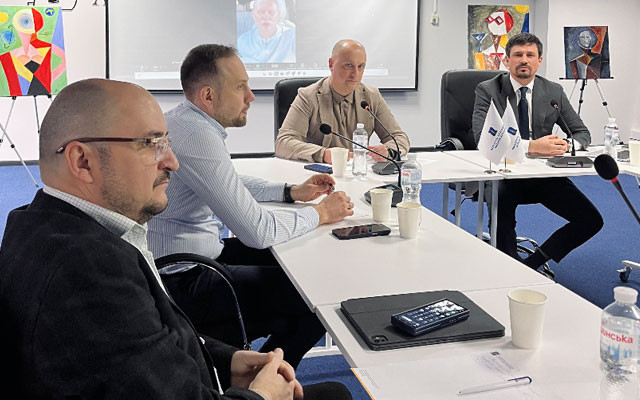
The development of cogeneration infrastructure, insurance of energy business risks, and the development of social infrastructure in communities were discussed by participants at a thematic roundtable held on March 4 at the initiative of the UNBA Committee on Investment and Privatization.
The moderator of the event, Committee chairman Andriy Shabelnikov drew attention to the problem of insuring energy facilities, which, according to him, is particularly relevant today. Current proposals provide for an excessively low level of insurance coverage — about 10% of the value of energy facilities, while this figure should be 50%. The current situation seems paradoxical: citizens can insure their cars or apartments, while owners of critical facilities still do not have a full opportunity to do so. According to the advocate, a separate state body is needed to regulate these issues and interact with international institutions.
At the same time, bureaucratic obstacles are one of the main problems in the electricity production industry. This aspect was highlighted by the deputy chairman of the Committee Vitaliy Zhadobin. He said that all costs due to systemic restrictions, also known as «network collapse», have to be covered by businesses, which negatively affects the development of the industry.
The roundtable participants explored options for the Ukrainian National Bar Association to participate in developing initiatives together with public organizations in order to accelerate the development of cogeneration infrastructure in the country.
After all, the legal community is the driving force behind any business project. This was emphasized by the president of the Association of Distributed and Maneuverable Generation Entities Maksym Marchenko. As an example, he noted that today it is necessary to conduct legal compliance, make a clear plan of action, take into account all deadlines, the procedure for connecting to electricity and gas networks, as well as to heat supply.
Business representatives focused on the practical aspects of project implementation. Director of an energy company Valentin Polishchuk drew attention to the issue of selecting a land plot for construction. He noted that, despite the simplified procedure provided for by CMU Resolution No. 1320, it is necessary to carefully check the availability of infrastructure for connection to networks before launching a project. Head of a heat supply company Valentin Prokaza spoke in favor of a clear distinction between investment and social projects. In his opinion, investors will not allocate funds to facilities with used equipment, as the business is primarily focused on new and insured equipment. And the head of another energy company Olena Kapustinska suggested considering the connection of cogeneration plants to networks not only as a procedure for obtaining technical documentation, but as a process of integrating a new source of generation into the energy system.
The participants paid special attention to the issue of energy independence of communities. A member of the Borshchahivka Village Council Oleksandr Demochko noted that although communities are promising customers for energy companies today, they themselves need ready-made solutions. An urgent task in the near future will be to adapt the social infrastructure to the operation of cogeneration plants.
«Our task is to ensure that standard solutions are developed by the Cabinet of Ministers or the NEURC and delivered to consumers. There are real budgets and the possibility to purchase all this even within the framework that has been announced», - concluded A. Shabelnikov.
Popular news
Guarantees of the practice of law
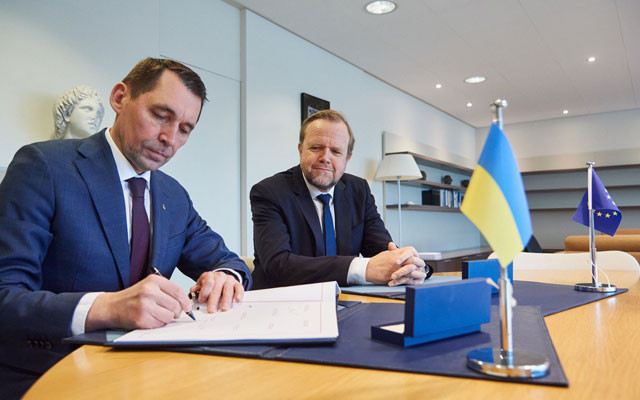
Ukraine has signed the Convention for the Protection of the Profession of Lawyer
Today, on 9 March, Ukraine's Permanent Representative to the Council of Europe Mykola Tochytskyi signed the Council of Europe Convention for the Protection of the Profession of Lawyer. This makes our country the 28th to sign this important international treaty.
European integration
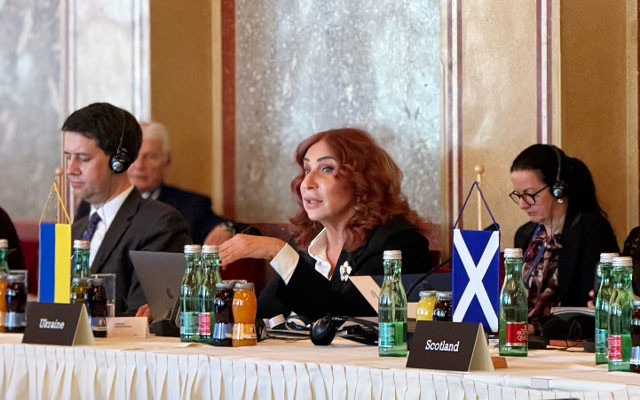
«Freedom or security» — a false formula: speech by L. Izovitova at the conference of bar presidents
Is the state protecting society from crime today, or is it gradually destroying the rule of law under the guise of this fight? These alarming trends were outlined by the President of the UNBA, BCU Lidiya Izovitova, during her speech at the 54th European Conference of bar presidents.
Discussion
AI in advocacy and justice: ethics, regulation, limits of application
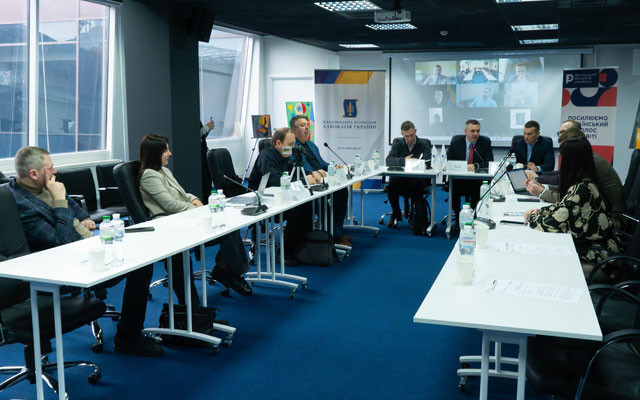
The Ukrainian National Bar Association held a roundtable discussion entitled «Artificial Intelligence in the цork of advocates: ethics, responsibility, legal process engineering». Participants discussed how artificial intelligence systems are already being used in the professional activities of advocates and where the ethical boundaries of what is permissible lie.
European integration
Researchers from the USA explain how shadow reports became a grant service
Shadow reporting often becomes a tool for the grant economy and competition for influence on policy. Such «expertise» replaces impartial analysis with the delegitimization of bar self-government, masks conflicts of interest, and is used as a channel for external pressure on the institution.
European integration
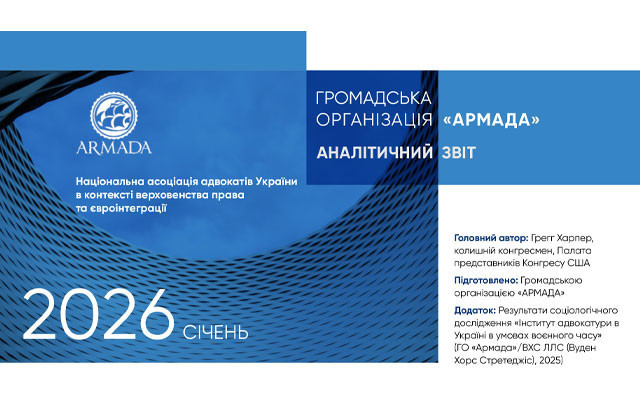
A translation of the report on advocacy presented to the European Parliament has been published
A translation of a research report on the Ukrainian advocacy profession in wartime, previously presented to the European Parliament in Brussels, has been published. The document is presented as a basis for discussion on the rule of law, Ukraine's European integration aspirations, and countering Russian disinformation in the legal sphere.

Legal defence of military personnel
How to formalize discharge from military service: practical workshop
The issue of discharge from military service remains one of the most pressing and complex for Ukrainian defenders and their families. Due to constant changes in legislation, military personnel often face refusals to discharge them from service or even to consider their reports.
Legislation
The Verkhovna Rada Committee criticized the format of the government working group on advocacy
The implementation of the Roadmap on the rule of law (approved by Cabinet of Ministers Resolution No. 475-r of May 14, 2025) in relation to advocacy raises the practical question of who exactly should prepare legislative changes and how.
Self-government
The BCU demands a review of the composition of the government working group on reforming the advocacy profession
The President of the UNBA, BCU Lidiya Izovitova, appealed to the Cabinet of Ministers of Ukraine to review the composition of the working group on improving legislation in the field of advocacy and legal practice.
Publications

Volodymyr Matsko Extradition during wartime: when the risks outweigh the request

Volodymyr Matsko Extradition as a systemic form of rights violations

Victoria Yakusha, Law and Business The anti-corruption vertical cannot «take care» of the Bar as an institution, - acting head of the HQDCB

Censor.net Protecting advocates – protecting justice: addressing concerns about the new law

Ihor Kolesnykov A BRIEF SUMMARY REGARDING THE APPLICATION OF THE ORDER ON EXTENDED CONFISCATION IN LATVIA REGARDING FINANCIAL ASSETS OF…

Valentyn Gvozdiy WORKING IN A WAR ZONE

Lydia Izovitova Formula of perfection

Sergiy Vylkov Our judicial system is so built that courts do not trust advocates