Monitoring of court proceedings: advocates joined the discussion on methodology
Monitoring of court proceedings is important not only as a means of documenting violations, but also as a tool for assessing the extent to which judicial proceedings comply with the standards of a fair trial established by Article 6 of the Convention for the protection of human rights and fundamental freedoms and the case law of the European Court of Human Rights.
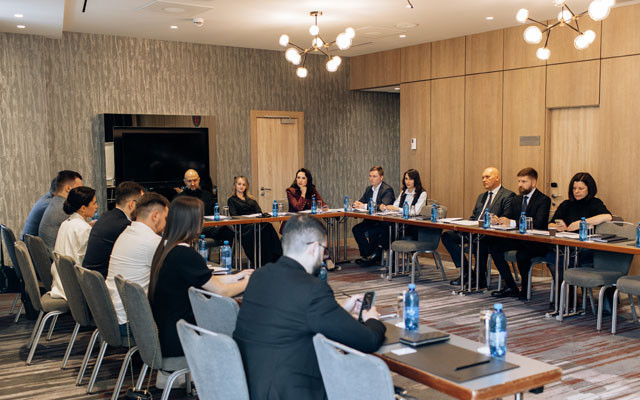
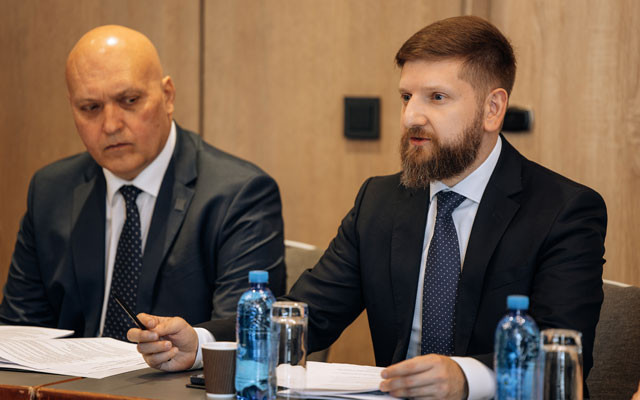
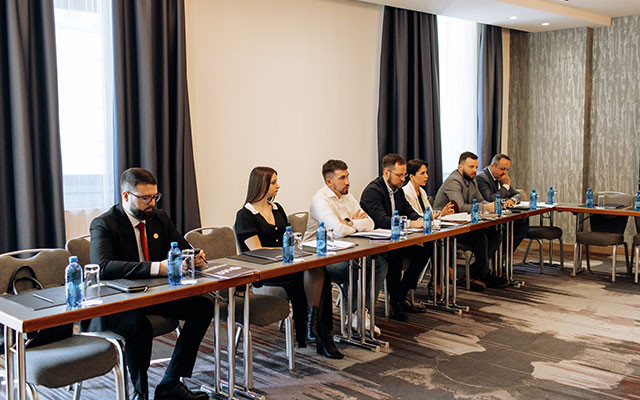
A roundtable dedicated to improving the methodology of such monitoring was recently held in Kyiv. It was organized by the Information and Analytical Center of the International Society for Human Rights (IAC ISHR) as part of a project by the German Federal Ministry for Economic Cooperation and Development. Representatives of the judicial system, the academic community, the Office of the Ombudsman, and advocates participated in the event.
The discussion centered on the goals and objectives of court monitoring, the observers’ protocol, the format and content of reports, methods for addressing identified violations, and assessing the impact of monitoring on human rights compliance.
Special attention during the discussion was given to the training of new observers and the development of practical skills for conducting court monitoring, particularly among law students and young lawyers. In this context, according to the chairman of the UNBA NextGen Igor Andreyev it is crucial to develop systematic, education- and practice-oriented programs aimed at training new observers capable of conducting objective, professional, and impartial analysis of court proceedings. The advocate noted that participation in court monitoring programs helps foster a legal culture among young lawyers based on respect for human rights, the principles of the rule of law, and standards of fair trial. It is precisely such initiatives that lay the groundwork for nurturing a new generation of lawyers who view human rights and judicial independence as fundamental values of a state governed by the rule of law.
«The joint work of representatives of the judiciary, human rights organizations, academics, and practicing lawyers allows for the development of high-quality recommendations that will contribute to the harmonization of national judicial practice with international human rights standards and the further strengthening of institutional guarantees of fair trial in Ukraine», - emphasized I. Andreyev.
Secretary of the UNBA Committee on human rights protection Bogdan Hlyadik drew attention to the need to strengthen communication between monitoring programs and the judicial system. He highlighted three key aspects:
1) An outside perspective. When the defense and prosecution are deeply immersed in the case, their focus inevitably centers on their own strategies. Independent monitoring allows for a comprehensive, unbiased view of the proceedings.
2) Disciplining participants. The presence of independent observers has a powerful disciplining effect on the court, the prosecutor, the advocate, the defendant, and the victim. This minimizes emotional or manipulative behavior and helps steer the proceedings into an exclusively constructive and legal framework, where logic and facts play a key role.
3) Protection of human rights. Court monitoring contributes to the substantive, rather than merely formal, enforcement of standards regarding the right to a fair trial, particularly the guarantees enshrined in Article 6 of the Convention. The transparency provided by monitoring helps identify systemic procedural violations and prevent arbitrariness at various stages of the judicial proceedings.
A member of the UNBA Committee on criminal law and procedure Kyrylo Legkikh discussed the potential for using monitoring results to enhance trust in the judicial system. In his view, monitoring should not be reduced to merely cataloging violations of the rights or guarantees of those involved in the proceedings. It can become a tool for restoring trust in the courts, but only if its results are promptly communicated to the court, which will allow for the rapid elimination of most identified violations. To ensure the system does not perceive it as a hostile mechanism, monitoring should be positioned as a means of legitimizing judicial authority. After all, the courts and advocacy are elements of the mechanism for the administration of justice. Therefore, by defending the judicial system, advocacy contributes to the proper functioning of this mechanism.
…
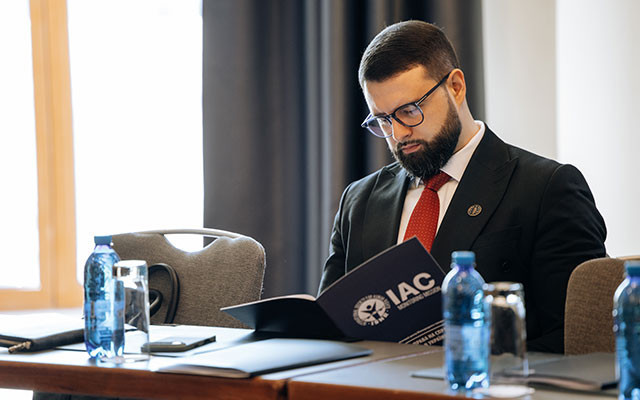
Overall, the discussion focused on improving the practical guide for observers prepared by the IAC ISHR based on international standards, in particular the OSCE guide «Trial Monitoring. A Reference Manual for Practitioners». This guide is intended to serve as the methodological foundation for more consistent and standardized monitoring of court proceedings.
Popular news
Guarantees of the practice of law
Ukraine has signed the Convention for the Protection of the Profession of Lawyer
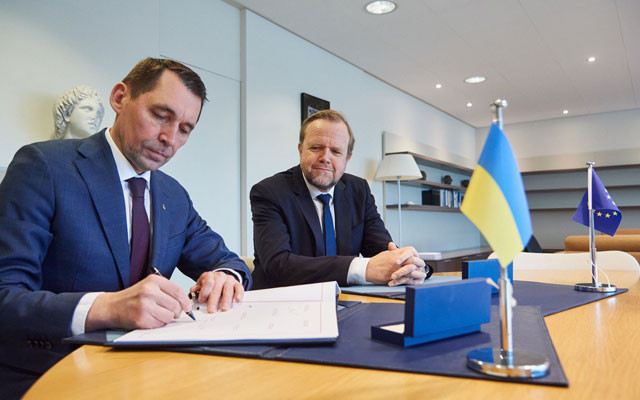
Today, on 9 March, Ukraine's Permanent Representative to the Council of Europe Mykola Tochytskyi signed the Council of Europe Convention for the Protection of the Profession of Lawyer. This makes our country the 28th to sign this important international treaty.
European integration
«Freedom or security» — a false formula: speech by L. Izovitova at the conference of bar presidents
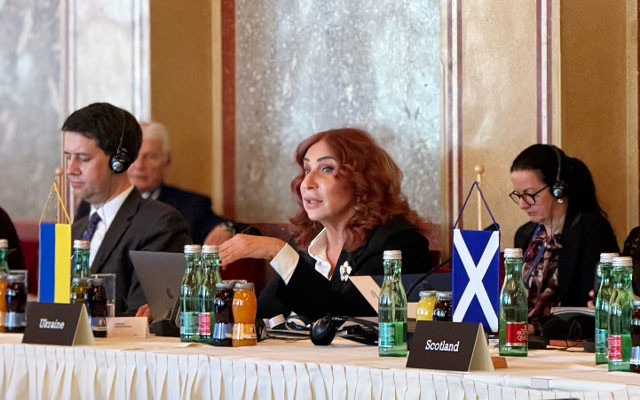
Is the state protecting society from crime today, or is it gradually destroying the rule of law under the guise of this fight? These alarming trends were outlined by the President of the UNBA, BCU Lidiya Izovitova, during her speech at the 54th European Conference of bar presidents.
Discussion
AI in advocacy and justice: ethics, regulation, limits of application
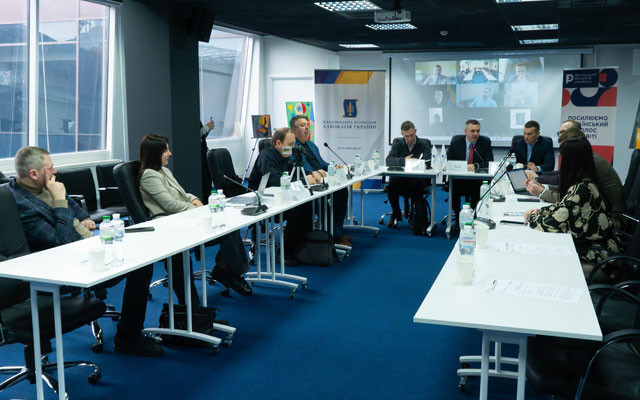
The Ukrainian National Bar Association held a roundtable discussion entitled «Artificial Intelligence in the цork of advocates: ethics, responsibility, legal process engineering». Participants discussed how artificial intelligence systems are already being used in the professional activities of advocates and where the ethical boundaries of what is permissible lie.
European integration
Researchers from the USA explain how shadow reports became a grant service
Shadow reporting often becomes a tool for the grant economy and competition for influence on policy. Such «expertise» replaces impartial analysis with the delegitimization of bar self-government, masks conflicts of interest, and is used as a channel for external pressure on the institution.
European integration
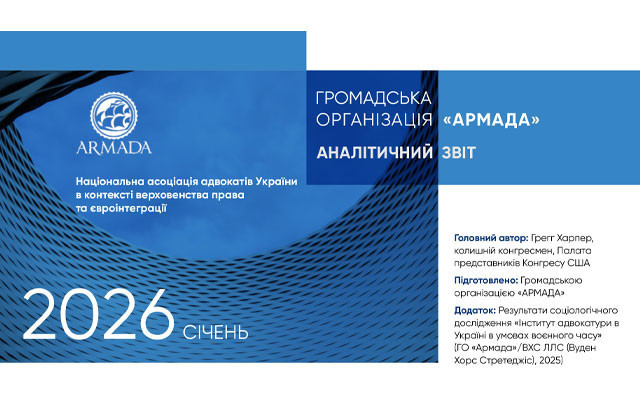
A translation of the report on advocacy presented to the European Parliament has been published
A translation of a research report on the Ukrainian advocacy profession in wartime, previously presented to the European Parliament in Brussels, has been published. The document is presented as a basis for discussion on the rule of law, Ukraine's European integration aspirations, and countering Russian disinformation in the legal sphere.

Legal defence of military personnel
How to formalize discharge from military service: practical workshop
The issue of discharge from military service remains one of the most pressing and complex for Ukrainian defenders and their families. Due to constant changes in legislation, military personnel often face refusals to discharge them from service or even to consider their reports.
Legislation
The Verkhovna Rada Committee criticized the format of the government working group on advocacy
The implementation of the Roadmap on the rule of law (approved by Cabinet of Ministers Resolution No. 475-r of May 14, 2025) in relation to advocacy raises the practical question of who exactly should prepare legislative changes and how.
Self-government
The BCU demands a review of the composition of the government working group on reforming the advocacy profession
The President of the UNBA, BCU Lidiya Izovitova, appealed to the Cabinet of Ministers of Ukraine to review the composition of the working group on improving legislation in the field of advocacy and legal practice.
Publications

Volodymyr Matsko Extradition during wartime: when the risks outweigh the request

Volodymyr Matsko Extradition as a systemic form of rights violations

Victoria Yakusha, Law and Business The anti-corruption vertical cannot «take care» of the Bar as an institution, - acting head of the HQDCB

Censor.net Protecting advocates – protecting justice: addressing concerns about the new law

Ihor Kolesnykov A BRIEF SUMMARY REGARDING THE APPLICATION OF THE ORDER ON EXTENDED CONFISCATION IN LATVIA REGARDING FINANCIAL ASSETS OF…

Valentyn Gvozdiy WORKING IN A WAR ZONE

Lydia Izovitova Formula of perfection

Sergiy Vylkov Our judicial system is so built that courts do not trust advocates