


Establishment of a legal fact: The Civil Code of Ukraine refers to an advocate

Special proceedings to confirm the existence or absence of legal facts are not considered minor; accordingly, only an advocate may represent a party in such proceedings.
This was the conclusion reached by the Civil Court of Cassation in Case No. 730/1248/25. The ruling dated March 25, 2026 was published in the Unified State Register of Court Decisions.
A person acting on behalf of a minor filed a petition with the court to establish the fact of family relations and paternity. To confirm their authority, the representative attached a power of attorney to the application. However, the court of first instance, in its ruling, returned the application, justifying its position by stating that it had been filed by an unauthorized person who had no right to sign such an application.
The appellate court agreed with this position, noting that the case did not fall into the category of minor cases and that only an advocate could represent the interests of a minor in court.
The Civil Court of Cassation noted that in court, representation on behalf of the applicant in all categories of cases, except for minor cases and labor disputes, may be carried out exclusively by an advocate or a legal representative.
And for the purposes of the Civil Procedure Code, minor cases are:
1) cases in which the value of the claim does not exceed thirty times the subsistence minimum for able-bodied persons;
2) cases of minor complexity recognized by the court as minor, except for cases subject to consideration only under the rules of general civil procedure, and cases in which the value of the claim exceeds eighty times the subsistence minimum for able-bodied persons;
3) cases concerning the collection of child support, the increase or decrease of its amount, the termination of child support collection, the payment of additional child-related expenses, the indexation of child support, and a change in the method of its collection, provided such claims are not related to the establishment or contestation of paternity (maternity);
4) cases concerning the dissolution of marriage;
5) cases concerning the protection of consumer rights, in which the value of the claim does not exceed sixty times the subsistence minimum for able-bodied persons.
That is, cases under separate proceedings, which are intended for the consideration of cases regarding the confirmation of the existence or absence of relevant legal facts, do not fall into the category of minor cases.
At the same time, the judges noted that the power of attorney provided by the representative does not indicate that the person is an advocate and is authorized to practice law. Such documents were not attached to the appeal; they are also absent from the case file, and this information is not recorded in the URAU.
In light of the foregoing, the conclusions of the appellate court are correct in that the circumstances described preclude the applicant from being represented in the appellate court by a person acting on the basis of a power of attorney who does not have the status of an advocate.
This material was prepared by secretary of the UNBA Committee on civil law and procedure Valeria Shkvarko.
Popular news

Support
Protecting the legal profession, cybersecurity and support for advocates: common themes for the IBA and the UNBA
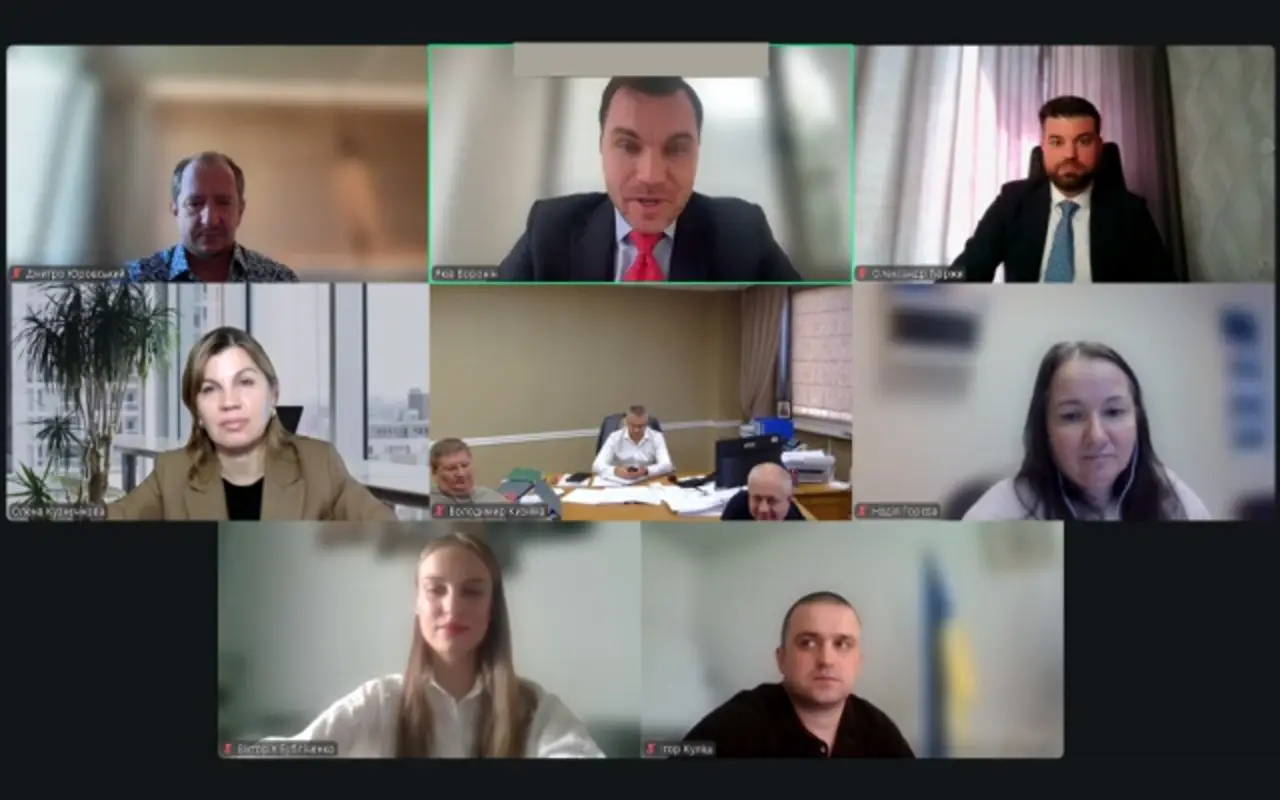
On September 18, a working meeting was held at the office of the Ukrainian National Bar Association with Executive Director of the International Bar Association (IBA) Mark Ellis. The parties discussed the Ukrainian advocacy profession’s participation in European legal processes, the protection of the UNBA’s digital infrastructure, psychological support for advocates and future areas of cooperation.
Educational events
Tax residency of Ukrainians abroad: what matters
The determination of tax residency for Ukrainians who have been living abroad for an extended period depends on the combination of their personal and economic ties to each country. The established status determines the procedure for reporting income, paying taxes and fulfilling CFC reporting obligations.
War
Are Europe's advocacy associations prepared for a potential war? V. Gvozdiy shared lessons from the Ukrainian experience
The continuity of the bar’s self-governance, the protection of professional registries and archives, as well as equal guarantees of employment for advocates, judges, and prosecutors must be enshrined in advance in legislation in the event of war or another emergency.
Tragic news
Former CCBE President James MacGuill has passed away
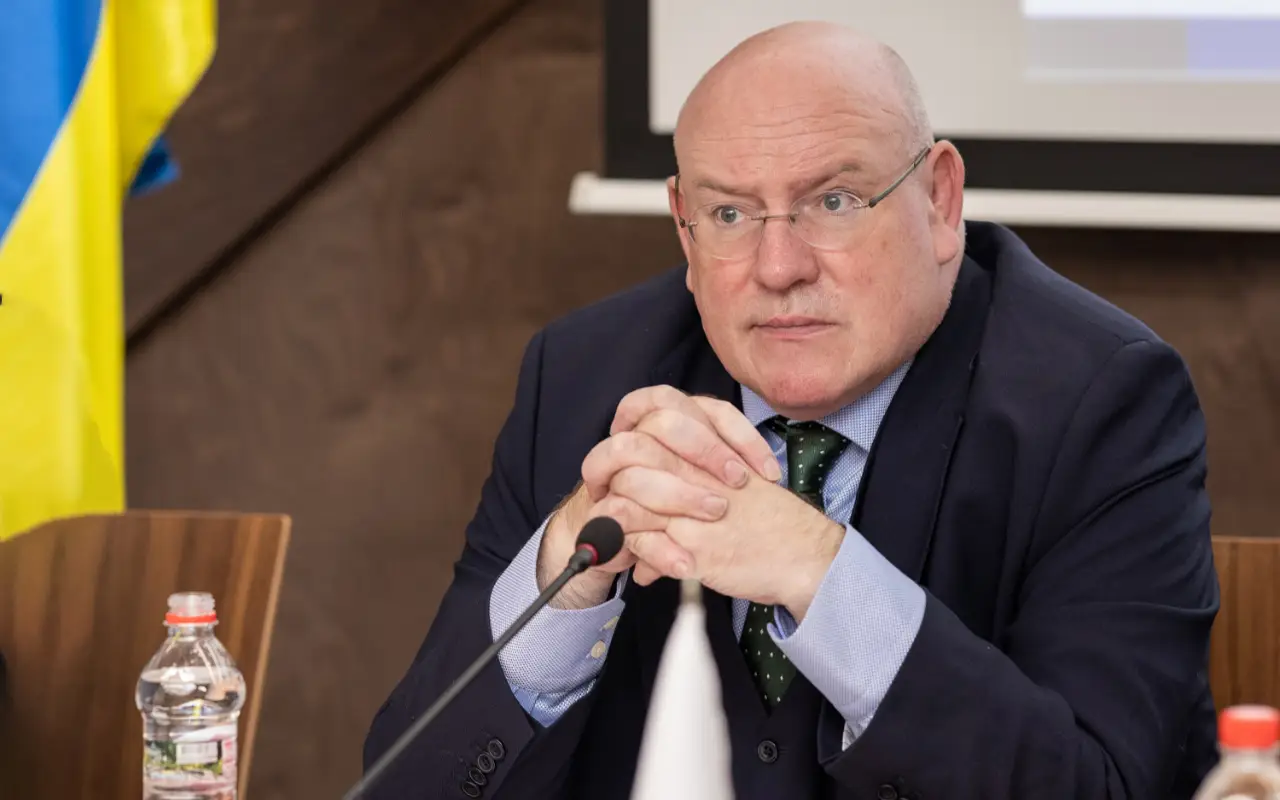
The Ukrainian National Bar Association expresses its condolences on the passing of James MacGuill — a renowned Irish advocate and former president of the Law Society of Ireland and the Council of Bars and Law Societies of Europe (CCBE).

Educational events
How DISC helps manage «tigers», «monkeys», «elephants» and «turtles»
The same instruction from a manager may motivate one employee to take action, while leaving another without the necessary guidance. People perceive work tasks differently: for some, a deadline and the expected outcome are enough, while others need explanations, time or a detailed plan.
Guarantees of the practice of law
The Council of Europe Convention will strengthen constitutional guarantees of human rights – M. Stavniychuk
The exclusive right of an advocate to represent another person in court, as enshrined in the Constitution, should be viewed as an integral part of the mechanism for protecting human rights in Ukraine. Furthermore, ratification of the Council of Europe Convention on the Protection of the Professions of Lawyer could strengthen the substance of this and other guarantees.

Legislation
The Verkhovna Rada is preparing a bill to implement the Convention on the Protection of the Professions of Lawyer
Members of Parliament plan to introduce a bill in the near future to implement the main provisions of the Council of Europe Convention on the Protection of the Professions of Lawyer. This parliamentary initiative may also prompt the government to expedite the preparation of the ratification package.
Educational events
What an advocate should consider when a fee dispute escalates into a complaint to the QDBC
If an advocate files a lawsuit seeking to recover fees from a client, the client may in turn file a complaint with the High Qualification and Disciplinary Commission of the Bar in an effort to compel the advocate to withdraw the lawsuit. How do the advocacy’s disciplinary bodies handle such cases?
Publications

Vasyl Kolishnyi, «Law and Business» Supporting mental health should become part of the professional culture of the Bar, - H. Udovenko

Volodymyr Matsko Extradition during wartime: when the risks outweigh the request

Volodymyr Matsko Extradition as a systemic form of rights violations

Victoria Yakusha, Law and Business The anti-corruption vertical cannot «take care» of the Bar as an institution, - acting head of the HQDCB

Censor.net Protecting advocates – protecting justice: addressing concerns about the new law

Ihor Kolesnykov A BRIEF SUMMARY REGARDING THE APPLICATION OF THE ORDER ON EXTENDED CONFISCATION IN LATVIA REGARDING FINANCIAL ASSETS OF…

Valentyn Gvozdiy WORKING IN A WAR ZONE

Lydia Izovitova Formula of perfection