


The judge joined the discussion on the professional challenges faced by young advocates

In a court hearing, the substance of an advocate’s legal argument is of paramount importance. At the same time, the structure of documents, familiarity with case law, adherence to deadlines, procedural discipline, and communication all influence how the court perceives a party’s performance.
These aspects were highlighted by Tetyana Denysiuk, chairman of the Kovel City and District Court of Volyn region, during the professional discussion «Common mistakes made by advocates in court hearings: a judge’s perspective», organized by the UNBA NextGen in Volyn region. The event was moderated by the Committee’s regional representative Nataliia Savchuk.
At the beginning of her speech, T. Denysiuk immediately clarified that she would not use the word «mistakes» from the event’s title, as it has negative connotations. Furthermore, only the advocate themselves — when analyzing the outcome of a case — or a disciplinary body reviewing compliance with professional standards can assess an advocate’s decision or action as erroneous. Instead, the judge proposed discussing the court’s perspective on constructive dialogue and the «rules of the game» in a court hearing.
According to her, the court’s first contact with an advocate occurs through documents. Therefore, a complaint, response, motion, or other submission must be concise and structured: a brief summary of the facts, evidence, legal provision, conclusion, a clear operative part, and references to attachments. Such a structure immediately commands respect for the advocate’s professionalism.
The judge then turned her attention to working with precedents. If there are several approaches or the practice is changing, it is better to openly note this and explain why the chosen interpretation is appropriate for the specific case. The judge emphasized that she checks references to the positions of the Court of Appeals or the Supreme Court, and when she sees that the practice has changed, her level of trust in the advocate decreases.
Another aspect is the disclosure of evidence and adherence to deadlines. T. Denisyuk reminded the audience that the phased submission of evidence allows for subsequent motions to be dismissed without consideration. At the same time, an advocate who objects to the other party submitting additional evidence may later find themselves in a situation where they need to submit important evidence after the relevant stage has passed.
The judge also explained why an advocate’s participation in a court hearing remains important even when a position has been set forth in writing. The parties need to express their views and be heard. In the presence of an advocate, the parties sometimes change the purpose of their court action, agree to an out-of-court settlement, a settlement of the dispute with the judge’s participation, or a compromise agreement.
The judge cited general objections without reference to a specific provision of procedural law as an example of an unprofessional response. According to the judge, a phrase like «I object because it is illegal» sounds trite. An objection is better received when it refers to a specific legal provision that restricts or prohibits the opposing party’s action.
Speaking about communication during the hearing, T. Denysiuk noted that tone, rhetoric, delivery, and vocabulary influence how a statement is perceived. At the same time, what matters most to the court is not the form itself, but the advocate’s ability to prove the facts and circumstances of the case. Separately, the judge reminded the audience that disagreement with a judge’s conduct must also be expressed in a procedural manner: through comments in the court hearing transcript or relevant arguments in an appeal.
Another piece of advice concerned the line between defense strategy and abuse of rights. As examples, the judge cited the filing of multiple lawsuits, attempts to select a judge, determining jurisdiction through additional requirements, as well as filing a motion to recuse a judge only after a decision unfavorable to the party. Such actions, she said, may be perceived as aimed at delaying the proceedings.
Popular news
Announcements
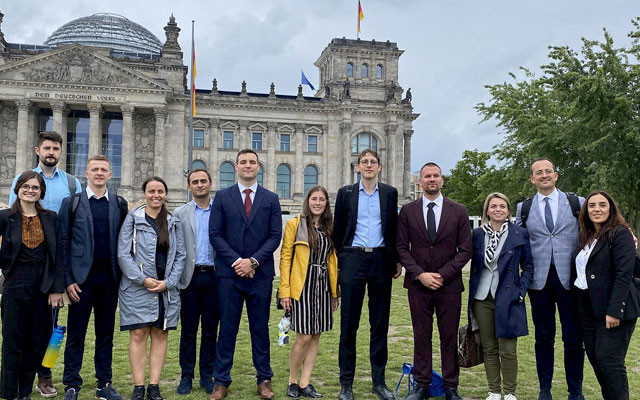
Internships at German law firms: IRZ is accepting applications from Ukrainians
In 2026, the German Foundation for International Legal Cooperation (IRZ) plans to organize a multilateral internship program for young advocates from partner countries. Participants will attend an introductory seminar in Bonn and complete internships at law firms in Germany.
European integration
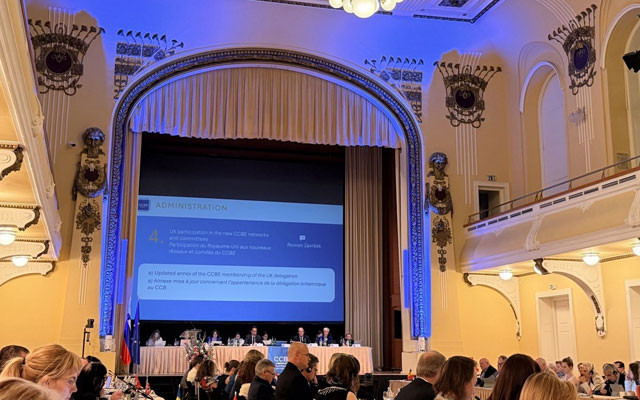
The UNBA presented the CCBE with an overview of legal reform and challenges
Reform of the legal profession, Ukraine’s European integration commitments, guarantees of the profession’s independence, and practices of bar self-governance in European countries — these issues were the subject of discussion at the Council of Bars and Law Societies of Europe (CCBE).

Rule of Law Roadmap
The UNBA is compiling the findings of the subgroups regarding the implementation of the Rule of Law Roadmap
Today, May 28, the Ukrainian National Bar Association hosted a meeting of the Coordination Bureau of the Working Group on the implementation of the Rule of Law Roadmap regarding the reform of the advocacy profession. Following a series of meetings by thematic subgroups, the work is now moving to the stage of consolidating proposals and preparing a coordinated package of recommendations.
Discussion
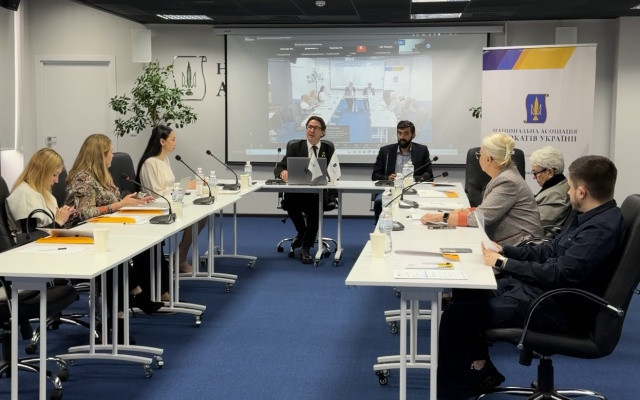
UNBA discussed removing barriers at border crossings for families with children with disabilities
Families of children with disabilities face additional requirements when traveling abroad, particularly regarding consular registration. What is happening and what changes are needed to remove these obstacles were discussed during the roundtable «Borders without barriers for families of children with disabilities».

Discussion
New rules, old problems: the UNBA discussed the work of the ETAIDF and MMC
The reform of medical-social assessment and military medical commissions has changed procedures but has not resolved practical issues. People face situations where documents are not issued, decisions are based on technicalities, assessments are delayed, and they struggle to demonstrate their actual health status in specific life situations.
Discussion
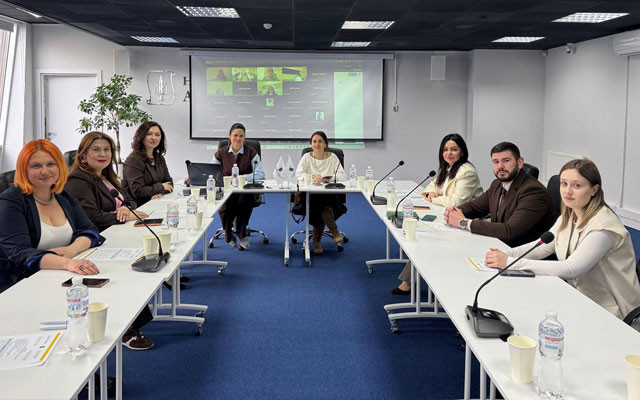
Co-parenting shouldn't be reduced to a 50/50 formula, — roundtable discussion
Following a divorce, joint custody can serve as a mechanism for ensuring equal parental rights. However, this model requires clear criteria and cannot be applied automatically without taking into account the child’s age, the level of conflict between the parents, the risk of violence, and the feasibility of enforcing the future decision.

Legislation
Penalties for errors in military registration require clear rules, – UNBA
The liability of officials for violations of military registration rules must be legally defined, proportionate, and effectively enforceable. Otherwise, the new fines will not protect citizens from registration errors but will create additional risks.

Educational events
How an advocate can find clients when starting a legal practice
Starting a law practice undoubtedly requires professional knowledge. At the same time, a clear understanding of one’s own area of specialization, clients, and communication channels is essential for success.
Publications

Volodymyr Matsko Extradition during wartime: when the risks outweigh the request

Volodymyr Matsko Extradition as a systemic form of rights violations

Victoria Yakusha, Law and Business The anti-corruption vertical cannot «take care» of the Bar as an institution, - acting head of the HQDCB

Censor.net Protecting advocates – protecting justice: addressing concerns about the new law

Ihor Kolesnykov A BRIEF SUMMARY REGARDING THE APPLICATION OF THE ORDER ON EXTENDED CONFISCATION IN LATVIA REGARDING FINANCIAL ASSETS OF…

Valentyn Gvozdiy WORKING IN A WAR ZONE

Lydia Izovitova Formula of perfection

Sergiy Vylkov Our judicial system is so built that courts do not trust advocates